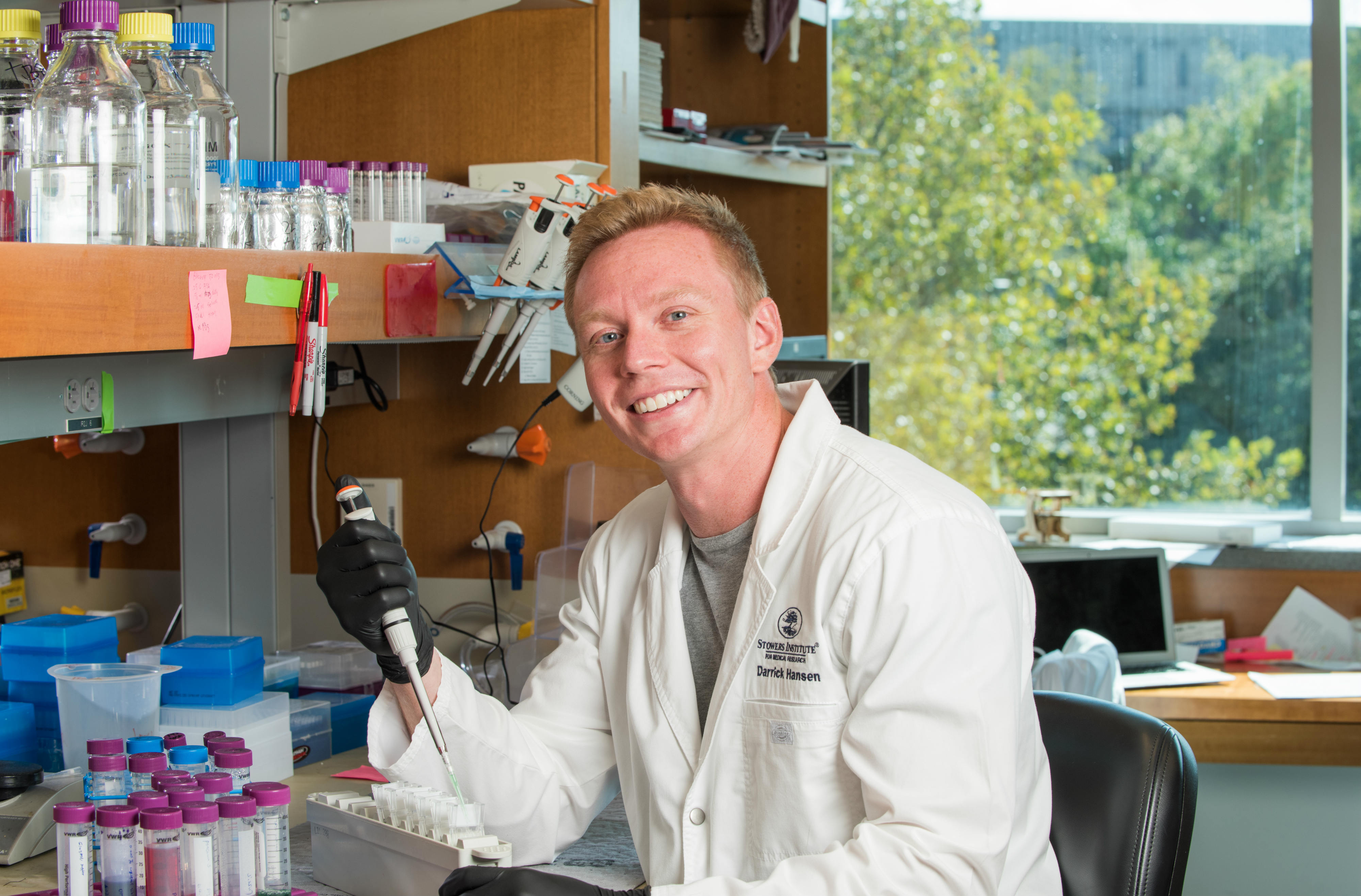
Darrick Hansen explored the world in pursuit of adventure and an undergraduate degree. Now, he sees his PhD program as a chance to explore biomedical mysteries alongside an international community of scientists.
This post was sponsored by the Stowers Institute
Darrick Hansen has a low threshold for the mundane. On his way to earning his undergraduate degree, he took time off to work in far flung places in between his studies in the US, Singapore, and Scotland.
Derrick Hansen{credit}STOWERS INSTITUTE FOR MEDICAL RESEARCH{/credit}
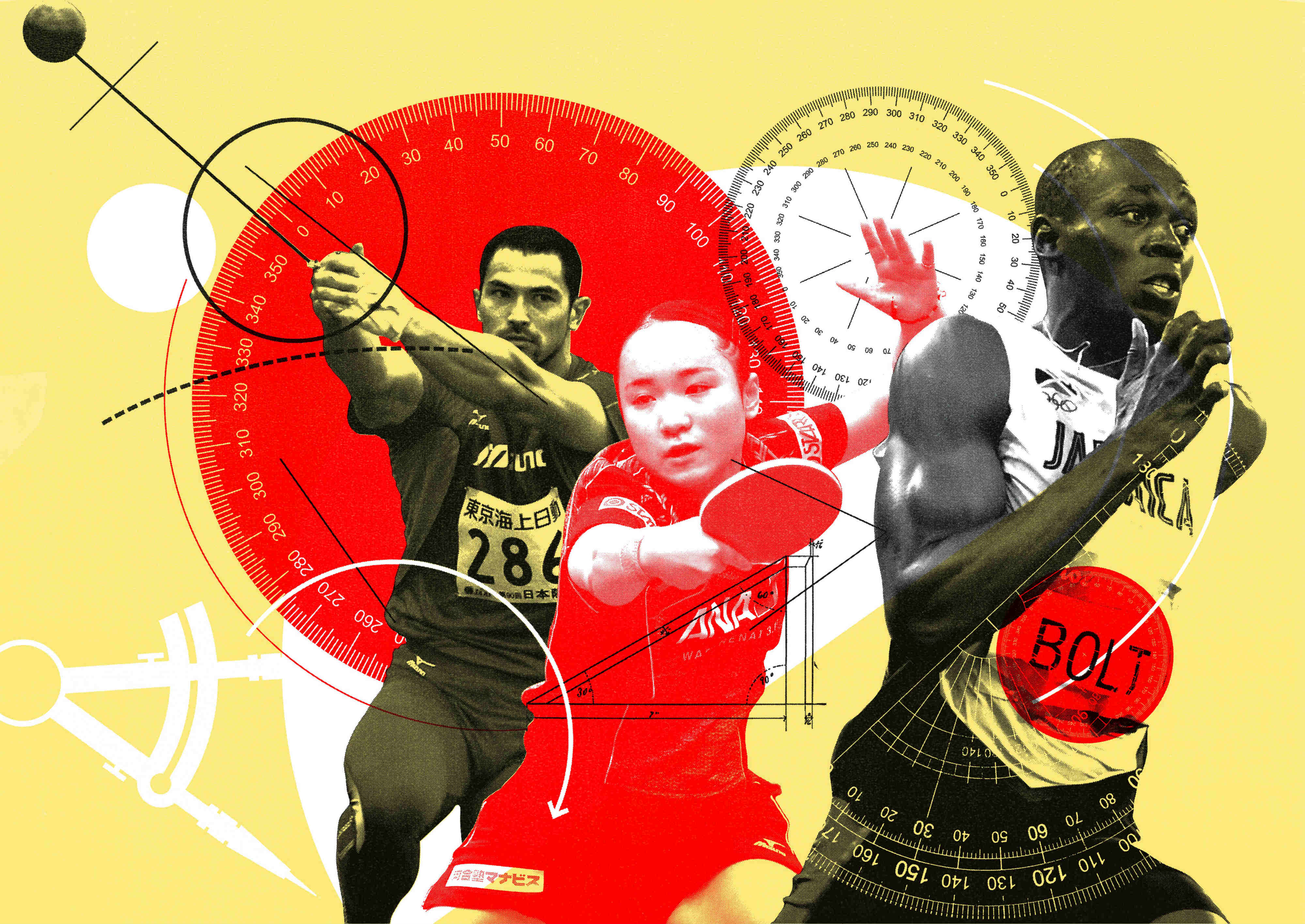
Koji Murofushi’s career has been a mix of tradition and innovation in sports science. He shares his thoughts on a new training approach.
By Tim Hornyak
Sports science is the study of the body as a performance machine. Its specialties span biomechanics and psychology, and demand for its experts is growing. Whether it’s helping everyday people with their physical wellbeing or training elite athletes to react faster endure longer or jump farther, sports scientists and performance consultants are playing an increasingly important role in exercise and competition.
Evidence of growing demand for sports science mavens can be seen everywhere from new university programmes such as the University of Michigan’s Exercise & Sport Science Initiative, launched in 2016, to mass media events. In one example of the latter, before Irish mixed martial artist Conor McGregor went up against boxing champion Floyd Mayweather in a much-hyped showdown in August, he trained at the UFC Performance Institute, a $12 million facility that opened earlier this year in Las Vegas. McGregor used altitude chambers to improve aerobic capacity and ran on an underwater treadmill to build endurance. That may have helped him go more than nine rounds with Mayweather, the overwhelming favorite and eventual winner of the bought. Continue reading →
Building a synthetic biology startup is tough – but stay the course and it’ll be the most rewarding struggle of your life, says James Field.
Since the advent of life 3.6 billion years ago, the survival of all species has depended on rapid innovation at the genetic level. As a consequence, our planet has grown rich with evolved technologies.
Traditionally, the dream of harnessing these evolved technologies has been confined to thought experiments and science fiction. Now, the emerging field of synthetic biology is giving engineers the tools required to tap into evolution’s code-base.
In the 4 May Nature technology feature, I explore the growing use of smartphones to drive scientific research. Today’s phones are so full-featured, they’re often ready for use out-of-the-box. Sometimes, though, a custom app is required, and that can be a sticking point, as programming a mobile app isn’t easy.
Wandering the convention center among 30,000-plus researchers, students and vendors at the Society for Neuroscience annual meeting in San Diego last November, I struggled to wrap my head around a feature I was writing for this week’s Nature, on managing big brain data. Mice, molecular biology and cell sorting reigned supreme in my former life as a bench scientist. Neurons, brain imaging, terabytes — not so much. So when it came time to find an entry into the vast universe of the brain, I latched onto something that seemed small and manageable: the fruit fly.
Ann-Shyn Chiang of National Tsing Hua University, Taiwan, told the SFN crowd his team has spent a decade imaging 60,000 neurons in the Drosophila brain. The pictures produced 3D maps detailed enough to show which neurons control precise behaviors, such as shaking the head side to side (see video). But here’s the part that blew my mind: They aren’t even halfway done (flies have 135,000 brain neurons), and mapping the human brain with similar methods would take 17 million years!
Head shake behavior elicited by a 593.5-nm laser. Credit Po-Yen Hsiao and Ann-Shyn Chiang.
When preparing a grant or publication, where can you turn for new ideas? You can bounce ideas off colleagues, search PubMed and Web of Science for related literature, and maybe take a trip down Google lane. But it’s difficult to get outside one’s particular area of expertise — to mine the opportunities at cross-disciplinary boundaries unless you know what you’re looking for. The developers of a new document search engine hope to make such cognitive leaps easier, finds Jeff Perkel.
As a business development officer at STEMCELL Technologies in Vancouver, Canada, Ben Thiede evaluates new technologies and negotiates deals that bring scientific advances to market. He describes his move from graduate studies toward law and into his current position.
What do you do?
It’s a very diverse role; I’m writing and drafting a lot of agreements – like license agreements and supply agreements. I’m helping the company evaluate the patents we have; I’m evaluating technologies that other companies are bringing to us. I’m always scouring publications; I have Google Alerts set for certain types of technologies. I feel that I am reading more scientific journals than when I was in grad school.Continue reading →