Announcement: The Naturejobs blog is moving house

We’re no longer publishing career stories from our global community of scientists on this platform.  Instead they’ll be posted in a shiny new home at nature.com/careers alongside the latest print news and features from Nature’s careers section. We believe this will better serve our authors and audience.

If you have a careers story to tell, you can get in touch with the editors here.

The blog will continue to be home to more than 1000 posts dating back to 2011, including advice on how to polish your CV, how to answer tricky interview questions, the best way to mentor colleagues, and how to thrive in careers both inside and outside academia.

We plan to migrate some of this important content over to nature.com/careers in due course, along with our monthly podcast about careers in science. Subscribe to our weekly newsletter — or follow our RSS, Twitter, Facebook or Instagram — for regular updates and to get the latest careers advice and information.

If you have any questions or comments please feel free to email the editors here.

The Naturejobs team.


Suggested posts

How to answer: Why do you want to work for us?

Done is better than perfect: overcoming PhD perfectionism

Why scientists should communicate hope whilst avoiding hype

Make your cover letter and CV stand out

How to answer: What is your greatest weakness?


Follow us

Twitter / Facebook / Instagram / LinkedIn / Newsletter / RSS / Atom / Feedburner


Writing an academic CV in English: 7 tips

By Elliot Brooks

This is a sponsored post from Nature Research Editing Service, part of Springer Nature

A well-written cover letter and CV are both crucial in securing an interview. It is the first opportunity in any job application for you to impress your prospective employer, and therefore it is vital that you present yourself well on paper.

When writing your CV, it’s important to adapt your writing to the format and expectations of the job application process – to give a brief but engaging account of relevant qualifications, skills and experiences. For many researchers, however, writing style isn’t the only hurdle when it comes to building an effective CV.

Now, more than ever, research is takes place in a truly global environment – research collaborations and education programmes are shared across continents. English frequently is referred to as the “universal language of research” (over 80% of journals indexed in Scopus are published in English) – and it is therefore becoming more common for prospective employers to request job applications written in English. This can be an obstacle for researchers who don’t speak English as a first language.

For researchers who don’t feel confident writing in English, we at the Nature Research Editing Service have compiled a few quick tips below to help with English CV writing. For more general tips on writing academic CVs, see here.  

7 tips for English CV writing

  1. Keep your sentences short and clear. Avoid writing complex sentences as these can be confusing and you may lose the attention of your prospective employer.
  2. Write in past tense. The one exception might be when describing your current role – you may prefer to describe tasks that you’re still doing using the present tense.
  3. Use ‘dynamic’ and ‘action’ verbs such as attained, accomplished, conducted, established, facilitated, founded, managed, etc (or attaining, accomplishing, etc if you are describing your current role). See more here.
  4. Use abbreviated sentence construction. This is acceptable for CV writing in order to save space. Where possible, you can leave out sentence subjects (“I”, “my”), possessive pronouns (“my/mine”) and even articles (“the”, “a”). You can use lists – replacing “and” with a semicolon. Make sure to have a friend or colleague whose native language is English to check that your sentences are clear and easy to read.
  5. Spacing, aligning and layout are very important when you write your CV, in order to create a positive and professional impression.
  6. Use a thesaurus to help you improve vocabulary and avoid repetition.
  7. Proofread. Look out for grammatical and spelling errors, as well as sentences that are not clear. You could also ask a colleague whose native language is English to proofread your CV.

As well as following these tips, you may wish to use a professional editing service to polish the your written English in your CV and job application documents. Professional editors will, for a fee, edit your documents to ensure the English is well-written and error-free.

Nature Research Editing Service is one such editing service. It is provided by Nature Research and available to all researchers — whether they’re publishing with Springer Nature or elsewhere. It offers English editing for all academic documents, including CVs and covering letters. See here for 10% off your first CV edit.


Notes

Nature Research Editing Service is part of Springer Nature Author Services. It is a service provided by Nature Research, publisher of Nature and Scientific American, and available to all researchers.

Reference

Van Weijen, 2012 The Language of (Future) Scientific Communication. Research Trends https://www.researchtrends.com/issue-31-november-2012/the-language-of-future-scientific-communication/


Elliot Brooks is an Associate Publishing Manager with the Researcher Services team at Springer Nature.


Suggested posts

Don’t Panic! How to make your CV look its best

38 tips on writing an academic CV

Career toolkit: CVs and resumes


Done is better than perfect: overcoming PhD perfectionism

The most important thing a PhD will teach you is how and when to stop.

By Atma Ivancevic

Sometimes ‘OK’ is OK enough

I submitted my PhD thesis on the evolution of jumping genes in December 2016, four days before Christmas. It wasn’t perfect — in many ways, it wasn’t even good. By the end of my graduate studies, I had hoped to be a proficient programmer and an established scientist with multiple high impact papers. At the bare minimum, I expected to find evidence to support my hypothesis. Instead, my thesis was largely unpublished, my coding was preliminary, and my results were inconclusive. In my eyes, it was a failure. Continue reading

Why scientists should communicate hope whilst avoiding hype

How we communicate our research is important in maintaining public trust in science

By Eileen Parkes

“Exciting new line of attack for aggressive breast cancer”

I read that headline recently. “Fantastic” I thought, quickly followed by, “How have I missed this?”. My disappointment as I read the article (the new treatment had only been shown to work in cells in the lab, not in humans) turned to anger as I thought what someone with breast cancer might think whilst reading this. Someone who had coped with bad news and difficult treatments, hoping for a cure only to be disappointed again and again by overblown headlines.

Continue reading

Lowering the stakes on exams could help close the gender gap in STEM classes

Women tend to underperform in introductory STEM (Science, Technology, Engineering and Mathematics) courses, but tweaking how courses are graded could help change that.

By Diana Crow

In many undergrad STEM courses, high-stakes exams — such as mid-terms and finals — determine as much as 60-70% of the student’s overall grade. However, this emphasis on tests may be inadvertently putting some students at a disadvantage.

An emphasis on high-stakes exams at undergraduate level may be a contributor to the gender gap

Continue reading

How could universities and funders improve the situation for postdoctoral scientists?

What the research system needs to be doing to improve the world that postdocs face

By David Bogle

I’ve already written about how PhDs can prepare for and decide whether or not they should pursue a postdoc. Here, I will discuss what more universities and funding agencies should be doing as stakeholders in training and employing researchers.

Universities must be doing more to ensure the postgraduate experience is a positive one

Employers, both at universities and elsewhere, need a range of sophisticated research skills at their institutions. Early career researchers have already shown themselves to be incredibly talented; and society needs them to drive innovation in the economy. This is all the more important in the context of an ongoing war for talent. Researchers must have the opportunity to develop as ‘creative critical autonomous intellectual risk takers’ for the sake of society. Continue reading

What should you get from being a postdoc?

And what should you look for when finding a postdoc position?

By David Bogle

You are coming towards the end of your PhD – so what next? There are many options open to you; one obvious one is to apply for a postdoc position. You should think carefully about what you want to do and not just pursue this through inertia. I have supervised many engineering PhDs and some postdocs in my 32 years as an academic. As Head of University College London’s Doctoral School, I oversee the environment and policy for 6000 doctoral candidates and 3200 postdocs.

Many can find good reasons to do a postdoc. {credit} Guy H/ Flickr CC-BY-2.0 {credit}

Continue reading

Want to find investors for your research idea? Change the way you pitch

A fundraising pitch involves vastly different style and substance than a scientific talk. Entrepreneurial scientists and engineers need to understand and manage the differences.

In a funding pitch, complexity is your enemy — no matter how significant the science

By David Rubenson, Wendie Johnston and Ned Perkins.

Many scientists hope to translate their discoveries into something useful and financially profitable. A biologist, for example, might hope to create a new line of health care products. Many use special grants or family resources to establish small companies. However, given the enormous challenges in the healthcare market, virtually every nascent enterprise needs outside funding; whether from wealthy “angel investors,” venture capital, or investment from large pharmaceutical and device developers. Continue reading

The million-dollar question every scientist should be asking

Both science communicators and researchers carry the onus of answering science’s most important question

By Jessica Eise

I recently had a phone call with a frustrated colleague looking for some advice. She had two key pressure points, both common in the field of science communication.

First, she often couldn’t make sense of what scientists were telling her. They would explain their advanced, varied concepts increasingly quickly and impatiently as she struggled to understand them. Both parties would leave frustrated, having not achieved much. The scientists might wrongly assume she’s stupid to have not understood.

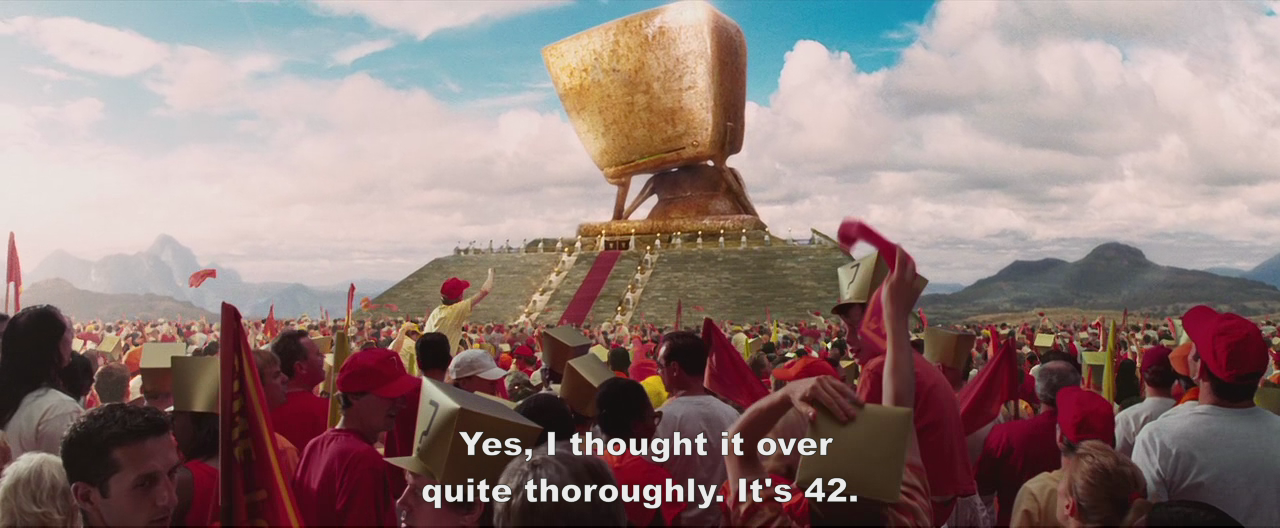
Douglas Adams’ The Hitchhiker’s Guide to the Galaxy asked “What is the answer to life, the universe and everything?” To communicate effectively, scientists should simply ask “So what?”{credit}By IllusionConscious [CC BY-SA 3.0 (https://creativecommons.org/licenses/by-sa/3.0)], from Wikimedia Commons {/credit}

Continue reading

How to mentor undergraduates as a postgraduate, and why it’s important

Spending more time mentoring undergraduates as a postgrad is good for everyone, says Jenn Summers.

To-do lists work for some, but a more holistic approach to researcher development may bring larger rewards.{credit}By FOTO:Fortepan — ID 2278: Adományozó/Donor: Unknown. [Public domain or Public domain], via Wikimedia Commons{/credit}

There’s a difference between mentoring and doling out to-do lists. This is something I’ve learned over the past year, my first as a mentor. Mentoring undergrads became part of my job only recently – in the past, research came first. Most advisors value research outcomes over mentoring, and departments certainly place more value on publications. Before this past year, I was used to just a single undergrad working in my lab, and I thought of them as worker bees, not as future colleagues.

Put simply: I did not think about teaching in the lab.

Now, after guidance from recent research on mentoring, I realize that if graduate students like myself were more invested in mentoring, there would be many more small-but-important teaching opportunities.

Continue reading