Take time to explore your options – there is no perfect path for finding your career, says Erica K. Brockmeier

As a global population we are generating more data than ever before. The International Data Corporation (IDC) estimates that by 2020 over 80 million gigabytes of data will be produced every minute. Each second, the world will generate enough data for a 50-year-long Netflix binge. Scientific investigation is a big part of that: every day huge amounts of data are generated on everything from the behaviour of supernovae to the 3D structure of proteins in the brain. When the world’s largest radio telescope comes online in 2020, it alone will produce 180,000 gigabytes of data a minute.
Previously, most of this scientific data would never be made public — the need to produce a compelling story for a journal article means that many datasets showing ‘negative’ results will never be published.

In the scientific community, the big question is not whether action on climate change is required, but what form it should take — and the part that scientists should play, says the recent Nature Outlook on Climate Change. Three early-career researchers share their thoughts on the current state on climate action worldwide and the place of science in society.
You can find the full Nature Outlook on Climate change here.

Julia Nimke/Lindau Nobel Laureate Meetings
Graduate student, Pennsylvania State University, USA
It’s hard for scientists to make definitive statements about the ‘truth’. Just as we don’t believe exactly the same things as we did 50 years ago, we expect our understanding of the things we’re learning now will change over time.
It doesn’t mean our current understanding should be dismissed as incomplete, but it can be a challenge to communicate this concept to non-scientists. It’s become evident that my communication skills are something I have to invest time in. It’s too easy to forget that we have a broader responsibility to the public. In my experience, public engagement is not a routine part of academic training. Every scientist can start by talking with people they know in their everyday lives. That’s not hard. Continue reading
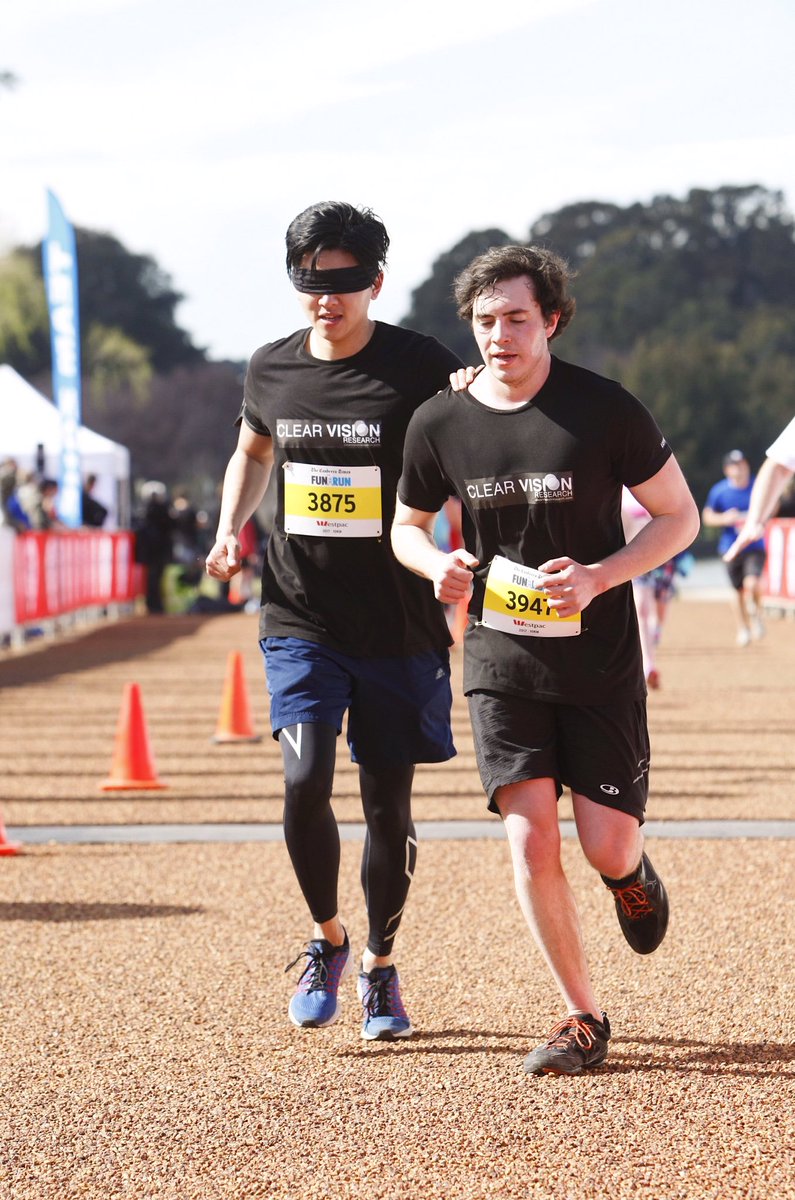
Science communication comes in many shapes and sizes, but running blindfolded for 10km is a novel way of raising awareness of your research area.
PhD student and vision researcher Joshua Chu Tan wanted to highlight what life is like for people living with visual impairment (and raise funds to support research at the same time). He describes the experience as was one of the most challenging things he’s ever done.
I write this as I wait outside my toddler’s summer preschool. It’s the same routine every day — I drop her, she wails, I leave. Later, the teacher reassures me that she’s completely fine as soon as I’m gone.

This is classic separation anxiety. I am overcome by guilt. Continue reading
A few weeks ago, I took my first sick day for the year. I was mentally and physically exhausted: disheartened by delays and failures in the laboratory, and constantly bad-tempered from headaches and stress. I started staying up late. I stopped exercising and gave up my hobbies. I ignored my friends, partner and family, irritated by the distractions they presented. I prioritized work to the extent that I became miserable and unproductive, existing on bad coffee and fast food.
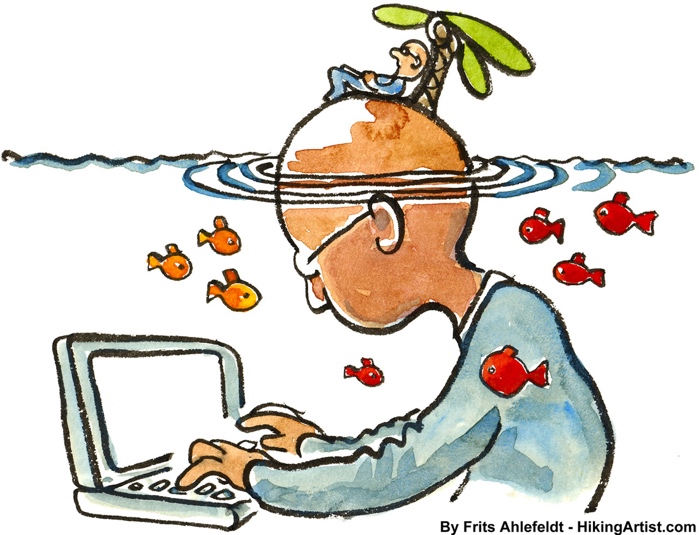
I was not alone. Continue reading
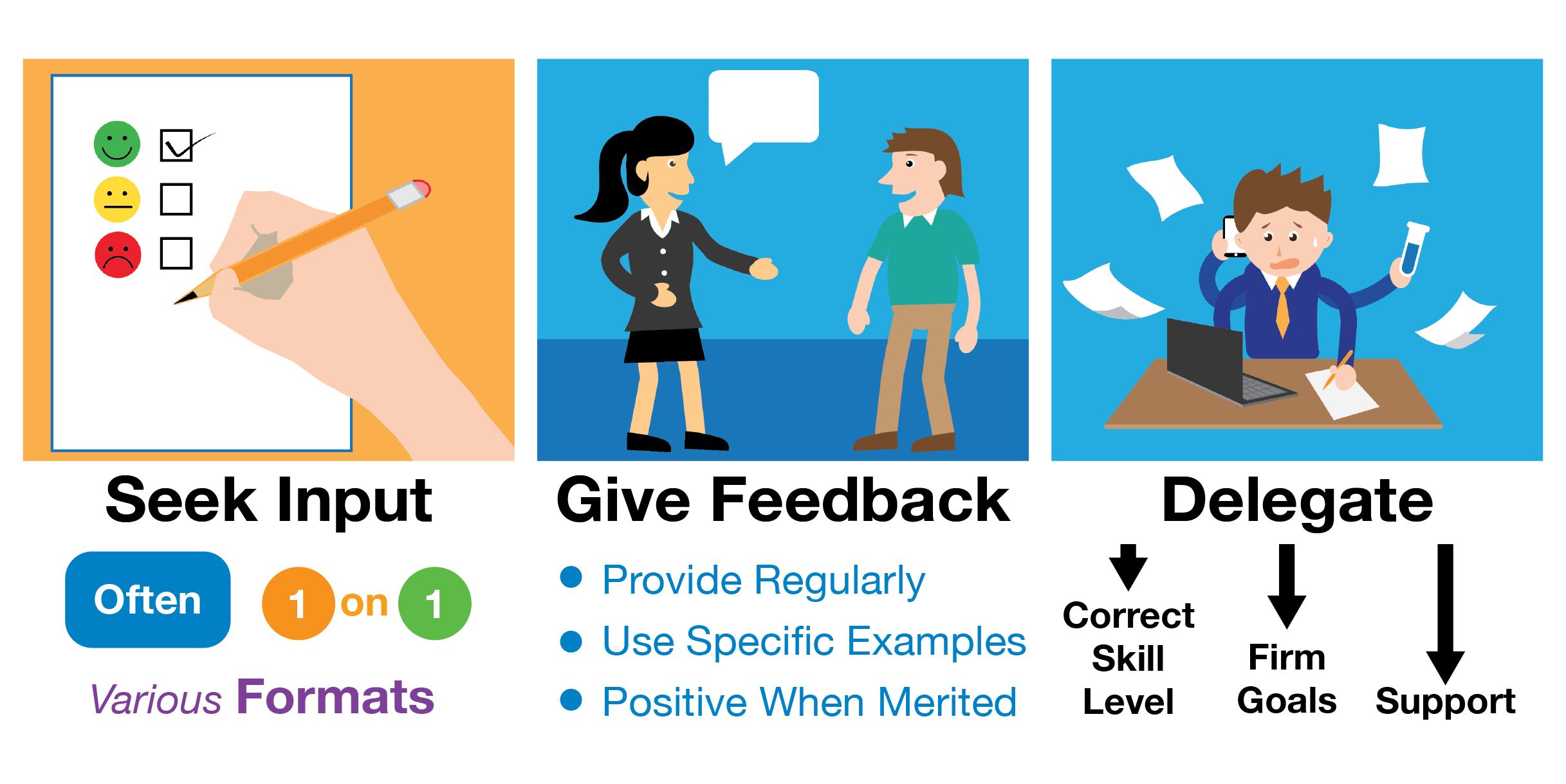
Good management can make an enormous difference in the success and productivity of any team. Unfortunately, new managers are rarely chosen because they have demonstrated skill at managing people. After 10-15 years of training, many scientists will be expected to run an academic lab or manage a team outside of academia with little experience and almost certainly no formal training. The kind of smarts and the types of skills that it takes to be a good scientist are not the same ones it takes to be a competent manager (much less a really good one). While getting your PhD or doing a postdoc, few science trainees have opportunities to work on their emotional intelligence or to hone their delegation skills.
So what makes a good manager? First, it takes an open mind willing to learn and develop skills. Managing a team is hard and scientists should reject the myth that “it comes naturally” to some. Most good managers have worked hard to learn principles of good management and they continually build their skill set with experience and trying new tactics. Second, being a good manager requires a focus on the goals. I believe the most important goals are to get a lot of stuff done, to produce excellent quality work and to create a team culture that provides a happy work environment. The first two goals may be obvious, but why the third? Happy people get more done and do better work and a positive culture attracts good people.
Here are three areas to work on.
{credit}Wu Li; addgene{/credit}
Funding agencies should not penalize poor performers; instead they should reward good mentorship, says Ahmed Alkhateeb
Are you one of the many PhDs considering a career in data science? I completed a PhD in neuroscience at Stanford three years ago; now I’m a data scientist at Uber. During my time in industry, I’ve found that the skills we develop in graduate school, such as analytical thinking, statistics, communication skills, and – oh yes – tenacity in the face of adversity, make us a great fit for the role.
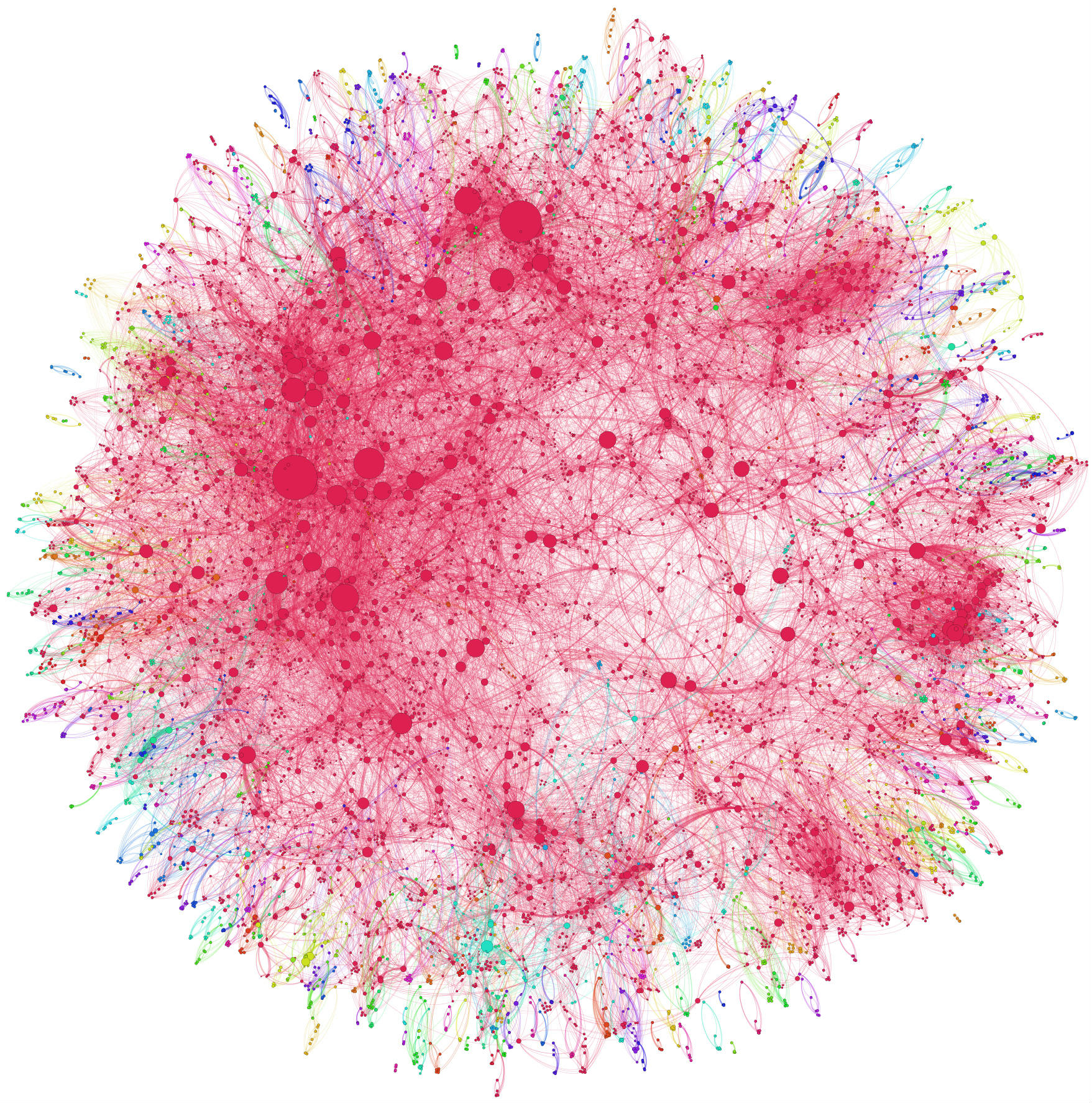
The co-authorship network of 8,500 doctors and scientists publishing on hepatitis C virus between 2008 and 2012. {credit}Andy Lamb/ Flickr{/credit}
PhD students are the backbone of the research industry, often responsible for compiling precious datasets for their lab and learning the cutting-edge techniques required for analysis. But completing a PhD is hard, and getting harder as scientific standards creep steadily upwards. It takes over a year longer for current students to publish their first scientific paper than those 30 years ago because of the increasing data requirements of top journals. Across Europe and Australia, this is one reason why students are taking an average of four to six years (or longer) to complete their PhDs, despite candidature contracts usually being a maximum of four years, and government scholarships lasting at most three and a half years.
Delays in completion reflect badly on universities, and can threaten future funding. They can also threaten the job prospects of graduates, who are increasingly expected to have excellent time and project management skills for careers outside academia. In an attempt to combat lagging completion times and increase employability of graduates, universities are redesigning the PhD by rolling out three-year PhD programs. These shorter programs are intended to provide increased structural support to students, whilst also promoting broader and more applied skills required by non-academic employers. The catch is that these PhDs must be completed within three years, unless the student faces project delays that were unequivocally beyond their control. But is the three-year PhD program really in the best interests of all, or even most, students?
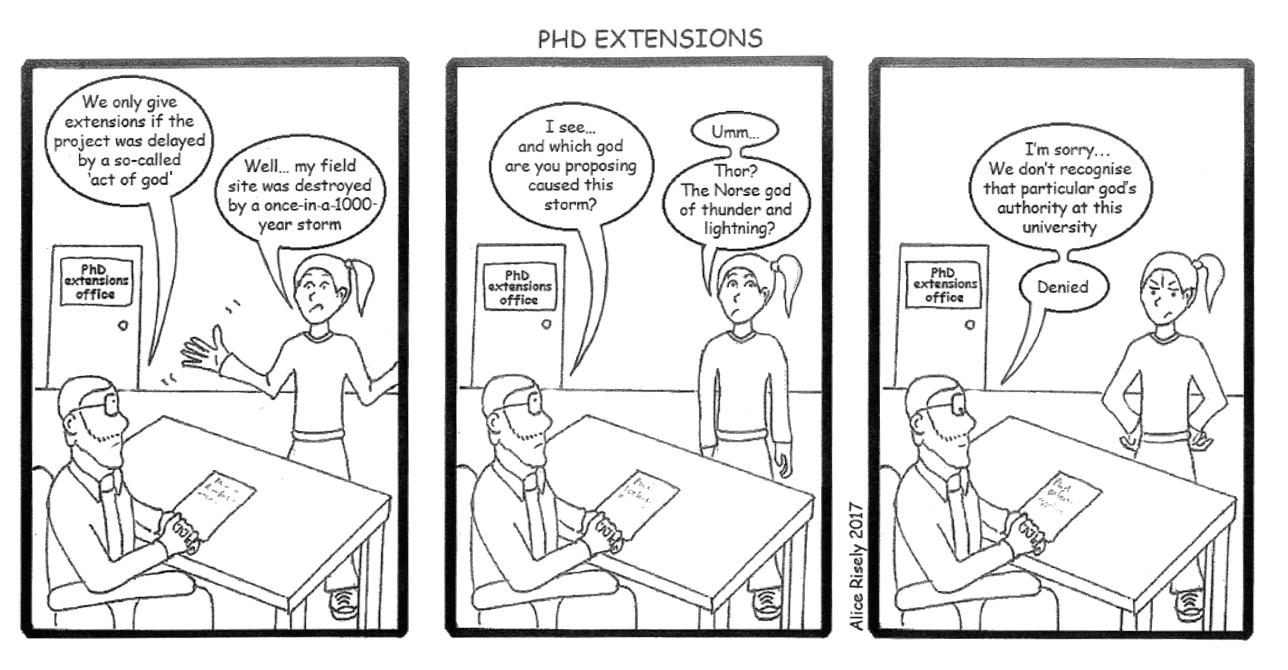
It will be harder to get PhD extensions under the new model.