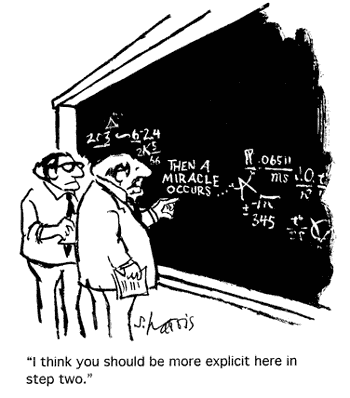
A proactive approach could help researchers contribute to solving many of the problems they encounter in academia
Naturejobs journalism competition winner Jiska van der Reest

Naturejobs journalism competition winner Jiska van der Reest
We’re launching our annual journalism competition, to cover our flagship career fair in London on October 4th, 2017. Continue reading
Speakers at the Publishing Better Science through Better Data (#scidata16) conference addressed these issues and more.
Publishing Better Science through Better Data journalism competition winner Réka Nagy.
Most research happens behind closed doors, and the results can only be gleaned once they’ve been published. The raw data that lead to results, however, are rarely made public, and the steps taken to get from data to figures in a publication is not always clear, which has led to the reproducibility crisis currently facing research. It’s clear that something needs to be done to address this, and the ever-inventive collective mind of science is finding inventive solutions.
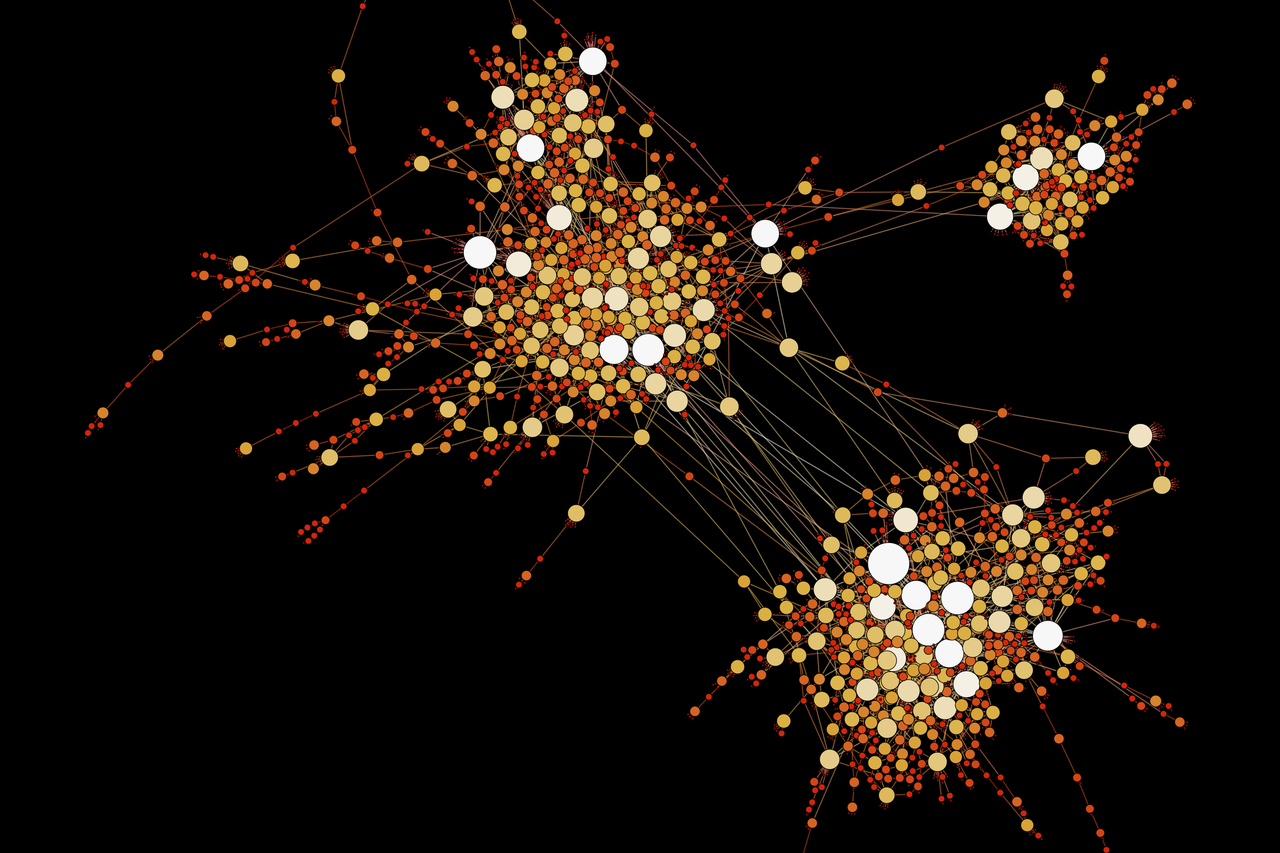
The steps taken to get from data to figures in a publication is not always clear {credit}SlvrKy/Wikimedia Commons CC-BY-SA-4.0 {/credit}
On my first day as a new PhD student, freshly awarded molecular genetics degree in hand, I was sat down at a laptop with an unfamiliar operating system and was encouraged to explore some data using arr. What sounded like pirate speak turned out to be R, a statistical programming language. Yep – for my PhD I swapped pipettes for programming, dilutions for data and spectrophotometers for statistics. Others experienced the opposite, entering the world of biology from a computer science background.

Réka Nagy
In today’s competitive world, it’s become increasingly common for scientists to question where their skills and knowledge will fit outside the lab. Academic research is a harsh place, littered with the victims of funding decisions and research projects that didn’t quite go to plan. The idea, even amongst scientists, that we are highly specialised professionals with no role outside the lab has become a persistent limitation in this search. So, what is the need for a scientist in any other capacity?

{credit}Topp_Yimgrimm/ThinkStock{/credit}
Naturejobs career expo journalism competition winner Ulrike Träger
You’re in the interview for your dream job. You give a great presentation on your work. You looked up the company, their work and the person interviewing you. All is going well. Until someone asks “please give us an example of when you had a conflict with your boss”. You start to sweat. You don’t know what to say. You stutter. You didn’t prepare for this type of question.

{credit}iStockphoto/Thinkstock{/credit}
Naturejobs career expo journalism competition winner Diane N.H. Kim
Confidence is not something we normally associate with science. In this field, grounded in facts and far from emotions, it’s no wonder we have trouble seeing how our attitudes affect our success. A confident attitude is considered much more important for an actress on the red carpet, or a politician delivering a speech. Scientists are still largely portrayed and perceived as solitary individuals with passive personalities, spurred by a media portrayal of a lone scientist in their basement lab. Continue reading
Naturejobs career expo journalism competition winner Andy Tay
Negotiation is a powerful skill. And, whilst graduate education arms you with technical credentials for a career, it often misses out training for soft skills like negotiation. An ability to negotiate effectively can convince your counterparts to care for your interests, allowing you to maximise personal gains such as pay or career development.

{credit}iStockphoto/Thinkstock{/credit}
At the recent Naturejobs Career Expo, San Francisco, Doug Kalish shared some pieces of advice with the participants on the art of negotiating for one’s interests. Here’s some of his tips on negotiating job offers and salary. Continue reading
Naturejobs journalism competition winner Andy Tay
Networking during academic events such as conferences and seminars can be nerve-wrecking. Most of us can remember when we pretended to be engrossed in a programme booklet, wishing we could finally muster the courage to speak to the speaker with ground-breaking research standing ten feet away. You’re not alone, and there is a solution. Effective networking is a skill and anyone can benefit from more practice.
It’s a good habit to read the abstracts of presenters and download their papers to learn more about them before you join a conference. If you’re interested in their work, look up their profiles on platforms like Google Scholar, PudMed and ResearchGate. These platforms automatically update publications and can be better sources of information than many lab webpages, which are less regularly updated. By being diligent, and finding out more about the presenters and their research, you’ll be more confident and ready to ask critical, intelligent questions.

{credit}iStockphoto/Thinkstock{/credit}
 Following the success of the Boston and London Naturejobs Career Expos journalism competitions (you can read all the articles from the competition in the #NJCEBoston and #NJCE14 categories on the blog), we are repeating the competition for both the 2015 Expos. Earlier this year we ran the Boston competition (see the NJCE15 category on the blog) but now it’s time for the London one!
The London Naturejobs Career Expo is our flagship event, so we are looking for five budding science writers to help us with our coverage of the Expo conference sessions, workshops and general ambience of the event for those who cannot make it. The conference will explore career paths in industry, academia and science communication, entrepreneurship, structuring a CV and transferable skills, amongst other things.
The five winners will have the opportunity to attend the Expo and write up at least two of the sessions or workshops for our readers, sharing the advice and expertise of the speakers with readers from around the world. Winners will also have the opportunity to work closely with Nature Publishing Group editors, and their articles will be published on the Naturejobs blog. Continue reading