The importance of broadening science communication

Though well-equipped with scientific training and expertise, scientists need to be aware of the resources available to help them share their work with a public audience, learns Aliyah Weinstein.

Recently, more and more emphasis has been put on scientists to communicate their research to public audiences. National scientific organizations such as the American Society for Biochemistry and Molecular Biology and the American Society for Cell Biology encourage their members to reach beyond the bench, and many blogs help scientists describe their research to wider audiences. At the University of Pittsburgh, where I’m working on my PhD, graduate student and postdoc organizations on campus share their excitement about science with the public through partnerships with local museums and school districts.

books

{credit}PhotoDisc/Getty Images{/credit}

Continue reading

Your best work might be just around the corner

A recent finding shows that a scientist’s career can peak at any age.

Ever wonder when you’ll publish that big paper that’ll win you the Nobel Prize (or at least a new research grant)? Turns out, it could be your next.

As Nature News reports, a new equation, developed by a team led by Albert-László Barabási at Northeastern University in Boston, Massachusetts, shows that papers published at any point in a scientist’s career have equal chance in becoming their most highly cited work. It might be sensible to keep that in mind the next time you’re struggling through centuries of data analysis, or when your thumb starts to bruise from more and more mindless pipetting.

You can watch a video explainer below, and find the paper here.


Suggested posts

How to get published in high-impact journals: Big research and better writing

Writing for international journals: tips and techniques

Nature Masterclasses: Writing for highly-selective journals


Why don’t scientists always share their data?

Reproducibility is the cornerstone of science, and it can be compromised by insufficient data in peer-reviewed publications. Should scientists reveal everything?

Publishing Better Science through Better Data writing competition winner Emma Vander Ende.

One of the foundations of science is its reproducibility. Without it, results are not verifiable and are therefore not believable. But even if a published result is true, there is a chance it might not be reproducible, which introduces a plethora of problems for science.

Irreproducible experiments severely limit the ability of the scientific community to build on results and advance the field. This can happen when scientists don’t share enough data, or details of their experiments in papers, and it happens quite frequently.

So why might a scientist not share their data?

drugs

{credit}Comstock/Thinkstock{/credit}

Continue reading

How is the rise of data-intensive research changing what it means to be a scientist?

Research involving vast quantities of data may be changing the image of scientific research, but is it changing the image of scientists too?

Scidata publishing better science through better data competition winner Jonathan Page.

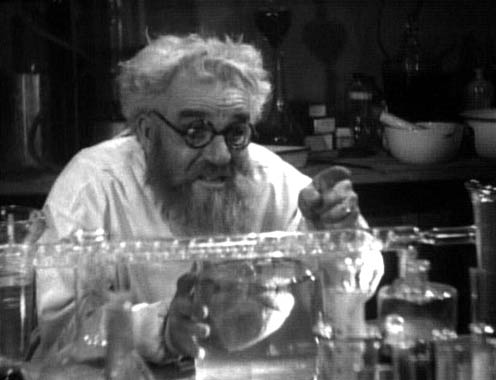
An intrepid, khaki-clad explorer, machete in hand, cutting their way through some undiscovered wilderness. A bespectacled, grey-haired academic in a white coat, supervising some elaborate experiment in a lab, illuminated by glowing lights and flashing buttons. These are the classical images sometimes conjured when the word ‘scientist’ is mentioned.

Maniac9

Horace B. Carpenter as Dr. Meirschultz, a scientist attempting to bring the dead back to life in the 1934 film Maniac

Continue reading

How not to respond to reviewers: Eight simple tips

Responding to reviewer reports is a key part of publishing academic work in peer reviewed journals. But if you’ve received mixed reviews of a paper or are publishing for the first time, where do you start?

This piece was republished from Sophie Lewis’ blog.

My first attempt at publishing a paper was a breeze. A collaborator was asked to contribute to a special issue and offered me the opportunity to lead the paper. I was a PhD student at the time, and spent two months visiting her lab overseas and writing. By the end of my visit, I’d carved out a draft that I left behind for comments. After a bunch of emails and several rounds of revisions over the next month, we were ready to submit.

Flickr/AJ Cann, CC BY-SA

Flickr/AJ Cann, CC BY-SA

Continue reading

Follow your passion when choosing a career in science

What are you passionate about?

Guest contributor Aliyah Weinstein

This question plays a role in the career decisions for almost everyone, yet is absent from most conversations when it comes to early-career scientists. Questions all PhDs hear are: What kind of research are you interested in doing? Do you want to work in academia, or in industry? But these questions make a fundamental assumption: every scientist wants to pursue a career in research. I, for example, have had a lifelong interest in writing and languages.

WEB_Astronomy-sky_65870

Continue reading

Five tips to overcome authorship conflict

Discuss authorship assignments to avoid fallout with collaborators, says Andy Tay

When I started my first year of graduate school, I was referred to a post-doc in my lab by some fellow students. Eager to start my research, I expressed interest in the project without thinking through the reasons behind my colleagues’ reluctance to join the post-doc.

combat-1300519_960_720

Continue reading

The Naturejobs career expo journalism competition, London, 2016!

Enter for a chance to work as a Nature journalist for the day!


NJCE-2016-(London)


Here we go again!

Following the success of the Boston and San Francisco Naturejobs career expo journalism competitions this year, we’re launching the competition for our tenth career expo in London, to be held on September 16th.

The London Naturejobs career expo is our flagship event, so we are looking for five budding science writers to help us with our coverage of the conference sessions, workshops and general ambience of the event for those who cannot make it. The conference will explore career paths in industry, academia and science communication, finding funding, and much more.

The five winners will have the opportunity to attend the expo and write up at least two of the sessions or workshops for our readers, sharing the advice and expertise of the speakers with our worldwide audience. Winners will also have the opportunity to work closely with Nature editors, and their articles will be published on the Naturejobs blog. Continue reading

Craft your connection

Twitter is the medium du jour, and if you’re like many other early-career researchers, you’re all over it. Fantastic. But digital and social media is about much more, and there’s more to consider than the content that you and everyone else are tweeting and retweeting.

7822101134_6cbcbb435b_o

{credit}CC-BY-SA Atos/Flickr{/credit}

Don’t forget that you need to nurture your online persona – the summation and entirety of every bit of online information about you or that involves you, both written and visual. Someone may well have already posted some of this. But you can still shape and guide a great deal of the accessible online information about you — and the image that this information creates — by actively managing the content over which you have some control.

This is especially true if you’re looking for a job. It’s safe to assume that potential employers will look you up online and so you need to have control over the information presented about you.

LinkedIn is still one of the most highly used sites for finding out about jobs through your virtual network – and occasionally getting one. You’ll need to make your profile look good — and you’ll need to find a way to stand out from the rest of the pack.

If you’re not seeking employment, though, social media is still a hugely powerful and useful tool. It can help you reach networks of like-minded scientists, build research collaborations and even make friends

Lots of your colleagues find particular sites to be key venues when they want to engage in collaborative discussion, peer-review papers, share negative results that might never otherwise be published, and even upload raw data sets

And through these sites, you can build a powerful virtual network that will yield opportunities, information and advice. Here’s to the click!


#scidata16: Publishing Better Science through Better Data: Writing competition

This competition provides the chance to attend the Publishing Better Science through Better Data October 2016 event, work with a Nature editor and have your writing published here on Naturejobs.

After a very successful event last year, we are again looking for five budding science writers to help with news coverage of this year’s Publishing Better Science through Better Data event.


scidataWellcomeSDATA2

Continue reading