Boffins, Brexit, Trump and a Time Lord: How the media saw the March for Science

The media seized on “nerdy signs,” celebrity appearances and interviews with working scientists and commentators to demonstrate that the March for Science had firmly engaged the public, says David Payne.
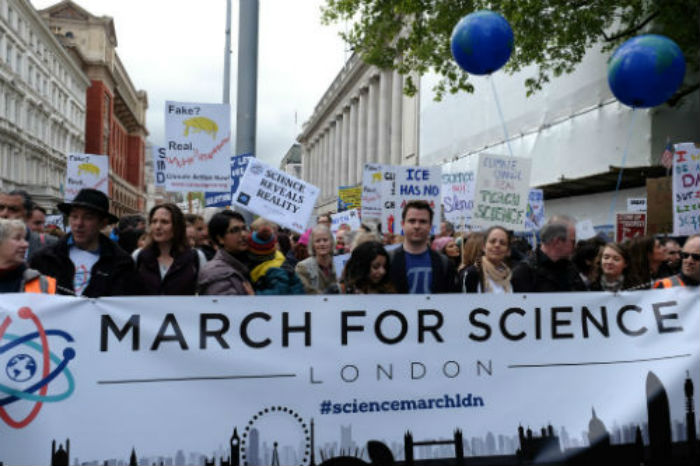
London march for science

London March for Science: 22 April 2017 Credit: Getty/Nur Photo

A sighting of Doctor Who actor Peter Capaldi “marching alongside physicists, astronomers and biologists” at the London march on 22 April proved irresistible to Daily Mail headline writers, who wrote: ‘”What do we want? Evidence-based policy. When do we want it? After peer review: Boffins’ VERY academic chant as Doctor Who joins thousands protesting against Brexit during global March for Science.” Continue reading
Why I marched for science – a transatlantic perspective

The March for Science turned a spotlight on the importance of research. But it won’t have a lasting effect unless we improve science communication, says Judith Reichel.

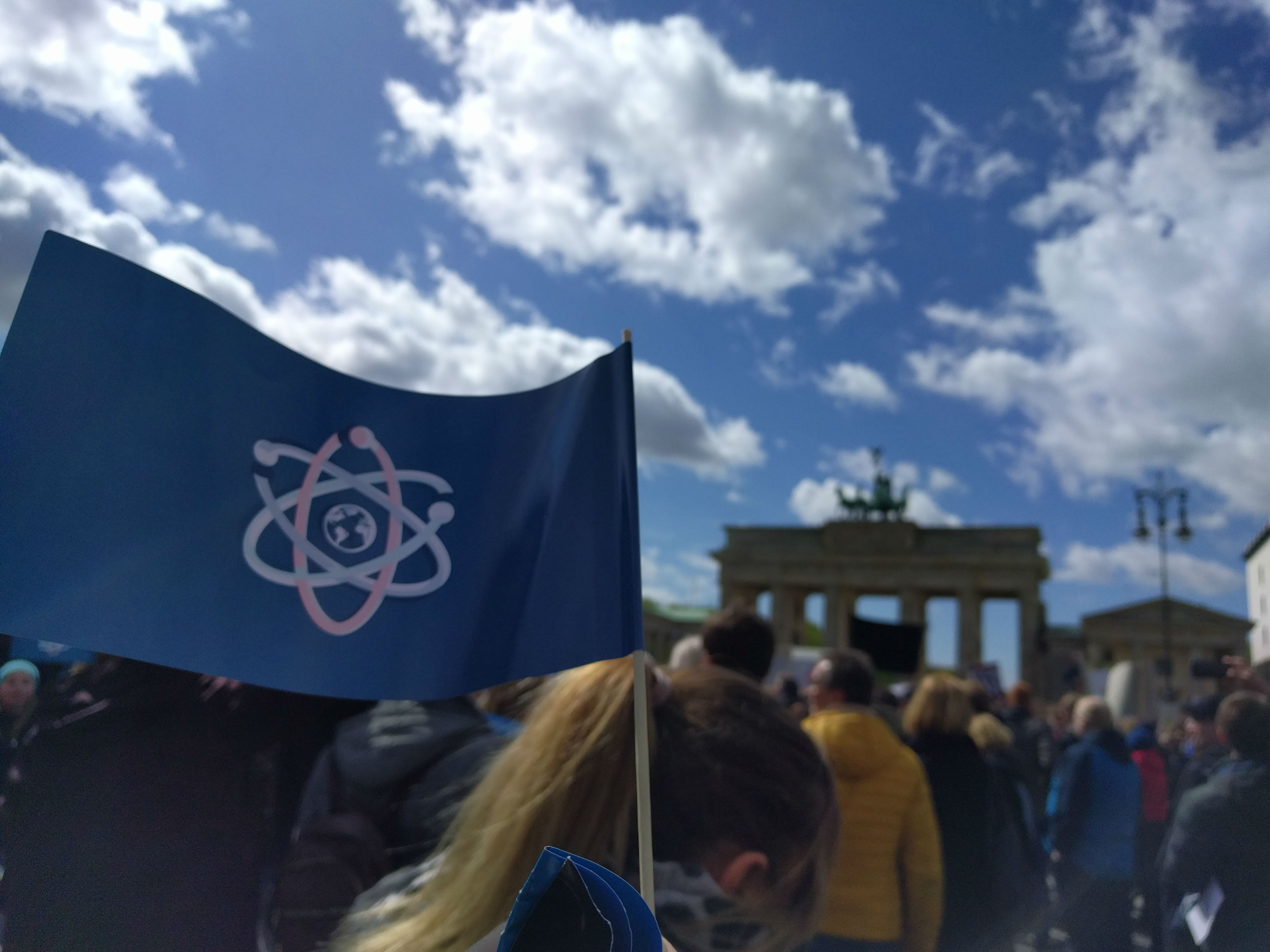
On Saturday, April 22nd, myself and an estimated 11,000 other science supporters marched in Berlin. The event was part of the global “March for Science” that took place in over 600 cities worldwide. While the March here and everywhere else was a great success in putting a spotlight on the importance of research and the danger of building on false facts, I’m worried it won’t have a lasting effect on the public perception of science if we don’t improve our science communication.

MarchforScience-Judith-1-smaller

The March for Science passes the Brandenburg gate in Berlin, Germany

Continue reading

The next generation of science outreach

Increased communication and outreach efforts require changes in the structure and culture of academic science, says Nicole Forrester.

In the wake of the US presidential election in November 2017, the scientific community has recognized that it has fallen short in communicating the value of science and research. As a result, scientists are now calling for increased public outreach and communication efforts. While this awareness is important, the path forward is not entirely clear.

pexels-photo-77984-smaller Continue reading

Science competitions earn you fame, glory and transferable skills

Competitions aimed at early career researchers fill the gap between a PhD and a ‘real world’ education, says Réka Nagy.

My PhD journey is coming to its end and I am considering a non-academic career. Looking at job descriptions, I know I tick the box marked ‘strong analytical and problem-solving skills.’ However, there are other boxes to consider: ‘Strong time and project management skills.’ ‘A team player with a proven track record of collaborations.’ ‘The ability to communicate clearly and concisely to a wide range of stakeholders.’

I worked in a ten-person research group but I did most of my work on my own – does that really make me a team player? And what does “a wide range of stakeholders” mean, anyway? I don’t have the time or money to pursue further training to gain these skills, and I feel like the four years I spent getting my PhD in Human Genetics were a waste.

13158201924_305223a6e9_o

{credit}David Luders/Flickr https://www.flickr.com/photos/42988571@N08/13158201924{/credit}

Continue reading

Development and debate about the March for Science

The March for Science’s date has been set for April 22nd. Nicole Forrester speaks to scientists planning to take part.

It’s fair to say the scientific community is spending a lot of time talking about the March for Science, due to take place on April 22, 2017. While organizers are preparing for events in Washington, D.C. and satellite locations around the world, scientists are evaluating their roles in politics and public outreach. I reached out to scientists and science supporters to discuss the march and the impact of recent political decisions on science, scientific policy, and our careers as scientists.

According to their website, the March for Science was founded as “a celebration of our passion for science and a call to support and safeguard the scientific community.” For many scientists, though, it’s about supporting the scientific process itself and advocating for its importance. Joel Sachs, an Associate Professor of Biology at the University of California, Riverside, says, “Science is just a way of learning about the world and is incredibly important to make predictions about what’s going to happen in the future — in terms of our climate, disease, and how to manage crops and livestock.

{credit} Bill McKibben/ Twitter: https://twitter.com/billmckibben/status/808791393569243140?lang=en{/credit}

Continue reading

Science communication: What it takes

Science achieves little if it stays in the lab. Here’s what you need to get it out to the world, says Jessica Eise

Communicating about science is a noble profession, and one that’s becoming increasingly and ever more popular. Yet it isn’t the right fit for everyone. I got started in this field about five years ago, and was surprised by many of the things I needed that no one had ever mentioned. Here’s what no one ever tells you you’ll need.

analytics-282739_1280

Passion for science

If you don’t care about science, you’re going to burn out fast. Science is hard, so science communication is hard, too. You’re going to have to delve into complicated issues quickly. I’ve worked on projects ranging from solar panel taxes to integrated imaging, from public perceptions of pork to international trade databases. You really have to care about good science communication to get a message across. The only thing worse than no science communicator is a science communicator who hates their job.

I didn’t have an immediate interest in food and agricultural topics when I started my job. But I audited a course on food security, read tons on the subject and sat down with my colleagues to figure out why these topics are so critically important. It made all the difference. Continue reading

Successful vs. effective research presentations

In a disturbing trend, biomedical researchers can achieve a degree of career success despite an inability to effectively communicate scientific information, say David Rubenson and Paul Salvaterra.


“I have only made this letter longer because I have not had the time to make it shorter.”

– Blaise Pascal, The Provincial Letters, 1657

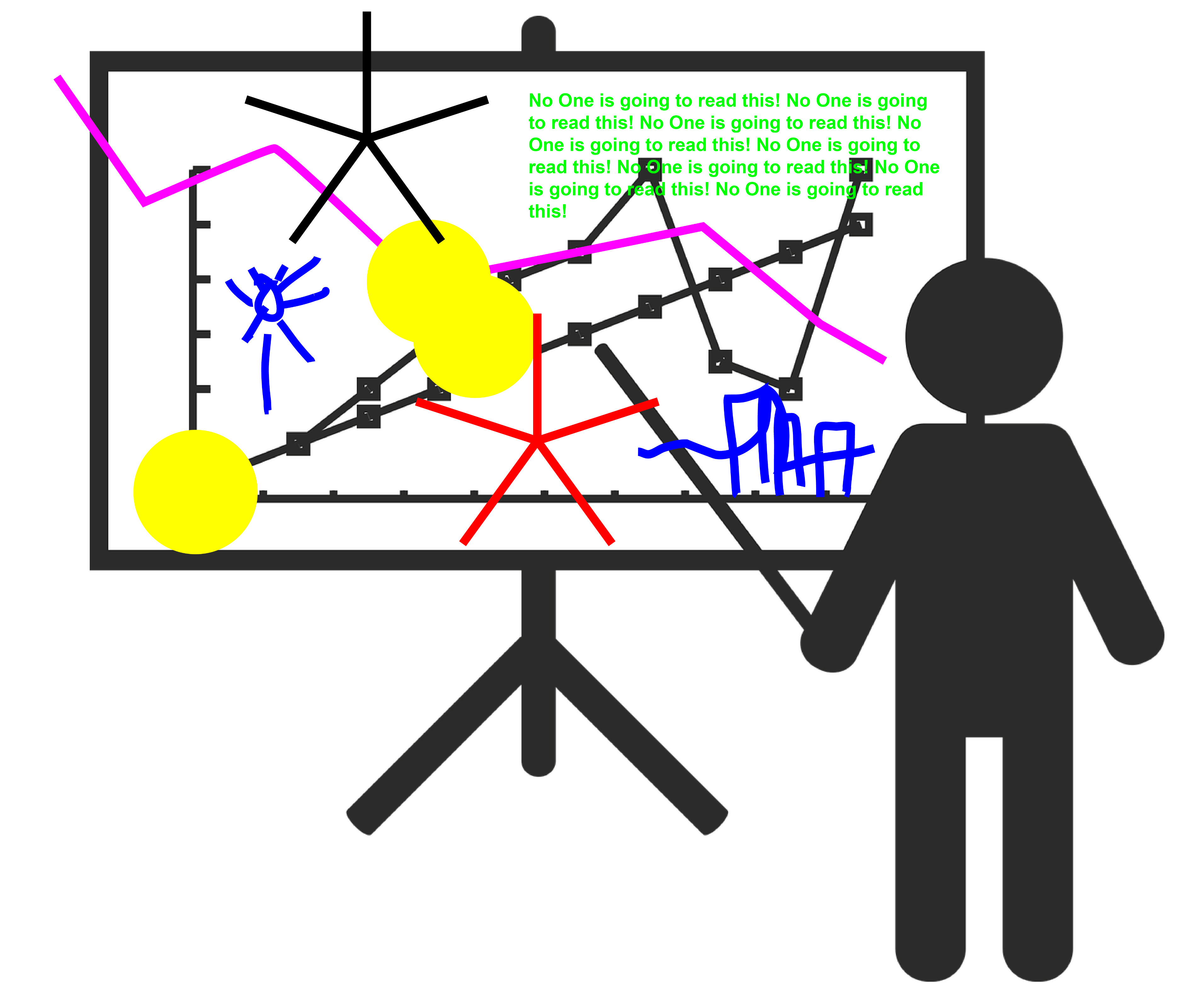
It goes without saying that every biomedical researcher wants to give effective presentations. Or does it? Is a presentation effective if it merely wows the audience with dense data, causes minimal objections, but fails to convey true scientific understanding? While such presentations may provide a degree of career success, they rarely inspire systematic or creative thinking. Scientists are wasting significant time listening to presentations that fail to effectively communicate information.

messy-cropped Continue reading

Is a picture worth a thousand words?

To communicate science is to tell a story. And the best stories come with pictures, says Thaís Moraes.

Translating the results of a research project into a 10-minute presentation or article can be a difficult task. It must be informative but also succinct and appealing. It has to tell an interesting story. It has to entertain. And you shouldn’t have too much text.

2014-06-29 15-smaller

Thais Moraes

Continue reading

Finding job satisfaction as a science communicator

Yuko Ueno planned to work in science communication…

…But a supervisor suggested that gaining first-hand research experience might make her a better communicator. Today, she sells workshops to companies, schools and universities and teaches science to Sunday-school students at a private academy in Tokyo.

Smriti Mallapaty catches up with her to learn more.

yuko-smaller

Yuko Ueno

Continue reading

Let’s talk about #SciComm

Science communication is a young field with many voices and few guidelines. Let’s find a way to combine our voices in order to protect the integrity of research endeavors, says Judith Reichel.

There are plenty of reasons to become active in the field of science communication, and for many early career researchers (ECRs) still exploring research, it’s a great way to find their niche and voice their opinions.

Yet, like many of its participants, the field of science communication itself is fairly young, and is constantly evolving from its original aim — to translate scientific findings to the public, in order to raise awareness and funding for the grand scientific endeavor. When 3000 new academic papers are published every day, it‘s impossible for any single scientist to keep track of every development.

GettyImages-550382899-smaller

Science communication is practiced by a range of journalists, editors, freelance writers and free-time writers, yet the aim remains the same: to communicate important findings in quick soundbites that provide enough information for scientists but are still digestible to the general public. Continue reading