Productivity for researchers: 9 brilliant tips

Are you great at procrastinating? Do you wish you could get more done in a week, or just do things ‘better?’ Here are some helpful hints and tips for your research workflow!

By Stacy Konkiel

At Altmetric, we provide actionable insights into the online engagement surrounding published research. In early 2017 we asked researchers to share their favorite productivity tips and tricks for tackling their to-do lists, in the hope picking up some ideas ourselves and sharing their wisdom with the wider community. Here are some of their top recommendations.

cube Continue reading

How to fix your separation anxiety

Navigate your career as a woman scientist at the right pace to avoid physical and psychological burnout, says Komal Atta

I write this as I wait outside my toddler’s summer preschool. It’s the same routine every day — I drop her, she wails, I leave. Later, the teacher reassures me that she’s completely fine as soon as I’m gone.

Lab coats and mouth mask at coat hook

This is classic separation anxiety. I am overcome by guilt. Continue reading

Human Pipettes: Scientific training and education in biomedical research

David Rubenson and Paul Salvaterra share their thoughts on a damaged and damaging research system

A recent cancer research symposium displayed a familiar asymmetry. 90% of the attendees were PhD students or postdocs sitting obsequiously in the rear and asking 10% of the questions. 10% of the attendees were front-sitting faculty providing 90% of the inquiries.

A simple case of youthful hesitancy and opaque presentations requiring years of experience to comprehend? But did individual Principal Investigators (PIs) meet with conference planners before advising their students to attend? Did conference planners consider the likely audience and ask speakers to modify their talks? And did faculty members attend the related trainee poster session?


Are junior scientists little more than human pipettes?

Are junior scientists little more than human pipettes?{credit}Paper Boat Creative/Getty{/credit}

Continue reading

The three-year PhD program: good for students? Or too good to be true?

Calls to modernize the PhD to meet the demands of the job market are being answered by the introduction of a more streamlined three-year PhD program. But such changes are not necessarily in the best interests of students, say Alice Risely and Adam Cardilini

PhD students are the backbone of the research industry, often responsible for compiling precious datasets for their lab and learning the cutting-edge techniques required for analysis. But completing a PhD is hard, and getting harder as scientific standards creep steadily upwards. It takes over a year longer for current students to publish their first scientific paper than those 30 years ago because of the increasing data requirements of top journals. Across Europe and Australia, this is one reason why students are taking an average of four to six years (or longer) to complete their PhDs, despite candidature contracts usually being a maximum of four years, and government scholarships lasting at most three and a half years.

Delays in completion reflect badly on universities, and can threaten future funding. They can also threaten the job prospects of graduates, who are increasingly expected to have excellent time and project management skills for careers outside academia. In an attempt to combat lagging completion times and increase employability of graduates, universities are redesigning the PhD by rolling out three-year PhD programs. These shorter programs are intended to provide increased structural support to students, whilst also promoting broader and more applied skills required by non-academic employers. The catch is that these PhDs must be completed within three years, unless the student faces project delays that were unequivocally beyond their control. But is the three-year PhD program really in the best interests of all, or even most, students?
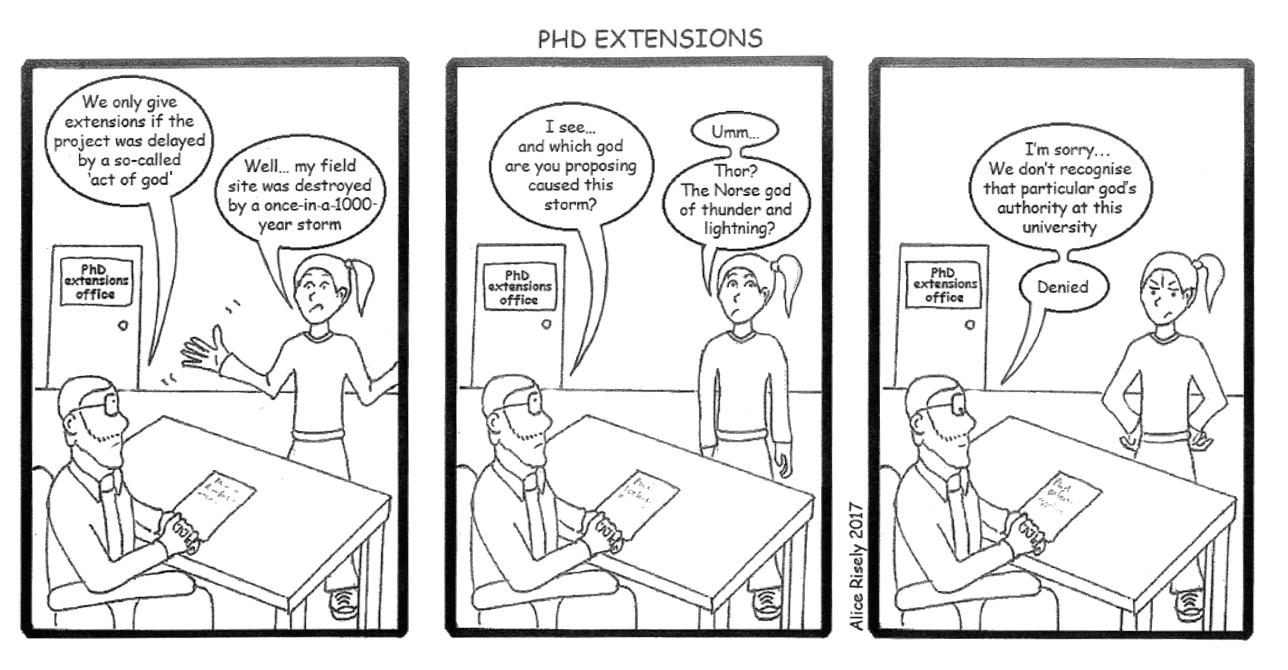
It will be harder to get PhD extensions under the new model.

It will be harder to get PhD extensions under the new model.

Continue reading

Science’s fake journal epidemic

Predatory publishers, peerless reviews and those who fight against the destruction of the scientific approach.

The landscape of scholarly communication falls into two main categories: a paid access business model, where journals require readers to pay for access to an article or a subscription to the entire journal itself; or open access journals, which charge authors to publish but make content available free of charge and without restrictions to readers. The rise in popularity of open access journals has resulted in more than 50 per cent of new research now being made available free online. Legitimate open access journals such as PLOS and BioMed Central have been essential in allowing greater access to science, a higher volume of published work, improved education and a greater scope for scientists to publish negative results.

Jeffrey Beall{credit}Kevin Moloney/The New York Times/Redux/eyevine {/credit}

Continue reading

Q&A: Progress for Congress

A neuroscientist wants to see change in the government — and he’s creating it.

Thomas Prigg is a brain cell circuitry researcher at Carnegie Mellon University in Pittsburgh, Pennsylvania, US. Now he’s using his science skills to fuel his campaign for Congress in 2018. He talks to Nikki Forrester. Continue reading

Ask not what you can do for open data; ask what open data can do for you

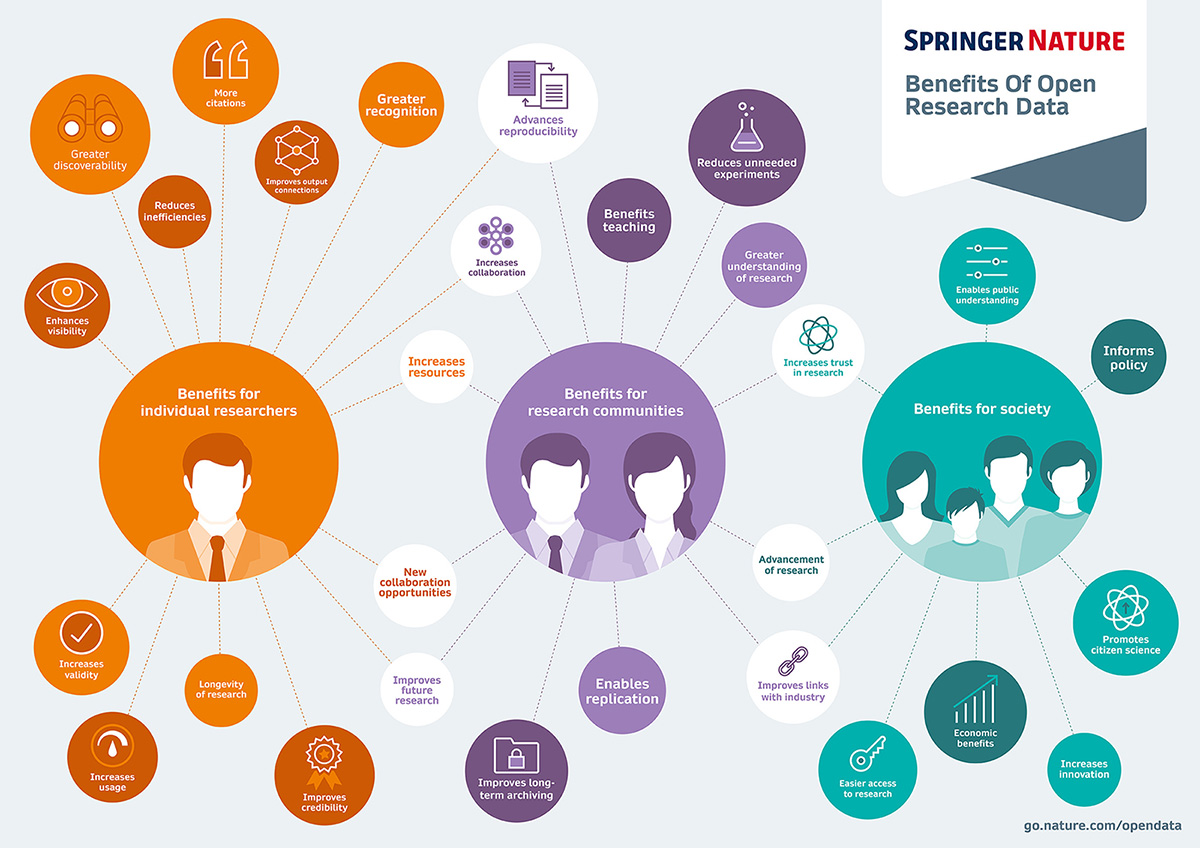
Mathias Astell, marketing manager for Scientific Data and Scientific Reports, outlines the benefits of open research data and provides some tips and tools researchers can use to make their data more open.

It has been shown that research articles receive more citations when they have their underlying data openly linked to them. With this in mind, it’s time to consider not just the ideological reasons for making research data open, but the selfish benefits of openly sharing data that all researchers can (and should) be taking advantage of.

mat1

This infographic can be downloaded under a CC-BY licence here

And as an increasing number of funders mandate data sharing, and publishers start implementing more consistent data policies at their journals, it is worth seriously considering how and why you should make the research data you generate more openly available. Continue reading

The discomfort is worth it: share more

Making sure to communicate with the public is hard and takes time. Scientists should keep doing it, says Jessica Eise.

When David Eagleman, a neuroscientist at Stanford, wrote the New York Times bestseller Incognito, I read it voraciously. The world of the mind opened to me. My subconscious brain took on an entirely new meaning to me. Eagleman’s research felt salient, relevant, and crucial to our understanding and progress as a species.

Knowledge-sharing

{credit}Asonlobo/Wikipedia; CC-BY-SA-4.0{/credit}

Continue reading

Meditation on a Caltrain: Understanding where to travel to next

Exploring options and thinking laterally about where you can use your scientific skills might be the key to successfully transitioning into industry, learns George Busby.

This piece was one of two winners of the Science Innovation Union writing competition, Oxford.

“This is downtown San Francisco, our train’s final stop. Can all passengers please detrain? All detrain please. All detrain.” Perhaps it was the heady fug of jetlag that made this broadcast particularly amusing to my UK-English language sensibilities, but I “detrained” all the same and stepped into the crisp morning air of the Californian rush hour.

I was on the west coast to visit two genetics start-ups as part of a whirlwind three-day tour of the US. With a long postdoc and several first author papers tucked into my belt, I wanted to see if these credentials would pass muster in the tech haven of Silicon Valley. I’ve always found the loneliness of solo work-travel to be highly amenable to strategic thought, and this American adventure was an opportunity to reflect on why I was there and what I wanted.GettyImages-530306679-smaller

Continue reading

Quick profiles: Emma Hilton

Emma Hilton worked as a doctor for nine years, including four in clinical research.  After that, she shifted to pharma. Here she shares her story.

Emma is now Global Medical Affairs Leader for Chronic Obstructive Pulmonary Disease (COPD) in GSK’s Respiratory Division.

As a child, I was fascinated by how things work, especially the human body, and I decided I wanted some kind of career in science. Medicine seemed like the ideal avenue and offered a reassuringly clear path including training and employment prospects.

career-decisions-naturejobs-blog

{credit}iStockphoto/Thinkstock{/credit}

Continue reading