Genetic sequencing tools key to pandemic fight

Indian-born British chemist Shankar Balasubramanian recently won the Millennium Technology Prize, instituted by the Technology Academy Finland, for development of revolutionary DNA sequencing techniques. Vanita Srivastava caught up with him to understand the award winning genetic sequencing work that has widely impacted the fields of genomics, medicine and biology.

[Shankar Balasubramanian is a Herchel Smith Professor of Medicinal Chemistry in the Department of Chemistry at the University of Cambridge, a Senior Group Leader at the Cancer Research UK Cambridge Institute and a Fellow of Trinity College, Cambridge. He won the one million euro prize jointly with David Klenerman.]

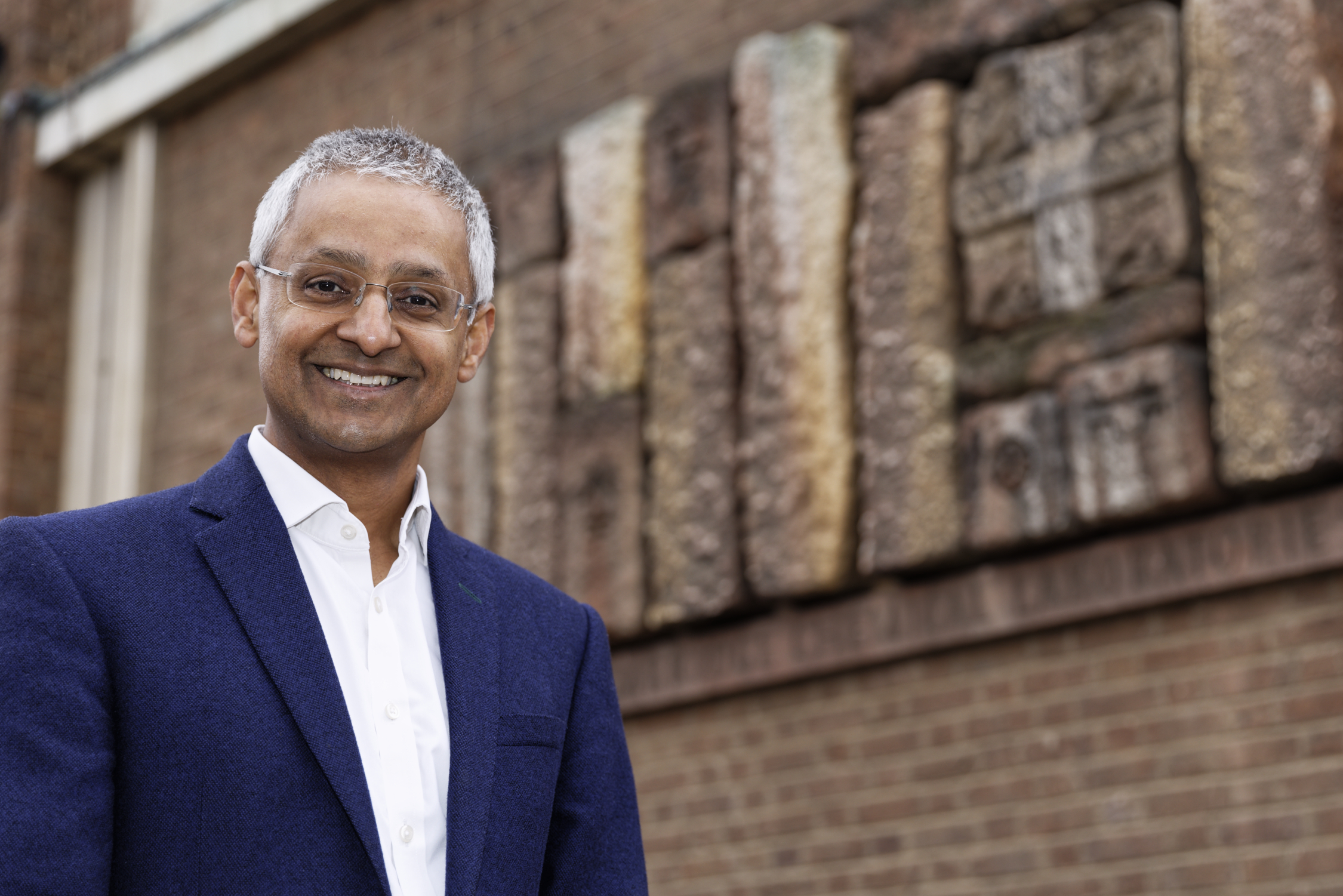
Shankar Balasubramanian{credit}University of Cambridge{/credit}

Q. Tell us about your genome sequencing technology and how it has impacted the course of the COVID-19 pandemic.

A. Prof David Klenerman and I are co-inventors of Solexa-Illumina Next Generation DNA Sequencing (NGS). The technology was fully developed at Solexa into an integrated, commercial system, then further improved by the team in Illumina. This technology has enabled fast, accurate, low-cost and large-scale genome sequencing, which is the process of determining the complete DNA sequence of an organism’s make-up.

During the pandemic, NGS has been providing an effective way to study SARS-CoV-2’s genetic make-up and help us track the viral mutations, which continues to be a great global concern. This work has also helped the creation of multiple vaccines now being administered worldwide and is critical to the creation of new vaccines against new dangerous viral strains.

Q. India is now a hotspot of coronavirus mutants. How can this technology help address problems relating to this?

A. By studying and understanding the genetic make-up of the new mutant using our technology, we can identify its potential as a new threat by knowing how it differs from the other variants. Further, I hope that our technology can be useful in sequencing the genomes of people who have had COVID and trying to get an understanding of why some people are severely affected by the disease and others are asymptomatic. This approach could identify risk factors in specific people that may also be applicable to other viruses in years to come.

Q. What other potential use does this technology have?

A. The technology has a huge transformative impact in the fields of genomics, medicine and biology. It is being applied widely in the basic research of living systems, as DNA and RNA are fundamental to cells and organisms. Aspects of living systems include genetics, the expression of genes, the structure of DNA in the nucleus and differences between cells, to name but a few.

The technology is beginning to be applied in medicine, particularly in the areas of cancer and rare diseases. The applications in medicine will grow as we sequence more human genomes allowing the idea of personalised medicine where diseases are more optimally treated by understanding the individual and the drugs that are used are designed to correct the molecular pathway that has gone in a specific person. It will also be used in agriculture to breed species with desired properties.

Over the past few years, there have been tremendous advances in cancer, both with therapy and also detection and diagnosis. Over the coming decades, the goal is to use this technology to help make some cancers become manageable diseases because they are detected sufficiently early and it’s clear what has to be done. This could also hopefully be extended to other complex diseases such as heart disease and Alzheimer’s disease.

Q. What are the challenges to personalised genomic medicine?

A. Developing an effective and efficient infrastructure for sequencing patients on a large scale and using their genetic profile to help make the decisions in regard to the prevention, diagnosis, and treatment of their disease is currently the biggest challenge.

Nature India Photo Contest 2020: Finalist #6

Here is finalist #6 in the Nature India Photo Contest 2020 themed ‘pandemic’:

Partha Paul, Kolkata, West Bengal

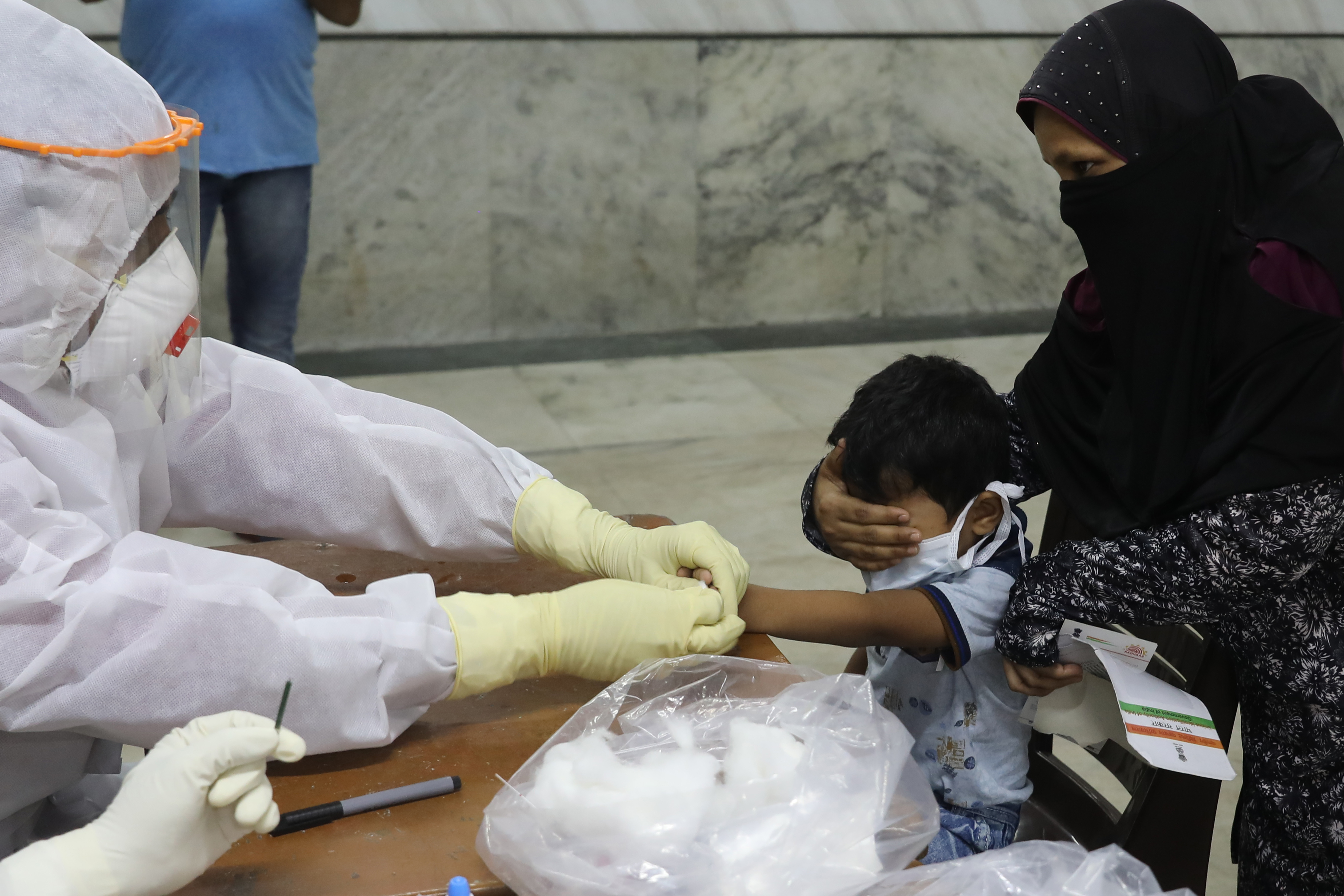
Photo Caption: Sampling immunity

“A health worker collects blood sample from a child in Kolkata, West Bengal as part of a sero survey to determine prevalence of SARS-CoV-2 in populations. In the middle of the COVID-19 pandemic, these surveys were conducted to determine what part of a population had developed antibodies. This was the first day of antibody tests in Kolkata’s Belgachia slum, one of the worst affected by COVID-19. This child, seen here with her mother, came from a ‘red zone’ where the government had enforced maximum containment measures.” — Partha Paul

Many congratulations Partha for your second entry in the top 10!

The Nature India editorial and design teams have chosen ten stunning finalists, that will be rolled out (in no particular order of merit) over the next few days. These entries have been judged for novelty, creativity, quality and print worthiness. Nature India’s final decision to chose the winner will be partly influenced by the engagement and reception these pictures receive here at the Indigenus blog, on Twitter and on Facebook. To give all finalists a fair chance, we will consider the social media engagement each picture gets only during the first seven days of its announcement. The final results will be announced sometime in early February 2021.

Watch this space as we announce the other finalists in the coming days. Like, share and comment on your favourite photos on Twitter and on Facebook with the hashtag #NatureIndphoto to make them win.

The winning pictures will get cash prizes worth $350, $250 and $200 respectively. The top 10 finalists will be featured here, on Nature India’s blog Indigenus and in our subsequent annual issue.

The winner and runners-up will also receive a copy of the Nature India Annual Volume 2020 and a bag of Nature Research goodies. Winning entries stand a chance of being featured on the cover of one of our forthcoming print publications.

Nature India Photo Contest 2020: Finalist #5

Rolling out finalist #5 in the Nature India Photo Contest 2020 themed ‘pandemic’:

Sourav Karmakar, Kolkata, West Bengal

Photo caption: Faithful fielder

“Before the COVID-19 pandemic, this old man walked in a group with other senior citizens at Lodhi Gardens in New Delhi, India. They followed a schedule – evening-walk, physical exercise, badminton and a chat session. In the new normal, most senior citizens are home-bound. This man found a new companion in his dog and tweaked his fitness schedule with the canine sports partner.” — Sourav Karmakar

Congratulations Sourav for getting a spot in the top 10 of the Nature India Photo Contest 2020!

The Nature India editorial and design teams have chosen ten stunning finalists, that will be rolled out (in no particular order of merit) over the next few days. These entries have been judged for novelty, creativity, quality and print worthiness. Nature India’s final decision to chose the winner will be partly influenced by the engagement and reception these pictures receive here at the Indigenus blog, on Twitter and on Facebook. To give all finalists a fair chance, we will consider the social media engagement each picture gets only during the first seven days of its announcement. The final results will be announced sometime in early February 2021.

Watch this space as we announce the other finalists in the coming days. Like, share and comment on your favourite photos on Twitter and on Facebook with the hashtag #NatureIndphoto to make them win.

The winning pictures will get cash prizes worth $350, $250 and $200 respectively. The top 10 finalists will be featured here, on Nature India’s blog Indigenus and in our subsequent annual issue.

The winner and runners-up will also receive a copy of the Nature India Annual Volume 2020 and a bag of Nature Research goodies. Winning entries stand a chance of being featured on the cover of one of our forthcoming print publications.

Nature India Photo Contest 2020: Finalist #4

Unveiling finalist #4 in the Nature India Photo Contest 2020 themed ‘pandemic’:

Kaushik Dutta, Kolkata, West Bengal

Photo caption: Personal protection

“This little boy, struggling to come to terms with life with a mask, seems to believe that his mother might protect him from all calamities, even an unseen virus. The healing and influencing power of mothers in protecting families has been at the forefront of many awareness campaigns and immunisation programmes during public health emergencies such as the COVID-19. Clicked at the Howrah station in West Bengal, India.” — Kaushik Dutta

Congratulations Kaushik for making it to the top 10 in the Nature India Photo Contest 2020!

The Nature India editorial and design teams have chosen ten stunning finalists, that will be rolled out (in no particular order of merit) over the next few days. These entries have been judged for novelty, creativity, quality and print worthiness. Nature India’s final decision to chose the winner will be partly influenced by the engagement and reception these pictures receive here at the Indigenus blog, on Twitter and on Facebook. To give all finalists a fair chance, we will consider the social media engagement each picture gets only during the first seven days of its announcement. The final results will be announced sometime in early February 2021.

Watch this space as we announce the other finalists in the coming days. Like, share and comment on your favourite photos on Twitter and on Facebook with the hashtag #NatureIndphoto to make them win.

The winning pictures will get cash prizes worth $350, $250 and $200 respectively. The top 10 finalists will be featured here, on Nature India’s blog Indigenus and in our subsequent annual issue.

The winner and runners-up will also receive a copy of the Nature India Annual Volume 2020 and a bag of Nature Research goodies. Winning entries stand a chance of being featured on the cover of one of our forthcoming print publications.

Nature India Photo Contest 2020: Finalist #3

With very similar entries, there are two ‘finalists’ number three in the Nature India Photo Contest 2020:

Partha Paul, Kolkata, West Bengal

Photo caption: New beginnings

“Newly married couple Avishek Bachhar (25) and Puspa Jana (22) leave the Siddeshwari temple in north Kolkata after seeking the goddess’s blessings. They tied the knot with only a handful of relatives due to strict restrictions on assembly of people during the COVID-19 pandemic. Marriages in India are generally grand events with hundreds of people participating. Despite the measures, West Bengal recorded over 5.5 lakh cases of infection and 9712 deaths in 2020.” — Partha Paul


Anindya Chattopadhyay, New Delhi

Photo caption: Present tense

“A little girl enjoys the attention of the newlyweds, as the bride steals a quiet moment with her groom during a ‘new normal’ wedding ceremony at Kirti Nagar in New Delhi. Despite the pandemic, thousands of weddings took place across India amidst strict restrictions and anxiety.” — Anindya Chattopadhyay


Congratulations Partha and Anindya for sharing the finalist number three slot in the Nature India Photo Contest 2020!

If you are rooting for one of these two pictures, you can make a mention of the picture caption or the name of the photographer in the comments here or on social media (Twitter, Facebook).

The Nature India editorial and design teams have chosen ten stunning finalists, that will be rolled out (in no particular order of merit) over the next few days. These entries have been judged for novelty, creativity, quality and print worthiness. Nature India’s final decision to chose the winner will be partly influenced by the engagement and reception these pictures receive here at the Indigenus blog, on Twitter and on Facebook. To give all finalists a fair chance, we will consider the social media engagement each picture gets only during the first seven days of its announcement. The final results will be announced sometime in early February 2021.

Watch this space as we announce the other finalists in the coming days. Like, share and comment on your favourite photos on Twitter and on Facebook with the hashtag #NatureIndphoto to make them win.

The winning pictures will get cash prizes worth $350, $250 and $200 respectively. The top 10 finalists will be featured here, on Nature India’s blog Indigenus and in our subsequent annual issue.

The winner and runners-up will also receive a copy of the Nature India Annual Volume 2020 and a bag of Nature Research goodies. Winning entries stand a chance of being featured on the cover of one of our forthcoming print publications.

Nature India Photo Contest 2020: Finalist #2

Announcing the second finalist in the Nature India Photo Contest 2020:

 Amitava Chandra, Kolkata, West Bengal

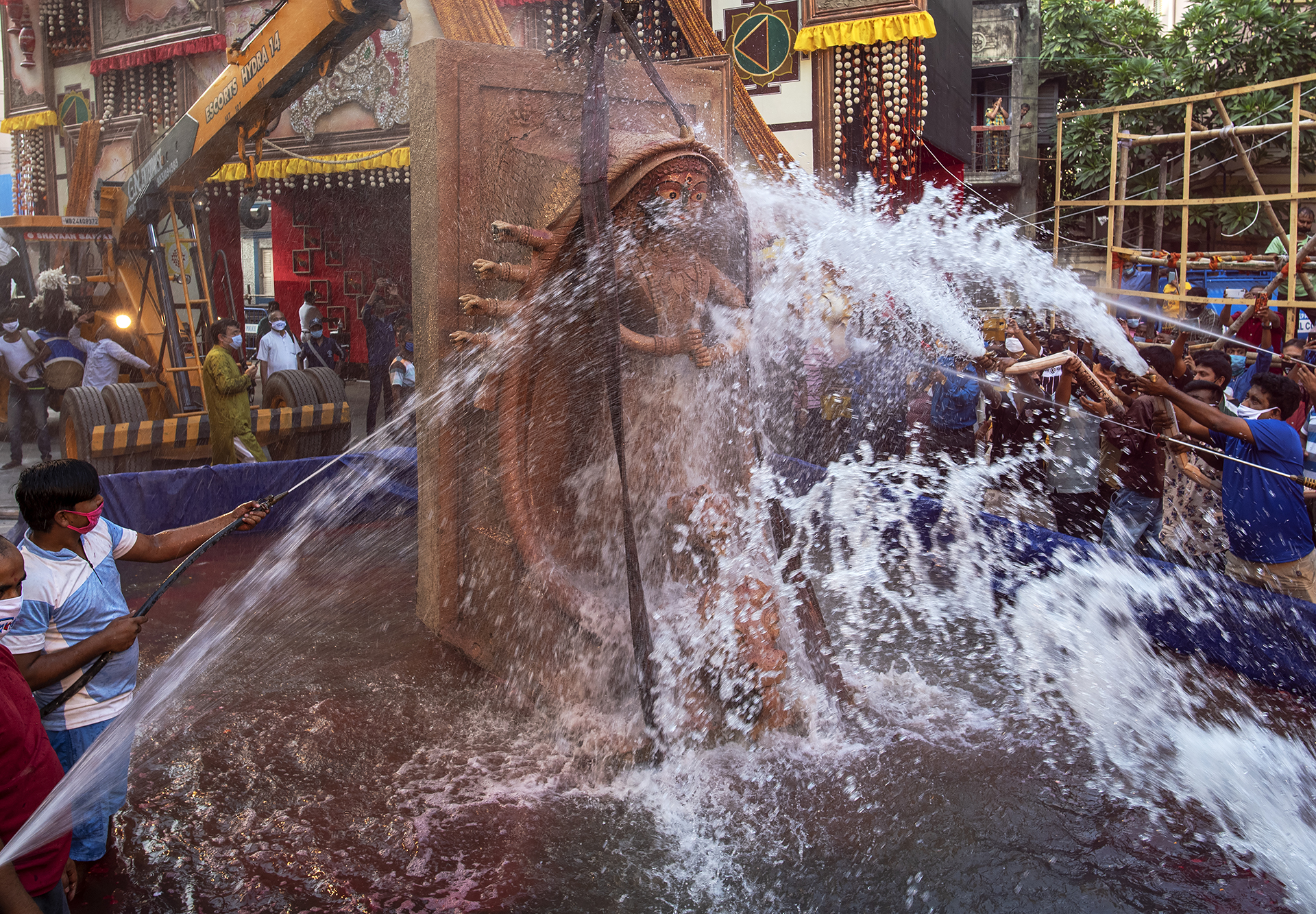
Photo caption: Immersive innovation

“The annual Durga Puja festivities end with the immersion of the gods’ idols in river Hooghly, a tributary of the Ganges. Every year thousands of people take part in the idol immersion processions. Following COVID-19 restrictions, the festival organising committees created temporary water bodies to ‘immerse’ the clay-made idols by dissolving them with high power water jets, like in this picture taken at the Tridhara Sanmilani Puja Pandal, Kolkata on 26 October 2020. The benefits were two-fold – no processions, and no pollution of the Ganges’ waters.” — Amitava Chandra

Congratulations Amitava for making it to top 10!

The Nature India editorial and design teams have chosen ten stunning finalists, that will be rolled out (in no particular order of merit) over the next few days. These entries have been judged for novelty, creativity, quality and print worthiness. Nature India’s final decision to chose the winner will be partly influenced by the engagement and reception these pictures receive here at the Indigenus blog, on Twitter and on Facebook. To give all finalists a fair chance, we will consider the social media engagement each picture gets only during the first seven days of its announcement. The final results will be announced sometime in early February 2021.

Watch this space as we announce the other finalists in the coming days. Like, share and comment on your favourite photos on Twitter and on Facebook with the hashtag #NatureIndphoto to make them win.

The winning pictures will get cash prizes worth $350, $250 and $200 respectively. The top 10 finalists will be featured here, on Nature India’s blog Indigenus and in our subsequent annual issue.

The winner and runners-up will also receive a copy of the Nature India Annual Volume 2020 and a bag of Nature Research goodies. Winning entries stand a chance of being featured on the cover of one of our forthcoming print publications.

Nature India Photo Contest 2020: Finalist #1

It’s time to roll out the shortlist of the Nature India Photo Contest 2020.

The 7th edition of our photo contest themed “pandemic” opened in December 2020 and has received some remarkable entries from around the world.

We invited entries that capture not just the hardships of the COVID-19 pandemic but also the hope of an infection-free future.

Nature India is covering various aspects of the pandemic since the first case of COVID-19 was detected in India. Our stories have taken a cross-cutting approach — going beyond hard core science into the socio-economic, cultural and psychological fall outs of the pandemic. As an extension of that coverage, it was only natural to consider “pandemic” as the theme for the annual photo contest.

Like always, entries came from a mix of amateur and professional photographers, scientists and non-scientists, mobile cameras and high-end DSLRs.

The Nature India editorial and design teams have chosen ten stunning finalists, that will be rolled out (in no particular order of merit) over the next few days. Nature India’s final decision to chose the winner will be partly influenced by the engagement and reception these pictures receive here at the Indigenus blog, on Twitter and on Facebook. To give all finalists a fair chance, we will consider the social media engagement each picture gets only during the first seven days of its announcement. The final results will be announced sometime in early February 2021.

So here’s finalist number one in the Nature India photo contest 2020:

Deepak Kumbhar, Kolhapur, Maharashtra, India.

Photo caption: Home-bound

“COVID-19 affected the mental health of millions of people worldwide. Children in India suffered loneliness due to long lockdowns. At an age when the outdoors and physical activity are necessary for their mental and physical growth, children stuck at home were glued to digital devices for learning and entertainment. This photo was taken in April 2020 during the lockdown in the small city of Kolhapur in western India. A boy is seen with a non-digital plaything – a carrom board – on the terrace of his home, but there’s no one to play with him.” — Deepak Kumbhar.

Congratulations Deepak for making it to top 10!

Watch this space as we announce the other finalists in the coming days. Like, share and comment on your favourite photos on Twitter and on Facebook with the hashtag #NatureIndphoto to make them win.

The winning pictures will get cash prizes worth $350, $250 and $200 respectively. The top 10 finalists will be featured here, on Nature India’s blog Indigenus and in our subsequent annual issue.

These entries have been judged for novelty, creativity, quality and print worthiness. The winner and runners-up will also receive a copy of the Nature India Annual Volume 2020 and a bag of Nature Research goodies. Winning entries stand a chance of being featured on the cover of one of our forthcoming print publications.

A conscience-stirring pandemic

Between treating patients and churning out a record number of scholarly publications, the COVID-19 pandemic has seen a productivity peak for many medical professionals. In this poignant essay, Debanjan Banerjee, a practicing psychiatrist at the National Institute of Mental Health and Neurosciences (NIMHANS), Bengaluru, talks about the many levels at which such hyperactivity affected professionals.

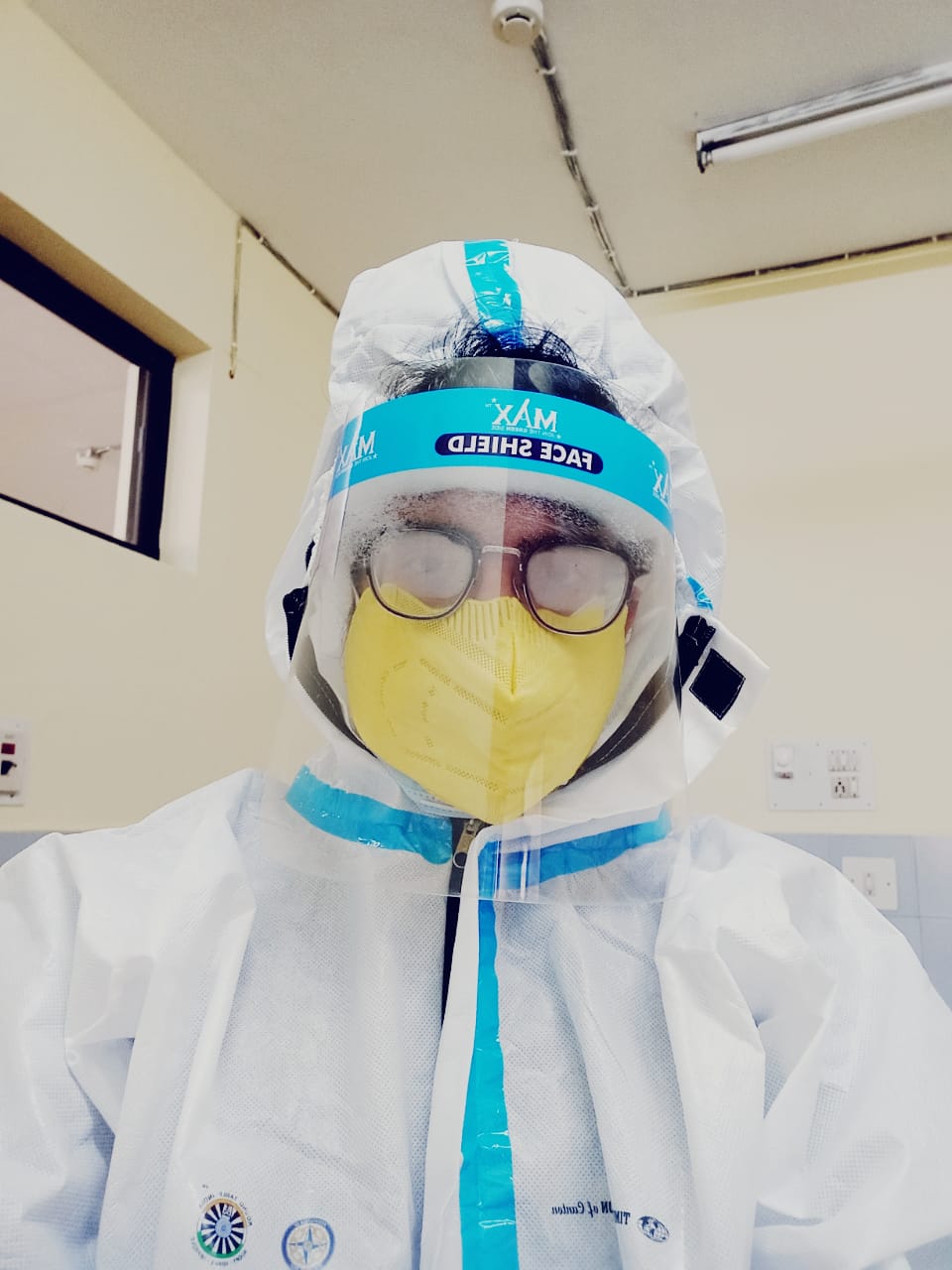
Debanjan Banerjee in his PPE.

Another ‘ahead of print’ issue was out. I was anxiously scanning it for my article. There it was! The next obvious thing to do would be to announce this exciting news on all possible social media channels, ‘humbly’ displaying my scientific and literary skills, proud of my name leading the decorated list of authors.

“One more,” I said, as I silently thanked the pandemic for turning an unusual year, clinically speaking, into an equally productive academic one. From the time COVID-19 was declared a pandemic, the rate at which I have churned scholarly articles is perhaps only second to the rate of the viral infection itself. Adding my two cents to the academic discourse around mental health issues stemming from COVID-19, I have rightfully earned my share of the pandemic pie as a young researcher.

With endless concepts and theories, innumerable correlations and associations, COVID-19 statistics have piled up faster than researchers can digest. As a medical professional, I witnessed an unprecedented quest to learn, write, explore and get to the bottom of every possible angle related to the pandemic. Specialties and duties have blurred: even as a psychiatrist, I speak about the viral structure, my pathologist friend comments on the behavioral effects of the virus, while virologists debate on treatment protocols. We are all involved in COVID-duty. COVID-19 has been a great leveler: first, it renamed physicians and healthcare workers as “front-liners” imposing an enhanced sense of responsibility as well as perceived stigma about them; second, it created almost universal expertise about the virus.

Information became an essential commodity. Almost everyone knew something about the outbreak, and none wanted to miss the chance to display that knowledge. Definitely not me, the pandemic added publications to my credit and I was secretly enjoying the closure of out-patient departments.

Busy in such self-obsessive ruminations that stemmed from the freshly minted publication, I didn’t hear my pager ring twice, then thrice. Finally, an irritated nurse in the emergency room mumbled something that sounded like “clinical duties first priority”. Reluctantly, I dragged myself out of my ‘ahead of print wonderland’, to hear some shocking news that made me dash to the COVID-designated ward. I barely had time to slip into the Personal Protective Equipment (PPE) as I digested the information – a famous business tycoon’s son had succumbed to the infection. Management of such ‘high profile’ cases is always a nuisance, and throughout my graduation years, I wished we had a chapter dedicated in the medical curriculum to this lesser discussed challenge of medical practice. I marched into the ward like an astronaut, media persons waiting outside to be briefed.

COVID-19 deaths have extra formalities to take care of. I met my masked and suited colleagues, each clumsy in their ‘gas chambers’, and visibly edgy as the businessman’s family and followers waited outside. I was the treating resident in charge of the patient the week before, and hence my presence was necessary for the last ‘medical rites’. India’s death toll had just crossed one lakh, and I was trying to guess what number would be assigned to this death, all the while impatient to get back to my just published paper.

As the clinical obligations lingered, I looked at the dead body of the cheerful young man with whom I had discussed cricket, gardening and romantic post-recovery surprise plans for his fiancée. Death is neither uncomfortable nor strange for my profession but I suddenly shuddered at its uncertain nature. When we heralded 2020 amid celebrations, did we know that more than two million of us would not see another new year?

As a psychiatrist, communicating with patients and their families is a large part of my job. I prepared for the ensuing tough dialogue with the bereaved family. The father and the uncle were waiting outside the ward, surrounded by family members in a distinct circle, all in PPE, masks and gloves. For a second, I mistook them for physicians. Then I realised that the circle was to ensure social distancing from potential infection carriers like me.

An elaborately rehearsed explanation of the death has always fallen short during such conversations. In what seemed like a very lengthy discussion, the family wanted to know of precautions for future (do we need to fumigate the house?), pondered over possible instances of transmission by their now dead kin, and the statistical chances of them being infected already. The concerns seemed a bit illogical to me considering a paid caregiver was in charge all this while. As a matter of courtesy, I asked if they wanted to have a last glance at their family member through the COVID-ICU window. They seemed to tighten the circle and left abruptly saying the cremation formalities would be handled by a separate team. I felt sorry for the young man, who was accorded a celebrity status in the hospital till yesterday. His corpse had no such privilege.

I was going back into the ward when someone tugged at my PPE. A boy, maybe all of five, in a tattered T-shirt and barely anything below the waist, was standing there, right next to the infectious diseases ward without a mask or gloves! Before I could react, a hospital guard came running, apologising for the transgression, “Sorry Sir, I tried my best, this fellow just ran past me”. Cautious of guarding the child from any possible infection from my PPE, I stepped back, crouched and asked him what he wanted. He was sniffling and mumbled something in the local language pointing towards the general ward. He had come looking for his father, another COVID-19 fatality. He lived in the slum next to the hospital. The motherless child was not allowed to stay with his father and his attempt to bypass the hospital guards succeeded only today, when it was too late. I explained to him that it was risky being near the COVID-19 ward without protective gear. He smiled, his teeth darker than his skin, and unfolded his little hands to show a facemask darkened with days of use, strings torn and numerous tiny holes on one side. He had exchanged his silver bracelet with a local vendor for this mask and taken it to a nearby temple for prayers. He believed it would protect his father from the killer virus.

I don’t know how the guards managed to take care of the child. I had to leave, breathless and feeling sick. Together, the choke of the PPE, a distended bladder, blurred vision and a burdened conscience had taken a heavy toll on me.

Half an hour later, I managed to get back from the reflective phase into being the stoic physician, the iron-willed ‘front-liner’ who has seen it all. Proud of my unceasing contribution to pandemic literature, I started re-reading with content my latest title: “COVID-19: The Great Equalizer”.

(Debanjan Banerjee can be reached at Dr.Djan88@gmail.com.)

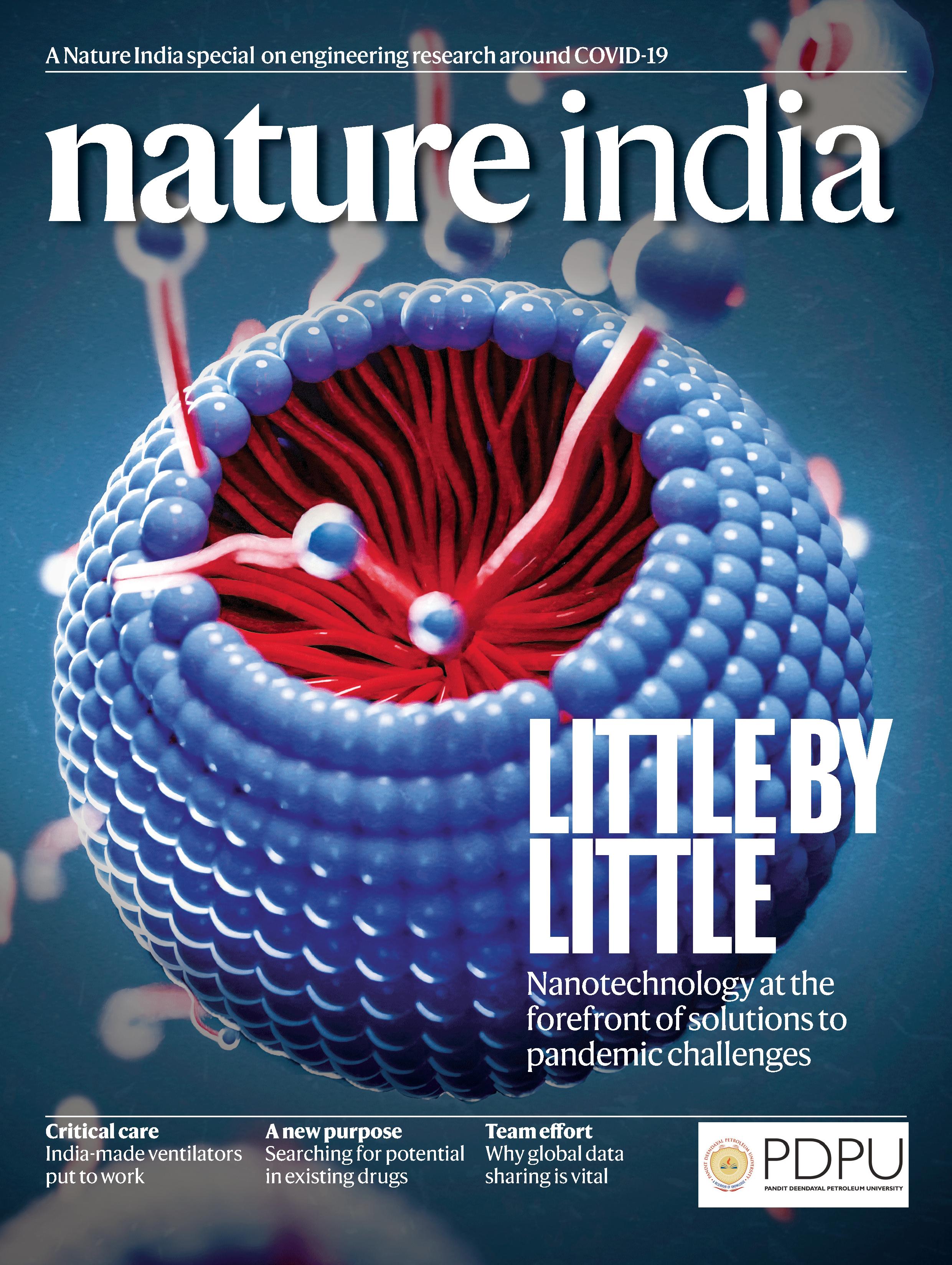
NI Special Issue on COVID-19 Engineering Solutions is out

Cover illustration: Youssef A Khalil

Very early on it became clear that the COVID-19 pandemic was not just a challenge for scientists and medical professionals. Almost a year into the coronavirus’s rampage across the world, there’s no doubt about the long-term impact that SARS-CoV-2 will continue to have on every facet of human life — from healthcare to education, social interaction, businesses, environmental concerns, and political processes.

India’s large population, governance, and creaky healthcare infrastructure have traditionally hampered the quick and smooth roll out of public health interventions. With this pandemic, it wasn’t any different. Nature India covered the evolution of the crisis from several angles, going beyond the strict remit of science. Our coverage embraced a new normal in these unprece­dented times. We looked at the physical and biological aspects of the virus extensively, and also published stories of how India, with its 1.2 billion-strong population, was responding to the health emergency. This resulted in Nature India’s first special issue on the COVID-19 crisis, published in June 2020.

Coping with a major public health catastrophe lies not just in vaccines and treatments, but also technologies that the world’s scientists quickly geared up to invent or repurpose. Within months of the novel coronavirus’ spread we saw the development of new ventilators, rapid antigen tests, personal protection equipment, and sanitization apparatus.

Nature India’s second COVID-19 special, focuses on such engineering and technology solu­tions being tested and deployed. We take a look at front-runners in nanomaterial design that are helping advanced antiviral and antibacterial therapies; the state-of-the-art in critical care ventilators and how in-silico docking studies are bringing new drug molecules.

The issue presents a selection of commentaries published in various Nature research journals highlighting the use of artificial intelligence tools and machine learning in scaling approaches for data, model and code sharing, and in adapting results to local conditions. Nanotechnology is offering hope in antimicrobial and antiviral formulations, and highly sensitive biosensors and detection platforms.

We ask whether nanoscientists can take better advantage of technology and automation in their laboratories to reveal new information about COVID-19. A host of reverse-engineered commercial medical equipment and devices for healthcare workers have flooded the market. While these ‘low-tech’ solutions are welcome for resource poor countries such as India, we argue that for real impact, they must affiliate to approved designs. We also shine a light on pandemic-fighting photonics tools (X-ray imaging and ultraviolet sterilization), the strengths and ethical questions around smartphone surveillance of the pandemic, and discuss why it is important for governments to implement public health measures aided by technology.

At the end of a trying year, we hope these new perspectives bring additional hope in efforts to tame the novel coronavirus.

The Nature India COVID-19 Engineering Solutions special issue is free to download here.

Why mental health discourse must transcend the pandemic

Mental health of societies is justifiably under the spotlight during the COVID-19 pandemic. However, psychiatrist Debanjan Banerjee of the National Institute of Mental Health and Neurosciences (NIMHANS) Bengaluru is sceptical that the important issue may be pushed back into obscurity once the crisis ends.

Debanjan Banerjee

Being a psychiatrist, I have been overwhelmed with the explosion of data, discussion and debate on mental health from even before COVID-19 was declared a pandemic by WHO in March 2020. Surprisingly, a virus has suddenly helped peak interest in an aspect of public health that has long been overshadowed in our societies by stigma and neglect.

In the last six months, there hasn’t been a single day that I haven’t been invited for webinars or media appearances on mental health or read a research paper or article around this. Various online fora discuss the ‘pertinent matter’ daily. I have discussed, debated and advised on topics ranging from psychiatric disorders to psychological effects  of COVID-19 on populations or special groups (based on age, gender or social status), as well as the future implications of the pandemic. Mental health journals are publishing special supplements related to psychiatry or psychological problems of COVID-19. Like many of my peers, the fertile ground created by the virus has resulted in several publications to my credit in these journals.

The rising curve of ‘COVID-19 related mental health’ provides a tough challenge to the slope of the COVID-19 case curve itself. But has it helped our service delivery and in estimating the mental health problem in this crisis? Perhaps not. Mental and psychosexual health has always been important. Did we need a pandemic to open our eyes to that?

“To worry or not to worry”

That is the most common question I face in public online discussions and media interviews. Has the COVID-19 pandemic impacted psychological health, or are we overestimating the threat? –people seem to be quite confused about that.

So here’s a rational approach to unpack this question – unlike other natural or human-made disasters, pandemics are not ‘a one-shot’ events. The mortality and morbidity continue to rise for months to years, and the rippling effects span the socio-economic, political, psychological and psychosocial dimensions.

COVID-19 related fear, health, anxiety, stigma, stress and sleep disturbances have affected the world’s population. Added to that are financial constraints, disruption of social structure, the effects of physical distancing, lockdowns and the ‘misinfodemic’ (misinformation epidemic).

Population-based research in India, China, UK, USA, Brazil and Italy has established the worsening of psychological status due to the pandemic. Though limited data exists on people already suffering from mental disorders before COVID-19, hypothetically they might be more vulnerable to the effects of chronic stress and trauma. Besides, many of them might lack access to mental healthcare and medications due to travel restrictions. The other vulnerable groups are the frontline workers, the students, the children, elderly and socio-economically impoverished groups, including the migrants.

Interestingly, even though generic measures of ‘stress’ and ‘quality of life’ get reflected in classical quantitative research, the needs for mental wellbeing are mostly similar across the world.

One size does not fit all

I read somewhere that “COVID-19 is a great equalizer”. Of course, it is not.

The needs of a migrant labourer stranded in an overcrowded railway platform are far different from a rural healthcare worker with no access to personal protective equipment (PPE). The factors governing resilience vary widely between someone trapped with an abusive partner and suffering violence during the lockdown and an adolescent deprived of intimacy with his/her partner for months together. In short, COVID-19 has ironically highlighted the crevices in our understanding of what mental health constitutes, the same understanding that has surreptitiously governed the attitudes of the general population and physicians alike for a long time. Beyond the rigid diagnostic criteria of psychiatric disorders and the ‘medicalization’ of mental health, the pandemic displays that psychological wellbeing is as abstract as the ‘mind’ itself and also highly individualized.

It is natural to be worried or anxious during a pandemic. Anxiety is the natural defence to deal with the crisis, and being ‘perfectly composed’ is a myth. The grey but vital line of what constitutes ‘acceptable stress’ and what needs professional help can be markedly polymorphic, again depending on personal and social circumstances.

Contrary to common advocacy recommendations, no one suit fits all. When the socially unprivileged are deprived of basic amenities like food, water, shelter and security, these needs seek much urgent attention than anything else. Mental health is intricately linked with physical, sexual and social health. Divorcing these contexts and giving it a purely ‘psychological’ shape is an injustice to the human mind itself.

Mental health: A piece of the pie

Feeding off the confusion and anxiety around COVID-19 is an alarming new brigade of life-coaches, happiness experts, faith-healers, counsellors, motivators, speakers and theorists – each claiming that they are the best ‘distress-relievers’. This is of grave concern.

Some of these healing methods and their purveyors have been controversial and merit scientific scrutiny. Psychological health, seen as an accommodative arena, has traditionally been an attractive breeding ground for numerous such ‘professional experts’ in mental health. Improvement in any medical disorder (including psychiatric disorders) depends largely on the patient’s trust in the therapist or the doctor-patient relationship, and this factor is exploited many times in advertisements and endorsements about such professions.

Faulty advice can harm patients of psychological distress and disorders. The underlying societal stigma and marginalization against the mentally ill have only helped putting them “away from the society” for ages. The same stigma is prevalent against those testing COVID-19 positive or those working on the frontline exposed to viral risk. Stigma and prejudice are an integral part of the ‘collective mental health’ and are often under-detected, as they cannot be categorized as ‘disorders’.

Social problems that affect mental health – poverty, homelessness, gender-based discrimination, ageism, domestic violence, deprivation of human rights and social injustice – are often politicized or discussed for academic obligations but rarely addressed with sincerity, either at an individual or administrative level. These lacunae get unmasked during a biopsychosocial threat like COVID-19, further re-enforced by the socially-dissociated storm of sudden mental health promotion and awareness.

It is important to realise that mental health can only be conceptualized as holistic psychosocial and psychosexual health. A number of factors are involved in the genesis of stress and trauma during a crisis. That necessitates an assumption and bias-free approach, sensitivity, empathy towards the underprivileged, administrative enthusiasm and collective understanding of the importance of mental health irrespective of the pandemic.

Will it fizzle out?

Mental health, unlike many other disciplines, is quickly capitalised and politicised for short-term gains. My scepticism is that, like any other piece of popular news, the relevance of this ‘hot and in-demand topic’ will fizzle out soon after it has served its purpose.

The most recent example of such event-driven concern is that of a Bollywood film star’s death by suicide, which gave way to the usual conspiracy theories alongside online awareness drives around depression and suicide prevention. I received numerous calls with inquiries on the ‘psychological premise’ of suicide and how it can be prevented.

What we fail to understand is that like diabetes, hypertension, strokes or heart attack, psychiatric problems are also better prevented. The approach of prevention starts right when a child is born, or a family is started. Environmental influences, parenting, education, upbringing and social interactions have as much a role to play in the genesis of mental health problems as genetics. But unlike genetic influence, the other factors can be modified, which gives us a wider angle of interventions. It is rather pointless discussing and criticising suicides with hypotheses about how they could have occurred, as one can’t second guess or retrospectively prevent the premature ending of a life.

The debate around psychological wellbeing during the pandemic will continue enriching our academic and professional lives.  However, whether the numerous webinars, articles, guidelines, Ted talks and public lectures will penetrate the concrete social shell to destigmatize mental health is doubtful.

When the pandemic ebbs, this heightened sensitivity about psychological concerns should not. That might help global mental health and sharpen our preparedness for such crises in future.

Nature India’s latest coverage on the novel coronavirus and COVID-19 pandemic here. More updates on the global crisis here.