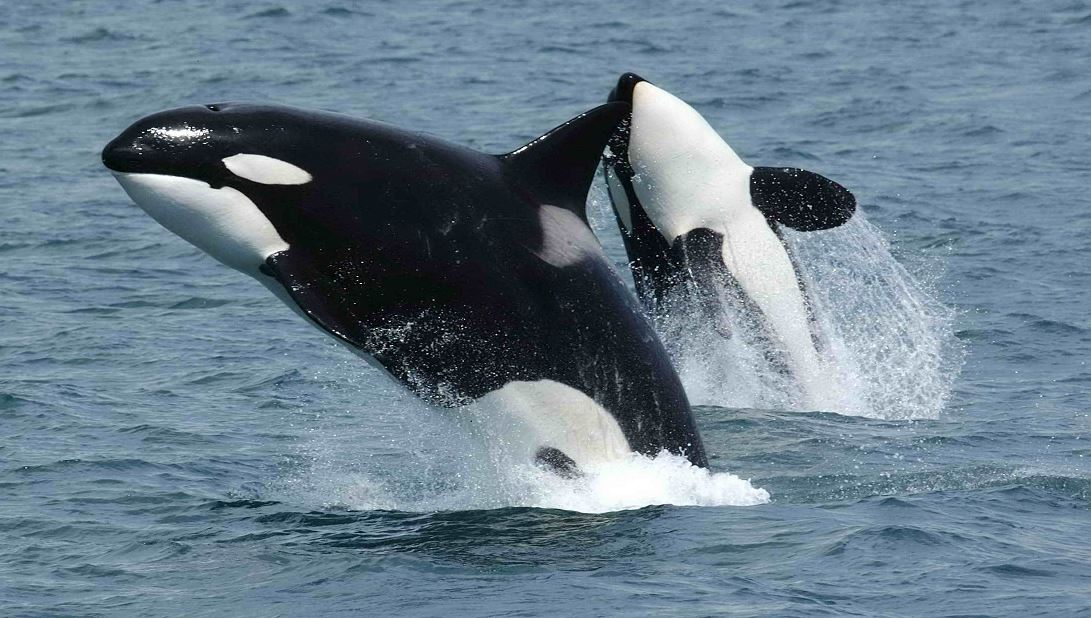
Looking back: Toxic PCB levels in European orcas and other dolphins

Guest blog by Paul Jepson, Institute of Zoology at the Zoological Society of London (ZSL), UK
Earlier in 2016 Scientific Reports celebrated its fifth anniversary. You can view our interactive infographic and blogs marking this occasion here.

As this fifth anniversary year draws to a close, we’ve got back in touch with authors from two popular papers from recent years.

Now that some time has passed, we wanted to know about their experience publishing with the journal, what impact they felt their research has had and if there’s been any surprises along the way.
Last week we posted an interview with Alex Greenwood, author of the study “Anti-NMDA Receptor Encephalitis in the Polar Bear (Ursus maritimus) Knut”.

In this blog, we’ve spoken another Scientific Reports author: Paul Jepson. In January 2016, Dr Jepson and his colleagues published the study “PCB pollution continues to impact populations of orcas and other dolphins in European waters” in Scientific Reports.

Here’s what he had to say about the research.

Could you give a brief overview of your study?

The few remaining killer whale populations in European waters have very low, or zero rates of reproduction, and are close to extinction in industrialised parts of Europe. Polychlorinated biphenyls (PCBs) are chemical pollutants which were banned in the EU in the mid-1980s, but after an initial drop in concentrations following the ban, they have now stabilized across Europe in humans, fish and wildlife.

The goal of the study was to assess the exposure to — and likely effects of — specific chemical pollutants including PCBs in European whales, dolphins and porpoises (cetaceans). We found that PCBs were at excessively high concentrations in the blubber of several marine apex predator species across Europe, including killer whales and bottlenose dolphins, and were associated with long-term and on-going population declines.

Our results suggest that much more work is needed to mitigate PCB contamination of the marine environment, and to comply with the Stockholm Convention that requires the reduction and eventual elimination of large sources of PCBs and other persistent organic pollutants.

What impact would you say your paper has had?

The paper was only recently published but it has been widely reported in newspapers and by other media, globally. The PCB issue — as based on our paper — also featured on the BBC current affairs programme Newsnight.

A public meeting about PCBs in killer whales and dolphins in Europe was held at the Zoological Society of London (ZSL) in March, where I spoke along with two other speakers. The meeting had the second largest audience for a ZSL public meeting ever and, after a lively Q&A session, Professor Ian Boyd, Chief Scientific Adviser at the Department of Environment, Food and Rural Affairs, closed the event.

This new cetacean PCB data has quickly fed into various international scientific and policy forums, including the Working Group for Marine Mammal Ecology (WGMME) of the International Council for the Exploration of the Seas (ICES). The recent ICES WGMME report (2016) concludes that PCBs pose the greatest threat to bottlenose dolphins and killer whales throughout the Northeast Atlantic region. The ICES also provide rigorous scientific advice to the Convention for the Protection of the Marine Environment of the North-East Atlantic (OSPAR) — including EU compliance with the Stockholm Convention.

Were any of your findings unexpected?

The main finding that very high PCB concentrations still persist in Europe — over three decades after the EU ban on PCB use / manufacture — has surprised a lot of people, including scientists who thought the ban would result in a gradual decline in PCBs in all biota. In fact, Europe has the highest PCB exposures in the marine environment globally. The very low reproductive rates in some of the highly PCB-contaminated resident/coastal bottlenose dolphins and killer whales are highly consistent with known PCB effects on reproduction. This is a very depressing finding, because if an apex predator population effectively stops reproducing, it will eventually disappear.

Another surprise was the very high PCB exposures in bottlenose dolphins and killer whales around the Iberian Peninsula. We have known that the Mediterranean Sea has been a pollution hotspot for many years, but the very high PCBs levels in bottlenose dolphins and killer whales on the Atlantic side of the peninsula also rather surprised us. Clearly action is urgently needed to dispose of large stocks of PCB-contaminated materials, especially in France and Spain.

Was there a particular reason you chose to publish in Scientific Reports?

The journal is highly respected and open access.  It also takes longer papers and so we were able to include more results and a longer discussion. After submission, the Scientific Reports review process was very rigorous but fair. The referee’s comments improved the final manuscript, including the statistical treatment of the data. Shortly before publication, the journal Press Office held an international telephone conference for science journalists to attend — this undoubtedly helped the paper to obtain the excellent and high-quality media coverage that followed publication.

Dr Paul Jepson is a Reader at the Institute of Zoology at the Zoological Society of London (ZSL) and is the main grant holder for the UK Cetacean Strandings Investigation Programme (CSIP) funded by the UK Government. He is a European Veterinary Specialist in Wildlife Population Health and has worked on pathological and other investigations into stranded marine mammals since 1993 and stranded marine turtles and basking sharks at ZSL since 2002.

Looking back: The mystery of Knut, the famous polar bear

Guest blog by Alex Greenwood, Leibniz Institute for Zoo and Wildlife Research (IZW), Germany

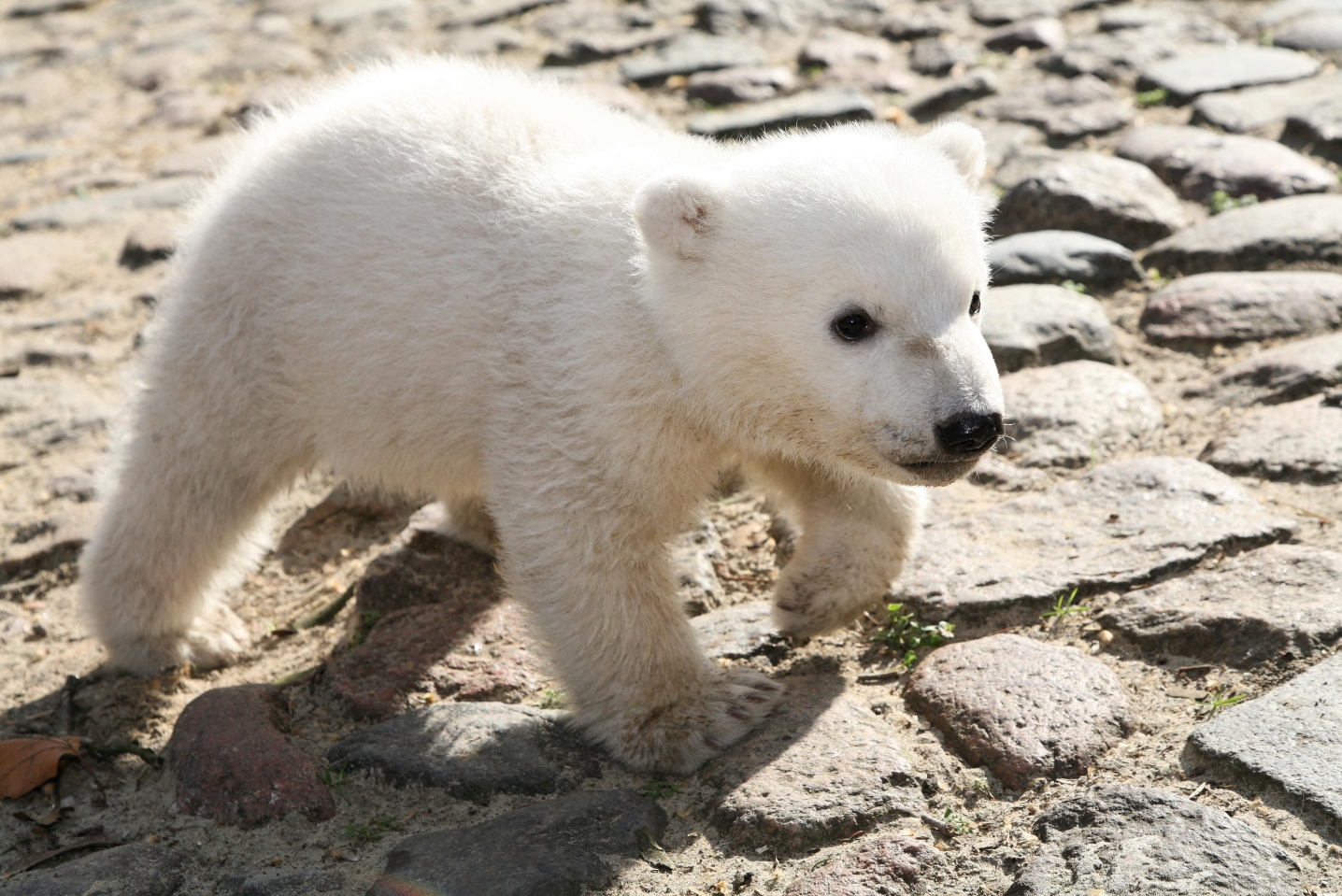
Knut the polar bear

{credit}Berlin Zoological Garden{/credit}

Earlier in 2016 Scientific Reports celebrated its fifth anniversary. You can view our interactive infographic and blogs marking this occasion here.

As this fifth anniversary year draws to a close, we’ve got back in touch with authors from two popular papers from recent years.

Now that some time has passed, we wanted to know about their experience publishing with the journal, what impact they felt their research has had and what’s surprised them.

First up, here is an interview with Alex Greenwood, an author of the study in Scientific Reports that suggested Knut, the famous hand-reared polar bear from the Berlin Zoological Gardens, suffered from anti-NMDA receptor (NMDAR) encephalitis. The study “Anti-NMDA Receptor Encephalitis in the Polar Bear (Ursus maritimus) Knut” is available here.

We spoke to Professor Greenwood about the research.

Alex Greenwood

Could you give a brief overview of your paper in Scientific Reports?

Our study in Scientific Reports was the culmination of our efforts to determine what caused the death of Knut, the world famous polar bear. A necropsy performed at the Leibniz Institute for Zoo and Wildlife Research (IZW) determined that Knut had inflammation of the brain (encephalitis) and suggested the cause was an infectious agent. However, intensive, cutting-edge pathogen diagnostics immediately after necropsy did not identify any causal pathogen. The negative results required completely new thinking and approaches; among the candidates was an autoimmune disease.

Similar to Knut’s case, many human medical cases went undiagnosed for decades because a causative pathogen could not be linked to the symptoms of encephalitis. In 2007 it was revealed that many of these patients suffered from an autoimmune disease (where the patient’s antibodies attack their own brain as foreign material). The most common among these diseases is anti-NMDA disease — where the patient’s antibodies attack the N-methyl-D aspartate receptor in the brain, leading to severe inflammation. The team of Dr. Harald Prüß at Charité/German Center for Neurodegenerative Diseases (DZNE) Berlin, who are experts on these diseases, reasoned that this could potentially explain Knut’s case. After extensive testing, the teams at the IZW and Charité determined that this in fact is what explained Knut’s encephalitis.

What sort of impact have your findings had?

Anti-NMDA disease is now more broadly recognized among the public because of its association with Knut. This will hopefully lead to improvements in diagnosis of this and related diseases, particularly because in humans the presentation of the disease can be quite variable.  Zoo and wildlife veterinarians have realized that not all diseases, even those where a pathogen is suspected, will necessarily be the result of infectious diseases and that management practices may have to take this into consideration. For example, the counterintuitive management strategy in such an encephalitis case would be to suppress the immune system — not a therapeutic intervention one would necessarily consider in the case of a pathogen caused disease. At the very least, it is quite likely that new cases in more species will be identified, expanding this disease’s occurrence to mammals in general. Others have already seen rarer neuronal receptor diseases in domestic cats. These diseases are unlikely to be restricted to cats and polar bears.

Was there anything surprising about this research?

Upon taking on Knut’s case, the flood of expert opinions, all supporting an infectious pathogen as the cause of Knut’s symptoms, was deafening. It was interesting to see how this guided so many of the contributions from collaborators and spectators. In many ways this narrowed the number of avenues initially investigated. We tried to keep an open mind but some of the ideas we had — including an aberrant immune reaction — were beyond what we thought is amenable to study in wildlife diseases, given that so much less is known about wildlife biology than human or laboratory animal biology.  Many of the techniques we considered would have likely yielded data difficult to interpret, without the fundamental knowledge of, for example, which proteins are expressed where in a polar bear.

Their sharp eyes and the constructive collaboration with Dr. Harald Prüß and his team made it possible to consider the improbable — and demonstrate that the improbable was in fact the answer. The ability to transfer the techniques from human medicine to a polar bear case was both unusual and extremely fortunate.

Was there a particular reason you chose to publish in Scientific Reports?

The study performed, in essence, represents a case report. Scientific Reports recognized that the findings in this case go well beyond Knut as an individual and allowed it to be peer reviewed. The identification of this disorder, which before Knut was only recognized as a human disease, must now be considered a disease of mammals with consequences for diagnosis and management in veterinary medicine in particular. Because Scientific Reports is open access this means anyone who is confronted with a similar case and suspects an autoimmune disease can refer to our study and our methods with no barriers to access. This was an important element in our consideration of where to submit the manuscript.

Professor Alex D. Greenwood is the Head of the Department of Wildlife Diseases at the Leibniz Institute for Zoo and Wildlife Research (IZW) and Professor of Wildlife Diseases in the Department of Veterinary Medicine of the Freie Universität Berlin, both institutions in Berlin, Germany. His work has focused on evolutionary virology, primarily on retroviruses and more recently herpes viruses in wildlife. He integrates ancient DNA, evolutionary and ecological analyses in most of his work and also has an interest in high throughput diagnostic methods. His work with Knut the polar bear intersected with the latter interest.

On Friday (23 December) we will post a second guest blog from another Scientific Reports author. 

Genetic variants in ‘red hair gene’ associated with increased number of skin cancer mutations

Carla Daniela Robles Espinoza, author on the Nature Communications paper

Carla Daniela Robles Espinoza {credit}Mamun Rashid{/credit}

Melanoma patients with genetic variants in the ‘red hair gene’, MC1R, have more mutations in their cancers compared to patients without such variants, found a study published in Nature Communications last week. Carla Daniela Robles Espinoza, one of the authors on the paper, takes us through the findings.

What were your main findings?

In this study, we wanted to investigate whether having common genetic variants in the red hair gene (called MC1R) can influence the number of mutations found in melanoma tumours. It has long been known that redheads are more prone to developing melanoma.

A woman with red hair using a camera, taking a photograph, adjusting the lens.

Melanoma patients with genetic variants in the ‘red hair gene’, MC1R, have more mutations in their cancers. {credit}Getty Images{/credit}

This is thought to be because they burn more easily in the sun, as exposure to UV light is one of the main risk factors for developing this cancer. However, there seems to be more to the story of how MC1R genetic variants increase the risk of developing melanoma. For example, previous studies have shown that, in mice, there is a sunlight-independent contribution to melanoma risk via the synthesis pathway of the red pigment1, and that there is an association between MC1R and melanoma risk which occurs independently of sun exposure in humans2.

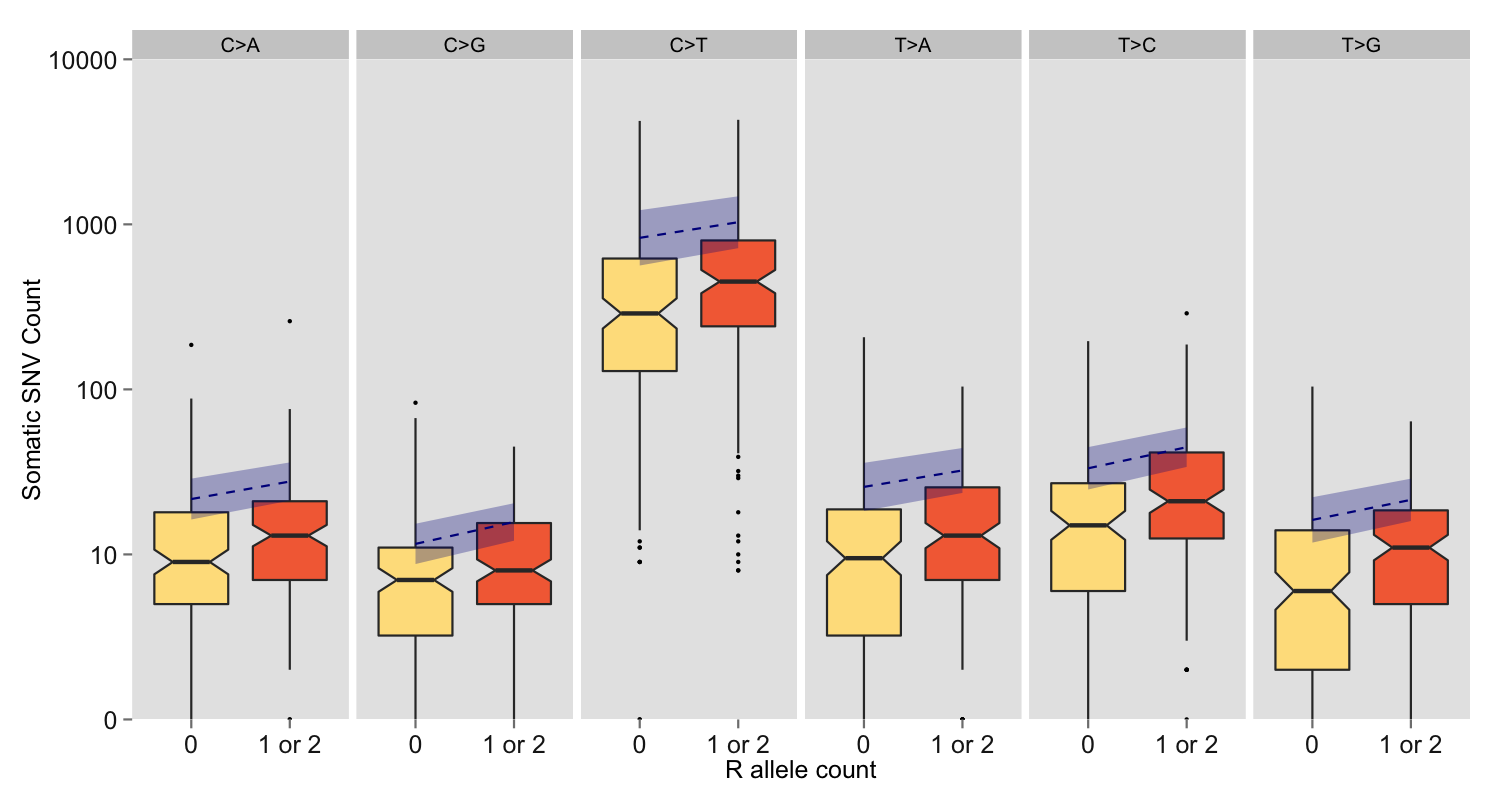
Here, we analysed the melanoma tumours from more than 400 patients and observed an increase in the number of mutations in patients carrying variants in MC1R. This effect was observed also in individuals that are not necessarily red-headed (those with only one variant copy of the MC1R gene as opposed to two), which means that these people might also be highly susceptible to the mutagenic effects of UV light. However, we observed this increase in all types of tumour mutations, not only the ones associated to UV damage.

We could also quantify this contribution, noting that the expected number of sun-related mutations associated with an MC1R variant is comparable to the number gained in about 21 additional years of age. Therefore, our study provides evidence of the existence of additional mutagenic processes in melanoma patients with MC1R variants, which make up about 26-40% of the patient population3.

How does this work link melanoma and the gene MC1R?

Many studies had noted that people carrying MC1R variants are more susceptible to developing melanoma, but only recently we have started to fully understand the reasons. We provide evidence that there may be additional mechanisms, beyond the effects of UV alone, that contribute to elevating the risk of melanoma in patients with MC1R genetic variants. MC1R has important roles in DNA repair and cell survival; thus, processes that increase the risks of developing cancer might include the generation of DNA-damaging stress when making up the red pigment or a decreased ability to repair DNA in carriers of MC1R variants.

In this study we also report that primary melanocytes (the cells where melanoma originates) with incomplete MC1R function show defects in survival and DNA repair, suggesting this might be one of the mechanisms through which MC1R function impacts melanoma risk.

The distribution of mutation counts in melanoma tumours grouped by the presence of MC1R variants.

The distribution of mutation counts in melanoma tumours grouped by the presence of MC1R variants.{credit}Carla Daniela Robles Espinoza et al., Nature Communications{/credit}

What is the significance of this research for melanoma patients and for the general population?

The conclusion of our study is important because it has relevance for people who are MC1R carriers (for example, about 21% of the British and Irish population, 10% of the French population and 16% of the population in the United States4). This means that the majority of these people, who will not have red hair, are still more susceptible to the effects of melanoma mutagens than people with no MC1R variants, with UV light the most established environmental risk factor.

The results suggest that MC1R carriers should take care in the sun following established guidelines (for example: https://www.cancerresearchuk.org/about-cancer/causes-of-cancer/sun-uv-and-cancer/ways-to-enjoy-the-sun-safely).

Can you outline any future research steps?

Future research will aim to understand the different processes through which MC1R can increase the risk of developing melanoma, and also to look for other genetic contributors to skin cancer predisposition. This will hopefully help us to identify the people who are at increased melanoma risk and allow us to better inform patient management and public health campaigns.

References:

1. Mitra D et al. An ultraviolet-radiation-independent pathway to melanoma carcinogenesis in the red hair/fair skin background. Nature. 2012 Nov 15;491(7424):449-53. doi: 10.1038/nature11624. Epub 2012 Oct 31.
2. Wendt J et al. Human Determinants and the Role of Melanocortin-1 Receptor Variants in Melanoma Risk Independent of UV Radiation Exposure. JAMA Dermatol. 2016 Apr 6. doi: 10.1001/jamadermatol.2016.0050. [Epub ahead of print]
3. Williams, P. F., Olsen, C. M., Hayward, N. K. & Whiteman, D. C. Melanocortin 1 receptor and risk of cutaneous melanoma: a meta-analysis and estimates of population burden. Int. J. Cancer 129, 1730–1740 (2011).
4. Gerstenblith MR et al. Comprehensive evaluation of allele frequency differences of MC1R variants across populations. Hum Mutat 2007 May;28(5):495-505. doi:10.1002/humu.20476