SciArt scribbles: Coupling creation and analysis with collages

Many scientists embrace the artistic medium to infuse new ideas into their scientific works. With science-art collaborations, both artists and scientists challenge their ways of thinking as well as the process of artistic and scientific inquiry. Can art hold a mirror to science? Can it help frame and answer uncomfortable questions about science: its practice and its impact on society? Do artistic practices inform science? In short, does art aid evidence?

Nature India’s blog series ‘SciArt Scribbles’ will try to answer some of these questions through the works of some brilliant Indian scientists and artists working at this novel intersection that offers limitless possibilities.

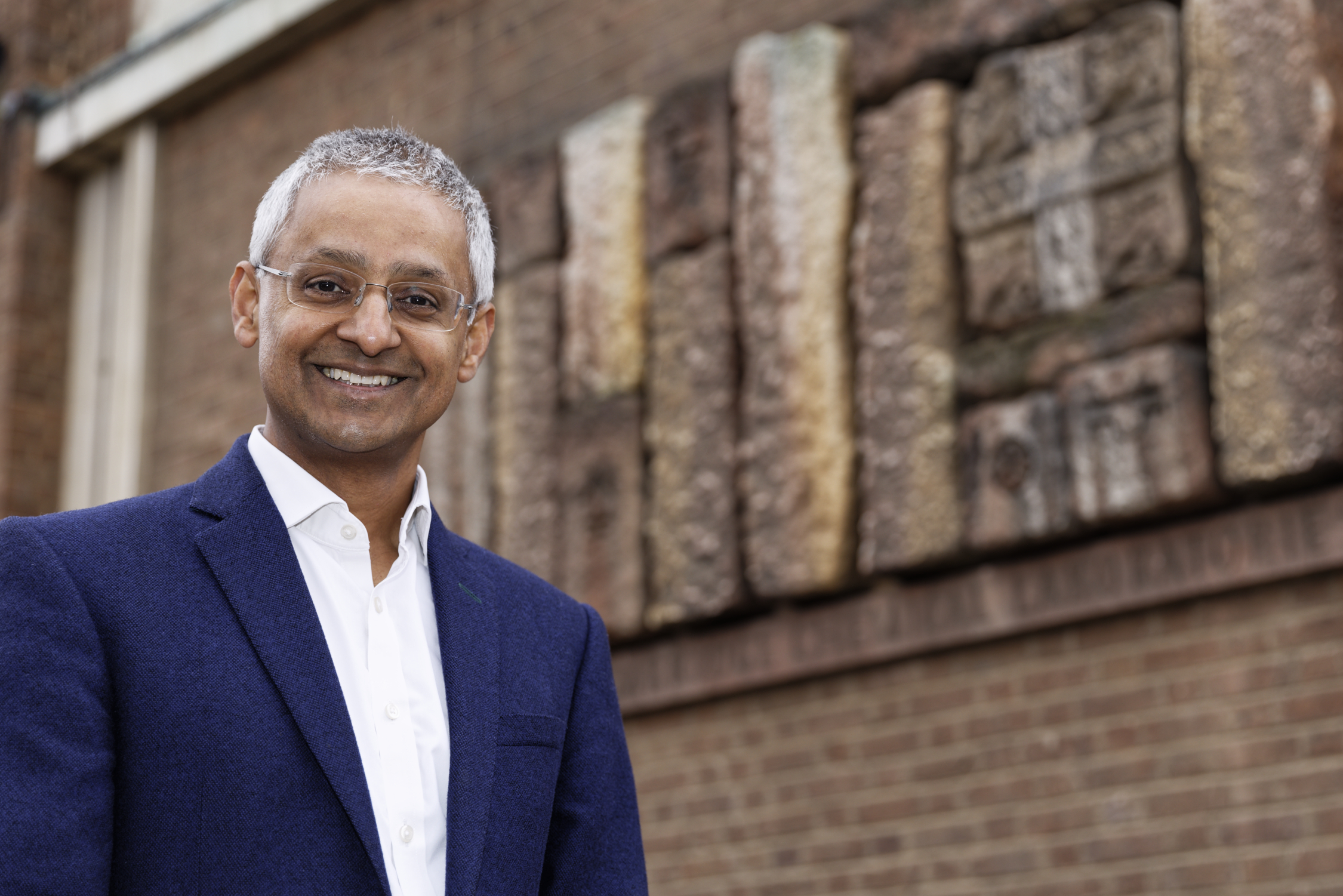
Neuroscientist Leslee Lazar dabbles in collages. A visiting faculty at the Indian Institute of Technology Gandhinagar, Leslee’s research interests lie in neuroscience of design, science communication, cultural cognition and behavioural change. He combines his training as a neuroscientist with his passion as a collage artist to create what he calls a ‘hazy amalgam’ of creation and analysis.

Leslee Lazar

Devarsh Barbhaya

Collage needs just a few scraps of paper, some glue and not even a steady hand. But, this humble hobby has exalted origins, “invented” by great artists like Picasso and instrumental in the birth of modern art.

My own foray into collage was rather fortuitous – the only available slot in my high school cultural team was for the collage competition. Making the team meant skipping classes for two full days. So, I put my name in and made my first collage. To everybody’s surprise, I won a prize. I did not make more collages after that glorious start. Almost two decades later, I found myself falling back on collages to unwind from a stressful postdoc stint.

When I make or see collages, I switch to a ‘dual mode’, described beautifully by the polymath Vladimir Nabokov; “I cannot separate the aesthetic pleasure of seeing a butterfly and the scientific pleasure of knowing what it is”. As a cognitive neuroscientist, I study how we perceive visual artwork and how it gives us that special feeling when we look at it – the aesthetic emotion. However, my process of creating collages is not driven by scientific theories, its impulsive, urgent, chaotic and a meditative process.

For my collages, I extensively use images from internet photo archives. The power of collages is that I can manipulate an element of an image, like form, colour or perspective giving new meaning to the original image. Sometimes, just a juxtaposition of images from different eras or styles can create a powerful reinterpretation. In a series called Pro:Postures, I explored how body postures reflect subtle meanings. In vintage portrait photographs, I manipulated certain features to remove skin colour, expressions, markers of ethnicity, social background etc. — the attempt was to amplify meanings embedded in the posture of the person. Postures reflect many of our emotions and realities. Using these manipulated images, I was attempting to highlight how postures convey subtle aspects of history, gender, politics and power (Fig. 1)

Fig. 1: Two separate collages created out of vintage portrait photographs to show how postures convey subtle aspects of history, gender, politics and power.

Leslee Lazar

The technique of collage was invented by artists Pablo Picasso and Georges Braque, when they were exploring ways to create spatial illusion in their art. They wanted to represent space from different perspectives. The painting could appear deep or shallow depending on where the viewer focused attention. To do this, they pasted textured wood and fabric on to their painting canvas, giving birth to collage. Soon, collage became an established method for western artists.  Of the many methods and means of collage, two kinds stand out – one that plays with our ability to group objects, detect patterns and relationships (called ‘gestalt’ perception) and the other that appeals to our inherent preference for human-like forms.

The first kind was made popular by artists like Hans Arp, who used shapes and arrangements to create forms and meanings. It exploits our visual system’s gestalt property. We give meanings to seemingly random stimuli, like the Dalmatian’s random white and dark patches in the famous collage where Arp is playing with composition. Many collages exploit this principle, much like other art, of deriving pleasure in “completing” a form.

The second kind of collages use the human form, especially the face. We can recognize faces effortlessly, read emotions, and communicate through expressions. In the brain, there is a special area to process visual information of faces. Any damage to this area and we lose the ability to recognize faces, made famous by Oliver Sack’s classic “Man who mistook his wife for a hat”. The way we process faces is different from other objects; it happens faster than objects and we read emotions before we register the identity of the face.

We also perceive faces holistically, which means we do not make mentally put the parts of the face, eyes, nose and ears together to recognise a face. Because the brain is set up to process face in such a way, it is prone to some illusions, like the Thatcher illusion, where inverted eyes and lips are perceived as normal when seen inverted. This special relationship with faces has been exploited in many artworks. In a collage I made in response to the treatment of Syrian war refugees in Europe, I used a stock image of European refugees from the past and manipulated their faces to represent the yearning for freedom and normal life (Fig. 2).

Fig. 2

Leslee Lazar

Although, art can evoke emotions purely by its visual features, there is also a strong cognitive, social and cultural element. Collage, with its borrowed imagery offers a ready-made way to contextualise art with pop and political reference. Some of the earliest collages were made in reaction to World War 1. Hannah Hoch used images of German Prime Minister and defence minister on an embroidered background as an anti-war statement.

Hannah Hoch’s anti-war collage

Wikiart

Collage also was influential in the pop art movement, an art movement with everyday objects, made famous by Andy Warhol’s painting of soup cans. However, the first pop art was a collage made with fashion magazines and sales catalogues.

A collage titled “Just what is it that makes today’s homes so different, so appealing?” by English artist Richard Hamilton is the first pop art.

Wikiart

The great art historian E. H Gombrich said “There really is no such thing as art, there are only artists”. And neuroscience claims that the artist is a neuroscientist. Will my training as a neuroscientist give me added insight into the artistic process? It’s too early to say, there is only a hazy amalgam of the two ways of thinking and interacting with the world. The forces that drive to create and to analyse are not necessarily opposite. I hope they merge into something greater than the sum of individuals. Till then, my collages will try to write visual poetry with other people’s words.

(Leslee Lazar can be contacted at leslee.lazar@gmail.com. He tweets from @leslee_lazar.)

Suggested reading:

SciArt scribbles: Technology to aid dance

SciArt scribbles: Music to tackle PhD blues

SciArt scribbles: Playing science out

Artists on science: scientists on art

Supporting early career researchers through travel grants

As part of our commitment to championing the cause of promising early career researchers, the Communications journals (Biology, Chemistry and Physics) introduce a new series of travel grants.

This guest blog comes from Joe Bennett, Publisher, Communications journals.

Today the Communications journals have introduced travel grants for early career researchers. Our hope is that by introducing these grants we can reach promising but underfunded researchers who need support the most. This is the first round of what we expect will become a recurring process, and is part of a longstanding commitment by the journals to champion the cause of early career researchers.

The grants

Three grants, each of €2500, will be made available. We have chosen this amount as it will allow support for a researcher, without access to other funding, to attend an international scientific meeting and present their work. We understand that early career researchers are best placed to choose where they would benefit the most from presenting their work, and so applicants are invited to tell us which meeting they require funding to attend. As the grants are designed to support researchers who are working within limited means, recipients will receive the grant funds in full immediately after the panel has made their choice.

We have chosen to introduce this first round of travel grants as we believe that our journals should do more than just publish great science, they should also play an active role within the  communities they serve. We also know that travel to scientific conferences can allow researchers to present their work, hear about the latest research and meet other scientists from around the world to discuss ideas and possible collaborations.

The grants are available across the breadth of the subject areas of biology, chemistry and physics. Although the grants match the subject areas covered by the journals Communications Biology, Communications Chemistry and Communications Physics there is no requirement for applicants to have published in, or to have reviewed for the journals previously. Likewise there is no obligation for the grant recipients to publish their work in the journals.

Supporting early career researchers is vital

We have written before about the challenges facing early career researchers, including the fierce competition for funding.They make a positive contribution to our journals as authors, reviewers and Editorial Board Members. Many of our own in-house editorial staff were also early career researchers before joining Nature Research. Early career researchers are a part of the fabric of our journals and we believe that their work should be supported and their achievements highlighted. This is why we are proud to introduce the first round of grants to strengthen our commitment to champion their work.

A fair assessment

We considered carefully how to make the assessment process as fair as possible and to be mindful of how our unconscious bias can influence decision making. We have designed our process to account for this and will consider each application on its own terms whilst guided by a shared set of principles. We have tried to ensure that our selection panels include members with a broad and diverse range of experiences and have considered factors including gender, geography and whether they were the first member of their family to join academia when deciding the composition of our panels. Active scientists drawn from the Editorial Board of each journal will join our in-house editors on the judging panels.

To be considered for a grant, applicants must first demonstrate that they have a need for funding support. We will then consider the promise of the research within the application when we choose the recipients. All applicants will be judged against the same criteria:

  • Has the applicant demonstrated that without the grant they would not have the necessary funding available to enable travel to the event?
  • Does the applicant plan to present research that the assessment panel feel has outstanding potential and should be seen by the wider community?
  • How does the applicant stand to benefit from travelling to and attending the meeting?
  • Has the applicant been working within a scientifically emerging country or in difficult circumstances?

We admire researchers who conduct research with limited resources, who have overcome systemic barriers or any number of other challenges in pursuit of their ambition to pursue great science. When assessing applicants we will not be selecting the grant recipients based on an exceptional track record, but rather looking for applicants with outstanding promise who have been working within difficult circumstances. Not only will the grants benefit the researchers in question, but empowering and including traditionally marginalised researchers benefits the wider community as we get to meet them, hear their ideas, and learn from their experiences.

Apply

The grants are now open for applications until 5th November 2018. To read more and apply please visit our website: www.nature.com/early-career-travel-grants

The story behind the story: The 133rd Live Podcast of the Gourmando Resistance

In this week’s Futures story, Beth Cato plunges us into the secret world of the Gourmando Resistance. As well as cooking up guerrilla podcasts, Beth is the author of The Clockwork Dagger duology and Blood of Earth trilogy. You can find out more about her writing (and her baking) at her website or by following her on Twitter. Here, she reveals the recipe for her latest tale — as ever, it pays to read the story first.

Writing The 133rd Live Podcast of the Gourmando Resistance

This story arose from two great joys of life: a Codex flash-fiction contest and churros.

Codex is a forum for neo-pro writers that hosts regular contests for its members. As novels have taken over my life in recent years, I’ve been producing fewer short stories. Codex’s contests inspire me to keep writing short works and keep them on submission.

In this particular contest, five prompts went out on a Friday, with a 1,000-word maximum story due the following Tuesday. Two of the prompts resonated with me: to write about a hunter, and to write about one thing in the world I want to change that could go horribly wrong.

So, naturally, my brain went to hunting down new food sensations as part of a future resistance movement. (My brain is weird like that.)

I’m an unabashed foodie. I maintain a weekly food blog called Bready or Not through BethCato.com. Many of my novels and stories explore the emotional and cultural importance of food; my past Nature story Bread of Life is probably one of my best examples of that.

My foremost issue was picking the food to centre my story around. The dish needed to be prepared quickly for the sake of the flash-fiction format, and I wanted something with cultural significance. Churros — those scrumptious doughy sticks coated with cinnamon and sugar — immediately came to mind. A few years ago, I was part of a foodie-writer group blog effort called the Holy Taco Church, wherein my official title was High Priestess of Churromancy. As part of my duties, I developed a series of churro-inspired recipes.

Writing this story gave me an opportunity to wield my High Priestess powers again and examine churros in a new and rebellious way.

Read more Futures stories by Beth:

Powers of observationExcerpts from the 100-day food diary of Angela MeyerThe human is late to feed the catBread of lifePost-apocalyptic conversations with a sidewalkCanopy of skulls

Biotech leaders call for free press

To the Editor: We, the undersigned, are biotechnology executives, entrepreneurs, academic leaders and investors. We are gravely concerned about trends in the United States that are undermining our news media, such that more than 300 news publications across the country recently found it necessary to run coordinated editorials in defense of the First Amendment’s guarantee of freedom of the press.

Why do we, in particular, feel compelled to speak out? We dedicate our lives to discovering and developing new medicines. In recent years, we have witnessed astonishing advances in medicine, including treating diseases at the level of genes and cells. These modern miracles rely, more than anything else, on the free and public exchange of ideas. This encompasses the ability to collaborate, debate, and test one another’s ideas and findings, and to publish data regardless of political, religious or other external pressures or considerations. This is foundational to the scientific method, without which we all might still be living in caves and have an average life expectancy of 30.

The Framers of the US Constitution understood this well; in 1774, the First Continental Congress wrote, in the Appeal to the Inhabitants of Quebec:

The last right we shall mention regards the freedom of the press. The importance of this consists, besides the advancement of truth, science, morality, and arts in general, in … its ready communication of thoughts between subjects, and its consequential promotion of union among them, whereby oppressive officers are shamed or intimidated into more honorable and just modes of conducting affairs.

We believe it is critical to recognize that a free press is not equivalent to a perfect press. Reporters, just like scientists and every other variety of human being, at times make mistakes, can be biased, or may be just plain wrong. We see no compelling evidence to indicate that this is more prevalent now than it was 250 years ago at the time of our country’s founding, or any time thereafter.

The great virtue in having a free press is that everyone’s mistakes, including those of politicians, scientists and the press itself, have the opportunity to be exposed and ultimately corrected. Thomas Jefferson, who, like many presidents, chafed under the scrutiny of the press while he was in office, nevertheless wrote: “Our liberty depends on the freedom of the press, and that cannot be limited without being lost.” To consider our press “the enemy of the people” is antithetical to this key founding principle of our nation.

Technology now provides near instantaneous access to almost every vehicle for news; perversely, this has created more silos of news consumption, as we citizens receive news from outlets that are tailored to our particular tastes and prejudices, and we are less and less frequently exposed to alternative perspectives.

The progress of science and medicine requires that their practitioners not only be exposed to, but actively seek out, such perspectives. This is just as true for the progress of our country and our citizens at large. For America to remain the world’s foremost beacon of liberty and human progress, as well as the world’s leader in science and medicine, we must be resolute in upholding the rights guaranteed us by the First Amendment. 

ACKNOWLEDGMENTS

This letter represents solely the individual and personal views of the authors and signatories, and not those of their employers, companies, universities or any other organization or agency.

COMPETING INTERESTS

John Maraganore is CEO and board member of Alnylam Pharmaceuticals, and on the board of Agios Pharmaceuticals and the Biotechnology Innovation Organization. Steve Holtzman is president, CEO and board member of Decibel Therapeutics, and on the board of Molecular Partners. Ron Cohen is president and CEO of Acorda Therapeutics and a board member of VBL Therapeutics. Jeremy Levin is an officer at Ovid Therapeutics and on the board of Lundbeck A/S, Biocon Limited and ZappRX.

John M Maraganore1, Steven Holtzman2, Ron Cohen3& Jeremy M Levin4

Signatories to the statement

Michael Aberman5, Chris Adams6, Julian Adams7, Jeffrey Albers8, Bonnie Anderson9, Mara G Aspinall10, James E Audia11, Martin Babler12, David Baltimore13, Stephane Bancel14, Peter Barrett15, Zoe Barry16, David Bartel17, Jean-Jacques Bienaime18, Burkhard Blank19, Robert I Blum20, Daniel M Bradbury21, Eugene Braunwald22, John P Butler23, Bruce Carter24, Gustav Christensen25, Isaac Ciechanover26, Chip Clark27, John K Clarke28, Michael D Clayman29, Jeffrey L Cleland30, David Clem31, N Anthony Coles32, Charles L Cooney33, Robert K Coughlin34, Zoltan Csimma35, Sally J Curley36, Bassil Dahiyat37, Daniel A de Boer38, Elisabet de los Pinos39, Ronald A DePinho40, Douglas Doerfler41, Daniel Dornbusch42, Richard H Douglas43, Deborah Dunsire44, Neil Exter45, Nima Farzan46, Jean-François Formela47, Robert Forrester48, Maureen N Franco49, Cedric Francois50, Heather Franklin51, Scott Garland52, Simba Gill53, David V Goeddel54, Maxine Gowen55, Kurt Graves56, Mary Ann Gray57, Barry Greene58, David-Alexandre C Gros59, Faheem Hasnain60, Michael Hammerschmidt61, Elma S Hawkins62, Russell Herndon63, Paul Hastings64, Andrew Hindman65, Annalisa Jenkins66, Cigall Kadoch67, Emil D Kakkis68, Johanne Kaplan69, Laurie Keating70, Rachel King71, Vanessa King72, Scott Koenig73, Peter Kolchinsky74, Daphne Koller75, Marc Kozin76, Paul Laikind77, Robert Langer78, Donna L LaVoie79, John J Lee80, Jonathan Leff81, Alan Levy82, Judy Lieberman83, Christine Lindenboom84, David R Liu85, Uri Lopatin86, Ted W Love87, David N Low Jr88, Nagesh K Mahanthappa89, Tony Martignetti90, W Eddie Martucci91, Kiran Mazumdar-Shaw92, Tracey L McCain93, Corey M McCann94, David J McLachlan95, David Meeker96, Ravi Mehrotra97, Steven J Mento98, Rachel Meyers99, Gregory Miller100, Ken Mills101, Kenneth I Moch102, Michael M Morrissey103, Robert Mulroy104, Imran Nasrullah105, William J Newell106, John F Neylan107, Bernat Olle108, Eric T Olson109, Douglas E Onsi110, John E Osborn111, Julia C Owens112, Stelios Papadopoulos113, Steve Paul114, Brian J G Pereira115, Doris Peterkin116, Cary Pfeffer117, Mark Pruzanski118, Gerald E Quirk119, Michael Raab120, Paula Ragan121, Amit Rakhit122, Bill Rastetter123, Ron Renaud124, Jason P Rhodes125, Scott M Rocklage126, Michael Rosenblatt127, William J Rutter128, Camille Samuels129, James Sapirstein130, Amar Sawhney131, David Scadden132, George Scangos133, John A Scarlett134, Stuart L Schreiber135, Paul J Sekhri136, Eric Shaff137, Bennett Shapiro138, Thomas Shenk139, Nancy Simonian140, William Slattery141, Erika R Smith142, Bruce Steel143, Harald F Stock144, Clifford J Stocks145, Michael Su146, Tim Surgenor147, Jean-Christophe Tellier148, Charles Theuer149, Martin Tolar150, Eric Topol151, Beth Trehu152, Akshay K Vaishnaw153, Christi van Heek154, Michael J Vasconcelles155, George P Vlasuk156, Michel Vounatsos157, Christopher T Walsh158, Jane Wasman159, Andrew Weisenfeld160, Yaron Werber161, Christoph Westphal162, Wendell Wierenga163, Terry Winters164, Eugene Williams165, Chuck Wilson166, Peter Wirth167, Kleanthis Xanthopoulos168 & Sanford (Sandy) Zweifach169

1Alnylam Pharmaceuticals, Inc., Cambridge, Massachusetts, USA. 2Decibel Therapeutics, Boston, Massachusetts, USA. 3Acorda Therapeutics, Ardsley, New York, US. 4New Milford, Connecticut, USA. 5Quentis Therapeutics, Inc., New York, New York, USA. 6Cydan II, Cambridge, Massachusetts, USA. 7Gamida Cell, Boston, Massachusetts, USA. 8Blueprint Medicines, Cambridge, Massachusetts, USA. 9Veracyte, Inc., South San Francisco, California, USA. 10Health Catalysts Group, Tucson, Arizona, USA. 11Constellation Pharmaceuticals, Inc., Cambridge, Massachusetts, USA. 12Principa Biopharma, South San Francisco, California, USA. 13Caltech, Pasadena, California, USA. 14Moderna, Inc., Cambridge, Massachusetts, USA.  15Atlas Venture, Cambridge, Massachusetts, USA. 16ZappRx, Boston, Massachusetts, USA. 17MIT/Whitehead Institute, Cambridge, Massachusetts, USA. 18BioMarin Pharmaceutical, Novato, California, USA. 19Acorda Therapeutics, Inc., Ardsley, New York, USA. 20Cytokinetics, Inc., South San Francisco, California, USA. 21Equillium, Inc., La Jolla, California, USA. 22Harvard Medical School, Brigham and Women’s Hospital, Boston, Massachusetts, USA. 23Akebia Therapeutics, Cambridge, Massachusetts, USA. 24Novo Nordisk (retired), Seattle, Washington, USA. 25Morphic Therapeutic, Waltham, Massachusetts, USA. 26Atara Biotherapeutics, South San Francisco, California, USA. 27Genocea Biosciences, Inc., Cambridge, Massachusetts, USA. 28Cardinal Partners, Princeton, New Jersey, USA. 29Flexion Therapeutics, Burlington, Massachusetts, USA. 30Graybug Vision, Redwood City, California, USA. 31Lyme Properties 2, LLC, West Lebanon, New Hampshire, USA. 32Yumanity Therapeutics, Cambridge, Massachusetts, USA. 33Massachusetts Institute of Technology, Cambridge, Massachusetts, USA. 34MassBio, Cambridge, Massachusetts, USA. 35Csimma LLC, Lincoln, Massachusetts, USA. 36IRC, CGIR, LLC, Savannah, Georgia, USA. 37Xencor, Monrovia California, USA. 38ProQR Therapeutics, Cambridge, Massachusetts, USA. 39Aura Biosciences Inc., Cambridge Massachusetts, USA. 40Department of Cancer Biology, MD Anderson Cancer Center, Houston, Texas, USA. 41MaxCyte Inc., Gaithersburg Maryland, USA. 42Dornbusch & Company, Oakland, California, USA. 43Aldeyra Therapeutics, Lexington, Massachusetts, USA. 44Lundbeck Pharmaceuticals, København, Denmark. 45Third Rock Ventures, Boston, Massachusetts, USA. 46PaxVax, Redwood City, California, USA. 47Atlas Venture, Cambridge, Massachusetts, USA. 48Verastem, Inc., Needham, Massachusetts, USA. 49Cambridge BioMarketing, Boston, Massachusetts, USA.  50Apellis Pharmaceuticals, Crestwood, Kentucky, USA. 51Blaze Bioscience Inc., Seattle, Washington, USA. 52Relypsa, a Vifor Pharma Group Company, Redwood City, California, USA.  53Evelo Biosciences, Boston, Massachusetts, USA. 54The Column Group, San Francisco, California, USA. 55Trevena Inc., Wayne, Pennsylvania, USA. 56Intarcia Therapeutics, Boston, Massachusetts, USA. 57Gray Strategic Advisors, LLC, New York, New York, USA. 58Alnylam Pharmaceuticals, Cambridge, Massachusetts, USA. 59Imbria Pharmaceuticals, Rancho Santa Fe, California, USA. 60Gossamer Bio, San Diego California, USA. 61Science History Institute, Philadelphia, Pennsylvania, USA. 62Redpin Therapeutics, New York, New York, USA. 63Hydra Biosciences, Cambridge, Massachusetts, USA. 64Nkarta Therapeutics, South San Francisco, California, USA. 65Acorda Therapeutics, Ardsley, New York, USA. 66Cell Medica, London, UK. 67Dana-Farber Cancer Institute/Harvard Medical School/MIT/Foghorn Therapeutics, Inc., Boston, Massachusetts, USA. 68Ultragenyx Pharmaceutical Inc., Novato, California, USA. 69ProMIS Neurosciences, Cambridge, Massachusetts, USA.  70Alnylam Pharmaceuticals, Inc., Cambridge, Massachusetts, USA. 71GlycoMimetics, Rockville, Maryland, USA. 72Virion Biotherapeutics LLC, London, UK. 73MacroGenics Inc., Rockville, Maryland, USA. 74RA Capital Management, Boston, Massachusetts, USA. 75Insitro, South San Francisco, California, USA. 76Naples, Florida, USA. 77ViaCyte, San Diego, California, USA. 78MIT, Cambridge, Massachusetts, USA. 79LaVoieHealthScience, Boston, Massachusetts, USA. 80Decibel Therapeutics, Boston, Massachusetts, USA. 81Deerfield Management, New York, New York, USA. 82Tasso, Inc., Bellevue, Washington, USA. 83Harvard Medical School, Boston, Massachusetts, USA. 84Alnylam Pharmaceuticals, Cambridge, Massachusetts, USA. 85Broad Institute/Howard Hughes Medical Institute/Harvard University, Cambridge, Massachusetts, USA. 86Assembly Biosciences, San Francisco, California, USA. 87Global Blood Therapeutics, South San Francisco, California, USA. 88MTS Health Partners, New York, New York, USA. 89Scholar Rock, Cambridge, Massachusetts, USA. 90Inspired Purpose Coaching LLC, Canton, Massachusetts, USA. 91Akili Interactive Labs, Inc., Boston, Massachusetts, USA. 92Biocon Pharma Inc., Iselin, New Jersey, USA.  93Blueprint Medicines Corporation, Cambridge, Massachusetts, USA. 94Pear Therapeutics, Boston, Massachusetts, USA. 95Skyworks Solutions, Inc., Woburn, Massachusetts, USA. 96KSQ Therapeutics, Cambridge Massachusetts, USA.  97MTS Health Partners, New York, New York, USA. 98Conatus Pharmaceuticals Inc., San Diego, California, USA. 99Third Rock Ventures, Boston, Massachusetts, USA. 100Visterra Inc., Waltham, Massachusetts, USA. 101Regenxbio Inc., Rockville, Maryland, USA. 102Cognition Therapeutics, Inc., Pittsburgh, Pennsylvania, USA. 103Exelixis, Inc., Alameda, California, USA.   104PTX Partner Therapeutics, Lexington, Massachusetts, USA. 105Boehringer Ingelheim Pharmaceuticals, Cambridge, Massachusetts, USA. 106Sutro Biopharma, Inc., South San Francisco, California, USA. 107Keryx Biopharmaceuticals, Inc., Boston, Massachusetts, USA. 108Vedanta Biosciences, Cambridge, Massachusetts, USA. 109Marblehead, Massachusetts, USA. 110HealthCare Ventures, Cambridge, Massachusetts, USA. 111BioVentures/Egalet Corporation, Wayne, Pennsylvania, USA. 112Millendo Therapeutics, Inc., Ann Arbor, Michigan, USA. 113Biogen Inc., Cambridge Massachusetts, USA.  114Karuna Pharmaceuticals, Boston, Massachusetts, USA. 115Visterra, Inc., Cambridge, Massachusetts, USA. 116OncoPep, Inc., North Andover Massachusetts, USA. 117Third Rock Ventures, Boston, Massachusetts, USA. 118Intercept, New York, New York, USA. 119Syros Pharmaceuticals, Inc., Cambridge, Massachusetts, USA.  120Ardelyx, Inc., Fremont, California, USA. 121X4 Pharmaceuticals Inc., Cambridge, Massachusetts, USA. 122Ovid Therapeutics, New York, New York, USA. 123Grail/Neurocrine Biosciences/Fate Therapeutics/Daré Bioscience/Regulus Therapeutics, Rancho Santa Fe, California, USA. 124Translate Bio, Lexington, Massachusetts, USA. 125Atlas Venture, Cambridge, Massachusetts, USA. 1265AM Ventures, Boston, Massachusetts, USA. 127Flagship Pioneering, Cambridge, Massachusetts, USA. 128Synergenics, LLC., San Francisco, California, USA. 129Venrock, Palo Alto, California, USA. 130Contravir Pharmaceuticals, Edison, New Jersey, USA. 131Ocular Therapeutix, Bedford, Massachusetts, USA. 132Harvard University/Massachusetts General Hospital, Boston, Massachusetts, USA. 133Vir Biotechnology, Inc., San Francisco, California, USA. 134Geron Corporation, Menlo Park, California, USA. 135Broad Institute/Harvard University, Boston, Massachusetts, USA. 136Lycera Corp., New York, New York, USA. 137Seres Therapeutics, Cambridge Massachusetts, USA. 138Puretech Health, Boston, Massachusetts, USA. 139Princeton University, Princeton, New Jersey, USA. 140Syros Pharmaceuticals, Cambridge Massachusetts, USA. 141Deerfield Management, New York, New York, USA. 142ReNetX Bio, New Haven, Connecticut, USA.  143Equillium, Inc., La Jolla California, USA. 144CognifiSense, Inc., Park City, Utah, USA. 145OncoResponse, Inc., Seattle, Washington, USA.  146Decibel Therapeutics Incorporated, Boston, Massachusetts, USA. 147Red Sky Partners, Cambridge, Massachusetts, USA. 148UCB S.A., Brussels, Belgium. 149Tracon Pharmaceuticals Inc., San Diego, California, USA. 150Alzheon, Framingham, Massachusetts, USA.  151Scripps Research Translational Institute/Molecular Medicine, La Jolla, California, USA. 152Jounce Therapeutics, Inc., Cambridge, Massachusetts, USA.  153Alnylam Pharmaceuticals Inc., Cambridge, Massachusetts, USA.  154Bio Point Group, Punta Gorda, Florida, USA. 155Unum Therapeutics Inc., Cambridge, Massachusetts, USA. 156Navitor Pharmaceuticals, Inc., Cambridge, Massachusetts, USA. 157Biogen, Cambridge, Massachusetts, USA. 158ChEM-H Institute/Stanford University, Stanford, California, USA.  159Acorda Therapeutics, Inc., Ardsley, New York, USA. 160MTS Health Partners LP, New York, New York, USA. 161Ovid Therapeutics, New York, New York, USA. 162TScan Therapeutics, Boston Massachusetts, USA. 163Crinetics Pharmaceuticals, San Diego, California, USA. 164Scottsdale, Arizona, USA. 165ProMIS Neurosciences, Cambridge, Massachusetts, USA. 166Unum Therapeutics Inc., Cambridge, Massachusetts, USA. 167Syros Pharmaceuticals, Inc., Cambridge, Massachusetts, USA.  168Irras, San Diego, California, USA. 169Nuvelution Pharma, Inc., South San Francisco, California, USA.

Nature Research journals improve accessibility of data availability statements

The Nature Research journals have taken further steps to promote transparency and reproducibility by making information on the availability of research data within our articles easier to access.      

This guest blog comes from Iain Hrynaszkiewicz, Head of Data Publishing, Open Research Group at Springer Nature, and Sowmya Swaminathan, Head of Editorial Policy and Research Integrity at Nature Research.

All research articles published in Nature Research titles now provide data availability statements as a distinct article section that is freely and universally accessible. This means that data availability statements are now equivalently accessible to abstracts, full reference lists, supplementary information, acknowledgements, and other key article information. See two examples from Nature here (pictured) and here.

Since 2016, we have required all primary research papers published in Nature Research journals to include a data availability statement. The aim of this policy was to make the conditions of access to the “minimal dataset” ― defined as the dataset necessary to interpret, validate and extend the findings ― transparent to all readers. Data availability statements have become a widely established mechanism for authors to consistently describe if and how research data supporting their publications are available.  Such statements are required by many other Springer Nature journals in addition to the Nature Research journals, including the BMC group of journals, as well as those of other publishers. They are also increasingly used by funding agencies, institutions and researchers, as a means to measure data-sharing practices and behaviours ― and for building better connections between data and literature. Some funding agencies, such as the UK’s Engineering and Physical Sciences Research Council, also require that data access statements are provided for policy compliance.

We believe that enhancing discoverability of data availability statements, by providing them as a separate section, could also:

  • Increase accessibility and reuse of the data-supporting publications, by making it easier to find ― by humans and machines
  • Encourage citation and reuse of data, including of data that are not publicly available
  • Promote good practices and common standards in preparing data availability statements
  • Enable funding agencies, institutions and other stakeholders to better monitor data sharing and compliance with data sharing-policies
  • Enable more precise research of data-sharing behaviours and practices

Our change in the way we present data availability statements to readers underscores our commitment to facilitating data access and the importance of data as a crucial component underlying the integrity, re-use and extension of published research. Our guide to authors and our specific guidance on data availability and data citations have been updated to reflect these changes.

Interactions: Michael Baker

     Michael Baker is a research fellow at Diamond Light Source and at the University of Manchester.

      What did you train in? What are you working on now?
My training was in physics: a physics undergraduate followed by a PhD in magnetism. Today I’d describe my work as physical chemistry and bioinorganic chemistry with magnetism as a professional hobby. One of the freedoms I have now as an independent researcher is that I can interchange topics depending on the sorts of interesting problems that come about. I really enjoy using X-ray and neutron spectroscopies to solve problems that are hard to tackle by more routine methods. So whether it is a active site in an enzyme or an unusual quantum tunneling effect in condensed matter, it doesn’t matter to me how a subject should be categorized.

      Do you think of yourself as a physicist or as a biochemist?
Neither! However I like to think I can speak to both about their science. I think of myself as being somewhere between physics and chemistry I suppose.

      What motivated you to move to this field of research?
My transition from magnetism to bioinorganic chemistry was driven by a desire to be involved in doing something of general interest to people but also fundamental. An example is oxyhemoglobin, with its iron sites that bind and release oxygen for transport. It is  high-school biology, everyone appreciates its importance. Yet the electronic structure of that iron oxygen bond has been a very elusive problem and a contentious matter. So it is problems like this that made me realise just how many  important problems there are to work on in this area. However, above all it was the Human Frontier Science Program that made my move realistic. Their cross-disciplinary fellowship offers three years of funding for computer scientists, mathematicians and physicists to switch to working in the biological sciences.

      What did you find more difficult when you started working in an area out of your comfort zone?
When you don’t know a field or the people working in it the literature can be overwhelming. I spent months reading papers, following citations and reading more papers.

      And what did you find most helpful to familiarize yourself with new concepts and jargon?
Just getting on with it. Asking all the stupid questions as early as possible.

      Tell us about your experience the first time you went to a conference outside the field you trained in.
This is where not knowing the field makes things difficult. In molecular magnetism I knew many people and their work. Bioinorganic conference sessions were like a first day at a new school.

      What are the main challenges and the main advantages of working in an interdisciplinary team?
You are adaptable and able to move into new areas quickly. When people are given the opportunity to be the group expert on a particular topic, they expand into the role and become proud of it and generally excel. People can be proud of not knowing about some topics too, which makes a great incubator for knowledge exchange and collaboration.

      What would be your advice to a PI leading an interdisciplinary group?
Well this is too early on for me to have much insight. I am just getting started on that front.

      Do you find it particularly difficult to obtain funding? Or to get your research published?
I think being interdisciplinary is a great advantage when applying for funding. Knowing about how people from different fields speak and write really helps to put yourself in the shoes of the reader or audience. A greater sense of adaptability opens up more funding options too, although writing proposals on completely different topics in different fields is very time consuming. In my case there was certainly an impact on my publication output when switching research fields. This can be stressful, but I think I am getting there now.

Interactions: Stefanie Reichert

Stefanie worked as an experimental particle physicist at CERN before moving to Berlin, where she just started as Associated Editor at Nature Physics.

What made you want to be a physicist? 

In fact, I’ve tried everything to avoid physics when I was a teenager. In high school, I chose to learn Latin and then French as this would allow me to attend only two hours of physics per week. I grew up in Germany, and we had to do a one-week internship in 10th grade. Back then, I wanted to become a pathologist and hence I applied at the hospital nearby. As I wasn’t sure if they’d take me on, I looked for something else and then stumbled across books about the universe my parents gave me as a child. Turned out there was a Max Planck Institute for Astronomy in Heidelberg (MPIA) where I applied as well. Long story short: I got to do internships in both pathology and at MPIA but the latter blew me away: we got to observe the sun, count galaxies, learned about Rosetta, played with liquid nitrogen and then I was hooked! Funnily enough, I interned in an astronomy and a particle physics working group at university, and guess what?

If you weren’t a physicist, what would you like to be (and why)?

After the internship, becoming a pathologist was out of the question (too uneventful for my taste). I guess I would sell books now and force recommendations on people. Maybe along with running a café and roasting my own coffee.

Which historical figure would you most like to have dinner with — and why?

With Oscar Wilde, as I love his impeccable sense of humour and wit. If you haven’t read ‘The Importance of Being Earnest’, you are clearly missing out.

Which is the development that you would really like to see in the next 10 years?

I believe that in science we are a leading example for promoting peace, equality and anti-racism. But I do feel there’s more we can achieve, and I would like to see a greater diversity within our community, including more women in science and also increased opportunities for scientists or students studying science all around the globe.

What’s your favourite (quasi-)particle?

I have a background in experimental particle physics, and because some tensions between experimental observations and theory, the so-called Standard Model of Particle Physics, have emerged over the past few years in the flavour sector, I would go for the hypothetical leptoquark, which is a candidate for explaining those anomalies. Plus, those could mediate a decay I was searching for with colleagues from the LHCb experiment. Basically, a leptoquark can turn a quark into a lepton (e.g. an electron) and vice versa.

What is your non-scientifically accurate guilty pleasure (could be film/series/book)?

I love Star Wars, and my favourite is ‘The Return of the Jedi’. When the new movies started coming out, I was so excited – there’s nothing like watching the Millenium Falcon jump into hyperspace and then there are so many awesome female characters!

The story behind the story: The Congress

This week, Futures is pleased to welcome Dave Kavanaugh with his story The Congress. Based in the Netherlands, Dave will publish his first novel, Age of Omicron, in October. You find out more about his work at his website or by following him on Twitter. Here, he reveals the political machinations that gave rise to his latest tale — as ever, it pays to read the story first.

Writing The Congress

My first draft of any story tends to be a bloated mess of sloppy world-building and overly detailed character backstory. With each additional editing pass, I carve away the story’s fat and gristle to find its true substance. In the case of The Congress, I realized what I wanted to do first and foremost was tell an idea story, almost like those of Asimov and Clarke. Specifically, the piece strives to answer — or at least to ask — two basic questions:

Are the qualities that make someone electable in a modern democracy ever synonymous with the qualities of a good leader?

and…

If a political system works, does it matter if it’s based on deception?

I composed my original draft of The Congress several years ago when these questions were more or less academic for me. The first question pertained to the machine’s curiosity and the second was reflected in Mari’s inner conflict. When I recently dug up the story to edit it afresh and submit it to Nature, I found that both questions had taken on new meaning and import.

In the midst of rising political tension and populism movements around the globe, a tale of AI government gone right sounds optimistic indeed. This is not to say that there aren’t ‘Mari’s in real life. I’ve no doubt there are dedicated, hard-working, intelligent civic workers who would take pride not only in achieving high rank, but in enacting positive change in the world. But in the cut-throat reality show of modern politics, can we hope that such an individual can come out on top? If recent high-profile elections are any indication, that seems increasingly unlikely. So even as AI technology advances and the possibility of thinking machine leadership becomes less and less improbable, one wonders if the type of power-hungry individual able to fight their way into a position of authority would ever give up that power and replace the very system that enabled them to succeed.

As for governments based on deception, I think many people have come to believe this is already a reality, leading some to abandon hope and others to embrace activism. Perhaps AI government could appeal to both groups. I think the more interesting question (at least from the point of view of an author obsessed with character motivation) is if the real-life Mari’s have the same reaction when they finally reach the positions to which they aspire. Do they face the same choice Mari did in the story, having to either turn and run from their dreams or else sacrifice their values and drink poisons of their own? At least in The Congress the system she sacrifices herself to is a system that works.

As these ideas ping-ponged around my mind, I considered them through the POV of a character that interested me. The result was the final version of The Congress.

In the end, the tone of The Congress might be bittersweet but the message is clearly hopeful. I guess only time will tell whether this optimistic little story is prophetic science fiction, or else pure fantasy. In the meantime, I suspect many of us would gladly hand the reins of political power over to an Atari 800 rather than put up with our present leadership. Pong/Pac-Man 2020, anyone?

Away from home: Doubling research fun with twin subjects

Our ‘Away from home’ interactive map features 49 bright Indian postdocs from around the world. Write to us at npgindia@nature.com to suggest names of postdocs from countries and disciplines we haven’t covered yet.

Varun Warrier, a postdoctoral researcher at the Autism Research Centre in University of Cambridge, UK, talks about the beautiful marriage of genetics and neurosciences . And how he has come to combine these two complementary subjects to carve out a meaningful research career. An alumnus of the Jawaharlal Nehru Centre for Advanced Scientific Research (JNCASR), Bangalore, Varun works on the genetics of autism and related traits.

Varun Warrier

It helps to know what you don’t want to do

When I finished high school, I had no idea what I wanted to do. I knew what I didn’t want to do, and in retrospect, that was very helpful. I didn’t want to study engineering or medicine. I didn’t have the inclination for the former, and was too squeamish for the latter. I ended up pursuing a degree in zoology, something I was reasonably good at.

At the end of the three-year undergraduate programme, I was faced with exactly the opposite problem. I knew what I wanted to do, but had to make a choice. I was lucky enough to get a three-summer undergraduate fellowship at the Jawaharlal Nehru Centre for Advanced Scientific Research (JNCASR), Bangalore. There, I worked with Anuranjan Anand on the genetics of stuttering. We searched for genetic regions linked to stuttering using an old genetic mapping technique called genetic linkage mapping. Many of the interesting genes were involved in brain development or neural signalling. I soon realized that I was as excited by neuroscience as genetics, and I had to decide between the two for my graduate programme. Since I already had some research experience in human genetics, I chose neuroscience for master’s at University College London (UCL).

People ask me if it was a big jump from zoology to neuroscience. I don’t think it was. The zoology degree was panoramic and, in effect, a life sciences degree. So, while some concepts like cognitive neurosciences were new, I was never completely at sea.

At UCL, I was required to conduct a 9-month research project. I was very much looking forward to this. Perhaps I wasn’t adventurous enough and ended up choosing a genetics project again! I worked on an extremely rare and debilitating childhood neurogenerative disease called Neuronal Ceroid Lipofuscinoses and thoroughly enjoyed it.

Coupling favourites

Towards the end of the project, when I had to make another choice, it came easy. I was enjoying the beautiful coming together of the two disciplines – neuroscience and genetics. I wanted to investigate research questions in neuroscience, using genetic methods. These silos are all a bit arbitrary though and don’t really matter too much. Once you start working on something, you’re likely to ‘borrow’ ideas from multiple fields.

It was this happy marriage of genetics and neuroscience that got me working with Simon Baron-Cohen at the University of Cambridge in the United Kingdom for an MPhil and a PhD. Getting into Simon’s lab was a matter of being at the right place at the right time. I had read some of Simon’s work, and wrote to him. I didn’t expect to get in. But as luck would have it, Simon had genetic data that needed to be analysed.

At Cambridge, I gradually pivoted towards human genomics, which required a lot of programming and statistics. I worked (and still do) on the genetics of traits related to autism, such as empathy, emotion recognition, and an interest in systems. People are surprised when I tell them of my work on the genetics of these traits – many don’t think something like empathy is genetic. But all human attributes are partly genetic despite what my sociologist friends will tell you.

Autism is complex, and no two autistic persons are alike. There are subgroups within the autism spectrum. Large scale genetic studies have had some success in subgrouping this spectrum by identifying variants in specific genes linked to specific syndromes. My most exciting research so far suggests that the two core domains of autism – social interaction difficulties (the social domain), and the unusually repetitive and restricted interests and behaviour (the non-social domain) – are genetically dissociable. I am not the first to suggest this as there have been a few studies to come to similar conclusions, but ours was the first to provide molecular genetic evidence in support of this hypothesis.

Choose your lab, supervisor well

So much of this journey has been made less arduous by very supportive and inspiring mentors and supervisors. When you don’t get along with your supervisor, your project can be extremely stressful. It’s always important to think carefully about doing a PhD, and finding the right supervisor. A PhD is always challenging, and it’s meant to be.  To paraphrase the author Jhumpa Lahiri, writing a novel is like jumping off a cliff and not knowing where you’re going to land. I think this is true of a PhD as well. Ideally, you’re doing something new and you’re never sure if you’re going to get it right. That for me was the most exciting aspect of the PhD.

When I embarked on doctoral research, I knew three years would be enough for me to decide whether to stay in academia or not. I found the PhD experience so enjoyable that I’ve decided to stay on at the University of Cambridge, and have transitioned into postdoctoral research.

The first few months as a postdoc were daunting. I guess the lack of a structured medium or long-term goal is difficult to get used to. I’m now used to the rhythm of a postdoc, and continue researching the genetics of autism and related traits.

Something that people don’t necessarily tell you but becomes quickly apparent is the number of rejections you get as an academic. Experiments fail, manuscripts are rejected, applications are unsuccessful. Perhaps this is true of all human endeavour, but I have nothing else to compare this to. I am still learning to develop a thick skin and take failures and rejection in my stride. But it’s not always a rejection – the intermittent successes are enormously exciting and make everything worthwhile.

Peer Review Week 2018: Creating equal opportunities for peer reviewers through training

This guest blog comes from James Houghton, Associate Publishing Manager, Nature Masterclasses.

This year’s Peer Review Week ― a global event celebrating the essential of role peer in maintaining scientific quality ― kicked off on 10 September. Diversity and inclusion in peer review is this year’s theme. Peer review is an essential part of the scientific publishing process. It ensures a certain level of scientific rigour and accuracy in published work by giving authors critical feedback to improve their papers. It is an activity academics must find time for among all the other demands they juggle. The burden of peer review is carried unevenly with some researchers doing more than their fair share and others not being offered (or not taking) the chance to participate.

Although it is known that women are underrepresented in STEM fields, the proportion of women contributing as peer reviewers is smaller than their representation in science overall. Female researchers are also less likely to accept invitations to review than their male counterparts. Early career researchers, regardless of their gender, can also be subjected to seniority bias, reducing their opportunities to contribute to peer review. These biases threaten the supply of reviewers needed to cope with the ever-increasing volume of scientific output. In addition, by being unwilling (owing to a lack of confidence, for instance) or unable to peer review, researchers can miss out on a valuable experience that could help them improve their writing skills, provide insights into emerging research topics or the latest advances in a field, and raise their profile as a researcher.

The biases that lead to underrepresentation of certain groups in the peer review process are often unconscious. Therefore, one way to broaden participation is to encourage editors and authors to be mindful of underrepresented groups when considering their choices of referees or recommending peer reviewers to assess their papers. Another approach is to improve access to training.  Some researchers might have the chance to help their supervisors to produce peer-review reports early in their career, but this option might not be available to every researcher. Formal training on how to produce a useful referee report can improve researchers’ confidence to participate in the review process and the quality of their reports, and can help widen representation.  However, such training is rare, and when given the opportunity to review, researchers without training are more likely to return reports that do not meet editors’ expectations, which can decrease the likelihood of them being asked to review in the future.

Ludic Creatives

At Nature Masterclasses we have developed a freely available online course that provides an overview of the peer review process and offers practical tips for how to be a great reviewer through video interviews, informative posts and interactive exercises. In our course, Nature Research editors and renowned scientists explain the importance of peer review and share their insights and experience on what editors expect from a good peer review report. They also advise on how to review an article and how to write and structure an excellent report.  The course also covers the ethics of peer review and new variations and innovations to improve the process. We hope that this resource will help level the playing field and ensure equal opportunities for researchers to peer review, independent of their gender, seniority, access to resources and geographical location.

Better training for peer reviewers will improve researchers’ confidence in their ability to provide an informative assessment and empower them to say “yes” when invited to review. High-quality reviews from trained researchers also benefit the academic community as a whole, delivering better scrutiny of submitted papers, informing editors in their decision-making process and helping authors to improve their publications.

If you’re interested in finding out more about peer review, you can visit the Springer Nature peer reviewer resource page or the Peer Review Week 2018 events page.