Ones that got away

“We don’t comment on marketplace rumor."

Pharma company Pfizer is purportedly trying to buy rival Wyeth for $60 billion dollars, but a Wyeth spokesman refuses to comment.

“I think we are seeing a funding future that is a reflection of the world’s current economy.”

Jules Duga has co-authored a report suggesting that the US will spend less on R&D in 2009, the first decrease in a decade.

Anti-evolution biologist has his court case against his old bosses dismissed, again.

An appeals court has upheld a ruling that Nathaniel Abraham’s lawsuit, claiming he was asked to resign from Woods Hole Oceanographic Institute for telling his supervisor that he didn’t believe in evolution, was not filed in time.

“Our goal is to develop, form and finance one or two companies a year.”

Johnson & Johnson is the latest member to join a global consortium of pharma companies that will fund research together and co-own the results, says Daphne Zohar, founder of PureTech. The total in the pot is now $52 million.


Ones that got away

“We are seeing some signs that consumers and patients are becoming more frugal.”

William Weldon, Chief Executive of Johnson & Johnson, explains why his company has seen its first revenue decline in 76 years.

Vietnam is the most vulnerable nation to global warming

A sea level rise of 1 meter could potentially displace about 10.8% of the Vietnamese population, according to a World Bank report.

“We are calling for international assistance to combat these insects.”

Ravenous caterpillars are destroying crops and terrorizing villagers in Liberia, says Agriculture Minister Christopher Toe.

Bewildering pharmaceutical case free to proceed

metoclopramine.bmp

Posted on behalf of Heidi Ledford

A controversial lawsuit got the green light to move forward yesterday when the California Supreme Court rejected Wyeth’s protests against a previous ruling that Wyeth could be held liable for side effects caused by a drug it did not make.

Plaintiff Elizabeth Conte says that she developed a neurological condition (called tardive dyskinesia) after taking a drug called metoclopramide. Metoclopramide is sold under the brand name Reglan by Wyeth, but Conte took a generic version of the drug manufactured and sold by other companies.

Nevertheless, Conte alleges that her doctor relied on drug labelling and a write-up in the Physician’s Desk Reference that were supplied by Wyeth. That labelling, she says, underplayed the risks of the drug. She tried to sue the generics manufacturers as well, but was unable to satisfactorily show that her doctor paid any attention to their labelling. The doctor did recall reading Wyeth’s labels, and so a California Appellate Court decided last November that her case against Wyeth could proceed.

Continue reading

Cuscovians banish biopirates

Posted on behalf of Emma Marrispirate-color.jpg

The inhabitants of Cusco, Peru, are notoriously protective of their region’s indigenous flora and fauna. In July 2007, they banned GM potatoes, fearing that they might contaminate the many native varieties that grow there. The Andes, you see, were among the birthplaces of the potato.

Now comes a report that the Cuscovians—if that is the proper term—have outlawed “biopiracy” in their region. Biopiracy generally means something like “the plundering of native species for commercial gain, including patenting resources or the genes they contain,” as the SciDev.Net article puts it. Sounds reasonable.

It is a concept not without its critics, however. A few years ago, scientists working in the Brazilian Amazon complained that biopiracy fears made it impossible for them to ship biological samples out of the country for analysis. And this year a proposed entomological survey of the Western Ghats Mountains in India failed for the same reason.

For a great long form article about biopiracy in Peru, read Viagra Natural, from the now-defunct Legal Affairs.

Top image: City of Tempe.

Two sentenced to death in China over tainted milk

A Chinese court has sentenced two men to death for their roles in producing and selling melamine-tainted milk, which killed at least 6 children and made around 300,000 ill.

Babies began suffering from kidney problems caused by the melamine in late 2007 and doctors were blaming the powdered milk by July 2008.

Sanlu, the now-bankrupt state-owned company at the heart of the scandal, allegedly failed to recall products despite knowing that they were contaminated because Party officials wanted them to keep quiet about the scandal.

The two men who were sentenced were Zhang Yujun and Geng Jinping, the BBC reports. Zhang Yujun was convicted for producing 600 tonnes of fake fatal protein powder, from which he earned £715,000. Geng Jinping was sentenced for producing and selling the toxic products to milk companies.

Continue reading

Scientists rejoice!

US_President_Barack_Obama_taking_his_Oath_of_Office_-_2009Jan20.jpg

Eight words in President Barack Obama’s inauguration speech delighted scientists yesterday — “We will restore science to its rightful place.”

Along with an international crowd of around 300 evolutionary biologists, I watched the inauguration at an impromptu closing session for a meeting on the Evolution of Society, held by the Royal Society in London. As Obama promised a rosy future for science (at 7:14 in the speech), elated applause and cheers flooded the full room.

The science blogosphere is similarly abuzz. BBC Newsnight’s Susan Watts, for instance, provides a meaty overview of a light at the end of the tunnel after 8 long years for scientists. Pseudonymous Kyle Finchsigmate, on The Chem Blog, has a shorter and cruder, but equally poignant, post.

Continue reading

Ones that got away

“There is not much we do in space any more that is really new, but this is really new.”

The US Defense Department is using ‘top secret’ microsatellites to inspect a crippled US spacecraft, says John Pike, head of a military think tank.

“The change is to underline our ‘excellence with impact’ agenda.”

Chloë Somers, from Research Councils UK, discusses new requirements whereby grant seekers have to assess the economic and social impact of their work.

“The Mesopotamians had different-coloured farm animals 5,000 years ago and, in that regard, they were no different to Paris Hilton, who has a pink Chihuahua…”

Ancient farmers may have selectively bred coloured animals to make them easy to spot or for amusement’s sake, says Greger Larson, of the University of Durham.

On Nature News

ESA seeks to join US dark energy mission

Deal would boost JDEM budget but scupper Europe’s Euclid.

Hong Kong inaugurates Institute for Advanced Study

Nature talks to university president Paul Chu about his vision of a ‘mecca for great scholars’.

Europe set to crack down on pesticides

Controversial rules that could ban many agents are a step closer to approval.

FDA ready to regulate transgenic animals

Agency unveils path to approval after decade-long delay.

Science wins big in US economic plan

Congressional stimulus package includes billions in extra research funding.

Teaching conservation biology to conservation biologists

Billfish.jpg

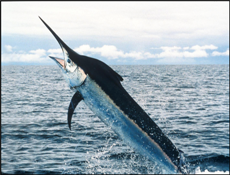
Scientists can’t just talk the talk, they have to walk the walk, argues marine biologist Giovanni Bearzi, from the Tethys Research Institute in Italy. In an editorial published in Conservation Biology he calls for conservation biologists to take action and, among other things, stop eating swordfish. He writes:

We think of ourselves as professionals who are aware of environmental problems and work hard to solve them, but we pay little heed to what we do, buy, and consume. Some of my reputable colleagues drive SUVs to the office every day, possibly where they write about climate change. I know excellent biologists who spend much of their professional lives condemning unsustainable fisheries or reporting high levels of toxic contaminants in marine megafauna, yet when eating at a restaurant they order swordfish or tuna from overfished and declining stocks.

Continue reading