Europe’s chemical safety law reviewed

The world’s most extensive chemical safety regulation, implemented five years ago in Europe, is working well, according to a review published today by the European Commission.

The law, known as REACH (registration, evaluation, authorization and restriction of chemicals), requires companies that produce or sell chemicals in the European Union (EU) to register toxicity data on the compounds and to outline any new tests needed to clarify their biological effects.

According to the review, the law has improved the available information about chemical substances on the market and upgraded risk management measures implemented by companies, thereby reducing the risks these substances pose to the EU population, the review says.

REACH is also making EU citizens feel safer — 61% of people interviewed in a survey of more than 25,000 said that chemicals are safer now than they were ten years ago.

Janez Potočnik, EU commissioner for the environment, said: “This report shows that REACH works. Companies are facing their responsibilities and as a result we have better data about the chemicals they produce and place on the market.”

But the report concedes that it is still too early to quantify the benefits of the regulation. The commission’s conclusions are based mainly on examination of initial trends and qualitative information.

Improvements to the law’s implementation are also needed, it says. These include reducing the registration and processing fees for small business to more evenly spread the financial burden of the regulation. The review also found that member states need to make more effort to ensure that companies comply with the law.

Nature has previously reported on a host of problems that have plagued REACH. Among those issues was that European companies were not providing robust information on the safety of chemicals, and that they were avoiding proposing expensive animal tests.

Animal-welfare groups criticized the review, adding that the law has failed in its goal of promoting alternatives to animal experiments. In a statement, the London-based European Coalition to End Animal Experiments said, “We are seeing routine additional requests for animal tests in some areas, and a lack of leadership… on the promotion of alternative methods that already exist.”
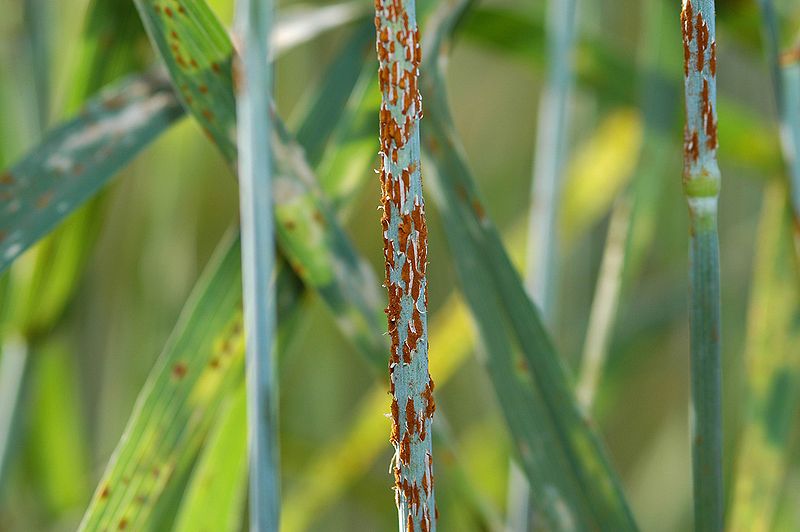
Researchers step up fight against wheat pathogens

Stem rust on wheat.{credit}Image via Wikipedia{/credit}

Researchers are putting up a strong fight against devastating wheat pathogens and have made progress in tracking and controlling disease outbreaks, helping to protect crops from East Africa to South Asia. But the wheat fields of central Asia, including China — the world’s largest wheat producer — are still vulnerable, agricultural scientists will warn at an international conference in Beijing next week.

Wheat rusts, including the devastating Ug99 stem-rust fungus, are mutating and spreading across the globe (see Nature’s previous coverage here and here). In 2010, scientists discovered that two new forms of Ug99 were on the move from their origins in Uganda and had spread to South Africa for the first time.  And they fear it could spread further.

“It is highly likely that some of the virulent new strains related to Ug99 will eventually be carried across the Middle East and Central Asia and into the breadbaskets of Pakistan, China and India,” says Dave Hodson, a senior scientist at the International Maize and Wheat Improvement Centre (CIMMYT), a leading research centre based in El Batan, Mexico.

To fight the spread, Hodson has led efforts to develop a computer system to track the global movements of wheat pathogens with the help of data provided by farmers and scientists from fields and laboratories. The ‘rust-tracker‘ can now monitor 42 million hectares in 27 developing countries, Hodson will tell researchers at the Borlaug Global Rust Initiative, which runs 1–4 September in Beijing. Continue reading

Chinese herbal medicine breaks into EU market

A traditional herbal medicinal product manufactured in China has for the first time been given the go-ahead for sale in Europe, under the continent’s strict new laws to ensure the safety and quality of herbal products.

Around 350 herbal medicines so far are licensed for sale in Europe under the Traditional Herbal Medicinal Products Directive (THMPD), which came into force in April 2011, but they are all manufactured in Europe. (Nature explained the herbal-medicine rules in a recent outlook.)

Advocates of alternative medicines worried that the new rules, which cover manufacturing practices and biochemical analysis, would deter Asian manufactures from the European market and so limit the range of herbal medicines available to patients. The stricter rules aim to ensure a better understanding of the products’ active ingredients and weed out those containing potentially harmful or undesirable substances. (Nature reported last week on recent studies showing that many products contain ingredients derived from endangered animals and toxic plants.)

But the Chinese product now licensed for sale in the Netherlands, and used for the relief of headaches, pains and cramps, signals a step in the right direction.

“About time,” says the UK Alliance for Natural Health International, a campaign group promoting alternative approaches to health care, in response to the news. But in a statement on its website, the alliance says that manufacturers of Chinese herbal products and products from other Asian traditions still face an “up-hill struggle” to win THMPD licences.

The directive is “particularly unsuitable for multi-herb products of the type that make up the overwhelming majority of the non-western products,” the alliance says. Identifying active ingredients in products containing several herbs is difficult, time-consuming and expensive, and does not make good business sense for Asian manufactures.

It is “no surprise” that the newly approved Chinese product is a single-herb extract of rhizomes of Japanese yam, the alliance says.

The Dutch Medicines Evaluation Board (MEB) says that assessing the product, known as Diao Xin Xue Kang, was “not an easy task”. The board travelled to China to ensure that the manufacturing processes of Diao Chengdu Pharmaceuticals, which makes the product, are up to scratch.

The next big leap will be for an herbal medicinal product to reach the lofty status of a medical drug approved for use in the treatment and prevention of disease. This is probably still some way off.

United Nations to appoint a chief scientific adviser

The United Nations (UN) could soon have its own chief scientist or panel of science advisers, the Planet Under Pressure conference in London heard last week.

In a video address to the conference, Ban Ki-moon, the secretary general of the UN, said that he is taking forward a recommendation to appoint a chief scientific adviser or scientific board, as suggested to him by a panel of experts on global sustainability.

“Policy-makers often fail to turn to scientists for advice, or discount it too easily owing to electoral or other political considerations,” he said.

The proposal is one idea among many aimed at strengthening the role of science in policy-making discussed at the conference. Scientists expressed concern that science will not feature strongly enough in discussions on global sustainable development at the earth summit in Rio de Janeiro in June. The London conference, which ran from 26–29 March, is seen as scientists’ opportunity to put forward their case on how to achieve global sustainable development. Evidence-based policy-making and improved environmental governance were at the top of scientists’ agenda (See Nature’s previous coverage of the Rio+20 Earth Summit and other coverage from the conference). Continue reading

Companies leave gaps in chemical safety information

Chemical companies in Europe are not providing sufficient information on the hazards and risks of the substances they produce to ensure their safe use by citizens, says a report from the European Chemical Agency (ECHA), Europe’s chemical regulator.

In a report published on 27 February, the agency finds that companies are not complying with a new European Union (EU) law — REACH (registration, evaluation, authorization and restriction of chemicals) that came into force in 2006.

Nature first revealed problems with companies’ compliance with the law in July last year (see Data gaps threaten chemical safety law). At the time, Jukka Malm, director of regulatory affairs at the ECHA, told Nature: “Industry has not taken full responsibility for the quality of data.”

The ECHA says that it has identified “deficiencies” in the safety reports submitted by companies, which detail substances’ hazards, uses or potential exposures, risks and risk-management measures. Given the missing information, the “safe use of chemicals cannot be achieved”, the agency says.

In 2011, the ECHA checked 146 dossiers containing chemical-safety information submitted by companies as required by law. Of these, 134 lacked sufficient data and the ECHA had to request that companies fill these information gaps.

In particular, companies are not properly identifying the substances they produce. This “undermines the pertinence of the hazard information” supplied by companies and of information on how to use the substances safely, says the agency.

The ECHA calls on companies to “proactively” update and improve the quality of the information they have provided on the substances they produce.

Millions of animals spared from chemical safety tests

Tens of millions of animals could be saved from use in chemical-safety tests over the next eight years after Europe’s chemical regulator gave the go-ahead to a new streamlined study to assess the safety of substances.

European Union (EU) legislation requires companies to test the safety of the chemicals they produce in two generations of animals to assess the effects on their reproductive systems. Toxicologists were concerned that the testing requirement would mean up to 54 million animals would be used in chemical-safety studies to meet the requirements of REACH (Registration, Evaluation, Authorisation and Restriction of Chemicals) legislation introduced in 2007 (see Chemical-safety costs uncertain).

A proposed new test would allow just one generation of animals to be used, with additional tests on a second generation required only if the first round raised concerns. The regulator, the European Chemical Agency (ECHA), based in Helsinki, had threatened to reject the test, saying that there is not yet enough evidence to rely on one-generation testing (see Streamlined chemical tests rebuffed).

But on 15 February, ECHA announced that it has now changed its mind in favour of the Extended One-Generation Reproductive Toxicity Study (EOGRTS). The agency says that the streamlined test will, “under certain conditions”, provide sufficient safety information to replace the two-generation reproductive toxicity study. It says it has already received around 230 proposals from companies to carry out the new test.  Clarifying its role, ECHA says, “Our role is neither to reject or generally approve test guidelines but to assess whether, and under which conditions, relevant new test guidelines could be applied to fill standard information requirements.”

The move comes after Nature revealed that chemical companies were not providing the safety data on reproductive and developmental toxicity REACH requires of them.  Nature also found that very few companies were proposing to carry out alternative non-animal tests, causing further concern that REACH would boost the number of animals used in toxicity testing.

Toxicologists say that allowing the streamlined test, which is quicker and cheaper to conduct, will encourage more companies to test their products.


Anti-GM groups attempt to sully transgenic control of dengue fever

Genetically engineered mosquitoes developed by British biotech firm Oxitec as an approach to controlling dengue fever have been caught up in controversy since 6,000 of them were deliberately released to an uninhabited forest in Malaysia in a trial in December 2010.

The move took many local people and international observers by surprise. For the most part, the problem was not that the mosquitoes were GM or ineffective – previous trials in the Cayman Islands were very successful. Rather the locals took aim at the lacklustre efforts made by Oxitec and the Malayan government to consult and notify the public about the trials (see  GM mosquitoes wipe out dengue fever in trial and Letting the bugs out of the bag).

Unsurprisingly anti-GM campaigners went for the company’s jugular over the incident, and have been trying to bring them down since. In the latest thrashing, green groups including GeneWatch and Friends of the Earth say Oxitec tried to hide results showing the GM mosquitoes could survive in the wild (Daily Mail).

The Aedes aegypti spreads dengue fever.

Oxitec engineered the males so that they will die unless they are given the antibiotic tetracycline which is not generally available once they are released into the wild. The green groups obtained a study showing that 15% of the offspring of lab-bred GM mosquitoes survived when fed on cat food which contains low levels of tetracycline. Tetracycline can sometimes be found at low levels in the environment. This represents a “failure of the technology”, they say.

The green groups have made “inaccurate public assertions” with the purpose of causing “anxiety” about GM technology and its the regulatory process, counters Oxitec. Given how the Daily Mail covered the story,  Oxitec has a point.

The green groups’ claims have “no substance as they could have known had they asked us about any part of it,” Luke Alphey co-founder and chief scientist of Oxitec told Nature.

In further studies Oxitec investigated whether the tetracycline levels that can be found in the environment are likely to lead to survival of the mosquitoes.

“While tetracycline can be found in the environment in isolated areas it is not present in sufficient quantity to ensure survival of the mosquitoes,” the company says.

About two-fifths of the world’s population are at risk of contracting dengue fever. The green groups “risk undermining the chance of a real solution coming to cultures who have a real problem,” the company says.

The fight continues.

Picture source: Wikipedia. Published under terms of the GNU Free Documentation License. Author  Muhammad Mahdi Karim.

Monsanto’s transgenic drought tolerant maize approved

Agricultural biotechnology giant Monsanto has received the green light from the US Department of Agriculture to sell its transgenic drought-tolerant maize (corn) MON 87460. The move marks the start of a new wave of biotech plants to reach the market engineered with traits tolerant to environmental stresses such as heat, and soils starved of nitrogen, phosphorus and other essential nutrients (Reuters).
This second generation of transgenic crops moves beyond what until now has been a mainstay of the ag-biotech business: developing and selling pesticide- or herbicide-resistance crops, such as Monsanto’s Bt maize (See Nature‘s feature on agricultural biotechnology companies and news on drought tolerant crops). Monsanto will conduct on-farm trials this year to give farmers experience with the product.
“Our drought system is designed to help farmers mitigate the risk of yield loss when experiencing drought stress, primarily in areas of annual drought stress,” said Hobart Beeghly, Monsanto’s US product management lead. Monsanto developed the crop in collaboration with the German chemical company BASF. They did so by inserting a drought-tolerant gene from the bacteria Bacillus subtilis into the crop’s genome. The trait reduces the limiting effect of drought conditions on the plant’s ability to photosynthesize and its yield. But it won’t save the crop in extreme drought conditions. Monsanto spokesperson Danielle Stuart told the agriculture news site Capital Press that the technology could have applications beyond maize.”There is a possibility the gene could be used in other crops and Monsanto has a robust pipeline that evaluates many genes,” she said in an e-mail.

Photo licensed under Creative Commons. Courtesy of Christian Fischer.

Land grabbing in Africa continues to harm the poor

More than 200 million hectares of land in poor nations was sold by governments in land-grabbing deals with industry and investors between 2000 and 2010, a new study reports.

This high global demand for land is likely to continue for the long term, concludes the study by the International Land Coalition, an alliance of civil society and intergovernmental organisations, published today. (See Nature’s previous coverage of land grabs here.)

While the most publicised deals have focused on international transactions for food and biofuel production, the study – the most comprehensive to date – says rich national investors play a much larger role in land acquisitions than previous recognised.

Continue reading