SciArt scribbles: Drawing to coax new scientific questions

Many scientists embrace the artistic medium to infuse new ideas into their scientific works. With science-art collaborations, both artists and scientists challenge their ways of thinking as well as the process of artistic and scientific inquiry. Can art hold a mirror to science? Can it help frame and answer uncomfortable questions about science: its practice and its impact on society? Do artistic practices inform science? In short, does art aid evidence?

Nature India’s blog series ‘SciArt Scribbles’ will try to answer some of these questions through the works of some brilliant Indian scientists and artists working at this novel intersection that offers limitless possibilities. You can follow this online conversation with #SciArtscribbles.

Late into her PhD, biologist Ipsa Jain realised that she did not want to spend her life in a lab. Was it okay then to change her mind and embrace visual arts — something which never failed to make her happy?

Ipsa Jain

During the fag end of Phd, I was convinced that the life of a lab rat was not for me. I was having a tough time figuring out a path different from what had been my single minded pursuit since high school. Around that time, I came across a blog by Bulgarian writer Maria Popova (Brain Pickings), which convinced me that it was okay to change my mind. I asked myself what I’d be happy doing. Art was an easy answer.

I went back to doodling and drawing after ten years. I drew things I knew, I drew biology. I started taking online art and design courses and posted some natural history inspired drawings along with tit-bits about the specimen. People started approbating the work and the information.

Mice eating and excreting.{credit}Ipsa Jain{/credit}

In a student festival at the Indian Institute of Science Bangalore, an undergrad student Abhijit Krishna asked me if I would want to exhibit my work. I did and to my surprise people liked and bought my work. I realised that this could make for a living as well, and not just remain a temporary side gig.

Wildlife art

I interviewed a lot of wildlife artists around the country including Abhisheka KrishnaGopal, Sangeetha Kadur, Rohan Chakraborty and Pooja Gupta. Conversations with them made me realise the impact of their work. It is through joy and beauty that they were able to spark conversations around the subject. I also realised that it was this very joy and beauty that had allowed me to connect with my audience through my early work.

Soon after, two of my friends Abhisheka KrishnaGopal and Veena Basavarajaiah invited me to be part of a dance project called ‘how to be a fig’. In this performance, a group of homemakers, engineers, dancers and scientists danced to the ecology of figs based on the book Ladders to Heaven by Mike Shanahan. We were the tempest one minute, a fighting monkey the other, and a growing branch another. The response from the audience was so strong and emotional that I realised the real power of art. It transforms the performer and the observer. It is a beautiful medium of exchange of ideas. That experience still defines my understanding of what it means to be an artist.

This understanding of art as a force evokes and provokes a lot of my work.

A water colour depiction of ‘calcium signalling’ — how calcium ions communicate and drive intercellar processes.{credit}Ipsa Jain{/credit}


Life vs. hydra: This water colour painting is a take on Austrian symbolist painter Gustav Klimt’s ‘Life and Death’. Here, death meets ‘immortal’ hydra.{credit}Ipsa Jain{/credit}

Understanding science visualisation

In one of my first illustration gigs, I created graphics for the web page of Dr. Arjun Guha at Instem, Bengaluru. As we discussed his work, I began thinking with the physicality of anatomy in mind. Drawing can force you to think differently. I got to read about the beautiful work of other science visualisers, including David Goodsell, Drew Berry and Graham Johnson. They incorporate a lot of science in making images. The end product often throws up new scientific questions and hypothesis.

I once attended a talk by Italian science visualiser Monica Zoppè. She said something extremely profound and I paraphrase it here. When we think like scientists, we think within the pragmatic constraints of resources and techniques. When we visualise our science, we are forced to think without these constraints. And if we come up with new ideas and questions, we are forced to push the boundaries of our techniques to answer these questions.

I got to experience these ideas first hand as a postdoctoral fellow in the lab of Minhaj Sirajuddin at InStem. Collaboratively, I worked on drawing a molecular motor with French digital animator Renaud Chabrier and biologist Carsten Janke at the Insititut Curie in Orsay, France. While summarising data into a pencil drawing, I found that the existing information on molecular motion didn’t match reports from structural data. I asked these questions to leading researchers in the field (unpublished data).

Renaud Chabrier exposed me to more ideas on how to incorporate science into a drawing. He taught me that while portraying information that is still under study or has an element of doubt, use faint strokes, and for established data use solid lines. I still use this trick all the time!

Pencil drawing trying to understand the form of a molecular motor.{credit}Ipsa Jain{/credit}

I also got exposed to the work of Gemma Anderson, a drawing practitioner who works with scientists and organises drawing labs for science students. Her work doesn’t rely on conventional iconography but recreates these forms and asks newer questions in the process. She coaxes scientists to contextualise their work in a space and time matrix. My dream would be to do similar work with Indian labs, where we use drawing exercises to think about our subjects differently.

Practising science communication

As my ideas grew from joy to information-driven image making, I found myself asking what “sciart” means. Where and how does it overlap with science communication and with science visualization?

Luckily my postdoc project allowed me to ask this very question on a daily basis. We are making a book for young adults on colouration in animals and how quickly these colours change. The idea is to discuss behaviour, anatomy, physiology and molecular processes in one book. The research is based on science and the images (particularly microscopic) are direct interpretation of available data. But I often have to balance clarity with accuracy to highlight the story. While the images are informed by science, they do not incorporate all details. This experience has taught me that the content and images we need to tell a story also depend on the intent and the audience.

A water colour painting of a melanocyte with pigment aggregated at the centre.{credit}Ipsa Jain{/credit}

In a project last year, I asked what a cell is. I realised that the textbook definition is incomplete in so many ways. In trying to find a more nuanced answer, I interacted with college students from fields other than science. From my drawings, some of them interpreted the distribution of internal structures differently — they felt that organelles are different at different depths, and the shape of the cell changes from top to bottom. Some figured out the polarity of the cell. Some were even able to identify and predict relationships between organelles. For example, they noticed how mitochondria (the energy making organelles) were closely related to the periphery of the cell where cilia, the structures that drive the motion of the cell, are located.

Mixed media depiction compares the form and interior of an orange with Tetrahymena, a unicellular organism.{credit}Ipsa Jain{/credit}

I am a great believer in sharing what I learn without waiting to acquire expertise in it. I have been conducting workshops on science illustration and graphic design for scientists. I also use art classes as an excuse to talk about some scientific concepts.

At a students’ course called ‘Art of Being’ in St. Joseph’s College, Bengaluru, we have been discussing how observation-based drawing can be used to learn about a subject. The course, attended by both science and economics students challenges me to think about my own ideas, and the students to think of the science (and other subjects) differently. How does an illustrator choose to represent certain information, and hide some? How does that affect the perception we create about the subject? How do we know about time while looking at schematic art or a drawing? How does our inherent bias affect the collection of data? These are some of the questions we ask.

At a science illustration workshop, students copied an artwork by American biologist-artist David Goodsell. Each chose to highlight different aspects of the drawing reflecting that science visualisers could choose to see or show different things.{credit}Ipsa Jain{/credit}

I am hoping to engage with science and design students on observation and documentation, which remain the essence of the scientific process. I hope to bring them together to ask newer questions and seek newer answers. As a freelancer, I hope to collaborate with more scientists and visualise their science.

[Ipsa Jain can be reached at ipsajain.31@gmail.com. Some of her work is at www.ipsawonders.com.]

Suggested reading:

SciArt scribbles: Science, history and comics

SciArt scribbles: Crowdsourcing oral history of India’s science 

SciArt scribbles:CRISPR and the smell of rain

SciArt scribbles: Bringing art and science together for greater good

SciArt scribbles: The mellifluous gene editor

SciArt scribbles: The molecule painter

SciArt scribbles: Coupling creation and analysis with collages

SciArt scribbles: Technology to aid dance

SciArt scribbles: Music to tackle PhD blues

SciArt scribbles: Playing science out

Artists on science: scientists on art

Water charity: What the drinking fountains of Mumbai tell us

The pyaavs of Mumbai aren’t just public fountains but a repository of memories, architectural history and an important lesson in water philanthropy. Swapna Joshi, a PhD Student at the Indian Institute of Science Education and Research Pune, studies them closely to find new meaning in the old.

A pyaav on Mumbai’s Mohammad Ali Road

There is something mesmerizing about the architecture of South Mumbai. As a local train commuter, whenever I step into Mumbai’s CSMT railway station (formerly Victoria Terminus), I notice, despite the hustle, intricate details of the building. Working with a Mumbai based conservation architect’s firm gave me a vantage point to look at colonial period architecture and appreciate it. That’s how I came in contact with the public drinking water fountains of Mumbai, locally known as the pyaavs.

‘Thy thirst repose to quench a handful of life’. This was the quote we chose to restore the first pyaav through a public-private initiative in Mumbai. Why this intense thought in a structural conservation? Was there a story beyond the material fabric of the pyaav? The answer is yes.

This pyaav was in the Kessovji Naik Fountain and clock tower in Bhat Bazaar of Masjid Bunder, one of the busiest markets of Mumbai. Some 100 years ago, a generous patron had decided to support the construction of the pyaav and provide water for the city, without any other motive. How fascinating is this!

Around the same time I read ‘The Water Heritage of Mumbai’ by Dr. Varsha Shirgaonkar, the Vice-Chancellor of S.N.D.T Women’s University. In this seminal work, she painstakingly documents most of the city’s pyaavs, including many whose exact location was not known. Data on about thirty pyaavs of Mumbai are available today. These pyaavs were built during the 19th and 20th century and provided drinking water in commercial zones, along tram routes, in markets, gardens and other public places.

A pyaav in the Char Nal area of Mumbai.

The concept of a pyaav is based on two important things — the generosity of a philanthropist with an intention of giving back to the city; and building a monument in the memory of a deceased relative of the patron. Armed with Dr. Shirgaonkar’s foundation-laying information and with the thought of developing and restoring these pyaavs to their former glory, a group of like-minded people, including me, came together. The group — comprising an architect, a journalist, a historian and a heritage enthusiast — formed a social media group called ‘The Mumbai Pyaav Project’. Our reach was limited because all we had were photos of pyaavs, some in utterly dilapidated condition.

In Carnac Bandar in Mumbai, for example, a pyaav has been transformed into a temple. Similarly, another pyaav nearby was on the verge of being demolished for a developmental project, but was saved because of the awareness of local people. Identifying dangers to the pyaavs would help in their conservation. The need is to look at the data but through a contemporary lens.

This pyaav in the Crawford Market area of Mumbai is modeled like a shrine.

In 2017, I received the Sahapedia Unesco Project Fellowship. It enabled me to map all the pyaavs in the city, understand their present condition, interview people associated with them and document them audio-visually. While doing the field work and photo documentation, I came across many pyaavs still in use as drinking water sources. When I saw a small child drinking from the pyaav in the King Circle garden, I was convinced of the need for their revival. I joined hands with people who shared this conviction to retrieve and share information on the pyaavs with a larger audience.

Apart from their heritage value, pyaavs reduce plastic pollution by eliminating the need for packaged drinking water. Commuters I interviewed near a pyaav in Kalachowki area, and the owner of a nearby shop, were delighted that it was being restored. The question of whether working class people were the only ones to drink water from these pyaavs was answered by visits to some modern paanpois (water storage tanks) and earthen water pots kept charitably for passers by on crossroads. Also, almost every tea stall serves water to customers before tea, which is a kind of a pyaav system in itself. The project started building up with all this and the same data now got a fresh relook.

The endeavour was to understand the basic drinking water supply system of Mumbai and functioning of the dams in the city — from when and why they were built to the quantity of water supply to the city. When we showed our audio-visual content, people admitted they passed these pyaavs every day but did not know what they were. Armed with knowledge, they expressed interest in seeing more of these.

Pyaavs are a network of history and heritage, drinking water supply and memories. As of now, three other pyaavs have been restored and many others are in the process of being revived . The re-collation of the data in the  Sahapedia project gave me the key to understand pyaavs much better.

The pyaavs have various functions but we have largely failed to admire them as spaces to pause, gather and remember. They are soothing beauties and heritage markers. As the great poet Rabindranath Tagore puts it: “For many years at great cost, I traveled through many countries, saw the high mountains and the ocean. The only things I did not see were the sparkling dewdrops in the grass…. just outside my door.”

[Photo credits: Swapna Joshi.]

SciArt scribbles: Science, history and comics

Many scientists embrace the artistic medium to infuse new ideas into their scientific works. With science-art collaborations, both artists and scientists challenge their ways of thinking as well as the process of artistic and scientific inquiry. Can art hold a mirror to science? Can it help frame and answer uncomfortable questions about science: its practice and its impact on society? Do artistic practices inform science? In short, does art aid evidence?

Nature India’s blog series ‘SciArt Scribbles’ will try to answer some of these questions through the works of some brilliant Indian scientists and artists working at this novel intersection that offers limitless possibilities. You can follow this online conversation with #SciArtscribbles.

Argha Manna, a cancer researcher-turned-science comics artist, tells us how he blended his passion for science, history and comics to carve a unique genre for himself.

Argha Manna

Seven years ago, as a PhD student in cancer biology at Bose Institute in Kolkata, I was sitting at my desk reading a research paper. The paper was about how ‘cortical actin remodeling can influence spatio-temporal organization of cell surface receptors’. Although it was not directly related to my research, I wanted to read it as one of my friends was on the author list. While the paper featured a beautiful graphical abstract and excellent schematics, I was still having trouble understanding what it was about. The moment I started to think in visual sequences, however, the story opened up for me. Unknowingly, I had created a comic narrative in my mind on the cellular events, and the paper made sense.

Making science accessible through comics is not a new concept. According to Will Eisner, considered the father of the graphic novel, and eminent comics artist and scholar, Scott McCloud, comics is a sequential art form. The practice of using sequential art to explain scientific findings was common during the early days of modern science — Galileo made a series of sunspot drawings from his own observations. After the advent of time-lapse imaging and video-micrography, sequential art has been restricted to either the discussion section of academic journals or in science-themed comic books.

Visual metaphors to tell science stories

My first encounter with such books was Larry Gonick’s The Cartoon History of the Universe series. I was amazed by the use of visual metaphors. Later, I came across several books that used comics to communicate science such as Jay Hosler’s Optical Allusions, Neurocomic by Matteo Farinella and Hana Ros, and Mysteries of the Quantum Universe by Thibault Damour and Mathieu Burniat. I also found comics in academic journals like Science (General Relativity by Adrian Cho, Science, 2015). In all of these comics, metaphors were used to explain complicated scientific concepts in an accessible manner. Jorge Cham’s PhD comics and Randal Munroe’s xkcd are great examples of this.

Reading Nick Sousanis and Richard Monastersky’s The fragile framework (Nature, 2015) was a kind of ‘aha moment’ for me. I had found my calling – communicating science through comics. I dropped out of my PhD and joined a local newspaper in culturally-rich Kolkata, the West Bengal capital. In the first few months I created a series of articles for school children on the advent of modern science. I was fascinated by the history of science, so I started researching Robert Hooke and the early days of the Royal Society. A few months later I started to convert the articles into a comic form — and my first newspaper comic was born (Image 1). It has been appearing every week in ‘The Telegraph in School’ supplement.

Image 1: A page from the comics ‘Welcome to the Hookes’ lab’

I didn’t want to restrict myself to just explaining scientific concepts, to make science truly come alive I also included elements such as socio-political context, the people behind the science, technological development, social network of scientists and micro-histories.

Such an approach is essential in communicating the full flavour of the history of science, according to Harvard-based physicist and historian Peter Galison (Ten problems in History and Philosophy of Science, ISIS, 2008). History of science practitioners — as historians, scientists, librarians, cataloguists and archivists — collect these elements in the form of oral histories, newspaper clippings, artwork, diaries and memoirs, photographs and podcasts.  A complete story can then be formed by adding these elements together — and may be more easily digested as a comic, rather than as a long form text.

As popular history of science stories tend to focus on Europe and North America, I created a free-to-access blog ‘Drawing History of Science‘ to tell stories about Indian science through illustration. At the beginning it was a lone venture. Then Sci-Illustrate, a Munich-based group, came forward as a collaborator in my journey. I found their goal – to revive the stories of women scientists from India – important. Together we have been retelling stories of Indian Women in Science (Image 2 and 3).

Image 2: Rajeswari Chatterjee (1922-2010), former professor and chairperson of the department of electro-communication engineering at the Indian Institute of Science, Bangalore. This and the following artwork were created in collaboration with the Sci-Illustrate group in their ‘Indian Women in Science’ series.


Image 3: Clockwise from top left: JANAKI AMMAL, Indian botanist and cytogeneticist, credited with putting sweetness in Indian Sugarcane varieties; ASIMA CHATTERJEE, one of the first women in India to earn a doctorate in science; IRAWATI KARVE, India’s first woman anthropologist; BIBHA CHOWDHURY, India’s first female particle physicist.

Later, ClubSciWri, the science communication platform of ‘PhD Career Support Group’ or STEMPeersTM approached me to create more comics about the history of science. In collaboration with them, I am telling stories from a global perspective, through comics and art (Image 5).

Image 5: A page from the essay ‘Waging war on the microbes’. The text of the essay was originally written by Ananya Sen for Club Sci Wri.

My future plan is to narrate natural history research in colonial India through comics and interactive art. Right now I am cataloguing the artwork (drawings, engravings etc) published in Asiatic Society journals and other media. I wish to redraw the old colonial artworks, to make them more interactive and then add the context and other elements in the form of sequential illustrations. It is still a lonely walk but I feel the future is bright.

[Argha Manna can be contacted at argha.manna@gmail.com.]

Suggested reading:

SciArt scribbles: Crowdsourcing oral history of India’s science 

SciArt scribbles:CRISPR and the smell of rain

SciArt scribbles: Bringing art and science together for greater good

SciArt scribbles: The mellifluous gene editor

SciArt scribbles: The molecule painter

SciArt scribbles: Coupling creation and analysis with collages

SciArt scribbles: Technology to aid dance

SciArt scribbles: Music to tackle PhD blues

SciArt scribbles: Playing science out

Artists on science: scientists on art

SciArt scribbles: Crowdsourcing oral history of India’s science

Many scientists embrace the artistic medium to infuse new ideas into their scientific works. With science-art collaborations, both artists and scientists challenge their ways of thinking as well as the process of artistic and scientific inquiry. Can art hold a mirror to science? Can it help frame and answer uncomfortable questions about science: its practice and its impact on society? Do artistic practices inform science? In short, does art aid evidence?

Nature India’s blog series ‘SciArt Scribbles’ will try to answer some of these questions through the works of some brilliant Indian scientists and artists working at this novel intersection that offers limitless possibilities. You can follow this online conversation with #SciArtscribbles.

Are memories of the generation that transformed India’s science in the 20th century fast fading away? Do India’s contributions get lost in the predominantly western storytelling of science? Jahnavi Phalkey, historian of science and the founding director of Science Gallery Bengaluru, says a new public repository is all set to correct this by documenting the oral history of India’s science.

Jahnavi Phalkey{credit}Science Gallery Bengaluru{/credit}

The concept of a well-documented ‘intergenerational conversation’ – where one generation passes on their expertise, anecdotes and experiences to the next – is grossly missing in India’s science. While transformative ideas revolutionised the country’s science and engineering in the 20th century, not many in the present generation of scientists might recollect the people behind those sparks.

To preserve these nuggets from history, my team and I at the Science Gallery Bengaluru are putting together a public archive of India’s science. Called Re:Collect, this crowd-sourced online repository will house recordings of conversations with free India’s first generation of scientists, engineers, and laboratory technicians about their life and times, giving us a peek into an era gone by. In short, we will document memories of science in action.

The repository is India’s first attempt to draw on the public’s curiosity, especially of the young, to unearth, document, and appreciate India’s rich science and technology history. Our inspiration came from two highly successful volunteer driven public digital archives – P Sainath’s People’s Archive of Rural India (PARI) and Guneeta Singh Bhalla’s 1947 Partition Archive.

What Sainath  says about the need for a people’s archive is equally true for the history of science in India, “Without any systematic record, visual or oral, to educate us – let alone motivate us – to save this incredible diversity, we are losing worlds and voices … of which future generations will know little or nothing.”

We will plug into a network of institutional archives willing to accept documents and objects we discover. Our first institutional chapter will be hosted at the Archives and Publication Cell, Indian Institute of Science (IISc), shortly to be followed by another chapter at the Indian Institute of Technology, Madras (IITM).

Positioning India in the global science narrative

The story of science is mostly told as a story of Europe and North America. Stories and contributions from India and other parts of the world are lost in this narrative. We thought about how we might be able to change that skew.

While it was heartening to see new institutional archives opening their wares up, we found very few oral histories and no significant collection of personal papers of scientists and engineers. Such material is essential to write the history of scientific practice, credible biographies and thought-provoking prosopographies such as Gary Wersky’s The Visible College: The Collective Biography of British Scientific Socialists of the 1930s (1978), Marwa Elshakry’s Reading Darwin in Arabic, 1850-1930 (2013) and Michael Boulter’s more recent Bloomsbury Scientists: Science and Art in the Wake of Darwin (2017).

Not too long ago, at the Science Museum London, I worked on what was dubbed as a blockbuster exhibition on India for which I was looking for interesting objects and stories behind them. Given my research in history of science, I knew it would be difficult, though I did not then appreciate just how much! King’s College London, where I was employed at the time, came to the rescue with seed funding for research on the exhibition and this is how Re:Collect was born. 

The process of archiving

Through the initial seed fund from King’s, I created a list of over 1,000 senior scientists and engineers born before India’s Independence in 1947, organised by their current city of domicile. Based on our learning from comparable projects, science communicator Shaun O’Boyle, designer Madhushree Kamak and I developed handbooks to generate material for the project. We have an established protocol for audio and audio-visual recording of interviews in laboratories, for creating their audio-summaries and transcripts, and for documenting objects and instruments of historical interest.

Re:Collect India will be driven by the young and not-so-young volunteers  ̶  they could be students, scientists, historians, artists or anyone interested in the history of science and technology in India. These volunteers will interview the first generation of free India’s scientists, engineers, and technicians preferably in their laboratories or field-site. They may even video record the interview as long as it adheres to the standards specified by the protocol. We want to encourage the need to listen to and capture the stories that these interviewees want to tell.

Field experiments are tricky and often throw up hilarious moments. Re:Collect will capture the joy of doing experimental research. In this photo, meteorologist Anna Mani works with a colleague on a radiosonde, a balloon-borne weather-measuring equipment.{credit}World Meteorological Organization{/credit}

The conversations will essentially capture the enthusiasm, challenges, setback, struggles of teaching, conducting research, establishing disciplines, institutions, and building equipment in India after Independence. We will encourage the documentation of objects in teaching and research. The resulting conversations about scientific practice will become an oral history archive, and also generate an object inventory.

India’s voices in science

As India comes under the spotlight in what promises to be the Asian century, general recognition of India’s struggles and accomplishments in science remains woefully inadequate both at home and abroad. This global lack of awareness is untenable especially when India is being seen as an engineering powerhouse with huge potential in scientific research.

Our archive, therefore, will have three strands – a digital public archive of people in science, an inventory of historical objects in teaching and research, and an open access exhibition website with stories of science in action. In due course, we would like to add full text official and credible reports related to science and engineering in India. As a bonus, we hope the process will help generate donations of personal papers and objects to institutional archives.

The Re:Collect experience and our online orientation workshops will help volunteers develop useful new skills. Our citizen archivists may want to become storytellers and vice versa. We would, of course, respect the interviewees’ intellectual ownership of their story, and always acknowledge the volunteer’s contributions.

Re.Collect will capture the collective energy and camaraderie that builds and pushes the pursuit of science. Rajeshvari Chatterjee (centre), the first woman engineer from Indian Institute of Science, works with colleagues at the Department of Electrical Communication Engineering.) {credit}APC, IISc{/credit}

Institutions of science and their archives, especially in India, are seldom accessible to the layperson. Moreover, written documents fail to capture the excitement, the tragedy and the occasional triumph of everyday science. Video and spoken-word recordings of conversations, accompanying historical and contemporary photographs, and supporting documents are, therefore, more appropriate as public resources.

Besides the collaborations with IISc and IITM, we are exploring partnerships with universities in India and abroad to host the website and the digital repository. We will also be actively seeking collaborations with people who can use materials from the repository for research, writing, filmmaking, and pedagogy.

As people across generations meet and talk to each other, the young will meet the experienced. The stories shared will shed light on institution building and leadership in science, on the trials and travails of doing experimental research in India  ̶  all immensely useful learning for an early career scientist or an engineer. Moreover, the material itself will lay the foundations for future history writing; and more generally, the project will help create a historical sensibility around science in India.

[Jahnavi Phalkey is the author of Atomic State: Big Science in Twentieth Century India, and director-producer of the film Cyclotron.]

Suggested reading:

SciArt scribbles:CRISPR and the smell of rain

SciArt scribbles: Bringing art and science together for greater good

SciArt scribbles: The mellifluous gene editor

SciArt scribbles: The molecule painter

SciArt scribbles: Coupling creation and analysis with collages

SciArt scribbles: Technology to aid dance

SciArt scribbles: Music to tackle PhD blues

SciArt scribbles: Playing science out

Artists on science: scientists on art

SciArt scribbles: CRISPR and the smell of rain

Many scientists embrace the artistic medium to infuse new ideas into their scientific works. With science-art collaborations, both artists and scientists challenge their ways of thinking as well as the process of artistic and scientific inquiry. Can art hold a mirror to science? Can it help frame and answer uncomfortable questions about science: its practice and its impact on society? Do artistic practices inform science? In short, does art aid evidence?

Nature India’s blog series ‘SciArt Scribbles’ will try to answer some of these questions through the works of some brilliant Indian scientists and artists working at this novel intersection that offers limitless possibilities. You can follow this online conversation with #SciArtscribbles .

Mukund Thattai, a physicist practicing biology at the National Centre for Biological Sciences (NCBS), talks to us about bio-art and how some bio-artists from Bangalore are challenging scientists’ new-found power to edit life.

Mukund Thattai

Genetically enhanced humans have long been a staple of science fiction. He Jiankui’s announcement in November 2018 of the birth the world’s first genome-edited babies drew flak for flouting ethical norms governing the use of genome editing technologies. This wasn’t the first time scientists had used the DNA cutting-and-pasting tool known as CRISPR to modify genes in embryos. It was, however, the first time such embryos had been implanted and brought to term in their mothers’ womb. The modifications introduced into the twins’ genomes confer no medical benefit, and may even cause harm. It is an irreversible human tragedy: the baby girls, who never asked for this, will spend the rest of their lives as scientific specimens.

Nevertheless, genome editing is here to stay. Will we learn how to use this technology responsibly?

This is the central question that animates iGEM, the International Genetically Engineered Machines Competition. Inspired by the Massachusetts Institute of Technology (MIT) robotics competitions, iGEM looks at a future in which engineering and biology are indistinguishable. What would happen if we could build new types of cells?

I was at MIT in the early 2000s when iGEM was founded. Though I was doing a PhD in the physics department, I’d grown fascinated with biology. Across campus in the computer science department, Tom Knight and Drew Endy were thinking about how to bring notions of abstraction and design to biological engineering. In 2003, they threw out an inspiring challenge to MIT undergrads: could they engineer bacteria that would blink like Christmas lights? The very next year, undergrads from five US universities tried their hand at engineering cells. In 2005, 13 undergrad teams from the US, Canada, the UK, and Switzerland participated in the first international iGEM at MIT, in what has now become an annual jamboree of creations for student teams from around the world.

Science with a dose of fantasy

iGEMmers think of cells as computers, running an operating system that provides basic functions such as the ability to replicate DNA, translate genes into proteins, and convert nutrients into energy. Designer genes are like applications running on top of the operating system. iGEM teams remix components known as BioBricks, an enormous collection of DNA-based “standard biological parts” that give cells new chemical and physical abilities. Over the years iGEM has featured applications that allow cells to keep time, store a digital bit of information, sense toxic chemicals, and carry out basic computations.

The ethos of iGEM, and indeed of the entire synthetic biology community, has always included a culture of openness, sharing, and excitement for science, coupled with rigorous engineering and ethical practice. In the early 2000s, iGEM embodied a bracing and idealistic vision of our biological future, with a dose of fantasy. At the time our actual ability to manipulate genomes was rather limited. With the advent of CRISPR, this has now changed.

From 2012 to 2014 He Jiankui was the leader of the Southern University of Science and Technology (SUSTC) iGEM team. In December 2018, the iGEM Foundation released this statement: “We are stunned and disappointed by Dr. He’s actions, particularly as a former iGEM team leader. Conducting human genome engineering – and further, doing so without proper research or backing from the broader scientific community – is a clear violation of iGEM’s standards as well as those of the scientific community at large. Had this project been proposed within the iGEM competition, it would have been disqualified for violating iGEM’s policies.”

The power of genome editing is rapidly outpacing our ability to predict its effects or regulate its practice. To deal with this monumental challenge, biologists will need to go far beyond the routine laboratory spaces in which they operate. They will need to partner with historians, social scientists, ethicists and artists. An energetic collective of bio-artists is leading the charge.

Making bacteria that evoke petrichor

In 2009, a group of art students from Bangalore stood before the iGEM judging panel describing an unusual summer project: to construct bacteria that would synthesise geosmin, the substance responsible for the evocative smell of the first monsoon rains. The team’s presentation documented their journey of discovery, as they learned the language and techniques of the life sciences and explored its cultural, ethical, and aesthetic implications. As one of their team leaders, I sat nervously in the back row. My nervousness evaporated when we received thunderous applause from a packed hall. One of the iGEM judges declared: “This changes the way I think about synthetic biology.”

Here’s a little back story to this extraordinary scene.

In 2004, I relocated from MIT to India to set up a synthetic biology lab at the NCBS in Bangalore. Reshma Shetty, an MIT graduate student working with Drew Endy, and I discussed how to put together an iGEM team from India. In the summer of 2006 I ran an open workshop called “A crash course in designer biological networks” to overwhelming response. We assembled an NCBS student team that brainstormed on the kinds of “genetic circuits” that could be built. We zeroed in on one old classic idea: teaching cells to blink. But then we confronted the messiness of biology: all the circuits we built expressed the right proteins and seemed to be correctly assembled, but did not do what they were supposed to.

The team went to MIT as the first from India, and competed with 31 others, only to report three negative results. These were later published in a paper which (to my great surprise) has actually been cited! (In 2012 Navneet Rai, a student guided by K.V. Venkatesh at IIT Bombay and me, finally succeeded in making blinking cells as part of his PhD research).

The iGEM atmosphere was electric, and each one of us came away with a lifelong memory of being present at the start of something big.

Next year, with help from a summer research fellows programme at Indian Academy of Sciences, I assembled a team of six undergraduate students from six Indian institutions. Our project was a proof of principle: “How to build and test a genetically engineered machine in six weeks”. 2008 saw a group of IIT Madras students mentored by their professor Guhan Jayaraman, raise funds with institute alumnus and biotech entrepreneur Shrikumar Suryanarayanan. The team was judged as having the “Best Foundational Advance” at iGEM 2008, and got a special prize for the “Best Engineered BioBrick device”. Many members of this team went on to co-found, with Suryanarayanan, the biotech company Sea6 Energy.

Later IIT Madras iGEM teams have also had great success: the 2011 team was awarded the “Best New BioBrick Part” for a light-induced pump, and in 2013 it received the award for “Best Human Practices”. Since iGEM 2009, which involved 100 teams from 25 countries, multiple teams from India have made consistent appearances each year. Credit for this goes to iGEM mentors across the country, and also to India’s Department of Biotechnology, which encourages and supports the teams through the Indian Biological Engineering Competition (iBEC).

Breaking boundaries

At iGEM 2009, we broke many boundaries.

I had just started working with Yashas Shetty from the Srishti Institute of Art, Design and Technology in Bangalore. Yashas combines art and technology, pushing the boundaries of synthesis and sensation. He wondered whether a living piece of art would be an appropriate iGEM project, something that could provoke and inspire people to think about biology. He then narrowed down the problem, asking: “Could we make a biological device that can influence human emotions?” Out of this was born the “Smell of Rain” project. Yashas and his students landed up in my lab, where they learned molecular biology under Navneet’s experienced stewardship, and formally signed up as iGEM contenders. Describing themselves as “outsiders” in a competition dominated by engineers and scientists, the very existence of the team was a unique experiment in art-science collaboration.

It marked the beginning of an unusual and fruitful collaboration between NCBS and Srishti, under the provocative name ArtScienceBangalore. Building on their “Smell of Rain” success, in 2010 the students imagined a “post-natural ecology” exploring the interactions of genetically-engineered bacteria and worms on a petri-dish, in collaboration with Sandhya Koushika and her student Sunaina Surana at NCBS.

In 2011 the team went even further with their project “Searching for the ubiquitous genetically engineered machine”. They imagined a far future in which bioengineered cells from iGEM covered the planet. How could we tell what was natural and what was artificial then, if we did not establish a baseline today? The students sampled ecosystems across the state of Karnataka, including urban, rural, and forest areas, and used a sensitive method called PCR to search for any evidence of BioBricks in the environment. They did not find any, implying that any future BioBricks in the wild must come from human activity. This foundational effort was awarded the “Best Human Practices Advance”, with the judges particularly praising the role of art-science engagement.

These ArtScienceBangalore projects have gone on to win honourable mentions at the prestigious Prix Ars Electronica prizes, and are currently displayed at the Science Gallery in Dublin.

Does science belong just to scientists?

The idea that artists should be taught molecular biology strikes some scientists as frivolous, and appears to others as dangerous. Is it a worthy use of genetic engineering to make bacteria that can evoke the smell of rain? Why should non-scientists – “outsiders” – be trusted with these hard-won powers? But by the same token, it is reasonable to ask why scientists should be trusted with these very powers.

Scientists and inventors have used genetic engineering to probe the inner workings of cells, as well as to create new medicines, cure diseases and improve crops. The combined benefit of these activities to humanity has been tremendous. In this backdop, cases like He Jiankui’s are an aberration. Nevertheless, the genome-edited baby controversy is a critical opportunity to move the conversation forward.

It is the responsibility of the scientific community to continually earn society’s trust. In this ongoing process, artists have a unique role as observers of the human condition. Bio-artists push the limits of what can be done using the tools of science. They do this to provoke, to make us uncomfortable, to make us think. They do this now, today, so we are forced to imagine and prepare for what might happen in the future.

[Mukund Thattai is at the Simons Centre for the Study of Living Machines, National Centre for Biological Sciences, Bangalore. He can be contacted at thattai@ncbs.res.in.]

Suggested reading:

SciArt scribbles: Bringing art and science together for greater good

SciArt scribbles: The mellifluous gene editor

SciArt scribbles: The molecule painter

SciArt scribbles: Coupling creation and analysis with collages

SciArt scribbles: Technology to aid dance

SciArt scribbles: Music to tackle PhD blues

SciArt scribbles: Playing science out

Artists on science: scientists on art

SciArt scribbles: Bringing art and science together for greater good

Many scientists embrace the artistic medium to infuse new ideas into their scientific works. With science-art collaborations, both artists and scientists challenge their ways of thinking as well as the process of artistic and scientific inquiry. Can art hold a mirror to science? Can it help frame and answer uncomfortable questions about science: its practice and its impact on society? Do artistic practices inform science? In short, does art aid evidence?

Nature India’s blog series ‘SciArt Scribbles’ will try to answer some of these questions through the works of some brilliant Indian scientists and artists working at this novel intersection that offers limitless possibilities. You can follow this online conversation with #SciArtscribbles .

Public engagement of science opens up interesting opportunities for scientists and artists to join hands to impact societal opinions and behaviours. Sarah Iqbal, public engagement officer at the biomedical research funding body Wellcome Trust/DBT India Alliance, finds herself at this exciting crossroad very often. Trained as a biomedical scientist, she says together the disciplines open many more doors than they do in isolation.

Sarah Iqbal

“All religions, arts and sciences are branches of the same tree. All these aspirations are directed toward ennobling man’s life, lifting it from the sphere of mere physical existence and leading the individual towards freedom.” – Albert Einstein.

For as far long as one can go back in history, the sciences and the arts and those engaged in them have informed each other’s practices, shaping societies. But in recent times, active exchange between the two fields has progressively waned. Yet, practitioners of the arts and sciences have more in common than is apparent. Both are curious about the world around them – they might use different tools to explore the magnificent cosmos we inhabit but their processes are strikingly alike.

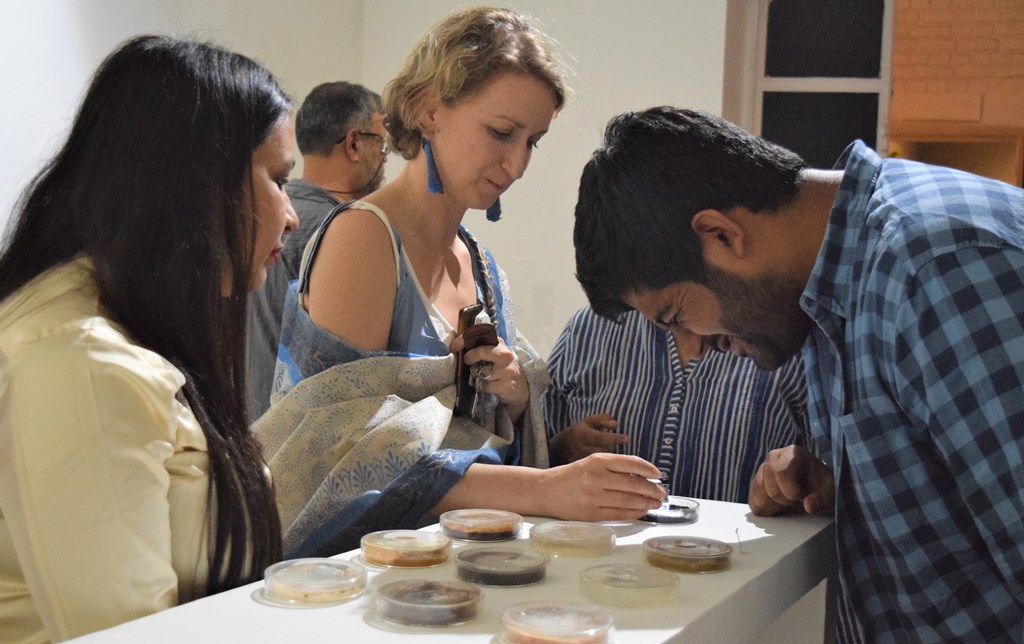
These were some of my early observations after facilitating the first art and science programme ‘The Undivided Mind’ through the Wellcome Trust/DBT India Alliance (or India Alliance) at Delhi-based Khoj International Artists’ Association. The programme had contemporary art practitioners interact with life scientists, technologists, social scientists and the general public to produce art work that reflected on terrestrial (and extra-terrestrial) scientific principles and various human conditions.

An open studio ‘The Undivided Mind’, where artists shared their ideas and science-inspired artwork with the public.{credit}Sarah Iqbal{/credit}

Having been trained as a scientist, I am aware of the strengths and limitations of the scientific process but what pleasantly surprised me was how I could fundamentally connect to the artist’s process of enquiry and see the world through their creative lens. It left me asking the question – why have artists and scientists and the fields drifted apart?

“Art is born of the observation and investigation of nature.” – Marcus Tullius Cicero

 Educationist Ashish Jaiswal observes in his recent book “Fluid” that our inflexibility of learning from other disciplines is a deficiency of our current education system that restricts knowledge within boundaries of disciplines. This reinforces the “two-culture” divide of art and science. Jaiswal gently goads the reader to reflect on whether an artist can only pursue art and a scientist only science – can or should they cross over to other disciplines to enhance their line of questioning?

The answer is an obvious and resounding yes, and the author illustrates this through examples of famous scientists, artists, philosophers and technologists who have straddled multiple disciples with natural ease and a sense of wonder.

Crossing over, blending in

“Objective” science and “subjective” art complement each other naturally. Sci-art projects have become increasingly popular world over, with more scientists opening their labs (and themselves) to the art world, and artists keen to discover the scientific world through their line of reasoning. This has given rise to broadly three types of art and science engagements in the recent times:

  • Artists employing scientific processes to produce art – popularly known as ‘bioart’
  • Scientists/science communicators using art to simplify and communicate science
  • Artists and scientists exchanging ideas, collectively framing questions and exploring the unknown

The first two types of engagement are the most common forms of collaboration. Art is most often used by the scientific community to convey the complexity of their research and to raise the public’s awareness of scientific and health issues. On the other hand, artists have embraced the possibility of experimenting in or outside the laboratory with biological materials and technology that can provide new direction to their work. This cross-disciplinary engagement has benefits for both.

Science empowers, so does art

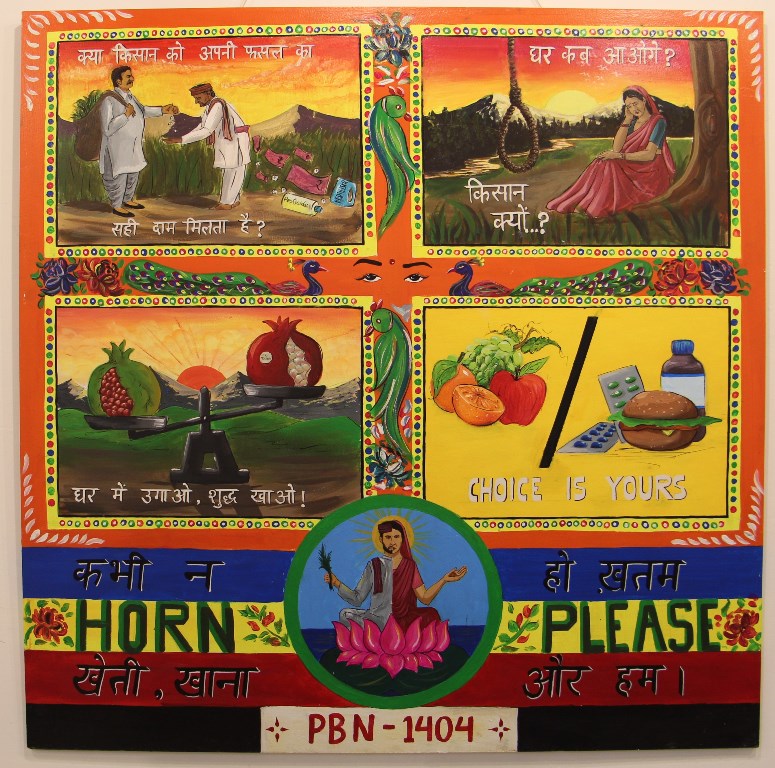
During a public engagement project in Chandigarh, Punjab, we used traditional Indian truck art to understand and reflect on the agrarian and health crisis in India. A young participating truck artist shared with me, quite emotionally, that she never realised that her art had the power to influence the public and raise awareness on important health matters. Another truck artist researching on the topic said it had encouraged him to think more critically about how their actions impact their health and that of others, and to change behaviours.

Sample of truck art used to spread awareness on the link between agriculture, food and nutrition.{credit}Sarah Iqbal{/credit}

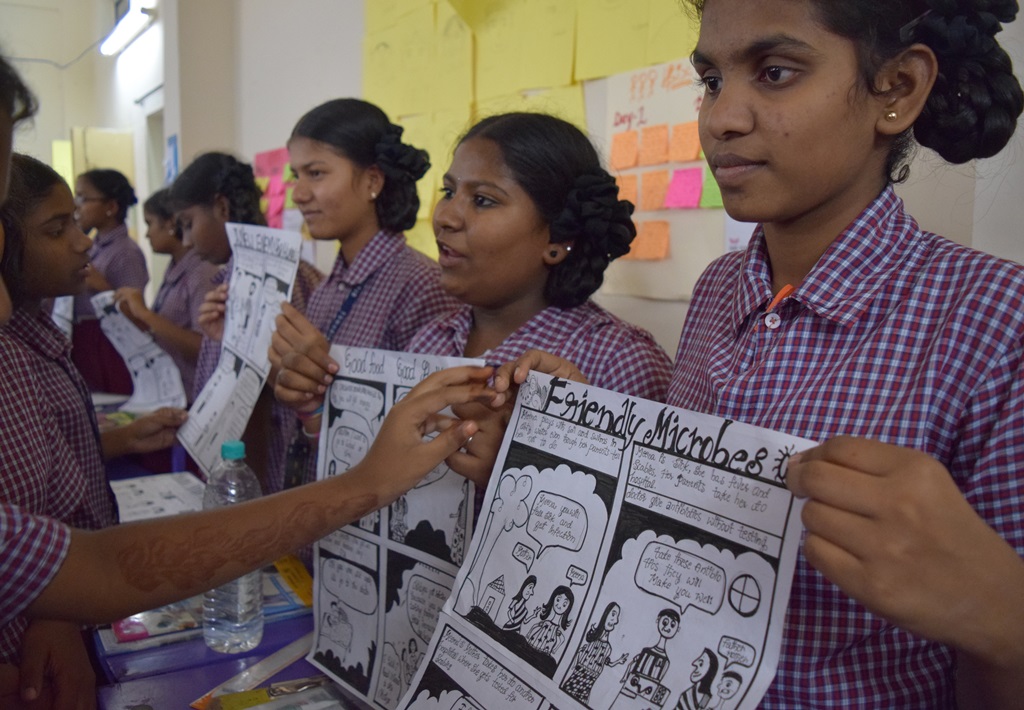
Similar sentiments were shared by a young girl in Hyderabad, where we encouraged school children to develop stories around the problem of drug-resistant infections in India through comics. “I always thought comics were to tell jokes. I never knew I could develop my own comics and use them to talk about important issues.”

Young school students using comics to talk about drug-resistant infections with their peers. {credit}Sarah Iqbal{/credit}

An engineer-turned-artist who collaborated with us on a multi-country programme to raise awareness on mental health felt it enabled her to delve deeper into this important subject. The rigour of research and understanding the science behind mental health had transformed their beliefs on the subject. These examples demonstrate that artists don’t merely act as translators of complex science and health issues but get new perspectives on their practice and can act as ambassadors for the scientific community.

Giving back

During the Khoj experiment that brought scientists and artists together, it was interesting to observe how science is shaping contemporary artistic practice. There is an ongoing discussion in the arts and sciences about whether art can also inform science. Can scientists feed this engagement back into their research?

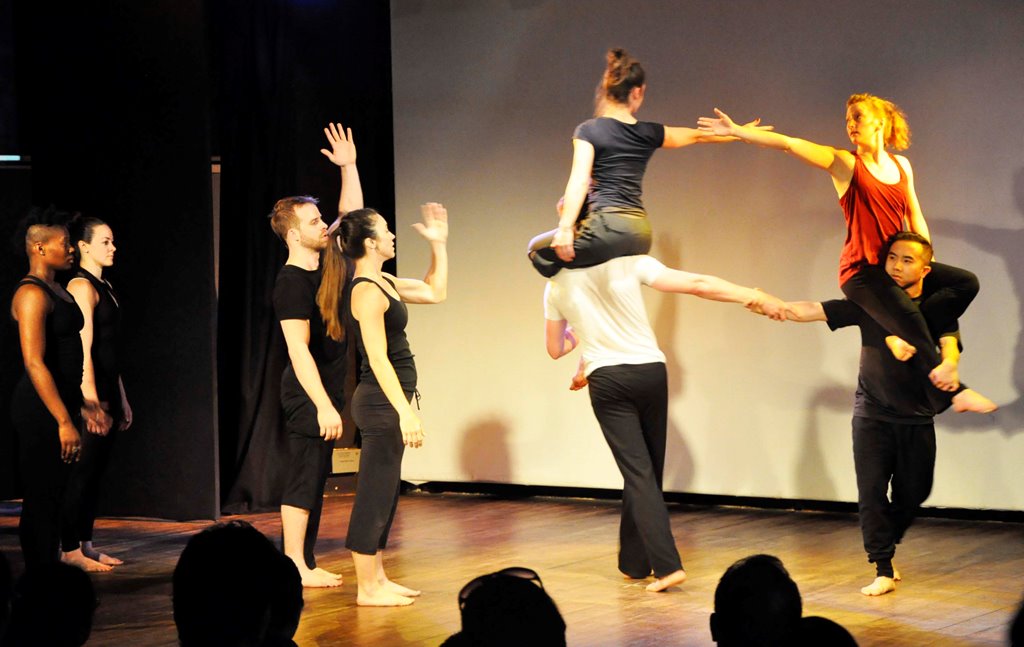
In 2014, India Alliance funded a project to explore this question. “Bodystorm hits Bangalore” was a unique creative collaboration between dancers and scientists, where each of them helped inform the other’s practice – the scientist got three-dimensional insights into their scientific problem through the physicality of dance whereas the dancers improvised on scientific structures to create new art. The wares of this unique collaboration were open to the public.

Dancers from a group called  Black Label Movement present complex scientific concepts to a non-specialist audience at a public event in Bangalore. {credit}Poornima Kartik{/credit}

The real beneficiaries of this type of engagement are the scientists and artists themselves. A longer and sustained engagement between them is needed to realise the true potential of these exchanges and their impact on society. We need more formal spaces, where scientist can explore open-ended experimentation with arts, and where artists can learn from and shape the culture of science as also participate in scientifically-informed creative activism.

It isn’t essential to define what art and science collaborations should look like – let them unravel, and let each be unique. My experience with such collaborations has made me realise that these dialogues are important, not just to popularise science or to provide new media for artists to convey their ideas but also to help both artists and scientists challenge their own way of thinking. And to imbibe a level of sophistication in their enquiry that can be understood by all.

[Sarah Iqbal can be contacted at sarahiqbal@indiaalliance.org. She tweets from @SarahHyder]

Suggested reading:

SciArt scribbles: The mellifluous gene editor

SciArt scribbles: The molecule painter

SciArt scribbles: Coupling creation and analysis with collages

SciArt scribbles: Technology to aid dance

SciArt scribbles: Music to tackle PhD blues

SciArt scribbles: Playing science out

Artists on science: scientists on art

SciArt scribbles: The mellifluous gene editor

Many scientists embrace the artistic medium to infuse new ideas into their scientific works. With science-art collaborations, both artists and scientists challenge their ways of thinking as well as the process of artistic and scientific inquiry. Can art hold a mirror to science? Can it help frame and answer uncomfortable questions about science: its practice and its impact on society? Do artistic practices inform science? In short, does art aid evidence?

Nature India’s blog series ‘SciArt Scribbles’ will try to answer some of these questions through the works of some brilliant Indian scientists and artists working at this novel intersection that offers limitless possibilities. You can follow this online conversation with #SciArtscribbles .

When Debojyoti Chakraborty isn’t engrossed in gene editing experiments in his lab, you will find him rehearsing for his next sitar recital. A senior scientist at the CSIR Institute of Genomics and Integrative Biology in New Delhi, Debojyoti has a parallel career as a performing sitarist, trained in the Maihar school of music. The musician scientist tells us how CRISPR Cas9 and raga megh beautifully balance his creative energies.

Debojyoti Chakraborty{credit}Ashish Gupta{/credit}

Very recently, we lost one of the doyens of Indian classical music, the surbahar and sitar player Shrimati Annapurna Devi. In times when terms like ‘legend’ and ‘irreplaceable’ are used indiscriminately, Annapurna Devi is perhaps one of those artists whose lifelong devotion to music will compel us to remember her as a ‘musician’s musician’ long after she is gone.

Music, like science, is a journey of a lifetime and for the few fortunate people like me who have just begun to scratch the surface of both, they are a constant source of satisfaction and gratification.

I have been learning and playing the sitar for more than 24 years, way longer than I have been in science as my main profession. Perhaps the excitement of pursuing two fields that are seemingly infinite in scope and yet extremely rewarding for the creative mind is what still drives me to pick up my instrument for practice after a long day in the lab. Needless to say, science on most occasions for a young group leader is an extremely frustrating venture — juggling grants, research and administration. Music is thus not only a source of comfort but also a medium to vent out the nervous energy, a constant companion of the scientist.

The sitar is a seven stringed instrument (with thirteen additional sympathetic strings) that requires several parts of the body to work in unison: the vigorous right hand movements that evoke the sound, the gliding left hand that pulls on the main string and above all the continuous brain stimuli which channelise inputs from both into the shape and form of a raga or the melodic interpretation of a mood.

[Watch Debojyoti perform raga Khamaj at the Indian Embassy in Berlin, accompanied by Pt. Debaprasad Chakraborty and Ashis Paul: https://youtu.be/om5bR9eNj3M]

In many ways, there is a lot of consonance between the job of a researcher and a musician — both involve multitasking at various levels. Thus marrying music and science has traditionally not been difficult for serious enthusiasts.

For me, the initial phase of learning was marked by the general unwillingness to practice but half-hourly candy bribes from my father made sure I complied. It was only much later, when I really began to like the sounds I produced, that self-motivation crept in and I could spend long hours without feeling any stress. Several years down the line during my PhD, the belief that with persistence my project will take shape helped me wade through those doctoral blues. Music thus teaches life lessons that come handy in various situations.

For a musician, listening to good music is of paramount importance. Just like a toddler learns new words by continuously repeating them, listening to various improvisations and compositions on the same melodic structure or percussive element allows a classical musician to develop a refined, original and personal style. A lifelong devotee of masters like Ustad Ali Akbar Khan, Pt. Nikhil Banerjee and Ustad Vilayat Khan, I grew up buying records and hearing them every night. I attended nightlong music conferences and tried to emulate everything about the artists — from their stage mannerisms to the color of their kurtas! This helped when I later became a performer myself. After all, an artist is a package of creativity and every aspect of that package needs to be perfectly aligned to deliver a memorable performance.

Similarly, in my scientific pursuits I have been fortunate to meet scholars and laureates who have shaped our understanding of the natural sciences. In most of these meetings, I felt that humility, devotion and a child-like excitement for knowledge are hallmarks of musical or scientific greats, regardless of their age or nationality. Once I spent an hour with the outstanding dance guru Pt. Birju Maharaj, listening to compositions that he learnt forty years ago. The glee in his eyes as he recounted the tunes told me how much he loved his art form and how much pleasure he still derived. It was no different from the expressions of Edmond Fisher, the Nobel laureate, whom I had the good fortune of meeting in Lindau.

My training in both music and science has given me access to the international and truly plural nature of both fields. At the Technical University of Dresden, I have worked as a guest researcher in music, trying to model Indian ragas mathematically with musician scientists from Europe. We still tour as the musical group Dhun. Our compositions universal, an example being the interpretation of a melody by Rabindranath Tagore that has the influence of the Scottish highlands and is set to notes of raga Gaud Sarang.

The time I spent in learning from European musicians has been enriching and filled with great camaraderie. This is in stark contrast to the somber and introspective nature of pure classical performances that I give. Musical associations are creative exercises that build long distance bonds just like scientific collaborations. At least on one occasion, it had also helped me finance my stay in a foreign country when transitioning between jobs.

My area of research is focused on developing better gene editing strategies using CRISPR Cas9 to target monogenic disorders like sickle cell anemia in Indian patients. The field of genome editing is fast paced and of late, balancing research, fatherhood and music has been challenging. However the support and encouragement of close family members and friends keeps me motivated to play and perform.

Being in science makes me pursue music for its aesthetic beauty and not purely for financial reasons. This is a refreshing thought to wake up everyday to since music, like most professions, comes with cut throat competition that often undermines its inherent beauty and soulful character. Being in science also makes me work with exceptional colleagues who appreciate creative art and share similar passion.

It has been an invigorating journey so far.

[Debojyoti Chakraborty can be contacted at debojyoti.chakraborty@igib.in]

Suggested reading:

SciArt scribbles: The molecule painter

SciArt scribbles: Coupling creation and analysis with collages

SciArt scribbles: Technology to aid dance

SciArt scribbles: Music to tackle PhD blues
SciArt scribbles: Playing science out

Artists on science: scientists on art


SciArt scribbles: The molecule painter

Many scientists embrace the artistic medium to infuse new ideas into their scientific works. With science-art collaborations, both artists and scientists challenge their ways of thinking as well as the process of artistic and scientific inquiry. Can art hold a mirror to science? Can it help frame and answer uncomfortable questions about science: its practice and its impact on society? Do artistic practices inform science? In short, does art aid evidence?

Nature India’s blog series ‘SciArt Scribbles’ will try to answer some of these questions through the works of some brilliant Indian scientists and artists working at this novel intersection that offers limitless possibilities. You can follow this online conversation with #SciArtscribbles .

Shraddha Nayak paints to bring clarity to complex biological phenomena. A PhD. from the Department of Pharmacology and Toxicology at the Medical College of Wisconsin, USA, here’s how this Bangalore-based biomedical scientist and illustrator finds stunning art in everyday biological processes.

Shraddha Nayak

Towards the end of my doctoral studies in Milwaukee, Wisconsin, I was strolling down the city sidewalks one chilly evening and came across a beautiful art store. The last time I made an oil-painting was in middle school. At that moment, I felt like a small fish that fell for the bait. Of course, I was enticed into buying a few paints that looked and smelled delicious.

At first, I made some random art, but those days my mind was swirling with lymphocytes and macrophages and interleukin production and it made an appearance on my canvas (Image 1 below).

Image 1: Oil colour depiction of the dendritic cell (far right) frantically prodding the sleepy lymphocyte to wake up: “We have been invaded. You gotta head to battleground NOW buddy”{credit}S. Nayak{/credit}

I liked how it turned out and made a few more. I am not sure if this helped me with research, but time slowed down while painting and I was wrapped in peace.

Visual bias

Research on adenosine biology (my laboratory interest during PhD) has been going on for almost 90 years. The amount of literature that exists is phenomenal and I often found myself drowning in it. I wanted to put my readings in one frame, in one big picture to see how all these studies connected. I also relished making graphs and little representations of data, and spending hours under the microscope to get the perfect shot, more than doing wet-lab experiments.

Consequently, the day I stumbled upon a whole fascinating world of biomedical visualisation, I was off the diving board. Since then, I have realised the significance of design. Look at our good old paper clip for example, or an iron box or a spoon among numerous others. We tend to take these products for granted, but they are designed so efficiently that within milliseconds of laying sight on them we know what they are meant for. The same applies to scientific figures and illustrations. There are design strategies one could follow, that helps the message jump out instantly at readers.

For example, see Image 2 below. The scientist wanted a depiction of the above discovery in context of cardiovascular disease. I used colour sparingly, only for the main characters, to enable distinction between wild type and mutant. The background contextual illustration being important to convey the message has been presented, but greyed out to prevent distraction from the main point.

Image 2: 2D illustration for a scientific paper showing how somatic mutations in hematopoietic stem cells can undergo clonal expansion and lead to cardiovascular disease. {credit}S. Nayak{/credit}

Thinking 3D

Cellular and molecular biology are very visual. Textbooks and scientific articles are replete with diagrams and illustrations. We have come a long way since the hand-drawings of the Renaissance period to digital renditions to communicate research and hypotheses. What we study, more often than not, involves looking at structure and/or dynamics and/or interactions from the bustling lives of characters that are invisible.

We only see a part of this drama unfold under the microscope. Why restrict ourselves to 2D thinking when our data is 3D, and when we have 3D tools to visualise the above facets? A few clever and creative scientists have developed (and are constantly expanding) ways of exploiting 3D animation software for research and its communication.

These are the very 3D programs used to create animated Disney-Pixar movies, or even used for automobile and architectural design beside other uses. They enable us to create context, test our hypotheses, consolidate data and simulate reality. And so, my journey as a molecular animator began. For example, see Image 3, where I use 3D animation to to help a lipid researcher visualise structural facets of a high-density lipoprotein (HDL) receptor.

Image 3: A 3D animation snapshot image to partially solve 3D structure, oligomerisation and ligand-binding of the HDL receptor.{credit}S. Nayak{/credit}

These programmes also provide wings to my imagination in fun ways. Working on an animation around a popular family of proteins found at the cell membrane (G protein-coupled receptor or GPCR), I drifted a little to create Image 4, from the adenosine receptor point of view, considering how much coffee the world drinks. (Caffeine, the stimulant found in coffee binds to adenosine receptors temporarily preventing drowsiness.  Adenosine receptors are an example of  GPCRs.)

Image 4: A 3D illustration titled “Why does it always caffeine on me?”{credit}S. Nayak{/credit}

I am not sure if I am creating art. The cell and molecular representations that we currently use, appear to be pieces of art on their own. Don’t you agree?

[Shraddha Nayak can be contacted at shraddha.m.nayak@gmail.com. She tweets from @Na_y_ak ]

Suggested reading:

SciArt scribbles: Coupling creation and analysis with collages

SciArt scribbles: Technology to aid dance

SciArt scribbles: Music to tackle PhD blues

SciArt scribbles: Playing science out

Artists on science: scientists on art

SciArt scribbles: Coupling creation and analysis with collages

Many scientists embrace the artistic medium to infuse new ideas into their scientific works. With science-art collaborations, both artists and scientists challenge their ways of thinking as well as the process of artistic and scientific inquiry. Can art hold a mirror to science? Can it help frame and answer uncomfortable questions about science: its practice and its impact on society? Do artistic practices inform science? In short, does art aid evidence?

Nature India’s blog series ‘SciArt Scribbles’ will try to answer some of these questions through the works of some brilliant Indian scientists and artists working at this novel intersection that offers limitless possibilities. You can follow this online conversation with #SciArtscribbles .

Neuroscientist Leslee Lazar dabbles in collages. A visiting faculty at the Indian Institute of Technology Gandhinagar, Leslee’s research interests lie in neuroscience of design, science communication, cultural cognition and behavioural change. He combines his training as a neuroscientist with his passion as a collage artist to create what he calls a ‘hazy amalgam’ of creation and analysis.

Leslee Lazar{credit}Devarsh Barbhaya{/credit}

Collage needs just a few scraps of paper, some glue and not even a steady hand. But, this humble hobby has exalted origins, “invented” by great artists like Picasso and instrumental in the birth of modern art.

My own foray into collage was rather fortuitous – the only available slot in my high school cultural team was for the collage competition. Making the team meant skipping classes for two full days. So, I put my name in and made my first collage. To everybody’s surprise, I won a prize. I did not make more collages after that glorious start. Almost two decades later, I found myself falling back on collages to unwind from a stressful postdoc stint.

When I make or see collages, I switch to a ‘dual mode’, described beautifully by the polymath Vladimir Nabokov; “I cannot separate the aesthetic pleasure of seeing a butterfly and the scientific pleasure of knowing what it is”. As a cognitive neuroscientist, I study how we perceive visual artwork and how it gives us that special feeling when we look at it – the aesthetic emotion. However, my process of creating collages is not driven by scientific theories, its impulsive, urgent, chaotic and a meditative process.

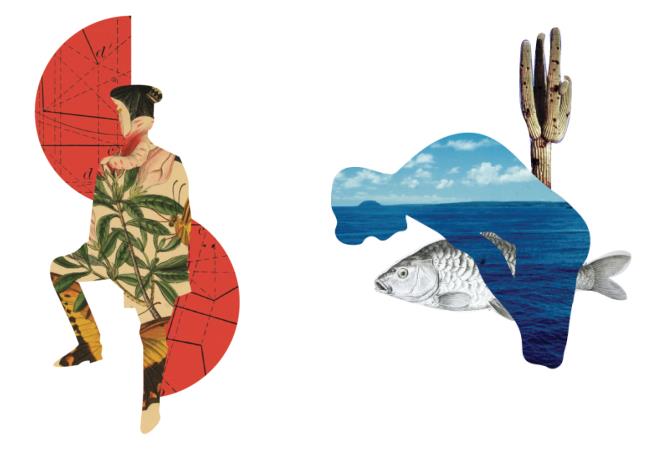
For my collages, I extensively use images from internet photo archives. The power of collages is that I can manipulate an element of an image, like form, colour or perspective giving new meaning to the original image. Sometimes, just a juxtaposition of images from different eras or styles can create a powerful reinterpretation. In a series called Pro:Postures, I explored how body postures reflect subtle meanings. In vintage portrait photographs, I manipulated certain features to remove skin colour, expressions, markers of ethnicity, social background etc. — the attempt was to amplify meanings embedded in the posture of the person. Postures reflect many of our emotions and realities. Using these manipulated images, I was attempting to highlight how postures convey subtle aspects of history, gender, politics and power (Fig. 1)

Fig. 1: Two separate collages created out of vintage portrait photographs to show how postures convey subtle aspects of history, gender, politics and power.{credit}Leslee Lazar{/credit}

The technique of collage was invented by artists Pablo Picasso and Georges Braque, when they were exploring ways to create spatial illusion in their art. They wanted to represent space from different perspectives. The painting could appear deep or shallow depending on where the viewer focused attention. To do this, they pasted textured wood and fabric on to their painting canvas, giving birth to collage. Soon, collage became an established method for western artists.  Of the many methods and means of collage, two kinds stand out – one that plays with our ability to group objects, detect patterns and relationships (called ‘gestalt’ perception) and the other that appeals to our inherent preference for human-like forms.

The first kind was made popular by artists like Hans Arp, who used shapes and arrangements to create forms and meanings. It exploits our visual system’s gestalt property. We give meanings to seemingly random stimuli, like the Dalmatian’s random white and dark patches in the famous collage where Arp is playing with composition. Many collages exploit this principle, much like other art, of deriving pleasure in “completing” a form.

The second kind of collages use the human form, especially the face. We can recognize faces effortlessly, read emotions, and communicate through expressions. In the brain, there is a special area to process visual information of faces. Any damage to this area and we lose the ability to recognize faces, made famous by Oliver Sack’s classic “Man who mistook his wife for a hat”. The way we process faces is different from other objects; it happens faster than objects and we read emotions before we register the identity of the face.

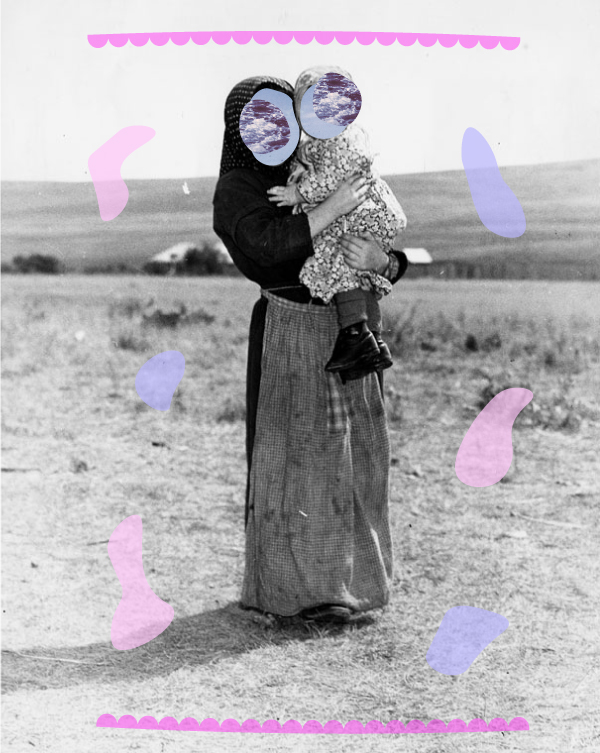
We also perceive faces holistically, which means we do not make mentally put the parts of the face, eyes, nose and ears together to recognise a face. Because the brain is set up to process face in such a way, it is prone to some illusions, like the Thatcher illusion, where inverted eyes and lips are perceived as normal when seen inverted. This special relationship with faces has been exploited in many artworks. In a collage I made in response to the treatment of Syrian war refugees in Europe, I used a stock image of European refugees from the past and manipulated their faces to represent the yearning for freedom and normal life (Fig. 2).

Fig. 2{credit}Leslee Lazar{/credit}

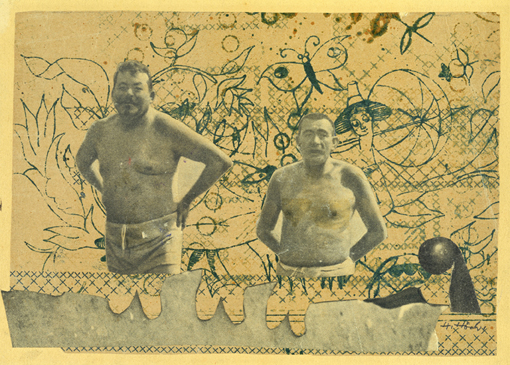
Although, art can evoke emotions purely by its visual features, there is also a strong cognitive, social and cultural element. Collage, with its borrowed imagery offers a ready-made way to contextualise art with pop and political reference. Some of the earliest collages were made in reaction to World War 1. Hannah Hoch used images of German Prime Minister and defence minister on an embroidered background as an anti-war statement.

Hannah Hoch’s anti-war collage {credit}Wikiart{/credit}

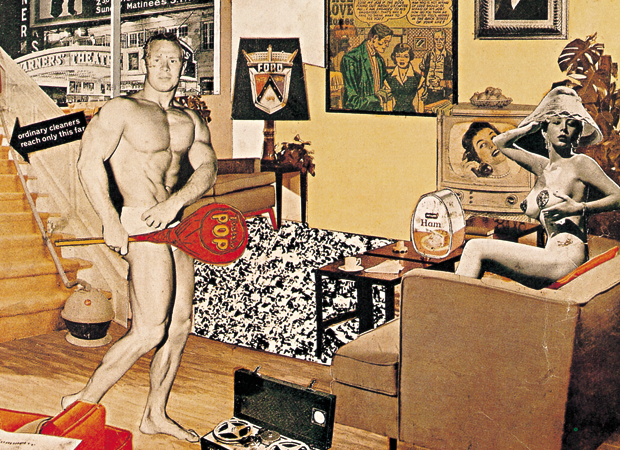
Collage also was influential in the pop art movement, an art movement with everyday objects, made famous by Andy Warhol’s painting of soup cans. However, the first pop art was a collage made with fashion magazines and sales catalogues.

A collage titled “Just what is it that makes today’s homes so different, so appealing?” by English artist Richard Hamilton is the first pop art.{credit}Wikiart{/credit}

The great art historian E. H Gombrich said “There really is no such thing as art, there are only artists”. And neuroscience claims that the artist is a neuroscientist. Will my training as a neuroscientist give me added insight into the artistic process? It’s too early to say, there is only a hazy amalgam of the two ways of thinking and interacting with the world. The forces that drive to create and to analyse are not necessarily opposite. I hope they merge into something greater than the sum of individuals. Till then, my collages will try to write visual poetry with other people’s words.

(Leslee Lazar can be contacted at leslee.lazar@gmail.com. He tweets from @leslee_lazar.)

Suggested reading:

SciArt scribbles: Technology to aid dance

SciArt scribbles: Music to tackle PhD blues

SciArt scribbles: Playing science out

Artists on science: scientists on art

SciArt scribbles: Technology to aid dance

Many scientists embrace the artistic medium to infuse new ideas into their scientific works. With science-art collaborations, both artists and scientists challenge their ways of thinking as well as the process of artistic and scientific inquiry. Can art hold a mirror to science? Can it help frame and answer uncomfortable questions about science: its practice and its impact on society? Do artistic practices inform science? In short, does art aid evidence?

Nature India’s blog series ‘SciArt Scribbles’ will try to answer some of these questions through the works of some brilliant Indian scientists and artists working at this novel intersection that offers limitless possibilities. You can follow this online conversation with #SciArtscribbles .

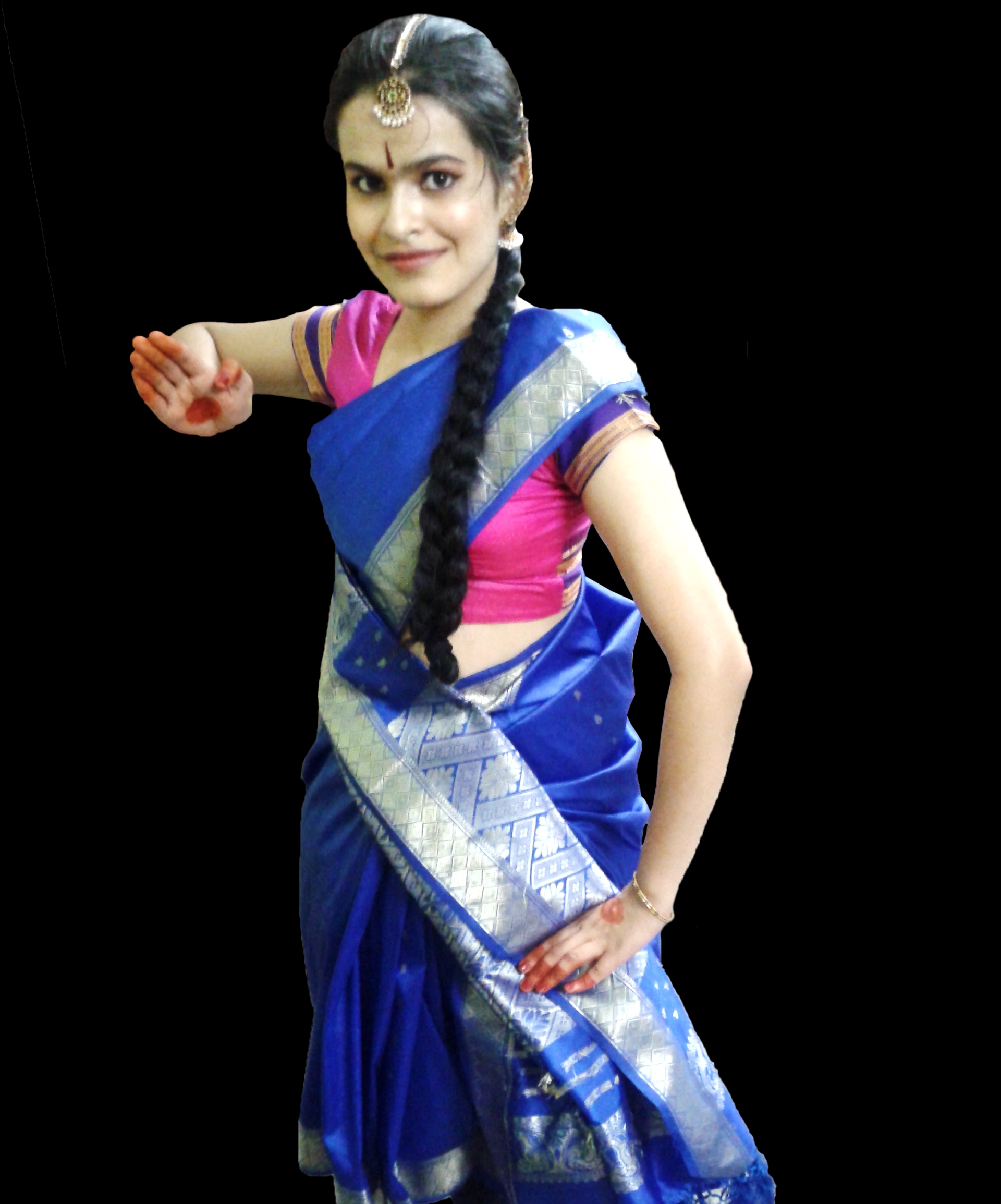
Today we learn the other side of the story from trained Baharatanatyam dancer and cognitive scientist Pranjali Kulkarni  — can science influence the arts? Pranjali, a research scholar at the Centre for Cognitive Science, Indian Institute of Technology Gandhinagar, uses technology to take her performing art lessons to another level – that of intelligent learning.

Pranjali Kulkarni

“Dance is like wine; it matures with every performance,” Alarmel Valli, the famous Indian classical dancer, once said. Even with great tutors, artists could take a lot of time and practice to become experts.

I have been learning the Indian classical dance form Bharatanatyam for 15 years now. I also taught it for almost 2 years, during which I realised that learning never ends.

Despite my best efforts to teach young students, my instructions were unable to convey to them what I had experienced while learning those very dance movements. Something was missing from my teaching. Why wasn’t I able to evoke the same experience in the learners?

This question was the basis of my quest to unravel the missing link.

As a student at the Indian Institute of Technology, Gandhinagar, I started looking at this challenge from a cognitive science perspective. Studying dance literature and experiential processing while dancing, I quickly learnt that dancers develop expertise through subconscious processes. These processes make performances by experts both mesmerising and very personal, something that can’t be easily transferred to another person – they can neither be shown nor taught.

But these subconscious processes can certainly be recorded through specific devices.

I wanted to unearth these subconscious techniques that an expert dancer puts to use in achieving finesse in dance movements. Technology came to my aid in integrating these two things — learning Bharatanatyam and tracking subconscious processes from bodily movements. I tried deconstructing these expert techniques in Bharatanatyam based on five bodily parameters – posture, balance, speed control, accuracy and synchronisation.

Technology helped me understand Bharatanatyam better

Bharatnatyam, like most other classical dance forms, is deeply rooted in religion, devotion and social practises. Intricate details of skilled Bharatanatyam movements have traditionally been passed on through family lineages. These hereditary traditions are preserved in ancient scripts, and in recent times, in audio-visual recordings.

A teacher, a video or a script could provide enough details to learn the basics of a dance form. But the subconscious skilled moves of expert dancers – the peculiar angles, postures, movement progressions or balance – don’t get conveyed in these forms of learning.

I used high precision cameras and algorithms to decode these micro movements through a technology called the motion capture system (Mocap). These unseen and unrecorded skilled moves have been defined as ‘dance primitives’, equivalent to notations in music, and considered the fundamental building blocks of a particular step. For instance, a fine movement such as a waist tremble can be recorded through a movement coordinate system on Mocap.

[Watch Pranjali use Mocap while teaching Bharatanatyam to students: https://youtu.be/ZUDB10b12DA]

To test my idea, I conducted Bharatanatyam workshops for students at the Japan Advanced Institute of Science and Technology in Ishikawa, Japan over two months. I taught them a few basic Bharatanatyam steps – Tatta Adavu and Natta Adavu – involving coordinated posture, hand and leg movements, in increasing order of difficulty.

I then used a virtual reality set up in Mocap that can read subtle movements and give feedback. I recorded both expert and novice dancers and used the virtual reality model of the expert dancer to give feedback to the novice dancers. The precision was unimaginable – I don’t think the feedback can be matched even by an expert human teacher. To my surprise I found that the novices quickly picked up some movements that I had taken many years to master.

To cite another example, the virtual reality model showed how experienced dancers use techniques of transition in steps at fast speeds. The balance between posture and movement maintained at peculiar angles is traditionally achieved through meticulous practice. But Mocap captured those angles at all speeds and helped learners correct their steps using real time feedback.

What’s more, novice dancers formulated some techniques on their own to learn better and faster. For example, they were using the torque of ankles to balance their body at fast speeds, a technique I had not taught them. Learners were innovating subconsciously and these innovations could be traced through Mocap. Such data can be very useful for self-reflection – to understanding a learner’s positives and negatives.

These two new insights from the Mocap data open doors for detailed research in various movement-based art forms.

I was extremely fascinated that something like Mocap could become a reflective learning tool. During my initial days as a Bharatanatyam student, I split dance videos into small clips to learn from them. But a technology like Mocap is a leap ahead in not just recording dance but also as a powerful teaching tool.

Experts and traditional tutors are not available everywhere. Technological experiments with art can now deconstruct expert techniques and help anyone master his or her passion for the performing arts.

According to Indian art philosopher Ananda Coomaraswamy, “The art remains in the artist and is the knowledge by which things are made.” I do agree that technology can never compete with the qualia of knowledge passed down through art traditions, learning and practice. But research such as Mocap can certainly aid learning and strengthen the appreciation and preservation of the art forms.

Suggested reading:

SciArt scribbles: Coupling creation and analysis with collages

SciArt scribbles: Music to tackle PhD blues

SciArt scribbles: Playing science out

Artists on science: scientists on art