Nature India Photo Contest 2020: Finalist #2

Announcing the second finalist in the Nature India Photo Contest 2020:

 Amitava Chandra, Kolkata, West Bengal

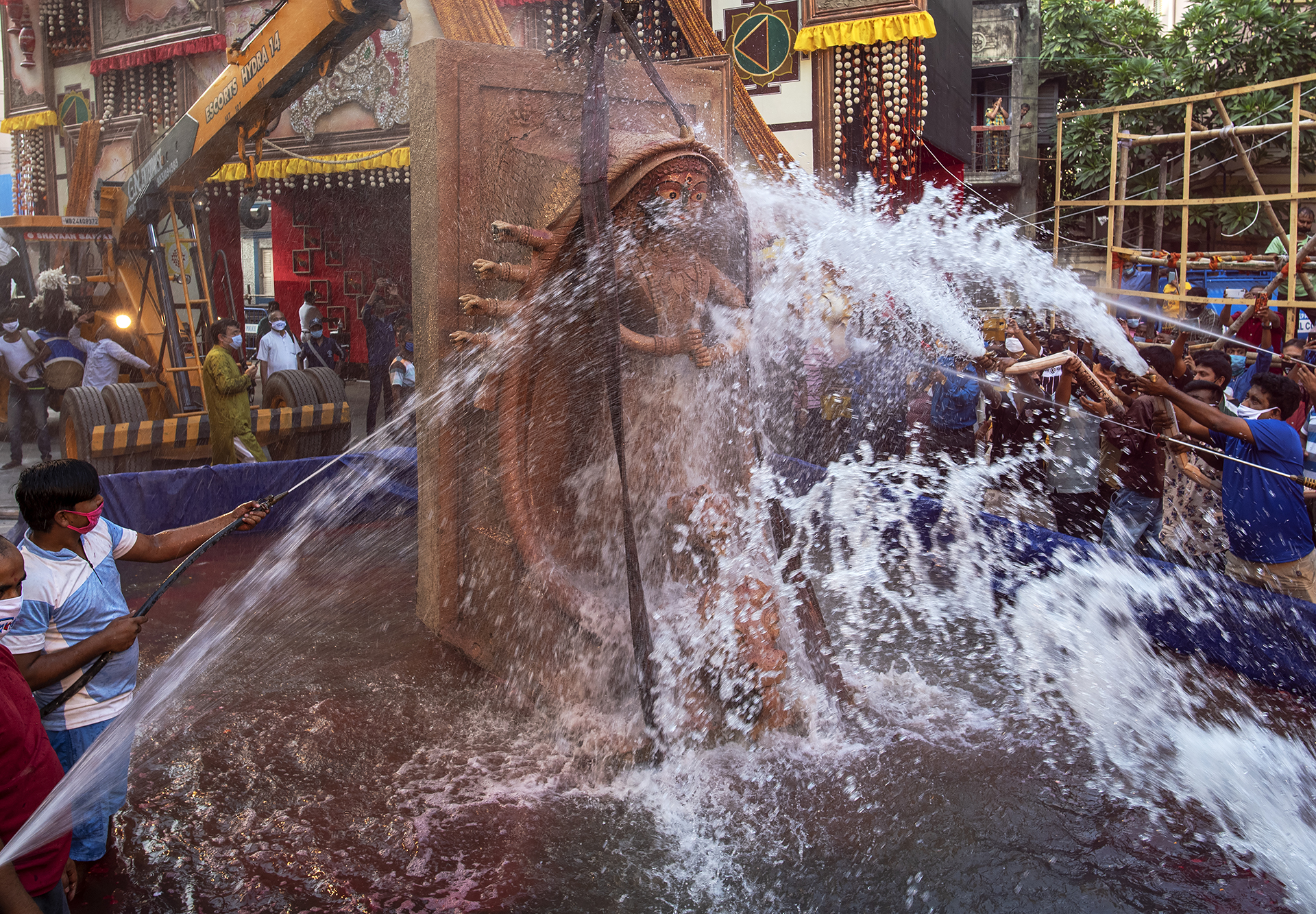
Photo caption: Immersive innovation

“The annual Durga Puja festivities end with the immersion of the gods’ idols in river Hooghly, a tributary of the Ganges. Every year thousands of people take part in the idol immersion processions. Following COVID-19 restrictions, the festival organising committees created temporary water bodies to ‘immerse’ the clay-made idols by dissolving them with high power water jets, like in this picture taken at the Tridhara Sanmilani Puja Pandal, Kolkata on 26 October 2020. The benefits were two-fold – no processions, and no pollution of the Ganges’ waters.” — Amitava Chandra

Congratulations Amitava for making it to top 10!

The Nature India editorial and design teams have chosen ten stunning finalists, that will be rolled out (in no particular order of merit) over the next few days. These entries have been judged for novelty, creativity, quality and print worthiness. Nature India’s final decision to chose the winner will be partly influenced by the engagement and reception these pictures receive here at the Indigenus blog, on Twitter and on Facebook. To give all finalists a fair chance, we will consider the social media engagement each picture gets only during the first seven days of its announcement. The final results will be announced sometime in early February 2021.

Watch this space as we announce the other finalists in the coming days. Like, share and comment on your favourite photos on Twitter and on Facebook with the hashtag #NatureIndphoto to make them win.

The winning pictures will get cash prizes worth $350, $250 and $200 respectively. The top 10 finalists will be featured here, on Nature India’s blog Indigenus and in our subsequent annual issue.

The winner and runners-up will also receive a copy of the Nature India Annual Volume 2020 and a bag of Nature Research goodies. Winning entries stand a chance of being featured on the cover of one of our forthcoming print publications.

Nature India Photo Contest 2020: Finalist #1

It’s time to roll out the shortlist of the Nature India Photo Contest 2020.

The 7th edition of our photo contest themed “pandemic” opened in December 2020 and has received some remarkable entries from around the world.

We invited entries that capture not just the hardships of the COVID-19 pandemic but also the hope of an infection-free future.

Nature India is covering various aspects of the pandemic since the first case of COVID-19 was detected in India. Our stories have taken a cross-cutting approach — going beyond hard core science into the socio-economic, cultural and psychological fall outs of the pandemic. As an extension of that coverage, it was only natural to consider “pandemic” as the theme for the annual photo contest.

Like always, entries came from a mix of amateur and professional photographers, scientists and non-scientists, mobile cameras and high-end DSLRs.

The Nature India editorial and design teams have chosen ten stunning finalists, that will be rolled out (in no particular order of merit) over the next few days. Nature India’s final decision to chose the winner will be partly influenced by the engagement and reception these pictures receive here at the Indigenus blog, on Twitter and on Facebook. To give all finalists a fair chance, we will consider the social media engagement each picture gets only during the first seven days of its announcement. The final results will be announced sometime in early February 2021.

So here’s finalist number one in the Nature India photo contest 2020:

Deepak Kumbhar, Kolhapur, Maharashtra, India.

Photo caption: Home-bound

“COVID-19 affected the mental health of millions of people worldwide. Children in India suffered loneliness due to long lockdowns. At an age when the outdoors and physical activity are necessary for their mental and physical growth, children stuck at home were glued to digital devices for learning and entertainment. This photo was taken in April 2020 during the lockdown in the small city of Kolhapur in western India. A boy is seen with a non-digital plaything – a carrom board – on the terrace of his home, but there’s no one to play with him.” — Deepak Kumbhar.

Congratulations Deepak for making it to top 10!

Watch this space as we announce the other finalists in the coming days. Like, share and comment on your favourite photos on Twitter and on Facebook with the hashtag #NatureIndphoto to make them win.

The winning pictures will get cash prizes worth $350, $250 and $200 respectively. The top 10 finalists will be featured here, on Nature India’s blog Indigenus and in our subsequent annual issue.

These entries have been judged for novelty, creativity, quality and print worthiness. The winner and runners-up will also receive a copy of the Nature India Annual Volume 2020 and a bag of Nature Research goodies. Winning entries stand a chance of being featured on the cover of one of our forthcoming print publications.

A conscience-stirring pandemic

Between treating patients and churning out a record number of scholarly publications, the COVID-19 pandemic has seen a productivity peak for many medical professionals. In this poignant essay, Debanjan Banerjee, a practicing psychiatrist at the National Institute of Mental Health and Neurosciences (NIMHANS), Bengaluru, talks about the many levels at which such hyperactivity affected professionals.

Debanjan Banerjee in his PPE.

Another ‘ahead of print’ issue was out. I was anxiously scanning it for my article. There it was! The next obvious thing to do would be to announce this exciting news on all possible social media channels, ‘humbly’ displaying my scientific and literary skills, proud of my name leading the decorated list of authors.

“One more,” I said, as I silently thanked the pandemic for turning an unusual year, clinically speaking, into an equally productive academic one. From the time COVID-19 was declared a pandemic, the rate at which I have churned scholarly articles is perhaps only second to the rate of the viral infection itself. Adding my two cents to the academic discourse around mental health issues stemming from COVID-19, I have rightfully earned my share of the pandemic pie as a young researcher.

With endless concepts and theories, innumerable correlations and associations, COVID-19 statistics have piled up faster than researchers can digest. As a medical professional, I witnessed an unprecedented quest to learn, write, explore and get to the bottom of every possible angle related to the pandemic. Specialties and duties have blurred: even as a psychiatrist, I speak about the viral structure, my pathologist friend comments on the behavioral effects of the virus, while virologists debate on treatment protocols. We are all involved in COVID-duty. COVID-19 has been a great leveler: first, it renamed physicians and healthcare workers as “front-liners” imposing an enhanced sense of responsibility as well as perceived stigma about them; second, it created almost universal expertise about the virus.

Information became an essential commodity. Almost everyone knew something about the outbreak, and none wanted to miss the chance to display that knowledge. Definitely not me, the pandemic added publications to my credit and I was secretly enjoying the closure of out-patient departments.

Busy in such self-obsessive ruminations that stemmed from the freshly minted publication, I didn’t hear my pager ring twice, then thrice. Finally, an irritated nurse in the emergency room mumbled something that sounded like “clinical duties first priority”. Reluctantly, I dragged myself out of my ‘ahead of print wonderland’, to hear some shocking news that made me dash to the COVID-designated ward. I barely had time to slip into the Personal Protective Equipment (PPE) as I digested the information – a famous business tycoon’s son had succumbed to the infection. Management of such ‘high profile’ cases is always a nuisance, and throughout my graduation years, I wished we had a chapter dedicated in the medical curriculum to this lesser discussed challenge of medical practice. I marched into the ward like an astronaut, media persons waiting outside to be briefed.

COVID-19 deaths have extra formalities to take care of. I met my masked and suited colleagues, each clumsy in their ‘gas chambers’, and visibly edgy as the businessman’s family and followers waited outside. I was the treating resident in charge of the patient the week before, and hence my presence was necessary for the last ‘medical rites’. India’s death toll had just crossed one lakh, and I was trying to guess what number would be assigned to this death, all the while impatient to get back to my just published paper.

As the clinical obligations lingered, I looked at the dead body of the cheerful young man with whom I had discussed cricket, gardening and romantic post-recovery surprise plans for his fiancée. Death is neither uncomfortable nor strange for my profession but I suddenly shuddered at its uncertain nature. When we heralded 2020 amid celebrations, did we know that more than two million of us would not see another new year?

As a psychiatrist, communicating with patients and their families is a large part of my job. I prepared for the ensuing tough dialogue with the bereaved family. The father and the uncle were waiting outside the ward, surrounded by family members in a distinct circle, all in PPE, masks and gloves. For a second, I mistook them for physicians. Then I realised that the circle was to ensure social distancing from potential infection carriers like me.

An elaborately rehearsed explanation of the death has always fallen short during such conversations. In what seemed like a very lengthy discussion, the family wanted to know of precautions for future (do we need to fumigate the house?), pondered over possible instances of transmission by their now dead kin, and the statistical chances of them being infected already. The concerns seemed a bit illogical to me considering a paid caregiver was in charge all this while. As a matter of courtesy, I asked if they wanted to have a last glance at their family member through the COVID-ICU window. They seemed to tighten the circle and left abruptly saying the cremation formalities would be handled by a separate team. I felt sorry for the young man, who was accorded a celebrity status in the hospital till yesterday. His corpse had no such privilege.

I was going back into the ward when someone tugged at my PPE. A boy, maybe all of five, in a tattered T-shirt and barely anything below the waist, was standing there, right next to the infectious diseases ward without a mask or gloves! Before I could react, a hospital guard came running, apologising for the transgression, “Sorry Sir, I tried my best, this fellow just ran past me”. Cautious of guarding the child from any possible infection from my PPE, I stepped back, crouched and asked him what he wanted. He was sniffling and mumbled something in the local language pointing towards the general ward. He had come looking for his father, another COVID-19 fatality. He lived in the slum next to the hospital. The motherless child was not allowed to stay with his father and his attempt to bypass the hospital guards succeeded only today, when it was too late. I explained to him that it was risky being near the COVID-19 ward without protective gear. He smiled, his teeth darker than his skin, and unfolded his little hands to show a facemask darkened with days of use, strings torn and numerous tiny holes on one side. He had exchanged his silver bracelet with a local vendor for this mask and taken it to a nearby temple for prayers. He believed it would protect his father from the killer virus.

I don’t know how the guards managed to take care of the child. I had to leave, breathless and feeling sick. Together, the choke of the PPE, a distended bladder, blurred vision and a burdened conscience had taken a heavy toll on me.

Half an hour later, I managed to get back from the reflective phase into being the stoic physician, the iron-willed ‘front-liner’ who has seen it all. Proud of my unceasing contribution to pandemic literature, I started re-reading with content my latest title: “COVID-19: The Great Equalizer”.

(Debanjan Banerjee can be reached at Dr.Djan88@gmail.com.)

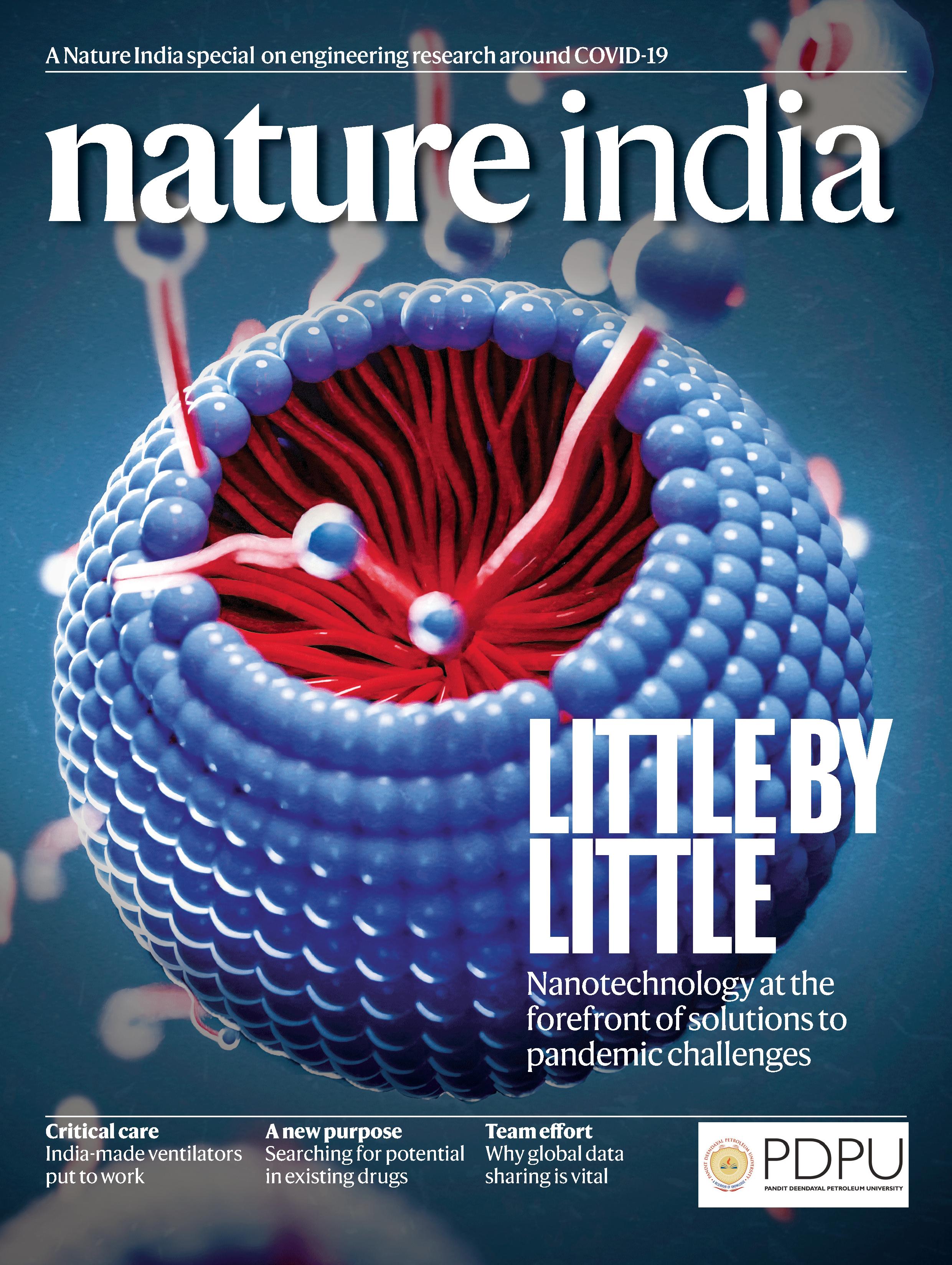
NI Special Issue on COVID-19 Engineering Solutions is out

Cover illustration: Youssef A Khalil

Very early on it became clear that the COVID-19 pandemic was not just a challenge for scientists and medical professionals. Almost a year into the coronavirus’s rampage across the world, there’s no doubt about the long-term impact that SARS-CoV-2 will continue to have on every facet of human life — from healthcare to education, social interaction, businesses, environmental concerns, and political processes.

India’s large population, governance, and creaky healthcare infrastructure have traditionally hampered the quick and smooth roll out of public health interventions. With this pandemic, it wasn’t any different. Nature India covered the evolution of the crisis from several angles, going beyond the strict remit of science. Our coverage embraced a new normal in these unprece­dented times. We looked at the physical and biological aspects of the virus extensively, and also published stories of how India, with its 1.2 billion-strong population, was responding to the health emergency. This resulted in Nature India’s first special issue on the COVID-19 crisis, published in June 2020.

Coping with a major public health catastrophe lies not just in vaccines and treatments, but also technologies that the world’s scientists quickly geared up to invent or repurpose. Within months of the novel coronavirus’ spread we saw the development of new ventilators, rapid antigen tests, personal protection equipment, and sanitization apparatus.

Nature India’s second COVID-19 special, focuses on such engineering and technology solu­tions being tested and deployed. We take a look at front-runners in nanomaterial design that are helping advanced antiviral and antibacterial therapies; the state-of-the-art in critical care ventilators and how in-silico docking studies are bringing new drug molecules.

The issue presents a selection of commentaries published in various Nature research journals highlighting the use of artificial intelligence tools and machine learning in scaling approaches for data, model and code sharing, and in adapting results to local conditions. Nanotechnology is offering hope in antimicrobial and antiviral formulations, and highly sensitive biosensors and detection platforms.

We ask whether nanoscientists can take better advantage of technology and automation in their laboratories to reveal new information about COVID-19. A host of reverse-engineered commercial medical equipment and devices for healthcare workers have flooded the market. While these ‘low-tech’ solutions are welcome for resource poor countries such as India, we argue that for real impact, they must affiliate to approved designs. We also shine a light on pandemic-fighting photonics tools (X-ray imaging and ultraviolet sterilization), the strengths and ethical questions around smartphone surveillance of the pandemic, and discuss why it is important for governments to implement public health measures aided by technology.

At the end of a trying year, we hope these new perspectives bring additional hope in efforts to tame the novel coronavirus.

The Nature India COVID-19 Engineering Solutions special issue is free to download here.

Nature India Photo Contest 2020 open for entries

Amidst the pandemic, we have been a little hesitant to launch our annual photo contest. When the world is grappling with millions of deaths and infections, professionals and families are facing unprecedented challenges, and movement of people is restricted, is it the right time for a photo competition? But as the year comes to an end, various science-led efforts have yielded results globally in the form of vaccines and drugs for COVID-19, signalling hope.

So here we are, announcing the Nature India Photo Contest 2020, expecting that this year’s entries can capture not just the hardships of the COVID-19 pandemic but also the hope of an  infection-free future.

Nature India has been covering various aspects of the pandemic since the first case of COVID-19 was detected in India. Our stories have taken a cross-cutting approach — going beyond hard core science into the socio-economic, cultural and psychological fall outs of the pandemic.

Therefore,  as an extension of that coverage, it was only natural to consider “Pandemic” as the theme for this year’s photo contest. 

Send us pictures of what you think the pandemic represents to you. For many, it has surely been a time of immense suffering — of disease, death, loss of livelihoods or vocation, uncertainty and mental unrest. The pandemic has offered lessons for most of mankind — a warning to treat our natural resources well or face the consequences, lessons of hygiene and health, of preparedness, of the importance of global collaborations in science. Scientists, healthcare workers, the media, the elderly, women and children — all have had their unique share of challenges living through the pandemic.

We invite entries that reflect challenges or strides in science and healthcare, portray the problems or solutions for citizens, spotlight the ‘new normal’ or present daily life during the pandemic. We are also interested in your creative take on what the future might look like; or unique stories, for instance, from pandemic-free regions.

For more ideas on what your photo story could be, do have a look at our coronavirus coverage here.

Send your entries by 31 December to natureindia@nature.com. Entries should be in jpeg format with your name and contact details in the email. Please mention “Nature India Photo Contest 2020” in the subject line of your email. The photograph must be accompanied by a brief caption (please see some photo captions here for reference) explaining the subject of the picture along with the date, time and place it was taken.

We will accept a maximum of two entries per person. The last date for submissions is midnight of December 31, 2020 Indian Standard Time. On social media, please use the hashtag #NatureIndphoto to talk about the contest or to check out our latest updates.

Prizes

The top three pictures will get cash prizes worth $350, $250, $200. The top 10 finalists will be featured on Nature India’s blog Indigenus

Entries will be judged for novelty, creativity, quality and print worthiness. Winners will be chosen by a panel of Nature Research editors and photographers. The winner and two runners-up will receive a copy of the Nature India Annual Volume 2020 and a bag of Nature Research goodies. Winning entries also stand a chance of being featured on the cover of one of our forthcoming print publications.

Eligibility

The contest is open to all – any nationality, any occupation, any profession. You may use whatever camera you wish – even your cell phone – as long as the photograph you send us is unedited, original, in digital format and of printable quality. Just make sure you are not violating any copyrights. Also, no obscene, provocative, defamatory, sexually explicit, or other inappropriate content please (refer to the contest terms and conditions below).

The theme for our inaugural photo competition in 2014 was “Science & technology in India”. Our themes have then covered “Patterns”, “Nature”, “Grand Challenges”, “Vector-borne Diseases” and “Food”. We have received some breathtaking entries from across the world all these years. You might want to take a look at the winning entries of the Nature India Photo Contest 201420152016, 2017 2018 and 2019 for some inspiration and to get an idea of what we look for while selecting winners.

[TERMS AND CONDITIONS

Please read these terms and conditions carefully. By entering into this Nature India Annual photo contest (“Promotion”), you agree that you have read these terms and that you agree to them. Failure to comply with these terms and conditions may result in your disqualification from the Promotion.

  1. This Promotion is run by Nature Research, a division of Springer Nature Limited a company registered in England with registered number 00785998 and registered office at The Campus, 4 Crinan Street, London N1 9XW (“Promoter”).
  2. To enter this Promotion you must be: (a) resident in a country where it is lawful for you to enter; and (b) aged 18 years old or over (or the applicable age of majority in your country if higher) at the time of entry. This Promotion is void in Cuba, Iran, North Korea, Sudan, and Syria and where prohibited or restricted by law.
  3. This Promotion is not open to directors or employees (or members of their immediate families) of Promoter or any subsidiary of Promoter. Promoter reserves the right to verify the eligibility of entrants.
  4. The Promotion is open for entries between 00:00 on 06/12/2020 and 23:59 on 31/12/2020 IST.
  5. No purchase is necessary to enter this prize Promotion and will not increase your chances of winning.
  6. You can enter this Promotion by emailing natureindia@nature.com
  7. Only two entries per eligible person. More than two entries will be deemed to be invalid and may lead to disqualification.
  8. Promoter accepts no responsibility for any entries that are incomplete, illegible, corrupted or fail to reach Promoter by the closing date for any reason. Proof of posting or sending is not proof of receipt. Entries via agents or third parties are invalid. No other form of entry is permitted. Please keep a copy of your entry as we will be unable to return entries or provide copies.
  9. The prize for the Promotion consists of the following: Three cash awards worth $350, $250 and $200 for the top three entries respectively, a copy of the Nature India Special Annual Volume 2020 and a bag of goodies from Nature Research.
  10. The prizes shall be awarded as follows: The prize will be decided in three weeks following the close of the Promotion. The winners will be notified via email. Winners will be selected by a four person panel of Nature staff, at least one of which will be independent from the Promotion, based on photographic merit, creativity, photo quality, and impact. Full names of the judging panel will be available on request. Any decision will be final and binding and no further communication will be entered into in relation to it.
  11. Ownership of entries: for consideration into this Promotion, you must sign a license to publish form granting the intellectual property rights to Nature Research for your image. This may be used in promotional or marketing material in print and online. You confirm that your entry is your own original work, is not defamatory and does not infringe any laws, including privacy laws, whether of the UK or elsewhere, or any rights of any third party, that no other person was involved in the creation of your entry, that you have the right to give Promoter and its respective licensees permission to use it for the purposes specified herein, that you have the consent of anyone who is identifiable in your contribution or the consent of their parent, guardian or carer if they are under 18 (or the applicable age of majority), it is lawful for you to enter and that you agree not to transfer files which contain viruses or any other harmful programs.
  12. The winner(s) of the Promotion shall be notified by email no more than three weeks after the Promotion closes.
  13. The winner(s) will be required to confirm acceptance of the prize within ten working days and may be required to complete and return an eligibility form stating their age and residency details, among other details. Promoter will endeavour to ensure that winner(s) receive their prizes within 30 days of the date they confirm acceptance of the prize. If a winner does not accept the prize within ten days of being notified, they will forfeit their prize and Promoter reserves the right to choose another winner(s). Promoter’s decision is final and Promoter reserves the right not to correspond on any matter.
  14. The name, region of residence and likeness of the winners may be used by Promoter for reasonable post-event publicity in any form including on Promoter’s website and social media pages at no cost.
  15. You can find out who has won a prize by checking the Nature India blog website Indigenus (https://blogs.nature.com/indigenus).
  16. Promoter reserves the right to cancel or amend these Terms and Conditions or change the Prize (to one of equal or greater value) as required by the circumstances. No cash equivalent to the Prize is available.
  17. All personal data submitted by entrants is subject to and will be treated in a manner consistent with Promoter’s Privacy Policy accessible at https://www.nature.com/info/privacy.html. By participating in this Promotion, entrants hereby agree that Promoter may collect and use their personal information and acknowledge that they have read and accepted the Promoter Privacy Policy.
  18. Promoter may at its sole discretion disqualify any entrant found to be tampering or interfering with the entry process or operation of the website, or to be acting in any manner deemed to be disruptive of or prejudicial to the operation or administration of the Promotion.
  19. Other than for death or personal injury arising from negligence of the Promoter, so far as is permitted by law, the Promoter hereby excludes all liability for any loss, damage, cost and expense, whether direct or indirect, howsoever caused in connection with the Promotion or any aspect of the Prize. All activities are undertaken at the entrants own risk. Your legal rights as a consumer are not affected.]

Why mental health discourse must transcend the pandemic

Mental health of societies is justifiably under the spotlight during the COVID-19 pandemic. However, psychiatrist Debanjan Banerjee of the National Institute of Mental Health and Neurosciences (NIMHANS) Bengaluru is sceptical that the important issue may be pushed back into obscurity once the crisis ends.

Debanjan Banerjee

Being a psychiatrist, I have been overwhelmed with the explosion of data, discussion and debate on mental health from even before COVID-19 was declared a pandemic by WHO in March 2020. Surprisingly, a virus has suddenly helped peak interest in an aspect of public health that has long been overshadowed in our societies by stigma and neglect.

In the last six months, there hasn’t been a single day that I haven’t been invited for webinars or media appearances on mental health or read a research paper or article around this. Various online fora discuss the ‘pertinent matter’ daily. I have discussed, debated and advised on topics ranging from psychiatric disorders to psychological effects  of COVID-19 on populations or special groups (based on age, gender or social status), as well as the future implications of the pandemic. Mental health journals are publishing special supplements related to psychiatry or psychological problems of COVID-19. Like many of my peers, the fertile ground created by the virus has resulted in several publications to my credit in these journals.

The rising curve of ‘COVID-19 related mental health’ provides a tough challenge to the slope of the COVID-19 case curve itself. But has it helped our service delivery and in estimating the mental health problem in this crisis? Perhaps not. Mental and psychosexual health has always been important. Did we need a pandemic to open our eyes to that?

“To worry or not to worry”

That is the most common question I face in public online discussions and media interviews. Has the COVID-19 pandemic impacted psychological health, or are we overestimating the threat? –people seem to be quite confused about that.

So here’s a rational approach to unpack this question – unlike other natural or human-made disasters, pandemics are not ‘a one-shot’ events. The mortality and morbidity continue to rise for months to years, and the rippling effects span the socio-economic, political, psychological and psychosocial dimensions.

COVID-19 related fear, health, anxiety, stigma, stress and sleep disturbances have affected the world’s population. Added to that are financial constraints, disruption of social structure, the effects of physical distancing, lockdowns and the ‘misinfodemic’ (misinformation epidemic).

Population-based research in India, China, UK, USA, Brazil and Italy has established the worsening of psychological status due to the pandemic. Though limited data exists on people already suffering from mental disorders before COVID-19, hypothetically they might be more vulnerable to the effects of chronic stress and trauma. Besides, many of them might lack access to mental healthcare and medications due to travel restrictions. The other vulnerable groups are the frontline workers, the students, the children, elderly and socio-economically impoverished groups, including the migrants.

Interestingly, even though generic measures of ‘stress’ and ‘quality of life’ get reflected in classical quantitative research, the needs for mental wellbeing are mostly similar across the world.

One size does not fit all

I read somewhere that “COVID-19 is a great equalizer”. Of course, it is not.

The needs of a migrant labourer stranded in an overcrowded railway platform are far different from a rural healthcare worker with no access to personal protective equipment (PPE). The factors governing resilience vary widely between someone trapped with an abusive partner and suffering violence during the lockdown and an adolescent deprived of intimacy with his/her partner for months together. In short, COVID-19 has ironically highlighted the crevices in our understanding of what mental health constitutes, the same understanding that has surreptitiously governed the attitudes of the general population and physicians alike for a long time. Beyond the rigid diagnostic criteria of psychiatric disorders and the ‘medicalization’ of mental health, the pandemic displays that psychological wellbeing is as abstract as the ‘mind’ itself and also highly individualized.

It is natural to be worried or anxious during a pandemic. Anxiety is the natural defence to deal with the crisis, and being ‘perfectly composed’ is a myth. The grey but vital line of what constitutes ‘acceptable stress’ and what needs professional help can be markedly polymorphic, again depending on personal and social circumstances.

Contrary to common advocacy recommendations, no one suit fits all. When the socially unprivileged are deprived of basic amenities like food, water, shelter and security, these needs seek much urgent attention than anything else. Mental health is intricately linked with physical, sexual and social health. Divorcing these contexts and giving it a purely ‘psychological’ shape is an injustice to the human mind itself.

Mental health: A piece of the pie

Feeding off the confusion and anxiety around COVID-19 is an alarming new brigade of life-coaches, happiness experts, faith-healers, counsellors, motivators, speakers and theorists – each claiming that they are the best ‘distress-relievers’. This is of grave concern.

Some of these healing methods and their purveyors have been controversial and merit scientific scrutiny. Psychological health, seen as an accommodative arena, has traditionally been an attractive breeding ground for numerous such ‘professional experts’ in mental health. Improvement in any medical disorder (including psychiatric disorders) depends largely on the patient’s trust in the therapist or the doctor-patient relationship, and this factor is exploited many times in advertisements and endorsements about such professions.

Faulty advice can harm patients of psychological distress and disorders. The underlying societal stigma and marginalization against the mentally ill have only helped putting them “away from the society” for ages. The same stigma is prevalent against those testing COVID-19 positive or those working on the frontline exposed to viral risk. Stigma and prejudice are an integral part of the ‘collective mental health’ and are often under-detected, as they cannot be categorized as ‘disorders’.

Social problems that affect mental health – poverty, homelessness, gender-based discrimination, ageism, domestic violence, deprivation of human rights and social injustice – are often politicized or discussed for academic obligations but rarely addressed with sincerity, either at an individual or administrative level. These lacunae get unmasked during a biopsychosocial threat like COVID-19, further re-enforced by the socially-dissociated storm of sudden mental health promotion and awareness.

It is important to realise that mental health can only be conceptualized as holistic psychosocial and psychosexual health. A number of factors are involved in the genesis of stress and trauma during a crisis. That necessitates an assumption and bias-free approach, sensitivity, empathy towards the underprivileged, administrative enthusiasm and collective understanding of the importance of mental health irrespective of the pandemic.

Will it fizzle out?

Mental health, unlike many other disciplines, is quickly capitalised and politicised for short-term gains. My scepticism is that, like any other piece of popular news, the relevance of this ‘hot and in-demand topic’ will fizzle out soon after it has served its purpose.

The most recent example of such event-driven concern is that of a Bollywood film star’s death by suicide, which gave way to the usual conspiracy theories alongside online awareness drives around depression and suicide prevention. I received numerous calls with inquiries on the ‘psychological premise’ of suicide and how it can be prevented.

What we fail to understand is that like diabetes, hypertension, strokes or heart attack, psychiatric problems are also better prevented. The approach of prevention starts right when a child is born, or a family is started. Environmental influences, parenting, education, upbringing and social interactions have as much a role to play in the genesis of mental health problems as genetics. But unlike genetic influence, the other factors can be modified, which gives us a wider angle of interventions. It is rather pointless discussing and criticising suicides with hypotheses about how they could have occurred, as one can’t second guess or retrospectively prevent the premature ending of a life.

The debate around psychological wellbeing during the pandemic will continue enriching our academic and professional lives.  However, whether the numerous webinars, articles, guidelines, Ted talks and public lectures will penetrate the concrete social shell to destigmatize mental health is doubtful.

When the pandemic ebbs, this heightened sensitivity about psychological concerns should not. That might help global mental health and sharpen our preparedness for such crises in future.

Nature India’s latest coverage on the novel coronavirus and COVID-19 pandemic here. More updates on the global crisis here.

Curating during a contagion

Almost 90 per cent of the world’s museums are facing closure due to the COVID-19 pandemic. Aditi Ghose, an Education Assistant at Birla Industrial & Technological Museum in Kolkata, says museums will have to become emotionally intelligent and responsive to stay relevant through the crisis.

A COVID-19 themed exhibition at Birla Industrial and Technological Museum, Kolkata.{credit}BITM{/credit}

In the middle of a pandemic, imagine planning a science exhibition that explains the contagion to people. What should it feature — test-kits, ventilators, surgical masks and PPE suits? Does the museum have enough supplies to create exhibits? Can the exhibits be sanitised and safely displayed for the audience? Will enough people turn up?

Museums are having to deal with all these imponderables in between frequent shutdowns necessitated by the COVID-19 pandemic. Almost 90 per cent of the world’s nearly 60,000 museums are faced with full, partial or eventual closure. Most museum staff are working from home, cataloguing, processing and preserving artefacts.

Juggling to protect collections, absorbing financial blows and protecting staff and assets while staying engaged with the public, museums are still aspiring to stay relevant. The museums which have closed down due to poor financing, sponsorships or funding, are no less vulnerable than those partially open. On 29 March 2020, Vincent van Gogh’s famous work ‘Spring Garden’ was stolen from the Singer Laren Museum in Netherlands during lockdown.

The International Council of Museums calls museums “institutions” owing their origins to the Wunderkammer or cabinets of curiosities featuring collections of natural history specimens, artefacts and curiosities, amassed by princes, dukes and other men of stature, museums have always provided sources and spaces for scholarly communication and informative entertainment.”

Museums are repositories of cultural memory gathering material objects and information to guard against its anticipated losses. Around the world, the treasure troves of our times sit proudly among those preceding ours, in climate controlled environments, in glass boxes, on wooden shelves and under shaded lights.

In reality, however, only about 10% of museum holdings ever go on display. Also — just like the records of book in a library point to its location without revealing the full contents — objects in museums are kept separate from their catalogued details, often offsite. The COVID-19 pandemic offers the opportunity to narrow this gap through digitization of rare photographs, videos and other content.  Digital objects are the blueprints — collected, documented and interpreted well — allowing deeper and richer experiences for visitors, especially during lockdowns. They open the museum doors to a global audience, who neither had such an opportunity in the past nor may have in an uncertain future. To survive the crisis, museum professionals across the world must embrace the flexibility of opening up museums to the digital realm.

During the lockdown, explanatory multi-lingual programmes organised by museums are seeking to engage audiences online.{credit}BITM, Kolkata{/credit}

A one-dimensional transfer of knowledge from museums to its stake-holders — such as through overnight virtual museum tours or mobile applications — does more harm than good. The needs of audiences have changed, as has the audience composition itself. As crisis keeps people at home and they turn to museums for their science knowledge repositories, it is worth creating digital content. Instead of uploading digital copies of existing galleries online, making ample usage of the autonomy, multi-layered multimedia and linked content that the new medium provides might help museums reach entirely new audiences. A website doesn’t have walls, a gallery doesn’t have tabs. The faster we understand this difference  and stop replicating our gallery contents online, the easier it will be to contextualise information.

These are tough times – for museums as well the audience they cater to. Amidst the prevailing confusion, institutional body language could be the powerful unspoken and unwritten message that museums could convey. “In the mist of chaos, museums break the walls that keep us apart,” assures Beryl Ondiek, Director of National Museum in Seychelles. Museums that survive this pandemic will emerge with deeper connections to their audiences and communities. A well-defined, battle-tested sense of purpose, will make them stronger than ever – and also strengthen those they serve. As Anne Marie Afeiche, the Executive Director General of Lebanon’s Council of Museums points out,”We will come through this and we are keeping in mind, for after COVID-19, the reprogramming of activities in our museums, because by saving culture, we save society, it’s diversity, it’s vitality and it’s creativity”.

What’s missing in the global COVID-19 news reportage are the stories behind the stark numbers of those dead or infected. These stories should take centrestage while planning for an exhibition on COVID-19 — the oral histories and the first-hand experiences of people. When the intensity of the crisis needs to be conveyed in a public exposition several years from now, a well curated collection of empty cartons of PPE suits, a jumbo-sized sanitizer jar, a handmade mask or perhaps a hand-written shopping list of essential items will be telling. Likewise, by engaging our audiences emphatically in our closed musums, respecting their voices, allowing them choices and approaching a fresh, unprejudiced attitude towards opening our doors, shall go a long way in keeping museums exciting. The Smithsonian Museum is actually collecting such coronavirus ‘artefacts’ to document the pandemic and plans on letting oral history shape the exhibition.

Closer home, the National Council of Science Museums is also curating an interactive digital exhibition on the pandemic.

Creating, hosting or managing museums has never been fast, easy or cheap. Making them digital or interactive will also not be. Once museums have survived these uncertain times, they need to become more emotionally intelligent and responsive. Museums have to become good listeners.

(Aditi Ghose can be reached at aditincsm@gmail.com)

Nature India special issue on COVID-19 is out

For most of us, 2020 will be marked as the year of great imponderables. We seem to know as much about the new coronavirus SARS-CoV-2 and its effects on the human body and societies at large, as we don’t. Ever since the virus broke out, ‘uncertainty’ is one of the most commonly used words in conversation, news reportage and emails.

Across the globe, very few lives have been untouched by the direct or indirect effects of the novel coronavirus. China, the most populous nation on Earth, bore its brunt as the virus jumped into human populations in the country’s Hubei province in late 2019. Though China reacted quickly to contain it, the contagion had spread via international travellers.

India, the world’s second most populous nation, reported the first case of the novel coronavirus on 30 January 2020. The number of people becoming infected by the virus began to rise quickly, prompting the government to impose a two-month complete shutdown of the country – the longest ever in its history.

An enormous population, a weak healthcare system, and traditionally meagre investments in scientific research and development meant there was enough reason to worry. However, the severe economic and social fallouts, like elsewhere in the world, forced the government to allow a regulated easing out of lockdown.

Nature India started reporting on COVID-19 in India from the outset. As the pandemic began unsettling every facet of life from healthcare to education and community life to businesses, our coverage embraced a new normal, going beyond pure science to a parallel reflection of its links with society, culture and life.

Nature India’s special issue on COVID-19, therefore, seeks to consider answers from the future. In a rapidly evolving pandemic, some of the articles in this special issue bear a time stamp. However, they will hopefully remain relevant for a long time to come as chronicles of the biggest human crisis any of us has faced in our lifetimes.

As we scrutinize India’s response to the mammoth healthcare challenge, we also look at vaccines and drugs being tested across the world in a hope to arrest the respiratory infection. We dive into the science of how the immune system responds to the virus and question if submitting genome sequences to global repositories at record speeds makes any sense without accompanying patient data. We explore how the packaging of the future would look like, and explain how to care for the elderly and critically ill in times when hospitals are struggling to accommodate COVID-19 patients.

Everyone has a COVID-19 story to tell. We feature some extraordinary everyday stories — a doctor on the frontline handling COVID-19 patients in a Delhi hospital, a scientist in the southern state of Kerala who hasn’t been able to start her dream laboratory due to the lockdown, and an Arctic explorer who endured months of darkness and isolation in the north pole before coming back to a world struck by a new virus.

This special issue also features the story of Ayurveda, and why it is time for India to apply scientific rigour to the study of the ancient system of medicine. We talk of the importance of socially influential groups, scientists, and religious leaders, in spreading the right messages and scotching misinformation in a public health emergency.
In many countries including India, the pandemic is testing the limits of science and of human perseverance. It is taking a toll on our mental health – how we live, work and communicate are set to change for a long time to come.

Science will hopefully find a solution to this unprecedented human suffering soon.

[Download the Nature India special issue “COVID-19 Crisis” free here.]

(For Nature India’s continuing coverage on the the novel coronavirus and COVID-19 crisis, please visit our special page.)

A peek into a COVID-19 testing facility

It’s a race against time to produce accurate and efficient diagnostic results, says Shanti Kalipatnapu, as she walks through IISER Pune’s testing centre, one of the 1047 across India checking samples for the novel coronavirus.

Outside the COVID-19 testing centre at IISER Pune.

Mridula Nambiar, a biologist at the Indian Institute of Science Education and Research (IISER) Pune, begins her day early to be at the COVID-19 testing centre, on a rather deserted campus of her institute – most students went home just before India’s two-month national lockdown that began 25 March 2020.

Nambiar is one of the 30-odd volunteers at the testing centre at IISER Pune approved by the Indian Council for Medical Research (ICMR) among the 21 in the city of Pune. It is unlike any other diagnostic centre since the institute, primarily engaged in undergraduate science education and research in the natural sciences, does not handle clinical or infectious samples on a normal day. However, some researchers at IISER Pune use the RT-PCR assay to decipher the inner workings of fundamental biological processes. This assay is also the key diagnostic tool for COVID-19.

Setting up a COVID-19 testing centre

Owing to this core RT-PCR expertise, when IISER Pune began to explore the possibility of setting up a testing centre, a group of faculty members from the institute’s biology department formed a COVID-19 action team. They used national guidelines to draft the standard operating procedures for the Centre. Team members used help from engineering colleagues to remodel some rooms at the institute to minimise the corridor and building space that the hospital samples would have to pass through.

Health and biosafety protocols firmly in place, the institute drew from the experiences of other already established testing centres in Pune – National Institute of Virology (NIV), Armed Forces Medical College (AFMC), National Centre for Cell Science (NCCS) – and elsewhere, to fine tune procedures and safety guidelines, and to ensure an efficient testing pipeline.

Putting together essential supplies for the centre.

Supplies needed to create a mini-research lab of sorts – protective equipment, gloves, masks, tubes, tips, small and medium-sized lab equipment – were procured, backed by an organized inventory. A call for volunteers saw over 570 PhD scholars, undergraduate students, postdoctoral fellows, and faculty and staff members of the institute signing up. A nodal officer was appointed to coordinate the process from receipt of samples to timely submission of results and effective communication with hospitals.

Within a month and after a few dry runs, volunteer training sessions and a formal approval from the ICMR, the centre was all set to begin testing samples on 21 May 2020. Nodal Officer Anjan Banerjee says by the end of June, the centre had tested over 4400 samples.

India has tested about 8.3 million samples (by June 2020) since the beginning of the pandemic. It is widely acknowledged that more testing is essential to combat the spread of COVID-19.

How tests are done 

Five teams of volunteers work in shifts of four hours. Each team of three members carry out a specific set of tasks. Hospitals send in throat and nasal swab samples in sealed tubes with a small bit of buffer solution to extract the sample into. These samples are collected from a designated location just outside the centre and handled by volunteers in room 1, equipped with level 2 biosafety (BSL-2) norms. Their task is to retrieve the buffer solution which would have extracted the essence of the swab, transfer the solution into fresh tubes, and release the viral RNA, should any virus be present in the sample. This is done by dissolving the outer lipid coat of the virus using detergents.

Inside the testing rooms.

This RNA is then handled by volunteers in rooms 2 to 4, first to convert it into complementary DNA (cDNA) and then to amplify the cDNA to make enough material for detection. Primers that specifically bind to the COVID-19 virus are used, so that amplification (and thereby detection) occurs only if the sample originally contained the virus.

Since room 1 deals with samples that could potentially contain live virus, volunteers mandatorily wear a full set of personal protective equipment (PPE) — cover-alls, safety goggles, head and feet covers, and two layers of hand gloves. It takes them about 15 minutes to don this protective gear. In spite of the temperature and humidity controllers in the room, it gets rather hot inside the suit. Nambiar says they try and coordinate the transitions between the shifts in a way that volunteers need not be in PPE for any longer than they need to.

Since the virus is inactivated, processing of the samples beyond Room 1 is less risky and requires lesser protection. Nevertheless, it still needs utmost care as RNA is a notorious molecule to handle, with high chances of degradation and contamination.

Following RT-PCR runs, large datasets are carefully analyzed and validated by faculty members before the results are shared. A few faculty members from Savitribai Phule Pune University (SPPU) have joined the testing efforts with two more RT-PCR machines. The team tests about 250 samples every day, and plans to enhance capability by automating some steps in the testing pipeline.

Data management

The data management room of the testing centre is a great collaboration between technical expertise and administrative prowess. Managing data does not require the technical know-how of performing the tests; it however requires a keen eye to handle a screen full of lists.

From the time the samples come in to delivery of results to the hospitals, it works like a relay race. The baton needs to be passed on to the next player, with no room for error.

Handling data.

Volunteers in room 1 receive the hospital data sheets along with the samples. They assign a code to each sample, scan the information sheets and send them to the data room where volunteers digitize them and keep the files ready for recording the final results later in the night. When final results become available, they share it with the hospitals and feed the information onto government portals that maintain detailed records of each test conducted.

The day ends rather late for Nambiar, as it does for many of her fellow volunteers at the Centre working into the night to relay the test results to hospitals. Insitute faculty Sudha Rajamani, who has been supervising this massive exercise, says the same team of 4 to 5 members has been working seven days of the week, late into the night, with steadfast alertness keeping in mind the huge implication of accurate data for patients.

Each day, the testing centre presents a grim reminder of the lurking virus. But, it is also an exemplar of the power of collaboration, the human bond that shines through in times of crises, of what people in a community can stand up for beyond the confines of their everyday jobs.

Pictures courtesy: COVID-19 Action team, IISER Pune

(Shanti Kalipatnapu is the Head of Research Communications at IISER Pune. She can be reached at shantik@iiserpune.ac.in and tweets from @skalipatnapu).

Nature India’s latest coverage on the novel coronavirus and COVID-19 pandemic here. More updates on the global crisis here.
COVID-19 fuels India’s biotech entrepreneurship

As the pandemic restricts imports of reagents and kits, India’s biotechnologists are making their own, writes Somdatta Karak* in this guest post.

The Addlagatta lab at CSIR-IICT in Hyderabad has been scaling up production of the key enzyme reverse transcriptase. {credit}S. Karak{/credit}

India’s Prime Minister Narendra Modi recently called for self-reliance in the country’s fight against the COVID-19 crisis. Being a biologist by training, the question that came to my mind immediately was: are India’s biologists and biotechnologists self-reliant in their laboratories across the country?

I walked down to one such example-setting lab earlier this month – the CSIR-Indian Institute of Chemical Technology in Hyderabad – where chemist Anthony Addlagatta and his lab members have been working to scale up the production of reverse transcriptase (RT), an enzyme at the heart of the diagnostic test that detects the novel coronavirus SARS-CoV-2.

RT was discovered in 1970 and it changed our understanding of how information flows in our living cells. Information does not flow in just one direction from DNA to RNA to proteins. RT makes the reverse possible – a conversion of RNA to DNA. Combined with the power of Polymerase Chain Reaction (PCR), invented in the 1980s, the duo ‘RT-PCR’ became an indispensable tool in biology labs across the globe. PCR helps amplify minute stretches of DNA in micro test-tubes.

Fast forward half a century as the world struggles with COVID-19 and urgently needs enough diagnostic kits that use the RT enzyme and Taq DNA polymerase, a bacterial enzyme used in PCR for its ability to amplify short DNA segments.

Though India has been using these enzymes for a few decades now, there is not a single ‘Made in India’ kit in the market. With India’s ability to import reagents and kits for its fairly limited use, the motivation to make a completely home-grown kit has been missing. Now, in times of a pandemic when imports are restricted, we are forced to think of developing these reagents ourselves.

Anthony Addlagatta with the fermentor that is brewing bacterial culture to produce reverse transcriptase.{credit}S. Karak{/credit}

In Addlagatta’s lab, a 10-litre fermentor has been brewing a bacterial culture cloned to produce the RT enzyme. The lab procured this fermentor for one of their industrial projects. Armed with the know-how of producing RT and Taq DNA polymerase, they wanted to develop their own resources and found the right industry partners in Genomix Biotech, who provided oligonucleotides for an RT-PCR kit. Oligonucleotides are short stretches of DNA or RNA molecules that initiate a reverse transcriptase or PCR reaction. Together they are validating these tests and hope to be in the market with test kits soon. A few kilometres down the road at the Atal Incubation Centre of the Centre for Cellular and Molecular Biology (CCMB), Nasar Khaja is also developing RT-PCT kits at his company BioArtis, which manufactures oligonucleotides.

Many other companies across India are developing these diagnostic kits using RT-PCR as well as other methods. Are such home-grown RT-PCR kits going to be in demand only as long as COVID-19 lasts? Can they sustain even after the pandemic?

The quality of these kits will drive their demand when import bans lift. Limited funding and bureaucratic hassles to procure reagents is a huge deterrent for scientists in India to try newer products of unestablished brands. Biotechnologists like Khaja feel that it is the scientific community’s responsibility to groom the home-grown brands. The newer kits might need a bit more enzyme or a few extra steps as opposed to established brands but will give the exact same results at cheaper prices, he says. In the bargain, the scientific community will have supported new start-ups, fostering a culture of product development.

The current Indian market size for many of these home-grown products is too small for start-ups to sustain. Biotech companies in India will have to compete with their global counterparts in quality and price.  Another way of dealing with this challenge could be to attract multinational companies to set up manufacturing units in India. The downside here is that global businesses may not share India-centric goals.

Adversities have often shaped cultures and national objectives. In the 90s, India proactively boosted the vaccine industry to fight Hepatitis-B in the country. This industry is now at the global forefront and also actively participating in the race for a vaccine against the novel coronavirus. Would the COVID-19 crisis be able to spawn entrepreneurship in other areas of biotechnology in India?

[*Somdatta Karak is the Science Communication and Public Outreach Officer at CSIR-Centre for Cellular and Molecular Biology in Hyderabad, India.]