NIH awards $46 million for brain-research tools

Just 18 months after the White House announced the Brain Research through Advancing Innovative Neurotechnologies (BRAIN) Initiative, the US National Institutes of Health has awarded its first US$46 million in grants for the programme.

“We have referred to this as a moonshot,” said NIH director Francis Collins at a 30 September press conference. “To me, as someone who had the privilege of leading the Human Genome Project, this sort of has the same feel as October 1990, when the first genome centres were announced.”

The 58 NIH grants, which range in size from about $300,000 to $1.9 million, will support more than 100 researchers. According to Story Landis, director of the National Institute of Neurological Disorders and Stroke, the NIH received more than 300 grant applications, and ended up spending $6 million more than it had anticipated in order to fund as many of these grants as possible.

The awards address research priorities included in the NIH’s 10-year plan for the BRAIN Initiative; most will support the development of new tools to monitor the brain, such as a wearable positron emission tomography (PET) scanner that could monitor a person’s brain activity as she goes about her day. Some of these tools could eventually be used for studying and treating human disorders, including grants for imaging neurotransmitters such as dopamine in real time in a living brain, which Thomas Insel, director of the National Institute of Mental Health, says will be extremely useful for studying disorders such as depression. Other tools will be useful primarily for basic research, including many potential improvements on optogenetics – using light to control neuronal firing in animals.

“It’s a new era of exploration, an exploration of inner space instead of outer space,” says Cornelia Bargmann, a neurobiologist at Rockefeller University in New York . “We feel a little like Galileo looking at the sky through his telescope for the first time.”

The NIH’s master plan calls for $4.5 billion for BRAIN Initiative research over the next 10 years, a goal that will require support from Congress to increase the agency’s overall budget. To allay concerns that BRAIN initiative will detract from other NIH-funded research, Collins noted that the BRAIN funding request is dwarfed by the $5.5 billion the agency spends on neuroscience research annually.

The NIH is the last of the three agencies involved in BRAIN to announce its awards. The Defense Advanced Projects Research Agency, which received $50 million this year, has announced several multimillion dollar grants for therapeutic applications such as brain stimulation to improve memory and prosthetic limbs controlled by brain activity. The National Science Foundation received $30 million and, in August, announced 36 small awards for basic research in topics such as brain evolution and ways to store data collected from brains.

Meanwhile, two additional federal agencies — the US Food and Drug Administration (FDA) and the Intelligence Advanced Research Projects Activity (IARPA) — are set to join the effort, the White House announced on 30 September.

The FDA will be working with the other agencies to enable the development of medical and research devices that could be used in humans. IARPA will be joining BRAIN with several of its own ongoing research programmes, including an effort to develop new artificial intelligence systems based on the brain’s network patterns and a study on the use of brain stimulation to increase human problem-solving ability. According to the White House, the total investment in BRAIN Initiative research this year by government and private funding sources, such as the Kavli Foundation, totals more than $300 million.

Optogenetics in neuroscience at Nature Methods

The optogenetic manipulation of cellular properties has not only revolutionized neuroscience, but this technology can also be applied to the manipulation of signaling pathways, transcription or other processes in non-neuronal cells. Here, we highlight some of the papers we have published on the neuroscience side of optogenetics.

Optogenetic tools

2014 has been an exciting year for us with the publication of new optogenetic tools. Klapoetke and Boyden developed Chrimson and Chronos, two channelrhodopsins that they discovered in a screen of algal transcriptomes. Chrimson is more red-shifted than previously known channelrhodopsins while Chronos has faster kinetics. Hochbaum and Cohen described another algal channelrhodopsin called CheRiff, which is highly sensitive to blue light stimulation, making it compatible with red-shifted voltage sensors.

Previously, we published papers describing modifications to optogenetic tools. For example, Prakash and Deisseroth tailored opsin with custom properties. To ensure stoichiometric expression of optogenetic activators and/or inhibitors, Kleinlogel and Bamberg simply and elegantly fused the two proteins into a single chain. Depending on the two partners, this marriage can lead to synergisms or bidirectional effects. Finally, Mattis and Deisseroth undertook a comprehensive characterization of available tools.

Optogenetic applications

Since the initial description of Channelrhodopsin2 (ChR2) as an efficient tool to evoke neural activity in a light-dependent manner, we have seen a flurry of papers applying ChR2 for a variety of questions in neuroscience. For instance, Zhang and Oertner combined this tool with two-photon calcium imaging in rat slices to study synaptic plasticity. Liewald and Gottschalk applied the same methodology to analyze synaptic function in freely moving C. elegans.

ChR2 can also be used to map the function of brains regions as Ayling and Murphy demonstrated by evoking activity in limb muscles via light stimulation in the motor cortex of ChR2 transgenic mice. Similarly, Guo and Ramanathan mapped neural circuitry in C. elegans by combining ChR2-mediated neural activation with imaging of a genetically encoded calcium sensor in downstream neurons. To facilitate circuit mapping in mice, Zhao and Feng generated mouse lines that express ChR2 in GABAergic, cholinergic, serotonergic or parvalbumin-expressing neurons.

While ChR2 is a very popular tool in optogenetics, other family members can do the job as well. C1V1T is a fusion of two different opsins and is particularly useful when applying two-photon excitation, as shown by Packer and Yuste. ReaChR is activated by red light and thus especially useful in vivo. Inagaki and Anderson studied courtship behavior in Drosophila with this tool.

Method of the Year

We celebrated the impact of optogenetics by recognizing the technology as our Method of the Year 2010. We marked the occasion with the publication of special Commentaries on the subjects. Deisseroth discussed the past, present and future of optogenetics. Hegemann and Möglich deliberate on the exploration of new optogenetic tools. And Peron and Svoboda illuminated us on the precise delivery of optogenetic stimulation. In addition, our News Feature recounted the stories behind the “Light tools”.

If we have sparked your interest, the mentioned papers are listed below.

We are excited to hear about the upcoming developments in optogenetics from you.


Nathan C Klapoetke, Yasunobu Murata, Sung Soo Kim, Stefan R Pulver, Amanda Birdsey-Benson, Yong Ku Cho, Tania K Morimoto, Amy S Chuong, Eric J Carpenter, Zhijian Tian, Jun Wang, Yinlong Xie, Zhixiang Yan, Yong Zhang, Brian Y Chow, Barbara Surek, Michael Melkonian, Vivek Jayaraman, Martha Constantine-Paton, Gane Ka-Shu Wong & Edward S Boyden
Independent optical excitation of distinct neural populations
Nature Methods 11, 338–346 (2014) doi:10.1038/nmeth.2836

Daniel R Hochbaum, Yongxin Zhao, Samouil L Farhi, Nathan Klapoetke, Christopher A Werley, Vikrant Kapoor, Peng Zou, Joel M Kralj, Dougal Maclaurin, Niklas Smedemark-Margulies, Jessica L Saulnier, Gabriella L Boulting, Christoph Straub, Yong Ku Cho, Michael Melkonian, Gane Ka-Shu Wong, D Jed Harrison, Venkatesh N Murthy, Bernardo L Sabatini, Edward S Boyden, Robert E Campbell & Adam E Cohen
All-optical electrophysiology in mammalian neurons using engineered microbial rhodopsins
Nature Methods 11, 825–833 (2014) doi:10.1038/nmeth.3000

Rohit Prakash, Ofer Yizhar, Benjamin Grewe, Charu Ramakrishnan, Nancy Wang, Inbal Goshen, Adam M Packer, Darcy S Peterka, Rafael Yuste, Mark J Schnitzer & Karl Deisseroth
Two-photon optogenetic toolbox for fast inhibition, excitation and bistable modulation
Nature Methods 9, 1171–1179 (2012) doi:10.1038/nmeth.2215

Sonja Kleinlogel, Ulrich Terpitz, Barbara Legrum, Deniz Gökbuget, Edward S Boyden, Christian Bamann, Phillip G Wood & Ernst Bamberg
A gene-fusion strategy for stoichiometric and co-localized expression of light-gated membrane proteins
Nature Methods 8, 1083–1088 (2011) doi:10.1038/nmeth.1766

Joanna Mattis, Kay M Tye, Emily A Ferenczi, Charu Ramakrishnan, Daniel J O’Shea, Rohit Prakash, Lisa A Gunaydin, Minsuk Hyun, Lief E Fenno, Viviana Gradinaru, Ofer Yizhar & Karl Deisseroth
Principles for applying optogenetic tools derived from direct comparative analysis of microbial opsins
Nature Methods 9, 159–172 (2012) doi:10.1038/nmeth.1808

Yan-Ping Zhang & Thomas G Oertner
Optical induction of synaptic plasticity using a light-sensitive channel
Nature Methods 4, 139 – 141 (2006) doi:10.1038/nmeth988

Jana F Liewald, Martin Brauner, Greg J Stephens, Magali Bouhours, Christian Schultheis, Mei Zhen & Alexander Gottschalk
Optogenetic analysis of synaptic function
Nature Methods 5, 895 – 902 (2008) doi:10.1038/nmeth.1252

Oliver G S Ayling, Thomas C Harrison, Jamie D Boyd, Alexander Goroshkov & Timothy H Murphy
Automated light-based mapping of motor cortex by photoactivation of channelrhodopsin-2 transgenic mice
Nature Methods 6, 219 – 224 (2009) doi:10.1038/nmeth.1303

Zengcai V Guo, Anne C Hart & Sharad Ramanathan
Optical interrogation of neural circuits in Caenorhabditis elegans
Nature Methods 6, 891 – 896 (2009) doi:10.1038/nmeth.1397

Shengli Zhao, Jonathan T Ting, Hisham E Atallah, Li Qiu, Jie Tan, Bernd Gloss, George J Augustine, Karl Deisseroth, Minmin Luo, Ann M Graybiel & Guoping Feng
Cell type–specific channelrhodopsin-2 transgenic mice for optogenetic dissection of neural circuitry function
Nature Methods 8, 745-752 (2011) doi:10.1038/nmeth.1668

Adam M Packer, Darcy S Peterka, Jan J Hirtz, Rohit Prakash, Karl Deisseroth & Rafael Yuste
Two-photon optogenetics of dendritic spines and neural circuits
Nature Methods 9, 1202–1205 (2012) doi:10.1038/nmeth.2249

Hidehiko K Inagaki, Yonil Jung, Eric D Hoopfer, Allan M Wong, Neeli Mishra, John Y Lin, Roger Y Tsien & David J Anderson
Optogenetic control of Drosophila using a red-shifted channelrhodopsin reveals experience-dependent influences on courtship
Nature Methods 11, 325–332 (2014) doi:10.1038/nmeth.2765

Karl Deisseroth
Optogenetics
Nature Methods 8, 26–29 (2011) doi:10.1038/nmeth.f.324

Peter Hegemann & Andreas Möglich
Channelrhodopsin engineering and exploration of new optogenetic tools
Nature Methods 8, 39–42 (2011) doi:10.1038/nmeth.f.327

Simon Peron & Karel Svoboda
From cudgel to scalpel: toward precise neural control with optogenetics
Nature Methods 8, 30–34 (2011) doi:10.1038/nmeth.f.325

Monya Baker
Light tools
Nature Methods 8, 19–22 (2011) doi:10.1038/nmeth.f.322

Sequencing: Ship-Seq sails the seas

To study a primordial nervous system, Leonid Moroz brings the tools of biology to the open sea. Nature Methods spoke with the neurobiologist turned sea adventurer.

Leonid Moroz diving in Palau, collecting Nautilus.

Leonid Moroz diving in Palau, collecting Nautilus.{credit}Aggressor Fleet / L.L. Moroz{/credit}

Meet neurobiologist Leonid Moroz of the University of Florida, the inventor of Ship-Seq. His hair is not always this wild, although his ideas tend to be.

Ship-Seq is a boat with a sequencing lab on board. On the high seas, Moroz and his crew of sailor-scientists do high-throughput sequencing of DNA and RNA from single cells, as well as neurobiology experiments. And they analyze results, too.

The ctenophore Beroe ovata.

The ctenophore Beroe ovata.{credit}J. Netherton/ L.L. Moroz{/credit}

He is especially intrigued by ctenophores, now believed to be the first multicellular organisms, which also have a nervous system but it is utterly unlike ours. It is likely, he says, that their ‘elementary brains,’ their neural and muscular systems, such as the ones found in molluscs and basal metazonas, have evolved independently from all other animal lineages.

In his Nature paper recently published, he and his colleagues present the genome of the ctenophore of the Pacific sea gooseberry (Pleurobrachia bachei)—the data are here—along with transcriptome analysis of other ctenophores. He and his colleagues also present metabolic and physiological data about these organisms. The authors describe how ctenophores have evolved neuronal organizations that show ‘molecular innovations.’ There is also an accompanying News and Views piece by Andreas Hejnol of the University of Bergen in Norway and a Nature news story by Ewen Callaway.

Labs can be outdoors and on-ship.

Labs can be outdoors and on-ship. {credit}L.L. Moroz{/credit}

Although organisms can be taken from the sea to the lab, they often need ocean depths or a certain temperature to survive. And when samples are prepared for travel, they need optimized conditions to not degrade. Three decades of dealing with dead organisms, degraded samples, delayed shipments and customs snafus have led Moroz to try something new: Ship-Seq. “We cannot bring the sea to the lab, but we can bring a whole lab to the sea,” he says.

After completing two proof-of-concept Ship-Seq voyages—one to the Bahamas and another near the Florida Keys and one to Palau to prepare those voyages—Moroz shares some of his findings here, offers a glimpse at his logistics and future plans. He hopes others can follow his example, because probing and analyzing nature while in and around nature is an adventure with biomedical value.

Leonid Moroz

Leonid Moroz wanted to bring the lab to the sea. {credit}L.L. Moroz{/credit}

Biologist and entrepreneur Craig Venter and his Global Ocean Sampling Expedition in some ways parted the seas for Moroz’s project. Moroz wanted to explore biodiversity through sequencing but also take an extra step to do on-site ‘integrative experimental biology,’ which is about using many types of tools to study whole organisms, their behavior and their cells and genomes.

Field biology tends to be an observational science, because in the field, biologists do not usually have an entire high-tech molecular biology lab in tow. And, says Moroz, field scientists may not be completely familiar with new genomics tools, which is too bad since nature has performed genetics experiments waiting to be evaluated. On the boat he studied regeneration, which is hard or even impossible to accomplish “in a dish,” he says, because the animals he studies are incredibly fragile.

King of Regeneration
Meet the comb jelly Bolinopsis, which Moroz calls ‘the king of regeneration.’

Bolinopsis can regenerate its brain in three to five days.

Bolinopsis can regenerate its brain in three to five days. {credit}L.L. Moroz{/credit}

These transparent organisms from the phylum Ctenophora propel themselves through the water with rows of iridescent combs of tiny hairs. Though they may be small and unassuming, they perform an amazing feat: they can regenerate their entire ‘elementary’ brain in three to five days.

Moroz calls their aboral organ with gravity sensors an ‘elementary’ brain; it is not homologous to the human brain. But it is a control center with many neuron types and it coordinates behaviors and motions. In that sense it is an “analog” of the human brain, he says. What astounded Moroz is that when it is dissected from the animal, it grows back.

Other marine organisms such as Hydra are known to regenerate organs, but examples are limited, particularly for organisms that can be maintained in the lab. Finding models for such biological phenomena are crucial in neurobiology, he says. And for regenerative medicine, too. Aplysia, the marine sea slug, has long been helping scientists study memory. And there are more such organisms to find and with which he wants to do ‘real-time’ experiments and analysis, for example look at the dialogue between pre- and post-synaptic neurons.

Bolinopsis has another intriguing trait that Moroz discovered by accident. He was making some small incisions and then briefly interrupted his work. “When I came back around 40 minutes or an hour later, I couldn’t find my cut,“ he says. He made another incision and watched the wound begin to close before his eyes. Overnight, the wound became invisible. “It’s very cool,” says Moroz.

Sequencing team on the first ShipSeq voyage, from feft to right: Tatiana Moroz, Andrea Kohn, Rachel Sanford

Sequencing team on the first ShipSeq voyage, from left to right: Tatiana Moroz, Andrea Kohn, Rachel Sanford{credit}L.L. Moroz{/credit}

He found this wound-healing ability in five or six ctenophore species. It is likely an adaptation to life close to the water surface, where there are predators and formidable waves that can inflict bodily harm on these organisms. A related ctenophore species that lives in deeper waters appears to have lost this wound-healing ability. In this sense, he says, “nature already performed knock-out experiments for us,” inviting researchers to investigate which genes might play a role in these instances. Some species in the same lineage are slow regenerators, others fast, another aspect that invites genomic analysis.

Traditional ways of exploring the biochemical underpinnings of physiology and behavior can be slow. With new technologies such as high-throughput sequencing, it is possible to connect data types more quickly. For example, one can see an organism behave and use genomics to see molecular changes, for example in gene expression or epigenetic markers. Being on the boat lets scientists directly address observed biology; “you basically follow up with what nature suggests to you,” says Moroz.

One-way ticket

The Ship-Seq sequencing team for the second trip (from left to right Suzette,  Lauran, Rachel, Gabby, Andrea, Greg, Emily, Leonid, Gustav).

The Ship-Seq sequencing team for the second trip (from left to right Suzette,Lauran, Rachel, Gabby, Andrea, Greg, Emily, Leonid, Gustav).{credit}L.Moroz{/credit}

ShipSeq is also an environmental research project. Roughly every six hours a species is lost, he says. The disappearance of these organisms means ecological harm and the loss of important molecular blueprints, which is not unlike losing precious art and heritage sites, he says.

Comparative biologists face the criticism that their work does not have ‘translational value’ for biomedicine. But Moroz believes Ship-Seq shows that marine organisms have tremendous biomedical value. Bolinopsis is one example of many.

A small volcanic island in Antarctica. Moroz nicknamed it  Aplysia Island given that it looks like a model organism,  the sea slug, Aplysia.

A small volcanic island in Antarctica. Moroz nicknamed it Aplysia Island because it looks like the sea slug, Aplysia, a model organism. {credit}L.L. Moroz {/credit}

Too many human diseases are “a one way ticket,” he says, such as age-related memory loss. Spinal cord injury and stroke lead to irreparable damage. But genomic analysis, including genome-wide expression studies can help researchers explore how to lessen the impact of these diseases and injuries. Scientists need to “jump” from the genome to complex functions and brain circuits, which recruit many parts of the genome.

By delivering the basic alphabet of an organism, sequencing is a boon to many fields. What scientists also need is the grammar with which this alphabet creates the biological equivalent of language, which is behavior and physiology.

With his approach to ‘real-time genomics,’ he wants to help expose this grammar, says Moroz. For example, scientists might want to capture epigenetic changes over the course of learning or regeneration.

Ship-Seq logistics

Copasetic with the mobile sequencing lab aboard

Copasetic with the mobile sequencing lab aboard{credit}Ian van der Watt{/credit}

This is Leonid Moroz’s boat, the Copasetic, a 141-foot yacht. Actually it isn’t his boat. And the story about how he gained access to it, is a tale of Moroz’s brand of determination.

Logistics expenses for field expeditions are usually not covered by traditional grants, so Moroz built a collaboration between companies and non-profits to make Ship-Seq a reality.Over the years, he found opportunities, but the tide was against him. One time, everything was ready to go, but the boat’s owner decided to sell the boat, a mere week before the scientists wanted to set sail. Ship-Seq’s maiden voyage was cancelled.

Then Moroz came across the Florida-based International Seakeepers Society, through which yacht-owners loan out their boats for research purposes when they are not using them.

In late 2012, Moroz was invited to an International Seakeepers Society dinner. He had a semiconductor chip in his pocket that is used in semiconductor-based sequencers from Life Technologies, now a part of Thermo Fisher. The scheduled presentation was delayed due to a glitch with the projector. Until the projector was fixed, Moroz gave an impromptu talk about how the small chip could help save the oceans’ heritage and tell the world about the genomic blueprints of marine organisms. He had already been using the technology in his lab and saw how the instrument was accelerating his work.

Some of the listeners smiled politely and ignored him, he says, but a few were excited. Around nine months after that dinner, finally an opportunity presented itself that allowed Ship-Seq to leave the dock.

Boat, crew, captain

Steven Sablotsky designed the Copasetic

Steven Sablotsky designed the Copasetic{credit}L.L. Moroz{/credit}

Steven Sablotsky, a University of Florida alumnus, engineer, businessperson, yacht owner and member of the International Seakeepers Society approached Moroz. Sablotsky had designed his own boat, the 141-foot Copasetic, with marine research in mind. Sablonsky offered his boat for Moroz’s “proof-of concept” trips for free, including his crew.

The added crew was important. Private boat owners can be their own skippers, but large boats are legally obliged to have a competent crew. “It’s pretty complicated machinery,” says Moroz. “You really have to work around the clock.”

The Copasetic crew

The Copasetic crew{credit}L.L. Moroz{/credit}

At the time, Moroz was also speaking with sequencer manufacturers. He had set up a Life Technologies’ Personal Genome Machine (PGM), which is a bench-top, semiconductor-based sequencer. The instrument’s semiconductor chip uses millions of wells to capture DNA sequence information. DNA is fragmented and each fragment is attached to a bead, and copied such that each bead is covered with copies of the same fragment. One bead is deposited into each one of many wells on the chip, which is then flooded with one of the four DNA bases. When a base is incorporated into DNA, a hydrogen ion is released, leading to a chemical change in the well. The instrument detects the change, converts the signal to voltage, which registers that the base was incorporated and adds it to the growing sequence of the fragment. Another base floods the wells and the process repeats.

After testing the PGM, Moroz decided that it should be the sequencer for Ship-Seq. He was not sure where to install it along with the other necessary lab equipment. It was the Copasetic’s captain Ian van der Watt who suggested housing the lab in a shipping container. A construction manager at Florida Biodiversity Institute helped to organize one such container and design the mobile lab with Moroz. A few weeks later it was ready to be placed on the boat’s deck.

The mobile lab contained is transferred to the Copasetic’s deck.

The mobile lab is placed on the boat’s deck….{credit}L.L. Moroz{/credit}

The lab is mobile

…and is ready to travel anywhere. {credit}L.L. Moroz{/credit}

The advantage of a container, says Moroz, is that it offers a completely controlled environment. He and his lab collected the supplies and instruments they needed such as benches, anti-vibration tables, PCR machine, and enrichment systems to measure RNA and DNA and run quality controls.

They needed a high-quality water purification system for the sequencing. It is, he says “somewhat ironic” that the team needed to produce ‘clean pure water’ even though they were in the middle of the ocean. Thermo Fisher engineers got the sequencer ship-shape for a seafaring environment. “Basically we made a full-scale molecular lab” for genomics and imaging, says Moroz.

He still had concerns about variables such as temperature and vibration. They set up the lab and tested all the instruments. While at the dock, he asked the captain to power the motor forwards and backwards, simulating high waves. The lab aced the test.

ShipSeq set sail on its first voyage and the lab was humming from the moment they left, Moroz says. Sablotsky came along, too. Every day they did two sequencing runs and sent the data via a satellite link to HiPerGator, which is a high performance computer with 24,000 core processing units installed at the University of Florida.

mobile lab inside for web

Ship-Seq’s core lab. {credit}L.L. Moroz{/credit}

Moroz had set up an analysis pipeline with computational tools and scripts to assemble and annotate the incoming sequence information. After automated analysis, data was beamed back to the boat. The sailor-scientists had considered taking a Thermo Fisher engineer along but that did not pan out “so we were on our own,” says Moroz. The good news was “everything worked.”

The second trip, to the Gulf Stream and Florida Keys was windy and through rough seas. Seasickness immobilized half of the lab staff for part of the trip, says Moroz, including his wife. “People could not cope with the field conditions but the PGM machine could,” he says of the sequencer on board. Actually, he says, the Ship-Seq’s sequencing runs were higher quality than in the lab on land. He speculates that the waves enhanced the mixing of chemicals.

“The versatility of our bench top sequencers is only limited by the imagination of today’s scientists,” says Mark Stevenson, executive vice president of Thermo Fisher Scientific in an e-mail to Nature Methods. “Clearly, Dr. Moroz has taken an ingenious idea to a new level and demonstrated that great data can be attained and analyzed in real time – even on a ship that’s rocking on the high seas.”

Seasick but happy
On both trips and despite the seasickness on the second venture, the lab’s team was especially motivated, says Moroz. “It is easy to work a 16-18 hour day when you have the beautiful sea, beautiful creatures around.” People have been important for the overall success of the venture, he says.

Moroz wants to do more trips and expand Ship-Seq’s scientific scope. Using a prototype of the PII chip (which is not yet on the market), he performed single neuron RNA-sequencing in the lab. He projects it might cost around $3 per individual neuronal transcriptome, if one wanted to do a census of neuronal cell types in the brain of a marine organism such as Bolinopsis or others ctenophores, plankton and other, as he calls them, ‘aliens of the sea.’

setting sail for web

It took a while before Ship-Seq could set sail. {credit}L.L. Moroz{/credit}

Ship-Seq and its ‘lab-in-a-container’ offers many opportunities, he says. “The beauty is that it is mobile.” The container could be put on a ship in Florida or it could be sent to Palau or Antarctica and placed on a boat there for not much greater cost. “You can get anywhere,” he says, maybe even set up a “sequencing fleet.”

The planning for the next Ship-Seq trips is underway—but the geographic and scientific directions are not yet finalized. And the finances, too, need to be organized. The trip might focus on more complex marine organisms. For example, cephalopods have complex brains, lending them their nickname ‘primates of the sea.’ Moroz hopes to one day study their neurobiology, integrating field biology, behavior, and genomics. He also wants to be part of the ongoing ‘race to save species,’ to not only study but also “preserve our planet.”

Moroz has encountered plenty of detractors and skeptics. Whenever he is criticized and told he should stick to the traditional way of doing science, his path of taking the lab to the sea feels right. He says it reinforces his sense: “I must do it.” To him, doing science on Ship-Seq feels like “the investigation of a new planet.”

Ship-Seq Protocol
1 x 141-foot boat
1 x generous entrepreneur
1 x ship’s crew
1 x mobile molecular biology lab equipped with lab benches, a sequencer, reagents
1 x manufacturer of a high-throughput sequencer willing to donate an instrument
1 x satellite link to a supercomputer
1 x lab staff and scientist/wife willing to be scientist-sailors
1 x diving equipment
1 x funding National Institutes of Health (NIH), National Science Foundation (NSF), National Aeronautics and Space Administration (NASA)
3 x support from non-profit organizations: Florida Biodiversity Institute, Florida Museum of Natural History, the International Seakeepers Society
1,000 international units of patience
Several remedies for seasickness

Kavli Prizes reward cosmic inflation, memory research and imaging

Posted on behalf of Gene Russo.

The 2014 Kavli Prizes, announced today, were shared among nine scientists for their work on the theory of cosmic inflation, for contributions to the field of nano-optics and for the discovery of specialized brain networks for memory and cognition.

The Kavli Foundation has awarded prizes every two years since 2008 in the disciplines of astrophysics, nanotechnology and neuroscience. The prizes are administered in cooperation with the Norwegian Academy of Science and Letters and consists of a cash award of US$1 million, as well as a gold medal.

astro-three

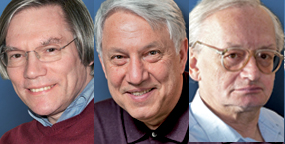
Alan Guth, Andrei Linde and Alexei Starobinsky shared the astrophysics prize.

The prize in astrophysics went to Alan Guth of the Massachusetts Institute of Technology in Cambridge; Andrei Linde of Stanford University in Palo Alto, California; and Alexei Starobinsky of the Landau Institute for Theoretical Physics at the Russian Academy of Sciences near Moscow. The three earned the award for pioneering work on the theory of cosmic inflation, which holds that the Universe underwent a short-lived phase of exponential expansion soon after it came into existence.

Studies of inflation now occupy thousands of theorists. Indeed, recently reported results seemed to suggest that scientists had found the imprint of the Big Bang by examining cosmic microwave background using the BICEP2 telescope; those results, however, have now been called into question.

nano-three

Thomas Ebbesen, Stefan Hell and John Pendry shared the nanotechnology prize.

For the field of nanoscience, the Kavli prizes went to Thomas Ebbesen of the Université Louis Pasteur in Paris; Stefan Hell of the Max Planck Institute for Biophysical Chemistry in Göttingen, Germany; and John Pendry of Imperial College London. The three countered long-held beliefs about the resolution limits of optical imaging and microscopy, showing that light can interact with nanostructures smaller than light’s wavelength. Previous convention had suggested that only details larger than approximately 200 nanometres could be imaged. In a press release, the Kavli Foundation calls this ability to see and image nanoscale objects “a critical prerequisite to further advances in the broader field of nanoscience”.

Ebbesen’s experiments in the late 1990s, which challenged accepted theory of light propagation through small holes, led to new means of increasing the efficiency and spatial focus of photonic devices and the sensitivity of optical sensors. Hell developed a technique that enables imaging at dimensions much smaller than optical wavelengths, including the processes in living cells. Pendry developed a model for the ‘perfect lens’, or superlens, using materials such as silver, gold and copper. Pendry is most famous for developing the concept of an invisibility cloak, which, like perfect lenses is based on the use of ‘metamaterials’ that have a negative index of refraction (see ‘Invisibility cloaks are in sight‘).

neuro-three

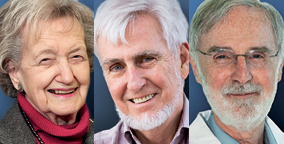
Brenda Milner, John O’Keefe and Marcus Raichle shared the neuroscience prize.

Kavli awarded prizes for neuroscience to Brenda Milner of McGill University in Montreal, Canada; John O’Keefe of University College London; and Marcus Raichle at the Washington University School of Medicine in St Louis, Missouri. Through a variety of research techniques, these neuroscientists elucidated how specialized nerve cells perform different functions and revealed details about brain regions involved in memory. The Kavli announcement notes that memory “defines who we are” and that “loss of memory can have devastating effects on an individual’s personality”.

Milner studied a celebrated patient known as H.M. and others who had incurred brain damage, and found that the medial temporal lobes are necessary for the formation of what is now known as episodic memory. O’Keefe showed that the hippocampus contains neurons that encode an animal’s specific location. And Raichle designed methods for visualizing the brain’s activity.

The Kavli Foundation, based in Oxnard, California, was established in 2000 by Norwegian-born entrepeneur Fred Kavli (1927–2013), and funds more than a dozen Kavli Institutes around the world.

The award ceremony will take place in Oslo on 9 September.

Pictures courtesy of Kavli Foundation (Guth); Linda A. Cicero/Stanford University (Linde); Landau Institute/RAS (Starobinsky); Eirik Furu Baardsen (Ebbesen); Bernd Schuller/Wikimedia Commons (Hell); Mike Finn-Kelcey/Imperial College London (Pendry); Owen Egan/McGill University (Milner); Kavli Foundation (O’Keefe and Raichle).

US Supreme Court strikes IQ cutoff for death penalty cases

When deciding whether a defendant is too intellectually disabled to receive the death penalty, courts must take into account inherent variability in intelligence quotient (IQ) scores, the US Supreme Court ruled today.

In its 5-to-4 decision, the court said that it is unconstitutional for states such as Florida to use an IQ score of 70 as a cutoff above which a defendant is considered to be intelligent enough to understand the consequences of his or her actions.

The plaintiff in the case, Freddie Lee Hall, has been on death row in Florida for 35 years after being convicted of murdering two people in 1978. He has taken multiple IQ tests, yielding scores ranging between 60 and 80, and testimony from people who knew him suggest that he has been intellectually disabled his entire life. But under Florida law, an IQ score above 70 disqualifies a defendant from being spared execution on the basis of intellectual disability, and Florida’s Supreme Court ruled in 2012 that Hall’s scores were too high to qualify for this reprieve.

But the American Psychological Association (APA) and the American Association on Intellectual and Developmental Disabilities hold that IQ tests have an error margin of about ten points. Consequently, Hall’s lawyers argued that IQ tests are too imprecise to determine whether his score falls on one side or the other of this cut-off.

“Florida’s rule disregards established medical practice in two interrelated ways,” Justice Anthony Kennedy writes in the court’s majority opinion. “It takes an IQ score as final and conclusive evidence of a defendant’s intellectual capacity, when experts in the field would consider other evidence. It also relies on a purportedly scientific measurement of the defendant’s abilities, his IQ score, while refusing to recognize that the score is, on its own terms, imprecise.”

The Supreme Court sent Hall’s case back to Florida’s court for a reassessment. It is not yet clear what Florida, and as many as eight other states with similar laws, will adopt in lieu of the IQ threshold. But the court’s decision compels states to incorporate other evidence if a defendant’s scores fall within the range of error.

James Harris, a psychiatrist at Johns Hopkins University in Baltimore, Maryland, and an expert on intellectual disability, is pleased with the decision. “The Supreme Court validates professional practice in measurement,” he says. “They confirm the dignity of the process and the dignity of the people with intellectual disability who are being served by the process.”

But Harris would have liked to see the ruling go further in emphasizing the importance of testing for adaptive functioning — a person’s ability to function in society — which is another factor that the APA uses to diagnose intellectual disability. This factor, he contends, is often more relevant to a case than an IQ score, which mainly tests academic ability.

Although the APA has held for decades that IQ scores have a margin of error, Justice Samuel Alito worries that the ruling opens a can of worms, as the guidelines of professional societies change over time. Tying the law to these views will “lead to instability and continue to fuel protracted litigation,” he writes in the minority opinion.  Alito adds that the court’s decision “adopts a uniform national rule that is both conceptually unsound and likely to result in confusion”.

German research agencies condemn animal-rights attack on neuroscientist

A timid silence often follows public attacks on scientists who use animals in their research. But today a group of ten heavyweight academic organisations in Germany shed its habitual reserve and raised a stern collective voice against animal-rights activists whose recent advertising campaign targeted an individual neuroscientist.

The activists overstepped the line between freedom of expression and unacceptable defamation, said the group, known as the Alliance of Science Organisations, which includes the Max Planck Society, the DFG grant-giving agency, the Conference of University Rectors and the German National Academy of Sciences Leopoldina. In particular, it said, activists depicted Andreas Kreiter, who uses monkeys in his research, as ‘not quite human’.

The row began on 16 April, when the Tierversuchsgegner Bundesrepublik Deutschland (Opponents of Animal Experiments Federal Republic of Germany) placed an aggressive full-page advertisement in two national quality newspapers and three regional newspapers.

The advertisement comprised a long treatise against animal research. It focused on Kreiter, from the University of Bremen, but also called on “all citizens” to treat every animal experimenter “with contempt and to denounce their work publicly”.

Its headline read “Kreiter cold-bloodedly carries on”, a reference to a federal court’s recent decision that local authorities in Bremen acted illegally in trying to stop his research. This legal decision had led Kreiter to believe his 16-year struggle to continue his studies into mechanisms of attention, one of the pillars of consciousness research, had finally ended. In the late 1990s Kreiter and his family had to be placed under police protection.

The advertisement set Kreiter’s photograph next to a picture of a primate with a number tattooed onto its chest, and with its head secured against movement during an experiment. It claimed that Kreiter’s experiments cruelly torment primates without yielding any medical advances.

This personalisation of the animal debate helped to spur the Alliance into action, as did the advertisement’s provocative opening quotation, attributed to neurologist and animal protectionist Herbert Stiller: “Animal experimenters are a particular type of creature – one should not casually call them human.”

The citation also precipitated an unprecedented debate in the press, because the right to human dignity is considered sacred in Germany and is enshrined in the first article of the country’s post-war constitution. During the Nazi era, categories of people like Jews, gypsies or the handicapped were declared to be ‘sub-human’ and killed.

In its public statement, the Alliance “expressly and decisively condemns” the advertisement. It says that animal research is necessary and is carried out under the tight contol of the authorities.

Welcoming the Alliance’s first public defence of animal research, neuroscientist Stefan Treue, director of the German Primate Centre in Göttingen, says that the affair “reinforces the recognition of the scientific community that we really need a public information platform where citizens and journalists can learn the facts about why animal research is needed”.

Kreiter says he is disappointed that the debate around his work has been reactivated. “This type of attack is hardly new for me,” he adds. “But these advertisements were particularly aggressive.”


Brain initiatives galore, smiles aplenty

Vivien Marx reports on the Society for Neuroscience meeting in San Diego and the big brain projects in the EU and US.

SfN attendance sign

The Society for Neuroscience annual meeting in San Diego clocked record attendance.{credit}Vivien Marx{/credit}

The brain is hot.

Despite dismay about the recent 16-day US government shutdown, the impact of automatic budget cuts–the sequester–taking effect in light of federal budget disagreements in Washington, and the general economic malaise, there is palpable excitement. New large-scale initiatives are getting underway around the world to develop technologies to empower neuroscientists.

This year’s Society for Neuroscience (SfN) meeting in San Diego that has just ended, clocked a record attendance of over 30,000 attendees, noted society president Larry Swanson to attendees with a broad smile in one of his conference announcements. “It is an inspirational time to be a neuroscientist,” he said, with the field drawing attention, for example, across the European Union and in the White House. In a town hall meeting for the Brain Research through Advancing Innovative Neurotechnologies (BRAIN) Initiative, there was no lack of critical comments and suggestions of aspects to include in BRAIN. But smiles stayed plentiful as funders explained their plans.

The fact that the US president chose neuroscience as his multi-year, signature project is something “we should all be pretty excited about,” says Tom Insel, director of the National Institutes of Mental Health. In addition to projects in the US, such as  (BRAIN) Initiative and the EU’s Human Brain Project, large neuroscience projects are just emerging in Australia, China, Japan and Israel. “This is beginning to feel like a global movement,” he says. And projects are unfurling in the private sector, too.

The new tools, says Story Landis, director of the National Institute of Neurological Disorders and Stroke, will help neuroscientists do their work “bigger, better, faster” and expand the research strides made in recent years.

Much remains to be done. Compared to what is known about the kidney or heart, very little is known about the brain, says Insel. Adding to the neurological diseases, he noted, are the “invisible wounds of war” such as traumatic brain injury and post-traumatic stress disorder. Tools to help diagnose these illnesses are urgently needed.

Nora Volkow, director of the National Institute of Drug Abuse says that the BRAIN initiative stands to “act like a catalyst” in ways not unlike the decoding of the human genome and its successive “avalanche of discovery.”

Besides attending SfN’s hundreds of sessions and 17,000 posters, scientists had the chance to get up close and personal with representatives from the funding agencies and to hear about and discuss the new opportunities. Here is a snapshot of some of the announcements.

European Union
As Daniel Pasini from the European Commission’s programme on future and emerging technologies explained, the 10-year European Human Brain Project has invited the scientific community to present “grand ideas” for a massive effort to computationally reconstruct the human brain using supercomputers.

The model will help to study brain-related diseases, which are a major health challenge, an economic and social burden, and to pool data and expertise more effectively and translate results for treatments.

The project, which took three years of planning, involves over 250 scientists across Europe in 135 research groups in 22 countries, including groups in the US and Asia. The program began officially in October and has a budget of $1.6 billion. Half of the money will come from the EU the other will come from national funding sources, Pasini says. The first phase is slated to last 30 months and is funded with $100 million.

Six platforms are to be developed including, for example, the neuroinformatic platform as a single point of access to all neuroscience and clinical data along with software tools. The other platforms involve brain simulation, high performance computing, medical informatics, neuromorphic projects and neurorobotics. The idea is to keep improving the model as new data become available. All tools and data are set to be made available to the global scientific community. The plan is to create the ‘CERN for brain research.’ Not unlike a telescope facility or a super-collider, scientists will be able to perform experiments and use this platform to help continue to expand the model.

Deconstructing Henry

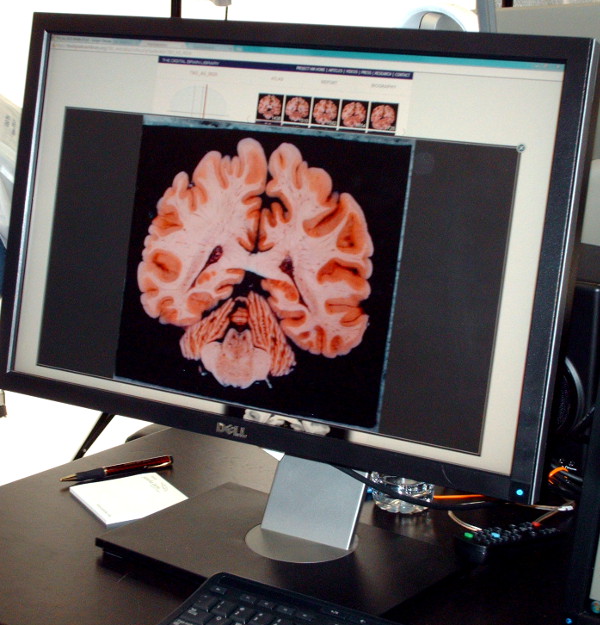
The Brain Observatory at UC San Diego is running ‘Deconstructing Henry’ an examination of the Brain of patient H.M.{credit}Vivien Marx{/credit}

US Defense Advanced Research Projects Agency (DARPA)
“Yes, we build guns and bombs, that is true,” says Colonel Geoffrey Ling of DARPA more generally. He is a neurologist who also served in Afghanistan and Iraq and currently deputy director of DARPA’s division responsible for defense sciences, which does not build bombs and guns. He and many other neuroscientists want to cure diseases ranging from Alzheimer’s to schizophrenia to post traumatic stress disorder to traumatic brain injury. DARPA is indeed “zeroed in” on the problems facing soldiers returning from the battlefield.

Speaking directly to fellow panelists from NIH, he says: “I wish they would double the budget yet again for you guys,” which was greeted by SfN attendees with vigorous applause.

Two DARPA solicitations for proposals are now open, offering “real money,” as Ling says, collecting projects that relate to memory dysfunction and psychiatric disorders. More solicitations are “in the works,” he says. “It’s not for us to decide what you’re going to build,” he says, highlighting the importance of imagination and taking a diversity of approaches.

The funding model at DARPA is shaped by use cases to assure that what is developed serves his constituency, the servicemen and women.

Multidisciplinary research, for example, is not achieved with the collaboration of a cellular neuroscientist, a neurophysiologist, and a neurologist. Rather, for DARPA interdisciplinary efforts can be a team comprised of a mathematician, a physicist and “a crazy guy in his backyard putting together some Rube Goldberg thing,” says Ling.

Unlike NIH, DARPA issues no grants but rather contracts, which are “deliverables-driven,” and may seem more rigid that NIH. But he sees strength in the synergy of the different funding approaches by NSF, NIH and DARPA. DARPA is committed to this project over the next decade, says Ling.

Data-sharing provisions are built into each contract, which DARPA takes “extremely seriously,” and breach of contracts are pursued. The DARPA solicitations issued are just the beginning, he says.

Systems based Neurotechnology for Emerging Therapies (SUBNETS)
Deadline: Dec. 17, 2013
This project seeks proposals to develop devices, perform model organism based research, or enable modeling of human neural systems, which are geared to help treat patients with neuropsychiatric and neurologic disease.

Restoring Active Memory (RAM)
Deadline: Jan. 6, 2014
This project seeks proposals in the area of analyzing and decoding neuronal signals which can be used to help patients recover memory function after injury.

SfN attendee bag

Companies in the neuroscience field may benefit from funding in the emerging large-scale projects. Here a scientst at SfN wears one company’s advertisement.{credit}Vivien Marx{/credit}

National Institutes of Health (NIH)
No grants have yet been awarded through the Brain Research through Advancing Innovative Neurotechnologies (BRAIN) Initiative. But grants are in the pipeline. True, says Insel, some see the project as a perhaps $40 billion dollar challenge, but he views the funding in 2014 as an “initial investment.”

The first report of the BRAIN initiative’s working group, says Landis, offers a guide for how the project could begin to move forward in its first year. The working group, is the advisory committee to the NIH director is chaired by Rockefeller University’s Cornelia Bargmann and Stanford University’s Bill Newsome. Landis says excitement is high in the Obama administration and across NIH. The hope is that this enthusiasm would be reflected in the budget allocations.

The NIH first year funding is “a down payment,” she says.

Insel says that the NIH’s $40 million to be allocated in 2014 is drawn from the following sources:

  • $10 million are coming from the NIH Director’s discretionary fund
  • $10 million are from the NIH Blueprint Neuroscience a program to enhance collaboration across NIH institutes
  • $20 million are split among four NIH agencies: National Institute of Neurological Disorders and Stroke (NINDS), National Institutes of Mental Health (NIMH), National Institute of Biomedical Imaging and Bioengineering (NIBIB), National Institute of Drug Abuse (NIDA)

These monies were previously slated for initiatives of the individual institutes’ choice. As Landis explains, these four agencies agreed that the BRAIN Initiative was the one they selected for fund allocation. She says she and her colleagues are “optimistic” that the excitement, opportunities and promise of the BRAIN initiative will power the budgets of the future. Throughout sessions at SfN, she, Insel and others were quick to squelch fears that BRAIN would draw funding away from investigator-driven grants.

The first NIH Requests for Applications (RFAs) are currently begin hashed out with cross-communication happening across NIH, NSF and DARPA, says Insel.

All BRAIN Initiative projects will be peer-reviewed and perhaps unlike the more classic grants, they will have milestones and there will be expectations of data-sharing. “That’s going to be baked into everything we do in this project,” says Insel. Evaluations will accompany the projects after they are funded.

A number of awards are likely to be cooperative agreements, which are part way between a contract with deliverables and R01s, says Landis. These agreements are accompanied by milestones. If researchers do not share data and that provision is in their notice of grant award “there can be consequences,” she says.

Update: In mid-December NIH announced six funding opportunities. Approximately $44 million will finance six new funding opportunities.

Sunset at SfN

Two of the 30,000 attending scientists take a break outside the SfN conference halls.{credit}Vivien Marx{/credit}

National Science Foundation (NSF)
Cora Marrett, the acting director of the NSF says her agency will “very energetically” support the BRAIN Initiative. She says that funders need to take “the long view” to let the forces of scientific discovery play out with a long-term commitment. “I’m feeling very optimistic, too, about what the long-run prospects for additional resources will look like.”

Evidence of NSF’s engagement with neuroscience in general can be seen in the recent $25 million grant to fund the Center for Brains, Mind and Machines at the Massachusetts Institute of Technology. The intent is to blend computer science, math, robotics, neuroscience and cognitive science.

The BRAIN Initiative will require intense collaboration across disciplines and scales, she says. Neuroscience has been more devoted to small science, she says, the work of individual principal investigators and small lab groups. Marrett agrees with Alan Leshner, the executive publisher of Science, that neuroscience’s strides will benefit from a change in the culture toward larger-scale, interdisciplinary efforts.

At the same time, this shift will occur without prescriptions that all work needs to be on “the huge scale” of a particle accelerator, for example. Indeed neuroscientists will need to integrate findings across the scales of their research and link physiology, biophysical and genetic data with cognitive and behavioral findings (see Leshner Editorial in Science).

The projects will require data management plans of the grantees, she says, to explain how they will handle data-sharing, which is to the benefit of the entire enterprise.

The NIH’s BRAIN Initiative interim report – notes and thoughts

The first official report lists the scientific priorities that will be funded by the NIH as part of the BRAIN Initiative

brain_map

{credit}Margrie & Osten, Nat. Methods{/credit}

Yesterday evening we heard the first official report that delivered some details about what scientific areas the BRAIN Initiative (at least the part coordinated by the National Institutes of Health) will focus on and what its general approach to science funding will be.

Cori Bargmann and Bill Newsome (co-chairs of the NIH-appointed panel that is advising the NIH-director about the plan) spoke through a webcasted seminar to explain the conclusions that arose from the series of scientific workshops and meetings that have been taking place over the summer to discuss what could be the scientific priorities of the BRAIN Initiative. These priorities will set the ground of the research areas to be funded by the BRAIN initiative NIH funding in Fiscal Year 2014 (with a budget of US $40M).

The overall goal of the project was summarized as focusing of developing tools and resources for analyzing neuronal circuits and their function in living organisms.

The two scientists delved on a number of principles that applied to the overall initiative, such as promoting platforms for data sharing, promoting interdisciplinary research and focusing on a variety of experimental organisms and studies across temporal and spatial scales.

The specific areas that will be funded through the Initiative are summarized below:

  1. Generate a census of cell types in the nervous system. Including neurons and glia and techniques for targeting them. To be attempted in parallel in human and animal samples. Methods developed for this should apply across species.
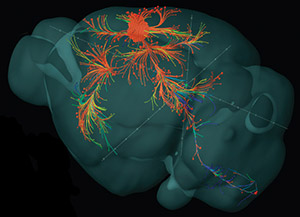
  2. Create structural maps of the brain. This means cell to cell level connections in different animal models. This would complement the Human Connectome project (based on macroscale neuroimaging approaches).
  3. Develop new large scale methods for recording chemical and electrical activity of neurons. Scaling up of electrophysiological and imaging methods as well as completely new technologies.
  4. Develop a suite of tools for circuit manipulation and perturbation of circuit function. A push for the development of technologies like optogenetics that enable manipulating nervous activity in ways that resemble natural activity patterns.
  5. Linking brain activity to behavior. Activity monitoring at the same time that behavior is monitored. Highlighting the importance of making simultaneous measurements during long periods of time and during different types of behaviors.
  6. Integrating theory, statistics and computation with experimentation. Importance of theoretical frameworks that could explain principles of brain function.
  7. Delineate mechanisms underlying macroscale brain imaging technologies, as used in humans.
  8. Create mechanisms to enable collection of human data.
  9. Provide training so that new methods reach the community and promoting interdisciplinary research.

Although these FY2014 research priorities are presented as 9 independent entities, the goal is really to integrate these approaches as much as possible —but how exactly this integration will take place or be promoted is to be revealed by June 2014.  The goals are also highly ambitious and will require much more funding than the BRAIN Intiative’s current budget.

The speakers noted that the goals were not “to develop tools for tools sake” but tools that could have applicability. Innovative tools, thoroughly validated and applied in real nervous systems, improved through iterations and to ensure that they are disseminated efficiently to the community.

The commission also highlighted that their goal was not to deliver the solutions but the problems. Solutions to addressing these challenges are to come from ‘bottom-up’ approaches proposed by the community of scientists.

Tools for studying individual cells in the brain or the entire brain as a whole exist and continue to be very useful. But methods for understanding how connected networks of cells in the brain work and relate to behavior are still largely missing. Even maps of these connected entities remain unknown. Focusing funding on better tools to close this gap will be exciting and productive for advancing neuroscience as a whole.

The conclusions disclosed in this interim report are very much in line with what was expected of the project as announced a few months ago. They also largely agree with the main scientific goals that were deemed to be the top funding priorities for the National Science Foundation for the BRAIN Initiative (which will have US$20M to contribute, as well). Indeed, many of the topics covered in these 9 areas were things we and others discussed in editorials and commentaries related to the BRAIN Initiative in our pages and in this blog. The working group that has developed these priorities has had an inclusive, overarching frame of mind and included most of the major challenges that neuroscience currently faces, as most scientists would probably agree.

As we’ve said before, a push for technology development in neuroscience, with clear goals and challenges that these tools need to tackle, will surely be an efficient way of advancing the science of the brain.

Lasker Awards go to rapid neurotransmitter release and modern cochlear implant

Lasker_logo-2Cross-posted on behalf of Arielle Duhaime-Ross from Nature Medicine’s Spoonful of Medicine blog.

A very brainy area of research has scooped up one of this year’s $250,000 Lasker prizes, announced today: The Albert Lasker Basic Medical Research Award has gone to two researchers who shed light on the molecular mechanisms behind the rapid release of neurotransmitters — findings that have implications for understanding the biology of mental illnesses such as schizophrenia, as well the cellular functions underlying learning and memory formation.

By systematically analyzing proteins capable of quickly releasing chemicals in the brain, Genentech’s Richard Scheller and Stanford University’s Thomas Südhof advanced our understanding of how calcium ions regulate the fusion of vesicles with cell membranes during neurotransmission. Among Scheller’s achievements is the identification of three proteins — SNAP-25, syntaxin and VAMP/synaptobrevin — that have a vital role in neurotransmission and molecular machinery recycling. Moreover, Südhof’s observations elucidated how a protein called synaptotagmin functions as a calcium sensor, allowing these ions to enter the cell. Thanks to these discoveries, scientists were later able to understand how abnormalities in the function of these proteins contribute to some of the world’s most destructive neurological illnesses. (For an essay by Südhof on synaptotagmin, click here.)

The Lasker-DeBakey Clinical Medical Research Award went to three researchers whose work led to the development of the modern cochlear implant, which allows the profoundly deaf to perceive sound. During the 1960s and 1970s Greame Clark of the University of Melbourne and Ingeborg Hochmair, CEO of cochlear implant manufacturer MED-EL, independently designed implant components that, when combined, transformed acoustical information into electrical signals capable of exciting the auditory nerve. Duke University’s Blake Wilson later contributed his “continuous interleaved sampling” system, which gave the majority of cochlear implant wearers the ability to understand speech clearly without visual cues. (For a viewpoint by Graeme addressing the evolving science of cochlear implants, click here.)

Bill and Melinda Gates were also honored this year with the Lasker-Bloomberg Public Service Award. Through their foundation, the couple has made large investments in helping people living in developing countries gain access to vaccines and drugs. The Seattle-based Bill & Melinda Gates Foundation also runs programs to educate women about proper nutrition for their families and themselves. The organization has a broad mandate in public health; one of its most well known projects is the development of a low-cost toilet that will have the ability to operate without water.

The full collection of Lasker essays, as well as a Q&A between Lasker president Claire Pomeroy and the Gateses, can be found here.

Italian parliament approves sweeping restrictions to use of research animals

The Italian parliament has voted in favour of introducing extreme restrictions on the use of animals in research — which some scientists say would halt important biomedical research in the country.

But some experts say that this may contravene European Union (EU) legislation — leaving the Italian government with the uncomfortable choice of either upsetting its democratically elected parliament or upsetting the European Commission.

The dilemma arose as the government began earlier this year to prepare legislation required to adopt into national law an EU directive covering the protection of animals for scientific purposes.

The directive, which was approved in 2010 after a long battle, strikes a delicate balance between animal welfare and the needs of biomedical research. It is considered to be among the strictest in the world.

Earlier last month the senate approved a series of amendments that further tighten the directive, and these were rubber-stamped yesterday by the Chamber of Deputies.

The amendments would, for example, forbid the use of nonhuman primates, dogs and cats in research, except in mandatory drug testing or when directly related to translational medicine. They would also forbid procedures that impose mild pain — such as injections — without anaesthesia.

The legislation further prohibits the use of animals in some research areas — such as xenotransplantation, in which cells and tissues are transplanted between species, and addiction. “It’s terrible,” says  Gaetano Di Chiara, a pharmacologist at the University of Cagliari, Sardinia. “Drug addiction is a major health issue, and it requires research with animals.”

But Roberto Caminiti, a physiologist at the University of Rome La Sapienza, who chairs the Committee on Animals in Research for the Federation of European Neuroscience Societies, points out that the second article of the EU directive explicitly bars EU member states from ‘gold-plating’ the directive by adding restrictions.

“If the government does actually implement these changes, we will call on the EU to open a procedure against Italy — that’s for sure,” Caminiti says.

The final legislation must be in place by the end of this year.