Nature India special volume on 30 years of DBT

DBT 30 years volumeOne of the key government departments of India credited with heralding the era of adventure and entrepreneurship in the country’s science – the Department of Biotechnology (DBT) – is entering its youthful years. Thirty, as they say, is the new twenty.

In these three eventful decades, DBT’s achievements have been many, in terms of the science it has enabled, the policies it has introduced, as well as the linkages it has established across disciplines and countries. DBT’s many forays into biological sciences education and its societal contributions have also bolstered its position as a formidable science-faring body in the country – as a confident young global icon who looks to the future, armed with a dynamic policy framework, the spirit of adventure and ample room for self-criticism.

Nature India is happy to be associated with DBT at this historic time of transition, a time when India’s science is making waves globally. This  special volume (freely downloadable from the Special Issues section of Nature India) marking DBT’s 30 years was released today. The volume features commentaries from leading names in biological sciences in India and across the world. The milestones of DBT have been highlighted in a commentary ‘The changing face of biological sciences in India’ and a short note ‘Three decades of biotech solutions’ by two of the many visionary past leaders of the department. DBT’s present chief outlines the vision for the future in an interview titled ‘As India’s economy grows, we will have more support for science’.

The articles compiled in this issue range from looking at the state of basic biotech research in the health sector (malaria, TB, allied microbes and stem cells) to green medicine and frugal medical innovations; from biosafety of India’s laboratories to the looming debate over genetically modified crops; and from biodiversity to big data.

The future of science and science-led entrepreneurship lies in an interdisciplinary, global approach; in frugal
innovations; in providing local solutions to the world’s problems. DBT, which has been playing the catalyst in all these areas successfully, now has an enviable 30-year benefit of hindsight to reflect upon and open newer doors to newer challenges.

As media partner, Nature India, a showcase of India’s science, is proud to collaborate with DBT in its newest mission of disseminating science better. It would be a mission well accomplished if the youth of this country gets back to thinking that ‘science is cool’.

Nature Index India analysis reports surge in publication

Indian Science Ascending report release

Indian Science Ascending report released

A new analytics report from Nature Index — ‘Indian Science Ascending’  — released today, notes a surge in high-quality scientific publication in India between 2012 and 2014. The report, produced jointly by Springer Nature and the Confederation of Indian Industry (CII), reveals that in high tier journals, Indian academic institutions co-author more papers with international companies than with domestic firms. The report was released at the CII Global Higher Education summit in New Delhi.

The analysis is the first of a new style of reports that further probe data from the Nature Index to answer questions about India’s place in global science, especially when compared with countries that have similar volumes of index output in 2014 and with broadly similar economic conditions (including Australia, Brazil, Italy, Russia, Singapore, South Korea and Taiwan).

The Nature Index database tracks the author affiliations of nearly 60,000 scientific articles published in an independently selected group of 68 high-quality science journals, and charts publication productivity for institutions and countries. The Nature Index report Indian Science Ascending shows a compound annual growth rate (CAGR) of 8% between 2012 and 2014 in the output of top-quality science in the country.

The report also chronicles India’s particular strength in the broad discipline of Chemistry, which shows the largest increase in CAGR of 8.6% among the comparator countries. The collaboration analysis reports that India’s international collaboration far outweighs domestic collaboration, and zooming into links between industry and academia reveals that Indian academic institutions collaborate mainly with international corporations through their international branches.

India_white-paper-int6_Page_01Here are the key highlights of the report:

  • At number 13, India is among the top 15 countries globally in the Nature Index 2014.
  • India’s research output has grown steadily since 2012, showing stronger CAGR of 8% than other countries with comparable output and economic conditions.
  • Chemistry continues to be India’s strongest research area with 50 per cent of India’s overall Nature Index output coming from Chemistry alone.
  • The US is India’s top collaborator followed by Germany. India collaborates with 85 countries, mostly in Europe. Other strong collaborative ties include East Asia and Australia.
  • Institutions in India collaborate mostly with inter­national counterparts, but their largest collaborations tend to be with other domestic institutions.
  • Industry–academia collaboration is yet to take off in India, but Indian academic institutions have good col­laborative ties with international cor­porations.

President Designate, CII, Naushad Forbes said,“There’s a common perception that India fails to produce anything of significant scientific value, but this report presents a refreshingly different picture of Indian science, supported by evidence – a fact reflected in its title: India’s Ascent Towards World Class Science. Prime Minister Narendra Modi recently launched a single-window mechanism called “Imprint” for release of R&D funds to academic institutions along with other policy measures. Hopefully soon then, our “historic love affair with chemistry”, aptly highlighted in this report, will be replicated in other areas of science too.”

According to Antoine Bocquet, Springer Nature Vice President Sales, Japan, India, Southeast Asia and Oceania: “Since its launch in 2014, the Nature Index has provided a new way to look at the scientific literature and the research organizations that contribute to it. India’s investment into R&D has stayed less than 1 per cent of its GDP for the past 2 decades, although the growth in Indian output in the index shows a steady increase. With other new initiatives by the Indian government such as tax incentives for R&D, we are excited to see the outcome in future years and continue working with CII to track the country’s growth both in the quantity of high-quality research and diversity in collaboration patterns. India will continue to be a driver of growth in both the quantity and quality of global research and a country to watch closely.”

World Diabetes Day: The silent killer endures

On World Diabetes Day, a new report by International Diabetes Federation (IDF) bears bad news to the Arab world, already boasting the highest prevalence of diabetes worldwide and reeling from its different side effects. According to the report, 35.4 million adults aged 20-79 of the Middle East and North Africa region are living with diabetes – over 40.6% of these are undiagnosed.

In 2015, over 340,000 people died due to diabetes, and projections for 2040 expects the number of people with diabetes to almost double, rising to 72.1 million.

Moreover, the silent killer is depleting resources in the region, with overall health expenditure eating up 15% of the region’s healthcare budget and it’s not enough. Although expenditure is also expected to double by 2040, the IDF says it will “likely not be enough to adequately treat all people with the disease.”

The wide infrastructure development, rapid urbanization, increased life expectancy and reduced infant morality also translated into lifestyle changes that included soaring rates of diabetes across most countries in the region, especially the Gulf states.

This time last year Nature Middle East ran a detailed infograph tracing the effects of the soaring epidemic. And nothing has changed much since then, except for the certainty that diabetes is still killing more than 10% of all adults in the region, and nearly half of these under 60, the cost to society and development due to the disease and other metabolic syndromes is high and rapidly growing.

The disease is worse in some countries than others. For instance, a report by our writer Louise Sarant earlier this year cited a study by King Fahad Medical City in Riyadh, predicting that over the next ten years, one in four Saudis will be at risk of having a fatal heart attack.

Of the 4,900 urban-dwelling Saudis monitored by the study, 26% were at high risk of having a heart attack in the next decade. Those in the cohort did not have a history of cardiovascular diseases (CVD), and were between the ages of 20 and 40.

Of those studied, the research found out that 25% had diabetes, 34% hypertension, 25% were smokers, 27% were obese, 86% were not involved in any physical activity and 19% had dyslipidemia, an abnormal level of lipids in the blood.

Another report published a year earlier, also by Sarant, warns of a sharp hike in type 1 diabetes cases. More alarmingly, the incidence among infants of this type was reported to be growing with children developing the disease as early as six months, rather than the established peak ages of around seven and at puberty, when hormones antagonize the action of insulin.

Regional experts have told Nature Middle East that changes in policy, and better research into diabetes, is needed. But it seems that few are listening.

In short, the region has a ‘fat’ diabetes problem, and it’s not waning. And the Middle East and North Africa, like the rest of the world, are no closer to a cure.


The Middle East experiences a sharp rise in antibiotic use

PhotoDisc/Getty Images

PhotoDisc/Getty Images

The region, especially countries like Saudi Arabia and Egypt, has increased its reliance on antibiotics, and the rise in numbers is dramatic, according to a new report that is hailed as the most comprehensive yet, worldwide.

The Center for Disease Dynamics, Economics and Policy (CDDEP), a non-profit think tank based in Washington DC, used national data and regional surveillance systems to calculate how antibiotic drugs are used globally. The center mapped out their use for 12 types of bacteria, over the period of ten years – and regionally, Saudi Arabia and Egypt are revealed to be the highest in terms of use, with numbers steadily growing every year.

The center measured antibiotic consumption in standard units, defined as the equivalent of one pill, capsule or ampoule. They divided reported numbers of standard units use by estimates of countries’ population, obtained from the World Bank, to get their data. To allow for easier comparison across countries, their graphics count standard units per 1,000 population (1000/pop).

CDDEP

CDDEP

In Saudi Arabia, for instance, all antibiotics use amounted to 25,171 standard units per 1000/pop in 2000. By 2010, this number rose to 32,272. The interactive maps, classified by country, can simultaneously track the use for several types of antibiotics, including broad and narrow spectrum penicillins, among others.

In Egypt, antibiotic drug intake experienced a similar hike, the figures climbed from 16,654 standard units per 1000/pop in 2000 to 24,734 by 2010.

Information regarding resistance to the drugs, however, is absent for this region, perhaps because of restricted access to data. Daniel Sahm, chief scientific officer at International Health Management Associates in Schaumburg, Illinois, tells Nature magazine that the new analysis “might contain holes: an argument for more-aggressive surveillance,” noting that it is difficult to gather data in developing countries.


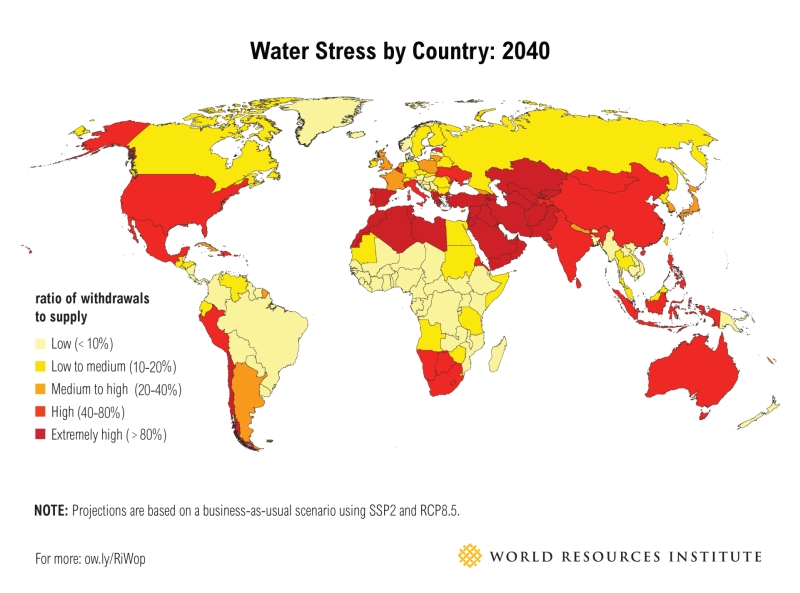
The Middle East: most water stressed region in the world by 2040?


The Middle East could be the least water-secure worldwide

The Middle East region could possibly be the least water-secure worldwide

This region will suffer from acute water scarcity, as projected by dreary future scenarios for 2020, 2030 and 2040 – at least according to an August 2015 report by environmental think tank World Resources Institute (WRI).

The WRI report covers the globe, but the emphasis on the Middle East comes from the fact that it harbors 14 of the 33 likely most water stressed countries in 2040. The statistics include nine countries that are considered “extremely highly stressed”: Bahrain, Kuwait, Palestine, Qatar, United Arab Emirates, Israel, Saudi Arabia, Oman and Lebanon.

The region already lacks security, water-wise, above all else. The report cites examples such as heavy migration of farmers and herders in Syria, from the countryside to urban areas, as a result of dwindling water supplies. In Saudi Arabia, and in fear of water depletion, the kingdom will depend on grain imports, instead of growing them by 2016.

Only this month, Nature Middle East reported that more than 20 million Yemenis – 80 per cent of the country’s population – have limited access to clean water due to raging conflict. The water shortages have created cases of blood diarrhoea among children under five and an increase in other diseases such as malaria. As well, they have created a crisis among farmers. Experts have warned that in many areas it is too late and the groundwater is running out or has disappeared. Eventually, this will lead to a shrinking rural economy.

“Whatever the drivers, extremely high water stress creates an environment in which companies, farms and residents, are highly dependent on limited amounts of water and vulnerable to the slightest change in supplies,” says WRI. “Such situations severely threaten national water security and economic growth.”

The report drew projections under business-as-usual, optimistic, and pessimistic scenarios. The water stress scores for each scenario and year were weighted by overall water withdrawals, but the report also provides scores for individual sectors, like agricultural, domestic, and industrial ones.

Of the Arab countries that scored the highest on water stress, a 5.0 out of 5.0 risk score, are: Bahrain, Kuwait, Qatar, United Arab Emirates and Palestine, followed by Saudi Arabia with a score of 4.99. For a breakdown of these projections, read the full report here.

water_stress_world_map_webready

Click on the picture to enlarge it
{credit}Infograph courtesy of World Resources Institute{/credit}

Hepatitis C: The case of Egypt

In the Arab world, and worldwide, one of the most affected countries when it comes to hepatitis C virus (HCV) is Egypt – in fact, it’s estimated that 14.7% of the North African country’s population is carrying the virus and up to 100,000 new infections occur each year.

Seven months before the world celebrates World Hepatitis Day today, Tuesday, a new study revealed that between 3,000 an 5,000 Egyptian children could be infected by the virus through mother-to-child transmission, probably during pregnancy, childbirth or somewhere in the postpartum period. The transmission could contribute to up to 50% of new cases in children under five.

A feature story published by Nature Middle East in October last year explored the possible causes of one of the most widely spread epidemics in Egypt, and it turns out, medical care – or the lack thereof – is responsible, with most transmissions happening due to healthcare hygiene breaches. Hospitals and clinics are by far the largest suppliers of the virus. Wahid Doss, the head of the Egyptian National Committee for the Control of Viral Hepatitis and dean of the Ministry of Health’s affiliated Liver Institute, told our writer Louise Sarant that “[around] 60% of patients who undergo kidney dialysis will have contracted HCV within the year, because the machines are not sterilized properly. Same goes for blood transfusions, which are very risky.”

In 2011, Nature Middle East’s chief editor Mohammed Yahia wrote that “not only is the Egyptian HCV problem one of size, but the genotype of the virus in circulation is one that is not commonly found in the rest of the world. If it is not controlled, there’s no guarantee that it will be confined to Egypt.”

Egypt — and the Middle East more generally — is a stronghold for genotype 4. The prolonged 72-weeks treatment available for hepatitis C – which involves a weekly injection and a daily capsule dose – only has a 60-65% success rate for this genotype. While the preferred treatment regimen – a costly 48-week course of interferon and the antiviral drug ribavirin – is usually only effective in 30-50% of cases.

By contrast, about 75% of HCV infections in Europe and the United States are of genotype 1. Naturally, most prominent research in the West targeted the latter, and not the former.

But perhaps things are changing; already scientists in the region are starting to pay some attention to the virus and its possible new treatments.

Last year, two Egyptian scientists sent sample crystals of two proteins of the hepatitis C virus to space for analysis, in their search for possible cure. The proteins are HCV genome 4, and the researchers, working at the German Aerospace Center (DLR), said they were hoping to understand the behavior of this specific type located heavily in Egypt.

Separately, researchers in Qatar collaborated with Harvard Medical School to develop a therapeutic cocktail that combines antiviral agents and cholestrol-lowering drugs, commonly known as statin, to ease the burden of hepatitis C complications. This statin therapy, announced in April, can complement treatment by slowing the progress of liver fibrosis and reducing the risks of liver cancer in virus-infected patients.

Research aside, in a chronic case like Egypt, prevention remains the saving factor in this affair. And it’s not an easy feat; it involves an overhaul of hospital practices, measures like proper sterilization across health facilities, more investment in awareness and educational programmes aimed at curbing the virus’ spread, in addition to easing access to treatments, especially in rural areas.

Hepatitis C: Training for journalists

Hepatitis viruses under an electron microscope

Hepatitis viruses under an electron microscope{credit}Image courtesy of U.S. Centers for Disease Control and Prevention{/credit}

Nearly 2.5% of people in the world is estimated to be infected with Hepatitis C – that’s a whopping 150 million people. And it’s more than most other infectious diseases, yet many people know little to nothing about the disease.

In addition to limited awareness of a disease that kills millions yearly, Hepatitis C receives narrow media coverage.

But for reporters to be able to cover the disease, properly, journalists need to know more about the virus and the disease. What are the different genotypes? Which new medications are there? Why is the disease burden so high around the world?

To mark World Hepatitis Day, the World Federation of Science Journalists (WFSJ) is launching a new online portal to educate and support journalists who are covering viral hepatitis all over the world. The portal should give reporters the appropriate tools, data sets and education to accurately cover the killer virus.

To produce this education plan, a steering committee of science journalists from around the world came together with experts, researchers, clinicians and patient advocacy groups representatives to identify the most important topics to cover; ranging from the global disease burden and its risks to health policy and the rapidly evolving hepatitis treatment landscape. I was part of this committee which met twice, then worked together online, to build the training programme.

The material is packaged into modules made available freely online, with each covering hepatitis C from a specific angle. Together they offer journalists different ways to tell the hepatitis C story.

Hepatitis C has been around for so long that it suffers from the same predicament that a condition like HIV/AIDS does: people feel it’s an old story that they don’t know how to keep telling.

But there is so much happening in the hepatitis C landscape to make the story both very fresh and very important. Through this portal, journalists will find tips on how to address said story, in a way that suits their community.

The portal’s steering committee worked on coming up with fresh angles and the portal is expected, still, to help journalists tie loose threads; for example, reporters on the virus should be able to explore questions related to drug policy, commercial use of hepatitis C drugs, accessibility and reach.

The portal also offers a database of experts, policymakers, researchers, clinicians and patient advocacy groups from around the world, with contact information readily available to all visitors of the portal. The experts speak different languages to suit the needs of journalists globally.

The second part of the programme will see the WFSJ use the material online to host face-to-face workshops for journalists on the ground in countries and regions where hepatitis C is most prevalent, such as Egypt and Pakistan.

The workshops will be held in several regions and in different languages to make sure that as many people as possible can benefit from them. In addition to field workshops, the portal will offer a series of online webinars by award-winning science journalists.

Tough times, tough measures for Kuwait

Kuwait has greenligted the creation of a DNA database of all its 1.3 million citizens, and 2.9 million foreign residents – a surprising move that DNA privacy advocates deem “ill advised.”

Parliament, based on a government request, mandated the law earlier this month, allowing the country’s Interior Ministry to establish said database. Now, people who refuse to provide genetic samples for testing could be jailed or fined, according to this AFP report. Furnishing fake samples is punishable by a seven-year prison sentence.

The decision came in the wake of a suicide attack in a Shiite mosque in Kuwait’s capital that left 227 people wounded. The militant terror group known as the Islamic State (IS) has claimed responsibility.

The entire endeavor is expected to set back the Kuwaiti government some $400 million, dug out from the country’s emergency cash, something that Hellen Wallace, director of GeneWatch UK, genetic science watchdog, calls “a waste of resources.”

“It does not help to solve more crimes or prevent acts of terrorism, especially by suicide bombers who are not concerned about their identities being revealed after the event,” she tells Nature Middle East.

Wallace says that a DNA database reveals private information about biological relationships, for instance. “It also allows everyone on the database to be tracked by the government or any outsider who can infiltrate the system, because people leave their DNA wherever they go, such as on their coffee cup, not only at a crime scene.

“Finally, the risk of errors increases with large databases, as DNA evidence can be planted or contaminated, leading to false accusations and even false convictions for a crime.”

The UK and Portugal have previously mulled over building DNA databases of their populations but had an about face. The European Court of Human Rights, following a case in 2008, judged unanimously that the indefinite retention of innocent people’s DNA profiles, fingerprints and samples is unlawful, breaching Article 8 of the European convention on Human Rights, which is the “right to privacy.”

A 2014 study published in the Egyptian Journal of Forensic Sciences, and co-authored by Wallace, suggests that criminalizing all those who refuse to voluntarily provide their DNA will eventually lead to public distrust. The study says that certain questions should always be asked of databases worldwide, especially ones related to safeguards needed to prevent miscarriages of justice, and cross-border sharing of DNA information.

It also highlights the importance of involving the public in such a political debate, something that Kuwait – in its hurry to impose stricter security measures and help authorities make quicker arrests – has clearly sidestepped.

Reference:

Wallace, H.M. et al. Forensic DNA databases-Ethical and legal standards: a global review. Egyptian Journal of Forensic Science https://dx.doi.org/10.1016/j.ejfs.2014.04.002 (2014)

Health situation in Yemen more desperate than ever

The World Health Organisation’s Margaret Chan published a statement this week decrying the health situation in Yemen, in which conflict killed almost 2,000 people, and injured 8,000, according to the latest death and casualty tolls.

Around 8.6 million are in need of urgent medical help, the statement said, adding that although WHO has delivered around 48 tonnes of medicine during a recent ceasefire, this is “vastly insufficient.” The aid can only serve some 400,000 people, and more continue to suffer, “not only from war-related injuries, but from inability to get basic treatment for the most common health conditions, or get obstetric care during childbirth.”

The statement reiterates that lives are lost not just in conflict, but in the throes of an ailing health system, a reality that Nature Middle East‘s correspondent Sophie Cousins has explored in an earlier report on May 4.

Ahmed Shadoul, WHO representative for Yemen, had told Cousins that health facilities are coping with “critical shortages of life-saving medicines, trauma care, and surgical and medical supplies, as well as medical staff to cope with the growing influx of patients.” At the time, the Yemeni ministry of public health and population had predicted that major hospitals will be unable to provide services, perform operations or provide intensive care to patients.

And indeed, WHO’s latest statement reported that hospitals around the country are already closing down their emergency operations rooms and intensive care units due to shortages in staff and fuel for generators. Medicines for diabetes, hypertension and cancer are no longer available, as per the WHO. The National Tuberculosis Programme has shut down in some areas, and infectious diseases such as malaria and dengue fever are spreading.

Outbreaks of polio and measles are also serious risks.

The statement in full can be read here.

Tyler Prize for Indian environment policy maker

Madhav Gadgil

Madhav Gadgil

Madhav Gadgil, Professor of Interdisciplinary Studies at Goa University and Chair of India’s expert panel on Western Ghats ecology, shares this year’s prestigious Tyler Prize for Environmental Achievement with Jane Lubchenco of Oregon State University, USA. The 2015 Tyler Prize, announced today, recognises their leadership and engagement in the development of conservation and sustainability policies in India, the United States and internationally.

Gadgil’s landmark report on the biodiversity of Western Ghats known as the “Gadgil Committee” report offered guidelines on the protection and development of India’s Western Ghats, a UNESCO World Heritage site and one of the eight most biological diverse areas on earth. His body of work has helped India draft the National Biological Diversity Act. Lubchenco, the former administrator of the federal agency National Oceanic and Atmospheric Administration (NOAA) has for long advocated the importance of the ocean and the need to protect it. The U.S. Department of State named her the first-ever science envoy for the Ocean, to promote this focus on ocean science, marine ecology, climate change and smart policy to a global audience.

“Drs. Lubchenco and Gadgil represent the very best in bringing high-quality science to policy making to protect our environment and ensure the sustainability of natural resources in their respective countries and around the world,” said Tyler Prize Executive Committee Chair Owen T. Lind, Professor of Biology at Baylor University announcing the prize winners. Lubchenco and Gadgil will share the $200,000 cash prize and each receive a gold medallion. The Prize, awarded by the international Tyler Prize Executive Committee with the administrative support of the University of Southern California, honours exceptional foresight and dedication in the environmental sciences and policy.

Gadgil’s career has been dedicated to marrying environmental science with policy making in India and promoting environmental science nationally. Through his public speaking and writing, Gadgil has advanced the field of environmental science and put it on the national radar. “From an early age, my father’s work inspired me to work with people and think about the impact of our collective activities,” Gadgil said in a release. “This first came about in my work in 1975 when traditional basket weavers who depended on bamboo in the Western Ghats approached the government and said the overexploitation of bamboo for paper mills was hurting their livelihood.”

Gadgil’s work began examining the tension between economic development, traditional use of resources among local communities and environmental conservation. This cross-sector approach drove the publication of his first book, This Fissured Land, which is used in environmental education across India, as well as a resource for policy makers.

According to Gadgil, the Western Ghats are central to India’s water supply, genetic diversity, economy and quality of life. “The Indian constitution is about empowering people and our resource management is too top down. Local communities do a better job of balancing economic development and conservation. We must have policies that empower local people to make these choices.”

Working with local forest communities in the central Indian forest belt, Gadgil has seen that that management in the hands of locals is most effective ensuring economic opportunity and sustainable use of natural resources while preserving sacred groves and local cultures. “We must engage local people who are most directly affected by policies if we want to develop policies that promote sustainability and balance the economics, culture and conservation,” Gadgil said in the release. “Empowering people is the key.”

Gadgil is a recipient of India’s highest civilian honours the Padma Shri in 1981 and the Padma Bhushan in 2006. He also received the Shanti Swarun Bhatnagar Award for biological sciences in 1986.