Analyzing Global Biotech Investing Over Time

Base_mapWhere are venture funds being deployed in biotech? Is this changing? As part of a programme to find out how VC interacts with biotech, I have created a database of venture investment in 33 countries and three regions of the USA, over the time periods before, during and after the financial crisis of 2008-11, and built this into an interactive map of the biotech VC world. The map is clickable, with data for each country linked to that country on the map. The link to the map is here.

A quick summary shows:

  • USA dominates investment in biotech.
  • East and West Coast investors have different behaviour and different investment priorities than others.
  • UK, Israel and non-Coastal US investors are similar
  • Looking to the Coastal US for examples of ‘how to do it’ guides for policy may not work.
  • Companies with bold ambitions should look to where investors match their vision, not to local sources.

Globally, the USA continues to dominate investment in biotechnology – around 2/3 of all investments by value and number are from investors in the USA and into US companies.

Because of the US dominance, many European governments and a not insignificant number of entrepreneurs look to the USA for leadership, inspiration and, of course, funds. But is the USA a good model for other countries?

Continue reading

The Plus and Minuses of Thailand

Union_Square

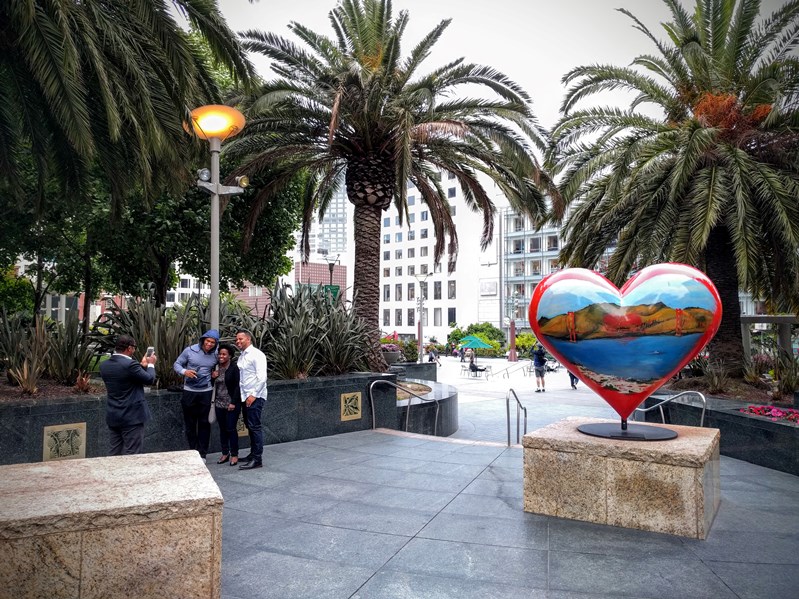
Northwest corner of Union Square, San Francisco.

The annual JP Morgan healthcare conference is held every January in the cramped halls of the Westin St. Francis hotel on the edge of Union Square, here in San Francisco. Because the conference is selective in its attendees anyway, and because the number of registrants is constrained by walls of the Westin, for the duration of the conference a massive overflow of biotech investors, executives and personnel conduct a torrid business in the lobbies and hotel rooms surrounding Union Square. This sideshow has swelled in recent years to even include smaller conferences running concurrently.

So perhaps I was reminded of JP Morgan today simply because the Biotechnology Innovation Organization (BIO) convention is held in the same city this year, with scores of biotech people walking the same sidewalks, show badges swinging from necks like pendulums. And, similar to attending JP Morgan, I began my day with a meeting in a hotel restaurant just up the hill from Union Square, and spent a portion of my afternoon speaking with small phalanx of Thai delegates in a ballroom at the InterContinental hotel.

Ajarin Pattanapanchai, the Deputy Secretary General of Thailand Board of Investment, took me through a pitch for drawing foreign biotech investment to her country. It included the familiar exemptions on foreign income tax for R&D activity/manufacturing of biopharmaceutical agents, as well as permissions to bring along expatriates to the country, and own land in Thailand.

But Thailand offers a few other interesting things. Its location, for instance, places it right between the burgeoning pharmaceutical markets of India and China. It is a top medical tourism destination for everything from cancer treatment to laser eye surgery to “weight loss surgeries,” due to Thailand’s more than 50,000 “well-trained physicians” and more than 1,300 hospitals, according to promotional material.

It is a rising destination for running clinical trials, says Sakarindr Bhumiratana, president of King Mongkut’s University of Technology Thonburi. A trial in Thailand could save a company 30-40%, he says, because of the lower pay nurses and doctors receive in Thailand versus the US, and the currency exchange.

Thailand also has drawbacks it needs to address. First, though Thailand has seen an increase of corporate venture arms, such as ones wielded by the Siam Cement Group and Crown Property Bureau, it still lacks venture capital for company creation – a complaint heard from life science sectors the world over, including those seeking to start biotechs in the US. And while the Thailand Center of Excellence for Life Sciences (TCELS) provides consultations on commercialization, there are no pharma headquarters in Thailand, and the supporting bioeconomy, so crucial to areas like San Francisco and Cambridge, Massachusetts, is missing.

We spent some time discussing entrepreneurism (also on the rise in Thailand), and when I got up to leave, the ballroom was just filling with attendees for a full afternoon of presentations breaking down Thai investment and collaboration opportunities. Thailand also has a pavilion in Moscone (booth 7301 in the West hall), and I suppose I could have gathered all this information there, but it feels like getting the most out of BIO this year means spending time outside the convention center.

Brady Huggett

Biotech investment panorama in Chile

In bloom.

In bloom.

The “Chilecon Valley” bubble is a weird one. Four years ago, people wrinkled their nose at you when you called yourself an entrepreneur. Today, they treat you like a rockstar and maybe even throw money at your face – especially if you’re a foreign entrepreneur coming to the country. There is an oversupply of tools, help and attention directed at entrepreneurs in Chile just now, which should seem like good news. The bad news? We are getting far too comfortable with all these entities babying us, and once the bubble bursts (if indeed it does) we will be left with nothing – because we have not built any sustainable structure.

Continue reading

Chile’s Austral Incuba


valdivia_la_nube

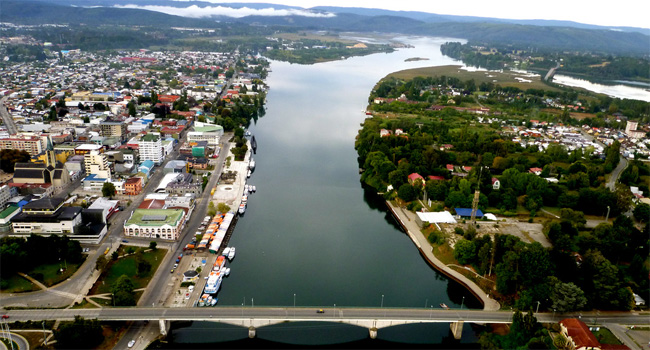
Rio Valdivia, cutting through Valdivia, Chile.

Or, why hatch a biotech business?

There are around 20 business incubators in Chile, and for the last couple of years they have been getting kind of a bad reputation. Their main job is to take government grants (usually seed funds) and allocate them to different projects that they scout through competitions and direct application. Many of these incubators base their business models on taking a percentage of their startups’ sales for up to 5 years, or equity up to 7% to be cashed out in 5 years, or a combination of both. Considering this timeline, it will probably come as no surprise that most business incubators here avoid biotech projects like the plague.

Which is why the case of Austral Incuba, arguably the only business incubator to focus in biotech in all of Chile, is so special. How have they managed to survive while competing with IT-based incubators with shorter timelines, lower risks and less capital-intensive projects?

Macarena Sáez, Austral Incuba’s CEO, tells me the choice to focus on bio-based projects was a conscious one, made about six years ago (the incubator has been in existence 11 years). Like every other incubator, they started working with the inevitable app and website groups, and all the projects that make you go “why are you wasting your brainpower in this,” (my words, not hers) until they realized that most of those entrepreneurs seemed much more interested in bettering the state of their personal finances than the state of their country.

But Austral Incuba was different from the start. It is located in Valdivia, a city more than 800 km away from Santiago, the country’s capital, and is housed within Universidad Austral de Chile. The university’s motto, “knowledge and nature,” reflects its environment (it is smack in the middle of forests and rivers) and their academic focus. Their most prestigious Master’s program, in human-scale development and ecological economy, is actually dictated by Manfred Max Nef, who was awarded the Right Livelihood Award in 1982. The downside is that not only is Valdivia far away from Santiago (we are talking a 12-hour bus ride at least), but also the city’s GDP is roughly 4 times smaller than that of Santiago, and still has grave illiteracy and poverty issues. So if incubating a business “from the end of the world,” as we ourselves refer to Chile, seemed hard, trying to do that from the south of said end-of-the-world sounds impossible.

ok3-1030x773

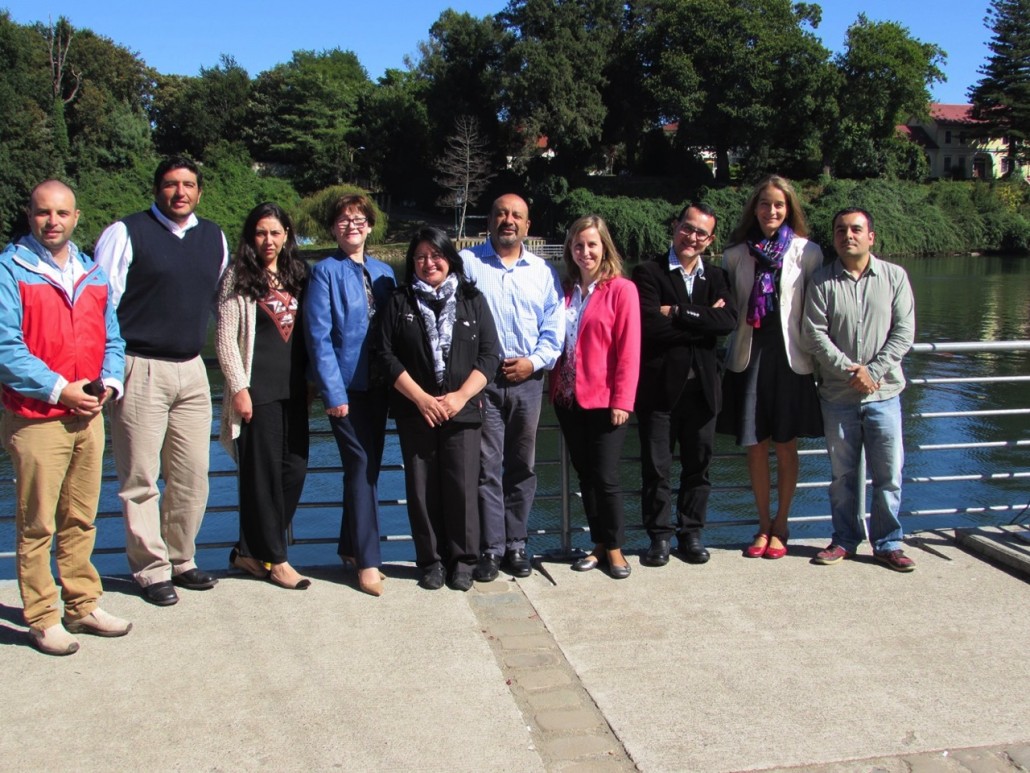
The Austral Incuba team.

“It feels like our very own crusade,” says Macarena. “We know the conditions are unfavorable and yet we choose high-risk projects such as biotech-related ones, because those are the ones that actually respond to what we see in our environment. The impact you can have while developing bio-based projects is infinitely bigger than your classic app or website, and can actually take responsibility for what is happening in our local area, both socially and environmentally speaking.”

Even the entrepreneurs there are different. They bring premises from their scientific disciplines to their startup work. They don’t just want to make a sustainable product; they want to work in creating a sustainable economy, capable of regenerating their local environment and society.

It’s not all butterflies and rainbows, though. The “diva scientist syndrome,” as I like to call it, is quite real and can be a huge impediment to the development of a project. As Macarena puts it, “We understand that you rule the lab but that does not mean you rule the world!” Which is to say that these entrepreneurs might know everything about their science, but sometimes have no idea what a value proposition is. A scientist’s ego might be one of the worst obstacles when becoming entrepreneurs – they can be un-coachable and deaf to feedback. In Chile this “diva scientist” attitude can become even worse when combined with the “rockstar entrepreneur” vibe we all seem to be getting secondhand from Silicon Valley. There are so many entities here that exist solely to serve the entrepreneur, including throwing money at them, that we haven’t been able to create a proper VC structure. This also has hurt the development of the entrepreneurs. We get money all the time, but we don’t get the smarts that should come with it – which is precisely what Austral and other business incubators are trying to solve.

Luckily, Macarena says that trait is more common in an older generation of entrepreneurs and not as prevalent in the younger crops. And it’s these younger ones that have proved themselves worthy of Austral’s help, over and over. “One of our entrepreneurs relocated from Santiago and practically revived a small town that had been left down on its luck by employing tens of people that had been left unemployed after the closing of a local industry. Another is obsessed with creating added value to local industry’s waste, and is now exporting his products to the US and Europe – all while making the region cleaner and greener,” she says.

The experience Austral has had with these entrepreneurs reaffirms their belief that there’s a certain common trait to all scientific entrepreneurs: a spirit of collaboration. “During our first 5 years we witnessed the non-necessity of collaborating that traditional startups put in place through constant outsourcing and extreme secretiveness,” Macarena says. “Bioentrepreneurs are radically different. They are aware of social pain, and that pushes them towards collaboration as a tool to improve social conditions around them.”

Emilia Diaz

Universities in Brazil – Do we have the best model?

college-building-1622355-1280x960

Education in Brazil should be free. Article 205 of the constitution claims: education is a right for all and a duty of the State. Article 206 IV of the constitution claims: Official institutions must offer free education for all.

What university system do we have in Brazil? We copied a federal system from France, where universities are free for all. We should have instead copied the American system, where there are state universities and students must pay.

In Brazil, federal universities do not resolve federal problems. The Federal University of Rio de Janeiro does not even clean the very polluted Guanabara Bay, a situation that will harm the atmosphere around the Olympic Games. Federal universities in Brazil receive federal money, but the federal budget is shrinking and our universities are getting less and less money. So I see no alternative to students paying to study in Brazil’s universities. Perhaps we’ll need to amend the constitution.

The competition to be a student at a federal university coming from high school in Brazil is stiff. Rich students coming from expensive schools have a better opportunity to enter a federal university. Poor students cannot pay for expensive high schools and then fail to compete at the next level. It is fortunate that we see more public high schools in Brazil that do an excellent job because they attract high-quality professors. These professors aggregate quality to the learning process and increase the opportunities for poorer students.

Yet students that do not qualify for public federal universities have to work during the day and pay to go to private, night schools. Are these schools good? Of course not, but they charge simply what one can pay. Their motto is, roughly: what we charge fits in your pocket. Undergraduates leaving these private schools have difficulty finding jobs. The answer is not more federal universities. What we need to do is financially strengthen the federal universities by charging the students. The rich should pay more, and the poorer should pay less. However, that would be against the Constitution.

In the United States in the nineteenth century it was obvious there was a regional imbalance. Not only between North and South but also between East and West. In Brazil the imbalance is between the Northeast and the Southeast. The per/capita income in the Northeast is half of that of the Southeast. In the U.S. land grant universities were created by the Morrill Act in 1862. The federal government donated land to each state, and proceeds from the sale of that land were used to establish schools or build out school programs.

Universities are not free, though. In California, where I did my PhD, those born in California paid a lot less than I did, or others who were residences of other states before applying. The population of California is then grateful for a splendid, expansive university system. If we look at the best universities in the world, 8 of the top 10 are in the United States, and 52 of the top 100. Many of these are land grant schools. The University of São Paulo is the best Brazilian school; it ranks 131st on this list.

What is the solution then? Create a land grant state university system more than one century later than it should have been created. States must invest in their universities as São Paulo does, instead of building soccer stadiums. What is the priority in Brazil? Soccer or science? Soccer, unfortunately. That must change.

Luiz Antonio Barreto de Castro

GM mosquitoes fire first salvo against Zika virus

pick

Genetically modified male Aedes aegypti mosquitoes made by Oxitec are released in Piracicaba, Brazil. © epa european pressphoto agency b.v. / Alamy Stock Photo.

A Brazilian city in January became the first to approve a program to grow transgenic mosquitoes for their release into the environment as a public health measure against the Zika virus outbreak. The city of Piracicaba in Brazil said it would work in collaboration with the Milton Park, UK–based Oxitec to scale up release of transgenic Aedes aegypti mosquitoes, the main vector for the Zika, dengue and Chikungunya viruses, and build a new production facility there. With no Zika vaccine in sight, government officials across the globe are pondering strategies that suppress the mosquito populations to thwart the spread of infection. US and Chinese regulators both green-lighted field tests for vector control strategies involving nontransgenic Aedes albopictus mosquitoes.

Infections with the flavivirus Zika appear to be linked to a surge in the number of infants born with microcephaly, or abnormally small heads. Nearly 5,000 cases of microcephaly have been reported in Brazil since late last year, according to the Brazilian health ministry. Normally about 150 cases are reported there annually. “The link between Zika and microcephaly is very strong and comes from multiple lines of evidence,” says Ernesto Marques, a public health scientist specializing in vaccines at the University of Pittsburgh in Pennsylvania.

The outbreak has spread fastest in Latin America, but has reached more than 33 countries. In response, the World Health Organization in January declared Zika an international public health emergency.

A handful of companies and institutes have begun working on a vaccine for Zika. Brazil’s Butantan Institute aims to develop a vaccine “in record time” and the US National Institute of Allergy and Infectious Diseases (NIAID) in January issued a call to the research community for Zika work. US President Barack Obama in February asked Congress for $1.8 billion in emergency funding for vaccine development, mosquito control and public education.

But a vaccine is many years—and clinical trials—away. Some knowledge gained from vaccine work on other flaviviruses such as dengue, West Nile and yellow fever can be transferred to a Zika vaccine program, but to what extent is unclear. “We know very little about Zika,” Marques says. “We don’t know if a vaccine [for it] requires any special technology.”

The only recourse, for now, is to fight the mosquitoes. Both A. aegypti and A. albopictus are likely Zika vectors, but A. aegypti seems to be the primary culprit, says Tom Scott, an entomologist at the University of California (UC), Davis. Vector control is woefully difficult, however. In Zika-affected areas, local governments have been spraying insecticides, minimizing mosquito breeding grounds, urging the public to cover up and wear repellent, and asking women to delay becoming pregnant.

Entomologists worldwide have been busy reviewing biological approaches. A strategy used in agriculture, the sterile insect technique (SIT) involves the release of large numbers of radiation-sterilized insects to mate with and reduce wild pest populations. Although successful against several agricultural pests, the technique has not been as effective against mosquitoes. Researchers have also proposed using gene drives to force a genetic change in mosquitoes that make them unsuitable hosts for a pathogen or drive vector species to extinction. But gene drives are untested in the field and guidelines for responsible use haven’t been hammered out.

The US and China are attempting to use mosquitoes sterilized, not by radiation, but by Wolbachia pipientis. The bacteria are introduced by microinjection followed by mass rearing. Mating of laboratory-reared males with wild females results in eggs that don’t hatch due to loss of paternal chromosomes. Lexington, Kentucky–based MosquitoMate has field-tested the technology on A. albopictus in three states in the US. The company is awaiting registration, or approval, from the US Environmental Protection Agency (EPA). A similar technology developed by a consortium of Chinese researchers in 2015 was field tested in A. albopictus in Guangzhou, China, and another test is planned for this year.

Furthest along is the genetically modified (GM) mosquito from Oxitec. The transgenic A. aegypti (OX513A) mosquito carries a gene encoding tetracycline-repressible transcription activator (tTA), a protein whose high-level expression is deleterious to cellular development. If the mosquitoes are grown in the presence of tetracycline, however, it binds and represses tTA expression, allowing batches of transgenic mosquitoes to be grown (whereas in the absence of the antibiotic, transgenic mosquito larvae die). The smaller male pupae are sorted from the female and released into the environment to mate with wild females, resulting in progeny that die before reaching reproductive stage (Nat. Biotechnol. 29, 9–11, 2011).

Oxitec, now a subsidiary of Intrexon of Germantown, Maryland, says OX513A mosquitoes reduced the wild mosquito population by 80–95% in field trials in Panama, the Cayman Islands and Juazeiro, in the Brazilian state of Bahia (PLOS Negl. Trop. Dis. 9, e0003864, 2015). Unlike insecticides traditionally used for vector control, Oxitec mosquitoes can easily get inside private properties, where much of the vector problem persists. “The male mosquito will always find the female. It doesn’t have to ask permission to enter the house,” says Hadyn Parry, CEO of Oxitec.

The company in 2014 received approval from Brazil’s National Technical Commission of Biosecurity (CTNBio) to commercialize the GM mosquito. But before the OX513A mosquitoes reach the market, the Health Surveillance Agency (Anvisa) must issue labeling and guidance. In the meantime, the city of Piracicaba, in the state of Sao Paulo, has taken matters into its own hands. The city first partnered with Oxitec in April 2015 to release the GM mosquitoes in a neighbourhood of about 5,000 people. The program reduced the larvae population by 82% compared to an untreated area, according to the company. In January, the partners announced they would expand the project to an area covering 60,000 people, and that Oxitec would build a local facility to rear enough mosquitoes to cover 300,000 people.

Other Brazilian officials have said they are interested OX513A. Local news organizations in Vitoria, a coastal city in the state of Espirito Santo, in December reported that health officials there and in nearby Vila Velha were considering the approach. Neither city, however, has pulled the trigger. Such a move is difficult without guidance from Anvisa and state authorities on the protocols for deploying the mosquitoes and how to integrate them with insecticides. “If you’re a municipal secretary of health and you’ve got a limited budget, it’s quite tricky, because you’ve got to follow the established rules and policies so that your back is covered by the state,” says Parry. That’s true for Piracicaba too. “We will need resources from other levels of government,” to continue scaling up the project, says Gabriel Ferrato, the mayor of Piracicaba. Many Brazilian cities lack the resources to do both traditional mosquito prevention and a new technology like Oxitec’s, he says.

Several independent researchers contacted by Nature Biotechnology said Oxitec’s technology is intriguing and worth pursuing. “I think it’s really important to look at this and see where it can go,” says Fred Gould, an entomologist at North Carolina State University in Raleigh. “Even if it only worked in specific, smaller cities, that’s one piece of the puzzle.”

Gould and others noted that neither Oxitec’s nor any other approach alone is going to fix a global problem like Zika. Pesticides, sanitation, water infrastructure, public education, biotech—all of it—must be deployed, and in ways that are tailored to local environments, adds Margareth Capurro, a biochemist at the University of Sao Paulo in Brazil, who was commissioned by Oxitec’s partner, Brazilian state-owned Moscamed, to study the mosquitoes.

Oxitec’s technology presents some unknowns. It is unclear how easily production could be ramped up, or how well it would perform on a large scale. “There are no studies on the cost-benefit” of Oxitec’s technology on a large scale, says Ferrato. Transporting large numbers of mosquitoes to their destinations could be a logistical obstacle and a considerable expense. In Piracicaba, Oxitec employees drove around in vans releasing mosquitoes through the windows to get them close to people’s homes. And even if mosquito populations are reduced drastically, it’s not clear what effect that will have on transmission of Zika. It seems logical that reducing the vector would decrease disease, but other factors come into play, says Scott at UC Davis. For example, if a population of people has no immunity to a virus “you can have very few mosquitoes and have an outbreak,” he says.

Carlos Brisola Marcondes, an entomologist at Federal University of Santa Catarina in Brazil, says it concerns him that most of the data about OX513A has come from Oxitec and its partners. “It would be advisable to get independent evaluations” that don’t involve Oxitec at all, he says. Marcondes says he would like to see large-scale studies, ecological assessments and cost analyses made before the technology is adopted.

With a virus as unstudied as Zika spreading explosively, officials are calling for a global full-court press from researchers. To that end, Capurro is leading a group of 40 scientists funded by the Brazilian government who will study how mosquitoes transmit the virus. And Marques in February headed to Brazil to join a research coalition called the Microcephaly Epidemic Research Group (MERG) studying the link between Zika and microcephaly, and to search for any co-factors that may contribute (Nature 530, 142–143, 2016). “It may be Zika plus something else” that causes microcephaly, Marques says.

Emily Waltz, Nashville, Tennessee

Law 13123 and access to the Zika virus

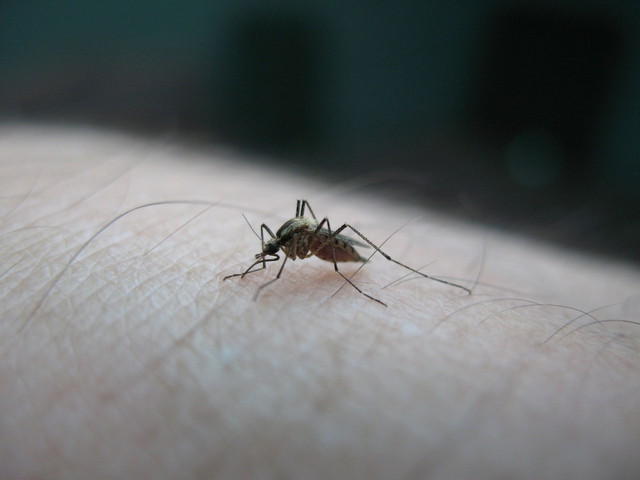
mosquito-on-my-hand-1385575-640x480

Last year I published an eBook by Schollars Press with an acknowledgment for this blog. The eBook was titled, Topics About Biotechnology in Brazil. One such topic was The Future of Sustainable Use of Biodiversity in Brazil.

I ended this topic saying that a substitute to the Provisional Measure 2186 put in place in 2001 might be worse than the PM 2186. In fact this new law (13123) has many problems, and in addition it requires a decree to regulate it that was not approved yet. The lack of regulation of the law impeded global scientists to access the Zika virus while investigating the microcephaly outbreak that became a huge problem in Brazil.

The Zika virus has existed in Africa for decades but microcephaly might be a particularity of the activity of this virus in Brazil. Thousands of women in Colombia had the virus, but their children did not have microcephaly. It is possible that a mutation in the virus caused this property to arise in Brazil. To prove or disprove this possibility we need to collect and sequence the virus from everywhere, but scientists abroad say they could not access the virus in Brazil because the lack of a decree to regulate Law 13123.

Obama provided $1.8 billion to obtain a vaccine for the virus. Today a vaccine can be obtained in plants in less than a year. We have the Olympic Games in Rio de Janeiro in August of 2016 and some countries may not show up due to this epidemic.

Scientists consulted by BBC Brazil said that the difficulty in accessing the virus in Brazil is possibly due to the intent of our authorities to have the vaccine developed in Brazil, and as such benefit initially the Brazilian population. If that is the case, I disagree, because we may have in front of us a global epidemic.

For this reason the Global Health Organization decided a massive effort was required. The problem is that the Decree has many constitutional incongruities, and cannot be approved as it is now – lawyers say this is the case. The solution, then, is for the government to authorize expedited access to other countries the particular virus found in Brazil. Scientists like Leslie Lobel, a virologist from the US, believe that a mutation may have happened to give the virus in Brazil a behavior different from what happened in other countries.

Sequencing Zika from many sources is vital. An authorization by the Brazilian government should happen because Evandro Chagas Insitute in Pará and University of Texas partnered already to produce a vaccine to be used against Zika virus. It is obvious that if Brazil engages in a global effort, all will benefit, including Brazil itself. We have the disease here and thus preclinical and clinical tests can be conducted here.

Science and politics do not mix. I said that before, regarding the process to approve GM salmon by FDA.

Luis Antonio Barreto de Castro

Doubling Feed and Food in Brazil

green-1397740-640x480In my previous posts I wrote that Brazil can double its food and feed production without increasing deforestation or further depleting our biomes. I mentioned that Brazil has conservatively 30 million hectares of degraded pasture distributed mostly in the Cerrado area in the south. This is almost the same acreage that Brazil uses for its production of grain and meat in these areas. Today Brazil produces close to 200 million tons of grain and we are the world’s No. 1 meat producer.

However in order for these degraded pastures to recover, EMBRAPA developed a technology that integrated grain production, meat production and forestry. These three components have important roles, and, when integrated correctly, can contribute to the reduction of the greenhouse gases (CO2, methane) that add to global warming.

It would be economically impossible for farmers or the private sector to pay for the recovering of degraded pasture without integrating this effort. The idea is to mix the planting of grain and cattle pasture. First, plant Brachiaria brizantha, which improves the quality of the soil for soybean and corn, which annually are grown in sequence. After three years, convert the land for pasture use, over a period of 1 to 3 years, to receive cattle, which in a degraded pasture would produce almost twice as methane.

The goal is to recover the pasture, because meat generates more revenue for the farmer than grain, and recovered pasture allows for more cattle per area. Yet the grain cycle is equally important, and the shrubbery in the pastures, mainly Eucalyptus, also contributes by converting CO2. Many farms have degraded pasture that has been recovered this way. Using this method, Brazil can be the top producer of feed and food in a couple of decades, and will not increase deforestation.      

Luiz Antonio Barreto de Castro


Clinical trials and beyond

peepsFor previous blogs on Australian biotech, go here, here and here.

Australia is well developed concerning clinical trials. The regulatory body, the Therapeutic Goods Administration (TGA), trusts the high ethical standards of the doctors and the ethics committees of the hospitals. Therefore, first-in-man trials do not require TGA approval, and can be done after notifying the regulators. Also, the protein for trials can be manufactured in a Good Manufacturing Practices (GMP)-like facility that is not fully GMP. (A GMP facility needs to comply with the regulations and be registered with the TGA in order to obtain the label, but a GMP-like facility doesn’t.) This makes it easy to do clinical trials in Australia. Further, the data generated from clinical trials in Australia are considered to be at par with that from the US or Europe. Clinicians running the trials are also paid much less than their peers in the US.

The country is also fairly innovative. In a 2013 Innovation Survey, Australia was ranked 13th in the world, and between 2003–2013, the per capita and per GDP dollar IP filings from Australia were more than that of most developed countries.

Yet problems remain. Overall, while human resources in Australia are less of a challenge now than they used to be two decades ago, the pool of people with experience remains small. There is a whole series of missing skills related to IT and data mining, IP, commercialization and regulatory affairs. Once a company has grown it can easily hire people who are accustomed to revenue and know how to increase sales, but in the early stages one has to put together a story and make people believe in it, and this is not easy to do in Australia. The experienced managers, or advisers, are mainly returning Australians or foreigners with commercialization experience in the US or EU. Also, the advisers might be located overseas. Notably, sourcing and retaining Americans is a challenge.

Another problem: the country has not yet produced a first-in-class drug. The only notable commercialization story is that of the key patent behind the cervical cancer vaccine Gardasil. The technology was discovered at the public University of Queensland, and clinical trials were financed through the sale of some of the patents to an Australian medical company, CSL, and later Merck. Currently, Merck has the exclusive global license to sell Gardasil, except in New Zealand and Australia, where CSL owns the license. But generally, a successful company is one that developed a simple product, repositioned existing products or developed new delivery systems for existing molecules, and did not build upon cutting-edge science.

Yes, biotech in Australia has its challenges. However, the science is good, government programs are supportive and clinical trials are relatively easy to initiate. Also, pioneers of earlier years have shown what it takes to build a successful company. Keep in mind that it can be done, but do not expect to go the whole way alone.

Szymon Jarosławski and Gayatri Saberwal

Acknowledgments: This article is based on interviews with 14 senior people in, or associated with, companies in Australia, whose comments have been edited for clarity and brevity. We are extremely grateful to the interviewees, who gave freely of their time and their insights.  This work was supported by a grant to GS from the Institut Merieux, France. SJ was supported by France Volontaires, France. Neither organization played any specific role in this study.