Diagnosing diseases using a simple blood test

Researchers from Qatar have developed biomarkers for plasma volume and red cell mass, which are used to monitor numerous disease states, such as heart failure, kidney disease or sepsis. The markers provide an applicable method to measure absolute plasma or red cell volumes, via a simple blood test, in a clinical set-up.

In their initial investigation, the scientists observed 33 healthy males over a period of six months. They collected monthly blood samples and concurrently estimated vascular volume.

They then analysed the individual variations of 45 common chemistry markers, such as total protein, cholesterol, calcium, transferrin, and albumin. These observed variations were then matched to the observed plasma volume variability. “We identified two panels of biomarkers, composed of 8 and 15 chemistry variables, which explained approximately 67% of plasma volume variance,” says corresponding author Louisa M. Lobigs, from Aspetar Sports Medicine Hospital, Doha, Qatar.

The scientist explains that, currently, vascular volumes are estimated in hospitals by calculating the change in concentration-based blood markers, such as hemoglobin concentration or hematocrit. This common approach produces relative values and assumes uniform mixing of the blood constituent (often not the case in the critically ill); it is also dependent on factors like the patient’s hydration levels, posture, their fluid intake. Alternatively, absolute vascular volumes can be estimated with radio-active tracers, but it’s a cumbersome and time-consuming approach, according to Lobigs.

The new method measures absolute volumes, and requires only a simple blood test.

“This is extremely promising news for improved volume management in the clinic,” she says. Validation of the model’s stability will be required before it can be streamlined among hospital patients.
Injectable gel repairs damage after heart attack in pigs

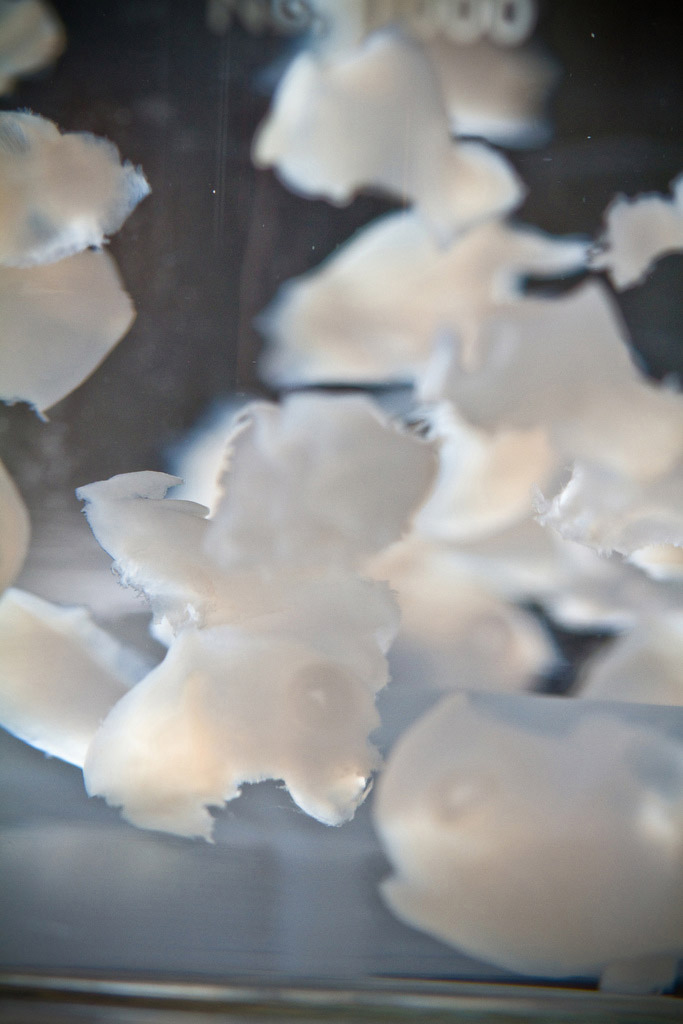
Processed hydrogel floats in a beaker{credit}UC San Diego Jacobs School of Engineering{/credit}

As you read this sentence, on average at least one person in the US will have started to clutch her chest. The blood flow to her heart will become blocked and cardiac muscle cells will start to die off and get replaced with scar tissue. This person has just suffered a heart attack and most likely will go on to develop heart failure, a weakening of the heart’s ability to pump blood and oxygen. In five years time, there’s a 50/50 chance she’ll be dead.

There are currently no treatments that can repair the damage associated with this so-called ‘myocardial infarction’ (MI), but a potential solution is now showing promise in a large-animal model. Reporting today in Science Translational Medicine, a team of bioengineers at the University of California–San Diego (UCSD) has developed a protein-rich gel that appears to help repair cardiac muscle in a pig model of MI.

The researchers delivered the hydrogel via a catheter directly into the damaged regions of the porcine heart, and showed that the product promoted cellular regeneration and improved cardiac function after a heart attack. Compared to placebo-treated animals, the pigs that received a hydrogel injection displayed a 30% increase in heart volume, a 20% improvement in heart wall movement and a 10% reduction in the amount of scar tissue scar three months out from their heart attacks. “We hope this will be a game-changing technology that can actually prevent heart failure after heart attack,” says UCSD’s Karen Christman, who led the study.

Christman and her team developed their hydrogel by stripping muscle cells from pig hearts, leaving behind a network of proteins that naturally self-assembles into a porous and fibrous scaffold upon injection into heart tissue. They previously tested its safety and efficacy in rats, where they found increased cardiac function and no toxicity or cross-species reactivity.

Similar strategies using naturally-derived scaffolding, such as small intestinal submucosa from pigs in wound patching, are well established. The UCSD study now shows the clinical potential of this approach for cardiac regeneration after a heart attack in a large animal that more approximates humans. Christman has already formed a company based on the technology, called Ventrix, and she hopes to move the product into human safety trials within the year.

Jeffrey Karp, a bioengineer at the Brigham and Women’s Hospital in Boston who is working on a glue that can bind cardiac tissue in live rat and pig hearts (as reported in a news feature this month in Nature Medicine), believes this is promising technology. “Promoting regeneration following myocardial infarction is one of the holy grails in medicine,” he says.

But, Karp warns, “it will be important to validate these results in additional pre-clinical studies, and compare efficacy with other approaches prior to marching onward to the clinic.”

Check out the video for the production process of the hydrogel: