California hantavirus outbreak surprises experts

A hantavirus outbreak in California’s Yosemite National Park is raising concerns among public health officials and has also presented researchers with a medical riddle.
{credit}CDC/Cynthia Goldsmith{/credit}

According to a 27 August announcement from the US National Park Service (NPS), the outbreak includes two deaths last month and a third, non-lethal, case of the virus. A probable fourth case is also reported.

The link between all the cases is that they involve individuals who stayed in a group of tent cabins at the park this summer. The NPS announced that they have tried to contact approximately 1700 individuals who lodged in the cabins between mid-June to mid-August in hopes that any other cases can be identified.

Hantavirus is characterized by flu-like symptoms which can appear as late as five to six weeks after exposure.  It’s caused by an RNA virus that’s only transmissible through airborne particles of rodent saliva, droppings, or urine.

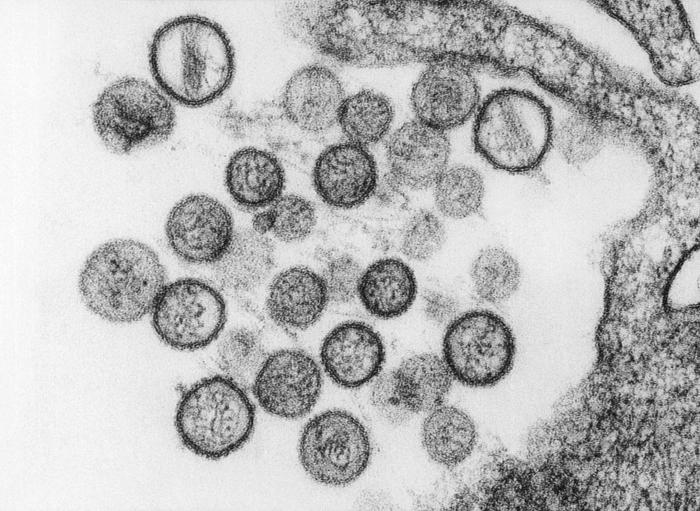
Just 587 cases of hantavirus have been confirmed in the US from its first identification in 1993 to 2011.  ‘Sin nombre’, the most common strain (pictured), can result in a severe respiratory condition; roughly 38% of cases are fatal. Deer mice are the primary hosts for the virus, and high elevation sites, where the mice are more prevalent, can be hot spots.

“Most cases can be traced to the same house – usually we see groups of two where people were cleaning a cabin together, for example,” says Brian Hjelle, a pathologist at the University of New Mexico in Albuquerque. “But it is unusual to have four cases coming from the same geographic location.”

That’s what has experts puzzled. Hantavirus has only infected humans twice before in Yosemite, each time at higher elevation cabins and only as isolated cases.
Continue reading

Citizen provision found beneficial to US Endangered Species Act

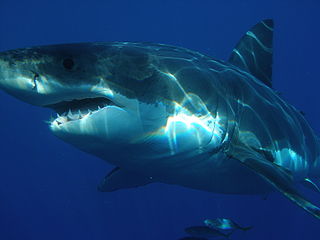
When three environmental groups petitioned the US National Marine Fisheries Service (NMFS) on 10 August to list a Pacific population of great white shark (Carcharodon carcharias) as threatened or endangered they made use of a legal tool that some critics say is as benign as a shark fin slicing through the water.

{credit}Wikimedia Commons{/credit}

That tool, a provision for citizen involvement in the Endangered Species Act (ESA), means that any citizen or group can petition the federal government to list a species that is believed to be threatened. The US Fish and Wildlife Service (FWS), or the NMFS in the case of marine species, is obligated to consider such petitions, some of which list dozens or hundreds of species, subspecies or populations. When petitions are rejected or languish too long the next step is a lawsuit. As a result, some have called the system little more than a revenue generating tool for environmentalists’ lawyers.

“One of the greatest obstacles to the success of the ESA is the way in which it has become a tool for excessive litigation,” wrote Doc Hastings (R-WA), chairman of the House Natural Resources Committee, in an op/ed to The Washington Times on 18 May.

That sentiment has now been challenge by a study published today in Science, which suggests citizen petitions are a net benefit. Berry Brosi, an ecologist at Emory University and Eric Biber, an environmental lawyer at the University of California in Berkeley, analyzed FWS data on 913 species petitioned since 1986 based on biological dangers, taxonomic classification, and conflict with economic development. “It’s clear that this citizen provision aspect is a flashpoint for critics, and we were curious if the criticisms had anything to them,” Brosi says.

Continue reading

US swine flu outbreak spikes

Today the US Centers for Disease Control and Prevention (CDC) announced that the number of reported cases in an ongoing outbreak of a strain of the H3N2 animal influenza virus (H3N2v) that transmits between pigs and humans has jumped to 145 in the past week.

{credit}CDC{/credit}

On 3 August, CDC officials reported 16 total cases of H3N2v infection. In all cases, patients interacted with pigs either in their occupation or at local agricultural fairs, suggesting that the virus has not yet evolved the ability to efficiently transmit between humans. CDC first reported the variant in a 12-case outbreak from July to December 2011, with two instances of suspected weak human-to-human transmission. This week’s surge may be partially due to a change in protocol: states can now confirm positive test results before further CDC testing. But, CDC influenza division chief Joseph Bresee warned in a press teleconference today, “We’re seeing a big increase, and we think it’s a real increase.”

The outbreak covers four states, with one case in Hawaii, one in Illinois, 30 in Ohio and 113 in Indiana. Indiana’s count rose to 120 today, according to the state’s health department, and Bresee expects a continued increase in the coming weeks. The symptoms are mild and similar to those of seasonal flu, and so far the outbreak has resulted in only two hospitalizations. More than 90% of the cases have been in children — probably because many adults may have antibodies that can handle the strain.

Virologists suspect that the H3N2v strain arose from swine flu strains exchanging genetic material in a process called reassortment. What raises eyebrows is that the H3N2 virus carries a gene found in the H1N1 strain that caused a swine flu pandemic in 2009. This matrix, or M, gene may influence transmissibility. If so, the current strain offers an opportunity to study how transmission evolves over the course of an outbreak. “This is still unfolding, and we have a lot to do to understand both the biology in the natural host, pigs, and the sporadic human infections,” says Ruben Donis, a virologist with the CDC’s influenza division.

According to Bresee, the seasonal flu vaccine probably won’t be affective against the strain, but it could be a reason that adults are less susceptible. A vaccine candidate for H3N2v is slated for clinical trials this year.

Image credit: CDC

Texas cancer institute digs out after controversy

Months after awarding a controversial grant that prompted the resignation of its chief scientist and led to increased public scrutiny of its managers and peer-review process, the US$3-billion Cancer Prevention and Research Institute of Texas (CPRIT) is trying to get back on track.

Meeting on 2 August for the first time since the controversy erupted, the Austin-based institute’s oversight committee approved 45 grants, totalling $114 million, for academic research, commercial development and cancer prevention. Among the stack of grants approved at the meeting were seven Multi-Investigator Research Awards (MIRAs) worth $39 million and three clinical trials that had been shelved at the committee’s last meeting in March. An extra 20 recruitment awards aimed at attracting top cancer scientists to the state were also approved at yesterday’s meeting.

The seven sidelined grants had been a sore point with CPRIT chief scientist and Nobel laureate Alfred Gilman. Not only had the grants already been recommended for approval by the CPRIT’s scientific review committee of outside experts, they also were held back at the same time that the CPRIT was awarding an unprecedented $20-million commercial ‘incubator’ award without scientific review, most of which went to a project led by cancer researcher Lynda Chin at University of Texas MD Anderson Cancer Centre in Houston. The application’s lack of detail, late submission and speedy approval without scientific review raised eyebrows. The decision was criticized after Gilman’s resignation letter became public in May. A flurry of leaked CPRIT e-mails and an investigation by the Houston Chronicle revealed drama behind the scenes and fueled the fire. The CPRIT later said it would re-review the award on its scientific merits, along with others in the commercial category.

Since then, the CPRIT has pledged to clean up the review process and alleviate concerns from reviewers and stakeholders. At yesterday’s meeting, the institute announced that Patricia Vojack, former senior counsel at the state comptroller’s office, would fill a newly developed position as the CPRIT’s compliance officer to review and monitor the grant-application process from start to finish. “She will be that extra set of eyes that will make sure that we follow our own process,” William Gimson, CPRIT executive director, told Nature.

Continue reading

Scaled-back option raised for US agricultural biodefence lab

Plan showing location of NBAF site near Kansas State University in Manhattan

The United States needs the capability to conduct research and surveillance for biological threats to its domestic livestock industry and study animal-borne diseases that could infect humans — but that capability need not be housed entirely in one location.

That’s the conclusion of a report from the National Research Council released on 13 July that takes a hard look at the rationale behind the National Bio- and Agro-Defense Facility (NBAF), a proposed high-security laboratory at the centre of an ongoing US debate over its location, its associated risk and its estimated US$1.14-billion price tag.

The committee of experts who wrote the report considered the pros and cons of three options: (1) proceeding with the NBAF as it is now planned, as a one-stop biosafety-level-4 agricultural (ABSL-4) lab (which would work at the highest level of bio-containment) located in Manhattan, Kansas; (2) building a scaled-down version of the lab, leaving some of its functions to be handled elsewhere; or (3) relying on international labs and the Plum Island Animal Disease Center, a 58-year-old BSL-3 agricultural lab off the coast of New York state.

Plum Island alone won’t cut it. “It is very outdated. It is inefficient. It doesn’t meet current biosecurity level standards, even with continued investment it wouldn’t be able to meet standards,” said Terry McElwain, a pathologist at Washington State University in Pullman, who chaired the committee behind the report. Dependence on international labs has a downside as well, he adds. “If we have an outbreak that requires BSL-4 containment, other countries have different priorities,” depending on which local diseases pose greater immediate threats, said McElwain.

According to the report, only the first two options meet US needs. But although a central laboratory such as the NBAF would be “a key part of an integrated national system”, it would ideally be only one component of a “distributed network of national and international partnerships” that would together defend against the threat of emerging or introduced animal diseases.

Continue reading

Study says US conservation agency ignored scientific advice

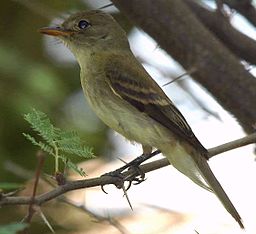
Researchers say politics influenced science in setting the habitat for the endangered southwestern willow flycatcher (Empidonax traillii extimus).

The US Fish and Wildlife Service (FWS) has routinely brushed aside advice from scientific experts when setting critical habitats for endangered species, according to a study published in the July issue of BioScience.

In setting the boundaries of critical habitats, internal FWS scientists are supposed to account for everything from the nesting tendencies of a species to its historical range. A draft habitat is then released for public comment, and a separate panel of outside experts reviews it before the agency sets the final boundaries.

But in a study of 42 critical habitats set between 2002 and 2007, the researchers found that the FWS ignored these reviewers 92% of the time, regardless of whether they recommended adding or subtracting land from the draft habitat boundaries.

“We’re seeing that they routinely ignored the scientific advice,” says Stuart Pimm, a conservation biologist at Duke University in Durham, North Carolina and a co-author on the study. “It’s a scientific integrity issue.”

The researchers claim that this is the first study to examine government peer review. “Peer review is fundamentally different in a government setting than at a scientific journal,” says Noah Greenwald, a co-author and endangered species program director at the Center for Biological Diversity in Portland, Oregon. “There’s no editor looking at whether they followed the advice of reviewers and whether they have a good explanation for not following it.” Most of the time, the final habitat boundaries did not match the drafts set by the internal scientists. In 81% of the cases, the researchers found, the habitats were cut by more 40% between the draft and final policies.

The FWS says it did not have time to review the study, but issued a short statement, arguing that the agency, in setting boundaries, must consider economic and national security concerns, and not just science. “Scientists may not always agree on the conclusions of a scientific analysis, especially in analyses as complex and challenging as critical habitat designations. In some cases, peer reviewers may disagree; in others, our biologists may not agree with the conclusions of individual peer reviewers.”

Karen Hodges, an ecologist at the University of British Columbia in Kelowna,B. C., agrees that designating critical habitat can be a tricky business. “Here’s a species that you need to protect, and you need to pick how much habitat to protect so it doesn’t go extinct. Good luck with that! That’s hard for species we know about, let alone species with limited data,” she says.

Photo credit: Jim Rorabaugh/USFWS.

US appeals court upholds rules curbing greenhouse gases

A US court has unanimously upheld the efforts of the US Environmental Protection Agency (EPA) to limit greenhouse-gas emissions from industry and automobiles. The 26 June ruling, from a federal appeals court in Washington DC, dismisses the complaints brought against the federal government by, among others, four states — Virginia, Texas, Nebraska and North Dakota — and paves the way for further regulations.

“In the end, petitioners are asking us to re-weigh the scientific evidence before EPA and reach our own conclusion. This is not our role,” said the panel of three judges in a sharply worded 82-page brief.

The EPA has been ramping up its efforts to curb carbon dioxide emissions ince a 2007 US Supreme Court decision that allowed the agency to regulate greenhouse gases under the 1970 Clean Air Act. The court ruling on Tuesday found that in 2009, when the EPA labelled greenhouse gases a danger to public health, it was being “neither arbitrary nor capricious”. They also dismissed objections to the EPA’s later vehicular- and industrial-emissions rules.

The judges took particular issue with the allegations that the EPA has relied too much on reports from other agencies and uncertain climate science. “EPA is not required to re-prove the existence of the atom every time it approaches a scientific question,” said the panel.

Unsurprisingly, the decision has drawn outcries from industry and applause from the environmental community. Jay Timmons, president of the National Association of Manufacturers in Washington DC, said in a statement that the ruling is “a setback for businesses facing damaging regulations from the EPA.” David Doniger, an attorney at the Natural Resources Defense Council, based in New York, said in a statement that the ruling allows the EPA “to keep moving forward”.

According to the Washington Post, opponents have already said that they intend to appeal the decision, and the New York Times reports that Republican presidential nominee Mitt Romney has already made greenhouse-gas regulations a campaign issue.

Photo Credit: Wikimedia/Dori

Dolphin genome yields evolutionary insights

It seems that being a brainiac is just in a dolphin’s genes. That’s the upshot from a paper, published on 27 June in the Proceedings of the Royal Society B, that contains insights from the recently sequenced genome of the bottlenose dolphin (Tursiops truncatus). Researchers say that the results should shed light on the evolution of the dolphin nervous system and reveals commonalities with other large-brained mammals.

“Dolphins are a really interesting model to look at because so much of their morphology is modified,” says Mike McGowen, a postdoctoral fellow in molecular genetics at Wayne State University (WSU) College of Medicine in Detroit, Michigan, and a co-author on the study.

Last fall, a team led by researchers at Baylor College of Medicine in Houston, Texas, took the first crack at sequencing the bottlenose dolphin’s genome, as part of a larger study of several mammalian genomes. Although the resulting sequence has gaps, the WSU team used it to flag some 10,025 genes with counterparts in the genomes of nine other mammals, including cows, horses, dogs, humans and elephants. They found 228 gene sequences that had changed significantly relative to other mammals. About 10% of those relate to the nervous system — a probable driver of the dolphin’s mental prowess.

“It was something we were hoping to find, since studies have shown that they have a large brain and high cognitive ability,” says McGowen.

One group of genes seems to be important for forming synapses in the brain, and another relates to the bizarre way dolphins sleep with one eye open and half the brain ‘turned off’. Another set corresponds to genes that in humans are related to certain brain disorders, including Alzheimer’s disease and schizophrenia. “These are interesting because any sort of gene that will affect intellectual abilities in humans signals that they may be important in cognitive functions in general,” says McGowen.

Continue reading

US healthcare research institute awards first grants

PCORI's pilot grant recipients, indicated in green, span 24 states and the District of Columbia.

A US institute focused on comparative-effectiveness health-care research has announced the winners of its first round of grants for evidence-based studies on treatment outcomes. The Patient Centered Outcomes Research Institute (PCORI) is funding 50 ‘pilot projects’, totalling US$30 million, that will set the stage for their future research agenda by identifying promising methods and data gaps.

“These projects will improve our understanding of how to conduct research and disseminate research findings in ways that are more responsive to the needs of patients and the health care community,” said PCORI executive director Joe Selby in a statement on 18 June.

The PCORI, a child of the Obama Administration’s 2010 health-care reform law, has slowly come into being amid the turmoil of a fiercely partisan debate on health-care reform. Its aim is to reduce costs in the US health-care system by identifying which treatments are more effective and better-suited to individual patients.  However, opponents of the law equated the notion of evidence-based medical care with the image of “death panels” of health officials controlling access to treatment.

The PCORI says that the 50 pilot projects will help it discern the best strategies for determining comparative effectiveness and also lead to the development of new methods that will inform future grants.

Continue reading

United States launches three biodefence centres

Texas A&M University moves to the forefront of the US biodefense effort.

The US Department of Health and Human Services (HHS) today awarded contracts for the creation of three new centres tasked with responding to the threat of future pandemics and biological attacks. To be based in Maryland, North Carolina and Texas, the three centres are comprised of academic and industry consortia whose role it will be to hasten the development and manufacturing of vaccines and medications in the event of an emerging biological threat.

“Establishing these centers represents a dramatic step forward in ensuring that the United States can produce life-saving countermeasures quickly and nimbly,” said HHS Secretary Kathleen Sebelius in a statement on 18 June. “They will improve our ability to protect Americans’ health in an emergency and help fill gaps in preparedness so that our nation can respond to known or unknown threats.”

The three Centers for Innovation in Advanced Development and Manufacturing are the first tangible result of a review concluded by HHS in 2010, which highlighted major improvements needed to effectively fight disease outbreaks — like those of H1N1 in 2009 or severe acute respiratory syndrome (SARS) in 2003 — or a bioterrorism attack, such as the anthrax attacks of 2001.

The contracts, amounting to roughly US$400 million, represent a range of academic and private partnerships as well as partnerships between large pharmaceutical companies and small biotechnology firms. “We noted that many small companies with great ideas don’t see their products make it because they need a lot of technical help,” says Nicole Lurie, HHS assistant secretary for preparedness and response.

Continue reading