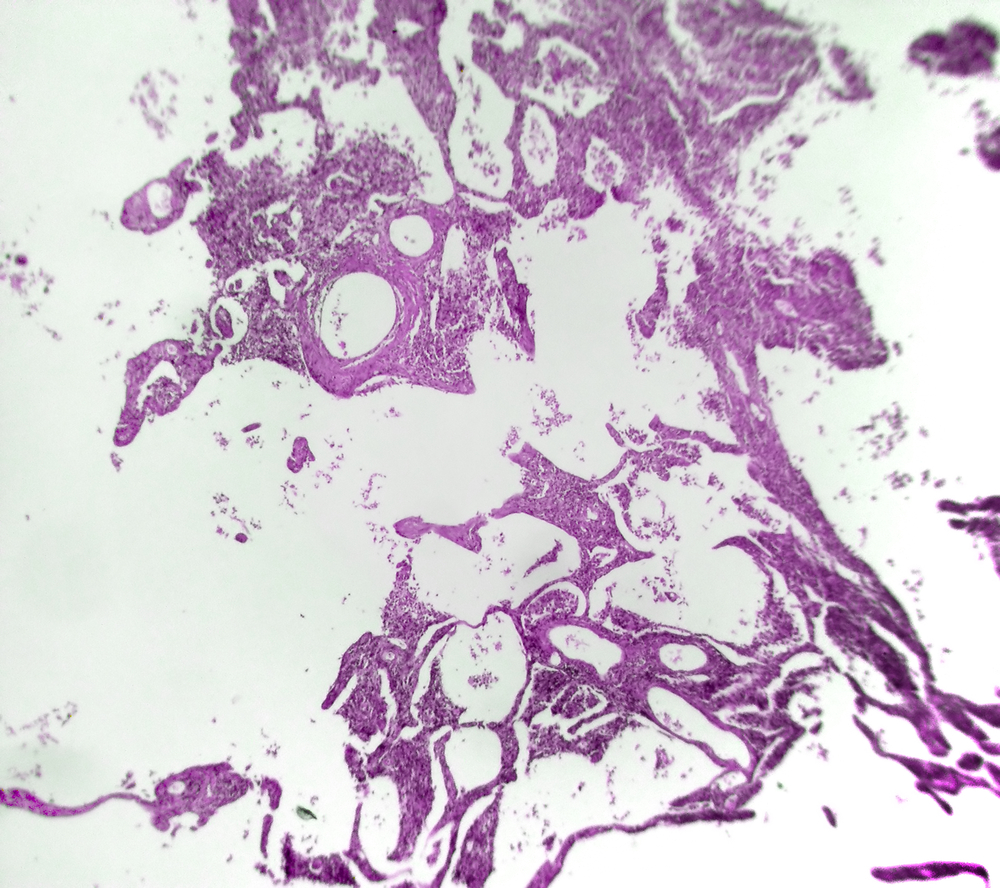
Experimental diabetes drug reverses emphysema in mice

Lung tissue damaged by emphysema

Lung tissue damaged by emphysema

This year marks the 50th anniversary of the US Surgeon General’s first ever report, which implicated smoking as the primary cause of emphysema and other chronic diseases. Despite decades of research, emphysema—a form of chronic obstructive pulmonary disease (COPD), which ranks among the third leading cause of death in the US—remains incurable.

But a new study provides a glimmer of hope. In a paper published online yesterday in the Journal of Clinical Investigation, researchers show that a compound belonging to the class of drugs known as thiazolidinediones (TZDs) can reverse smoking-induced lung damage in mice. What makes the discovery even more intriguing is that TZDs activate a protein called PPAR-gamma, which acts on DNA, and two of these drugs—namely, Takeda’s Actos (pioglitazone) and GlaxoSmithKline’s Avandia (rosiglitazone)—have been used clinically to treat type 2 diabetes.

At first glance, type 2 diabetes and emphysema might appear to have little in common. But in the last decade several studies have suggested that smoking triggers heightened lung inflammatory responses through pathways that are normally held in check by PPAR-gamma, which is perhaps best known for its crucial role in the development of fat cells and regulation of metabolism.

In the new study, led by David Corry and Farrah Kheradmand at Baylor College of Medicine in Houston, the researchers investigated the genetic changes induced by tobacco smoke, and discovered that levels of PPAR-gamma mRNA were depleted in a subset of immune cells from the lungs of smokers with emphysema and mice exposed to cigarette smoke. What’s more, emphysema-associated lung damage began to heal in animals that had ongoing exposure to smoke when they received ciglitazone, an experimental antidiabetic medicine belonging to the TZD class drug that activates PPAR-gamma.


Continue reading

Metabolic gatekeeper provides new target for disrupting cancer metabolism

In the 1920s, the German physiologist Otto Warburg proposed that cancer cells generate energy in ways that are distinct from normal cells. Healthy cells mainly metabolize sugar via respiration in the mitochondria, switching only to glycolysis in the cytoplasm when oxygen levels are low. In contrast, cancer cells rely on glycolysis all the time, even under oxygen-rich scenarios. This shift in how energy is produced—the so-called ‘Warburg effect’, as the observation came to be known—is now recognized as a primary driver of tumor formation, but a mechanistic explanation for the phenomenon has remained elusive.

Now, researchers have implicated a chromatin regulator known as SIRT6 as a key mediator of the switch to glycolysis in cancer cells, a finding that could lead to new therapeutic modalities. “This work is very significant for the cancer field,” says Andrei Seluanov, a cancer biologist at the University of Rochester in New York State who studies SIRT6 but was not involved in the latest study. “It establishes the role of SIRT6 as a tumor suppressor and shows that SIRT6 loss leads to tumor formation in mice and humans.”

SIRT6 encodes one of seven mammalian proteins called sirtuins, a group of histone deacetylases that play a role in regulating metabolism, lifespan and aging. SIRT1—which is activated by resveratrol, a molecule found in the skin of red grapes—is perhaps the best known sirtuin, but several of the others are now the focus of active investigation as therapeutic targets for a range of conditions, from metabolic syndrome to cancer. Just last month, for example, a paper in Nature Medicine demonstrated that SIRT6 plays an important role in heart disease.

Six years ago, a team led by Raul Mostoslavsky, a molecular biologist at the Massachusetts General Hospital Cancer Center in Boston, first showed that SIRT6 protects mice from DNA damage and had anti-aging properties. In 2010, the same team established SIRT6 as a critical regulator of glycolysis. Now, reporting today in Cell, Mostoslavsky and his colleagues have shown that SIRT6 function is lost in cancer cells—thus, definitively establishing SIRT6 as a potent tumor suppressor.

Continue reading

Turning down the heat revs up brown fat

This past winter, vests were a hot button issue thanks to then US presidential hopeful Rick Santorum. But a vest that cools—rather than warms—could fire up studies of brown fat as researchers seek drugs that turn on this calorie-burning tissue.

Compared with white fat, which mostly acts as an energy repository, brown fat serves to generate heat. In the past, researchers believed only babies made use of brown adipose tissue. Now we know adults have small deposits of brown fat throughout the body that burn energy only in chilly environments. With roughly two-thirds of the US classified as overweight, researchers are keen on pinpointing how brown fat is activated and how to convert white fat to its healthier cousin to help people slim down.

In February, Canadian researchers published a study in the Journal of Clinical Investigation that looked beyond brown fat’s heat-producing capabilities to how, once activated, it affects our metabolism. With a sample size of six healthy men, they reduced average skin temperature by about 4 degrees to roughly 30°C by fitting them in a cooling suit. Positron-emission tomography (PET) allowed scientists to see for the first time that cold exposure increased the amount of nonesterified fatty acids (NEFA)—the primary source of energy for tissues in fasting conditions—in the blood stream by one-third. Despite the small sample size, researchers expressed confidence in their results due to consistent measurements across the participants.

But it would be more convenient for overweight individuals to take a drug that causes brown fat to burn calories. A study published this week in the Proceedings of the National Academy of Sciences (PNAS) set out to test a possible drug therapy. Aaron Cypess of the Joslin Diabetes Center in Boston and his team wanted to determine if an ingredient found in over-the-counter decongestant drugs, called ephedrine, might activate brown fat without any cold exposure. A meta-analysis in 2003 had previously suggested that ephedrine may produce modest weight loss in humans. Ephedrine seems to cause weight loss by stimulating a release of the messenger molecule norepinephrine, thereby increasing heart rate. Brown adipose tissue has receptors for norepinephrine, so researchers reasoned the drug would activate this type of fat.

Continue reading