It’s time to map the brain

A special complimentary focus on technology for large scale mapping of anatomy and function of brain circuits at Nature Methods
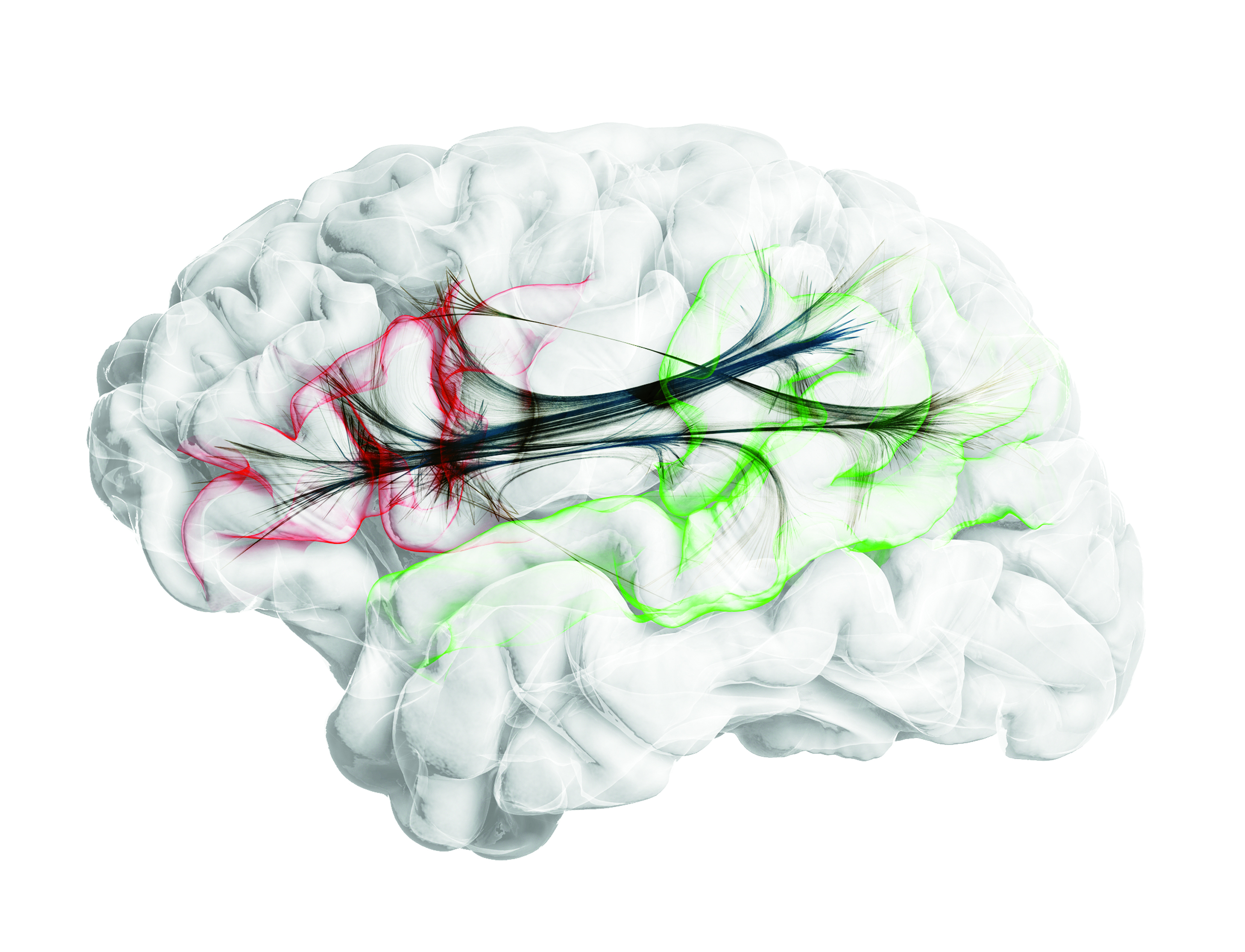
0613 NMeth cover-hires

These are exciting times in neuroscience. The technology available for  large-scale anatomical and functional brain mapping is advancing at a very high speed and it is foreseeable that these brain maps will have a profound impact on our understanding of how the brain works. Because of the importance of this topic, we devote a special focus to it.

To understand the brain we need to know how and when neurons fire in the living animal while it performs naturalistic behaviors. We need to know the underlying wiring patterns and anatomical configuration of the circuits and we need to be able to develop testable models of how behaviors arise from the underlying function of the cells in the brain.

Obtaining this type of systems-level information about the brain has not been easy up to now. But thanks to technological development, this is rapidly changing.

Rendering the connectivity maps of entire areas of the mammalian nervous system, like the retina, at nanometer resolution is now feasible in a few years work. These structural maps will contain unique information about the characteristics of neural circuits. But in addition to anatomical information, we need to monitor the brain at work at cellular level and we need to gather molecular information about its components. Together, the compilation of functional, structural and molecular data about the circuits in the living brain and their relation to behavior opens new posibilities for neuroscience.

Data-gathering alone will not, however, deliver the answers. Neuroscientists will need help from statisticians and mathematicians to make the information understandable and interpretable. After all, the data is only a tool that one hopes will lead to testable theories and models about how the brain works.

Because of the exciting moment at which the technology for mapping the brain is, we have put together a collection of Reviews, Perspectives and Commentaries in which experts discuss the state of the art technologies available for mapping the brain, the challenges and the potential of this endeavor. All the materials in this focus are freely available (thanks to our sponsors)—you can also read more about our views on the importance of this topic for neuroscience in our editorial.

We hope that these pieces will inform, inspire and incite discussions about mapping the brain and its potential to help us advance towards a deeper understanding of our own minds.

Updated: Italy reins in rogue stem-cell therapy

Posted on behalf of Alison Abbott.

A controversial decree allowing severely ill patients to continue treatment with an unproven, and possibly unsafe, stem-cell therapy may be amended, if the Italian parliament’s Chamber of Deputies has its way.

[UPDATE, 22 May 2003 — The Chamber voted in favour of the amendments on 20 May, and the amendments were accepted by the Senate on 22 May. The amended decree thus becomes law, and Stamina Foundation therapy will be available only in the context of clinical trials. Stamina head Davide Vannoni says that he will not comply with the requirement to provide the therapy for trials, according to good manufacturing practice.]

Yesterday (16 May) the Chamber’s social affairs committee unanimously passed amendments to the decree that would allow the Brescia-based Stamina Foundation, which developed the therapy, to continue administering it. However, Stamina would be required to do so within regular clinical trials, under the oversight of regulatory agencies and using cells manufactured according to Good Manufacturing Practice (GMP). A supervisory ‘observatory’ comprising experts and patient representatives would oversee clinical trial procedures.

The proposal is intended to defuse the tensions between, on one side, terminally ill patients and their families, who believe the Stamina treatment is their only hope, and on the opposite side,  scientists and regulators who believe it to be dangerous and almost certainly not effective.

Stamina claims to have treated in the past six years more than 80 patients with diseases ranging from Parkinson’s disease to muscular dystrophy. Many of the patients have been young children. In the therapy, mesenchymal stem cells are extracted from the bone marrow of the patients, manipulated in the laboratory and re-infused into the patients.

According to the committee’s proposed amendments to the decree, the government would make €3 million (US$3.9 million) available for the clinical trials over the next 18 months. The plenary Chamber is expected to vote in favour of the amendments on Monday.

But that won’t be the end of the story. The upper house, the Senate, will then have to approve the Chamber’s amendments, and in the continuing emotional heat, its final decision is hard to predict. Patient groups wearing tee-shirts bearing the slogan ‘Yes to Stamina. Yes to Life’ demonstrated against the amendments in Rome yesterday. Stamina’s charismatic president Davide Vannoni was among the demonstrators. Vannoni claims that the Chamber had been influenced by the interests of the pharmaceutical industry.

If no final political decision is made by 25 May, the decree will automatically expire.

Neuroscientists brainstorm goals for US brain-mapping initiative

More than 150 neuroscientists descended on Arlington, Virginia this week to begin planning the Brain Research through Advancing Innovative Neurotechnologies (BRAIN) Initiative—an ambitious but still hazy proposal to understand how the brain works by recording activity from an unprecedented numbers of neurons at once.

President Barack Obama announced the initiative on 2 April, which will be carried out by three federal agencies—the National Institutes of Health (NIH), the National Science Foundation (NSF), and the Defense Advanced Research Projects Agency (DARPA)—alongside a handful of private foundations. Most neuroscientists have relished the attention on their field, but have also been left wondering what it means in scientific terms to “understand” the brain, what it will take to get there, and how much will be feasible in the programme’s projected 10-year lifespan. They gathered at an inaugural NSF planning meeting taking place from 5-6 May to discuss their ideas and concerns.

“The belief is we’re ready for a leap forward,” says Van Wedeen, a neurobiologist at Harvard Medical School in Boston, Massachusetts, and one of the NSF meeting organizers. “Which leap and in which direction is still being debated.”

The NSF group invited researchers representing neuroscience, computer science, and engineering — as many as would fit in the hotel conference room. Another estimated 200 or so followed the meeting by live webcast on Monday. Roughly 75 participants accepted NSF’s open invitation to submit one-page documents outlining the major obstacles currently impeding neuroscience research.

Many researchers stressed the importance of developing more sophisticated theoretical models of the brain. “We want to know the principles of neuronal function, not just recording of their activity,” says Huda Zoghbi, a molecular neurobiologist at Baylor College of Medicine in Houston, Texas.

Others warned of the need to plan for a data deluge. “We’re spectacularly underprepared to capture the data that are going to be generated,” says Randal Burns, a computer scientist at Johns Hopkins University in Baltimore, Maryland. Existing brain imaging techniques can generate 1 terabyte of data per day, and proposed technologies may be poised to far exceed that rate, he says.

One day earlier, the same hotel hosted the first face-to-face meeting of the NIH ‘Dream Team’ — a panel of 15 neuroscience researchers appointed by NIH director Francis Collins to lead the agency’s efforts on the BRAIN Initiative. The first NIH meeting and its agenda was closed to outside scientists and the public. “We’re just trying to get ourselves organized,” explains Bill Newsome, a neuroscientist at Stanford University in California, and co-chair of the NIH group, who stayed to attend the NSF meeting as well. He says that the NIH group will begin collecting public input in the coming weeks via a new website.

New brain-banking network for children

Autism is a neurodevelopmental disorder, so it is important for researchers to have access to developing human brains. But acquiring donations of brains from young children is painfully hard.

Two foundations in the United States which fund autism research have now announced the launch of Autism BrainNet, a network of sites which will acquire donated brains from children who have died, and will process, store and distribute the tissue to researchers.

The Simons Foundation will donate US$5 million and Autism Speaks will donate $2.5 million to the project in its first five years. They made the announcement today at the International Meeting for Autism Research in San Sebastian, Spain.

The first four partners are the Autism Tissue Programme in Boston, Mount Sinai School of Medicine in New York, the MIND Institute of the University of California, Davis,  and the University of Texas South-western Medical School in Dallas.

Each of the participating institutions will collect tissue in its own region, but applications for tissue from researchers will be reviewed centrally. Requests directly related to autism will have priority. Researchers who receive tissue will be required to return all data they generate, which will be made available freely through the Autism BrainNet portal.

Autism researcher David Amaral from the MIND Institute will be the first director.

Autism BrainNet will engage in active outreach activity to explain the importance of brain banks for neurodevelopmental diseases.

Society for Neuroscience quashing dissent on BRAIN Initiative, critic complains

NIH Director Francis Collins and President Barack Obama announce the "BRAIN" initiative at the White House on 2 April.

NIH Director Francis Collins and President Barack Obama announce the BRAIN Initiative at the White House on 2 April.{credit}Chuck Kennedy/White House{/credit}

Fresh from attending President Barack Obama’s announcement of the BRAIN Initiative at the White House on 2 April, Society for Neuroscience (SFN) president Larry Swanson, a neurobiologist at the University of Southern California in Los Angeles, composed this letter to SFN’s nearly 42,000 members.

In the 5 April missive, Swanson, writing on behalf of the SFN’s executive committee, calls the Brain Research through Advancing Innovative Neurotechnologies (BRAIN) Initiative “tremendously positive” for neuroscience. Its aim is to let scientists examine and record the activity of millions of neurons as they function at the speed of thought; ultimately, applications to several human diseases are hoped for.

The project comes at a crucial time in neuroscience, Swanson writes: a time of huge new opportunities coupled with stagnant or slumping government budgets for basic science research. (In the budget he released last week, Obama asked Congress to provide about US$100 million to launch the BRAIN Initiative in 2014.)

But the SFN letter makes it clear that Swanson wants a lid put on public criticism of the nascent project, which is expected to last more than a decade and ultimately cost several billion dollars. “It is important that our community be perceived as positive about the incredible opportunity represented in the President’s announcement,” Swanson wrote. “If we are perceived as unreasonably negative or critical about initial details, we risk smothering the initiative before it gets started.”

In case anyone missed the point, he adds that he encourages “healthy debate” and “rigorous dialogue” but urges SFN members to “bring all this to the table through our scientific communications channels and venues”. He also notes that the National Institutes of Health has enlisted a team of “distinguished” neuroscientists to conduct a “rigorous” planning process.

The letter’s admonitions did not sit well with some in the neuroscience community, and on Friday, Avery Gilbert, an olfactory psychologist and author who writes the blog First Nerve posted an entry entitled ‘Society for Neuroscience president: shut up, he explained’.

Gilbert introduced Swanson’s letter, which he posted in its entirety, as follows: “This disgraceful note is what passes for science advocacy today.” He complains that the letter and the views it represents amount to a blatant grab for money: “Swanson wants to suppress open dissent so as not to jeopardize SFN’s rent-seeking activities.”

Today, Nature asked Gilbert, who consults for scent-sensitive industry clients including Colgate-Palmolive and Procter & Gamble  as president of Synesthetics, Inc., what he objects to in the BRAIN Initiative itself.  He said: “The BRAIN project typifies this administration’s predilection for big government “solutions” flavoured with Chicago-style politics. Central planning rarely works out well, especially not in science.”

Several online commenters agreed with Gilbert’s critique. One wrote: “[Swanson] writes a long letter without any real justification for why the money is needed. How about some results?”

But Larry Goldstein, a prominent Alzheimer’s researcher at the University of California, San Diego, disagrees. “I thought Swanson’s letter was fine,” he says. “Thoughtful, constructive, and optimistic. If we want to see long-term support of scientific initiatives, I think this is the kind of tone that will make the most difference with those who pay the bills, that is, taxpayers.”

Today, Swanson himself told Nature: “My point in the letter was that this project — still very much in its early formative stages — represents a remarkable and perhaps fleeting opportunity… It is my continuing hope that we all reserve judgment on the merits of the broader project until we first learn more about what it will prioritize and fund, and that is going to take some time. If we condemn such a promising investment in neuroscience prematurely, before its focus is known and without engaging scientifically, I firmly believe we will have missed a tremendous chance to advance the field.

Obama launches multibillion-dollar brain-map project

US President Barack Obama today officially launched an ambitious multi-year project to probe the human brain in action. In a preview of his 2014 budget request, expected next week, he said he would ask Congress for about US$100 million to get the Brain Research through Advancing Innovative Neurotechnologies (BRAIN) Initiative off the ground.

The ambitious plan, originally dubbed the Brain Activity Map, created a buzz when word of it crept out ahead of schedule in February. With big backers in the White House, such as Tom Kalil at the Office of Science and Technology Policy (see ‘Behind the scenes of a brain-mapping moon shot‘), it seemed as though the project had the chance of becoming a signature administration initiative. This morning in the grand East Room of the White House, Obama left little doubt of that, comparing the BRAIN Initiative to the US quest to put a man on the Moon and calling it “the next great American project”.

Between our ears, he said, “there is this enormous mystery waiting to be unlocked, and the BRAIN Initiative will change that by giving scientists the tools they need to get a dynamic picture of the brain in action.”

Current technology allows scientists to record the activity of up to hundreds of neurons in action. The BRAIN Initiative aspires to map the function of thousands or hundreds of thousands of neurons simultaneously, as they function at the speed of thought. Obama acknowledged the difficulties involved, but said: “Think about what we could do once we do crack this code.” He imagined an amputee playing the piano or throwing a baseball, people fully recovering after a stroke or traumatic brain injury and cures for autism and Alzheimer’s disease.

Significantly, the White House has engaged Cori Bargmann, a neuroscientist at Rockefeller University in New York, to co-chair a National Institutes of Health (NIH) committee that will develop a detailed scientific plan for the project including timetables, milestones and cost estimates. (Neurobiologist William Newsome of Stanford University will be the other co-chair.) Bargmann had been one of the proposed project’s vocal critics, suggesting to Nature that it represented “central planning inside the [Washington, DC] Beltway” and worrying whether it would crowd out “bottom-up”, investigator-initiated research.

The president’s 2014 budget, due for release as soon as next week, will request $50 million in funding for the BRAIN initiative through the Defense Advanced Research Projects Agency; $40 million from the NIH, mainly through an existing multi-institute initiative called the NIH Blueprint for Neuroscience Research; and $20 million from the National Science Foundation. Details on the kind of work that each agency will contribute are available on this fact sheet. The project is expected to cost billions of dollars over more than a decade.

The White House also noted its plans to collaborate with private foundations that are already at work in dynamic brain-mapping efforts. It highlighted commitments from the Allen Institute for Brain Science in Seattle ($60 million annually over four years); the Howard Hughes Medical Institute’s campus at Janelia Farm in Ashburn, Virginia (at least $30 million annually); the Kavli Foundation in Oxnard, California, whose original efforts brought the project to the White House’s attention ($4 million annually for ten years); and the Salk Institute for Biological Studies in San Diego, California, which has committed $28 million.

An era for BRAIN technology

President Barack Obama has just proposed large investments in a project aiming to develop technologies that enhance our understanding of brain function.

In an official announcement from the White House, US President Obama just launched the BRAIN (Brain Research through Advancing Innovative Neurotechnologies) Initiative project. This basic research project is expected to receive large sums of public and private funding to promote technologies that expand our knowledge of brain function.

This was a much awaited announcement. From what can be read in the White House’s official Press release, the BRAIN Initiative will be a collaboration between the US National Institutes of Health, the Defense Advanced Research Projects Agency and the National Science Foundation, with an initial injection of funds going up to $100 million for 2014.

To set the goals and timeline of this project, the NIH will establish a working group composed of 60-80 scientists co-chaired by Cori Bargmann of Rockefeller University and Bill Newsome from Stanford University. Through workshops and meetings that will take place in 2013, the working group will define the detailed scientific goals and establish a multi-year scientific plan for achieving them. The workshops are to start in about one month.

In addition, the project will have several private sector partners: the Allen Institute for Brain Science, the Howard Hughes Medical Institute (HHMI), the Kavli Foundation and the Salk Institute for Biological Studies. Most of these institutions have already been investing in technology development to address the challenges of understanding the brain for some time. In fact, Nature Methods recently published work from HHMI investigators showing the first whole brain imaging of neural activity at the single-cell level. As the details of the goals and timelines of the BRAIN Initiative become clearer over the next few months, we will likely have a more concrete idea of how the budget for BRAIN will be projected in the coming years.

What is unique about BRAIN compared to other previous ‘big science’ projects like the Human Genome Project is that it is advocating for technology development first as it lays out its broad goals without indicating a particular biological idea or concept. The need for technology development is so dear in neuroscience that in our view devoting substantial resources to this is essential for understanding brain function, a view that appears to be shared by the HHMI as evidenced by the substantial technology development they are funding for brain research at the HHMI Janelia Farm Research campus.

As we have discussed in previous posts on this site and in our April Editorial, to understand the brain we will need technologies that help large scale mapping of the structural wiring diagrams in the brain, that record the activity of whole brains in action at resolutions that mirror those of physiology and behavior and that link function and behavior. In all these areas, we first need to improve our tools and methods.

The progress that can be made by promoting technological development cannot be underestimated. Once more powerful methods are in the hands of researchers, knowledge will advance at a much higher speed and investments in science will be more productive and efficient.

Technology development at the heart of ‘big neuroscience’

European and US initiatives aiming to advance our understanding of brain function depend on new technologies.  

Last January the European Commission awarded one of its flagship grants worth 1 billion Euros ($1.3 billion) to the Human Brain Project, an international initiative that seeks to integrate everything we know about the brain into databases and computer models. The Human Brain Project builds on the work of the Blue Brain Project led by Henry Markram of the École Polytechnique Fédérale de Lausanne and seeks to simulate the workings of the human brain.  

The NIH is also likely to support a  big collaborative effort to improve our understanding of the brain through the Brain Activity Map, a  project that aims to develop technologies to monitor and modulate the activity of whole brain circuits at cellular level.

As we discuss in our recent editorial, technological development is a fundamental pillar of both of these projects. The Human Brain Project will require significant advancements in algorithms and computing technology, and will benefit from improvements in the type of data that is used to create the models. The Brain Activity Map faces challenges due to the difficulty of recording the activity of neurons distributed across large brain areas simultaneously and at the cellular level. As its proponents have outlined, the project will require large efforts in new technological development in the areas of functional brain imaging and optogenetics. It also has to set realistic goals and focus much of its initial effors in model organisms.

Understanding brain function and its pathologies is undoubtedly a challenge worth taking—the steps that will take us in the right direction hinge on our capacity to work across scientific disciplines and stimulate major technological advances.

Whole brain cellular-level activity mapping in a second

It is now possible to map the activity of nearly all the neurons in a vertebrate brain at cellular resolution in just over a second. What does this mean for neuroscience research and projects like the Brain Activity Map proposal?

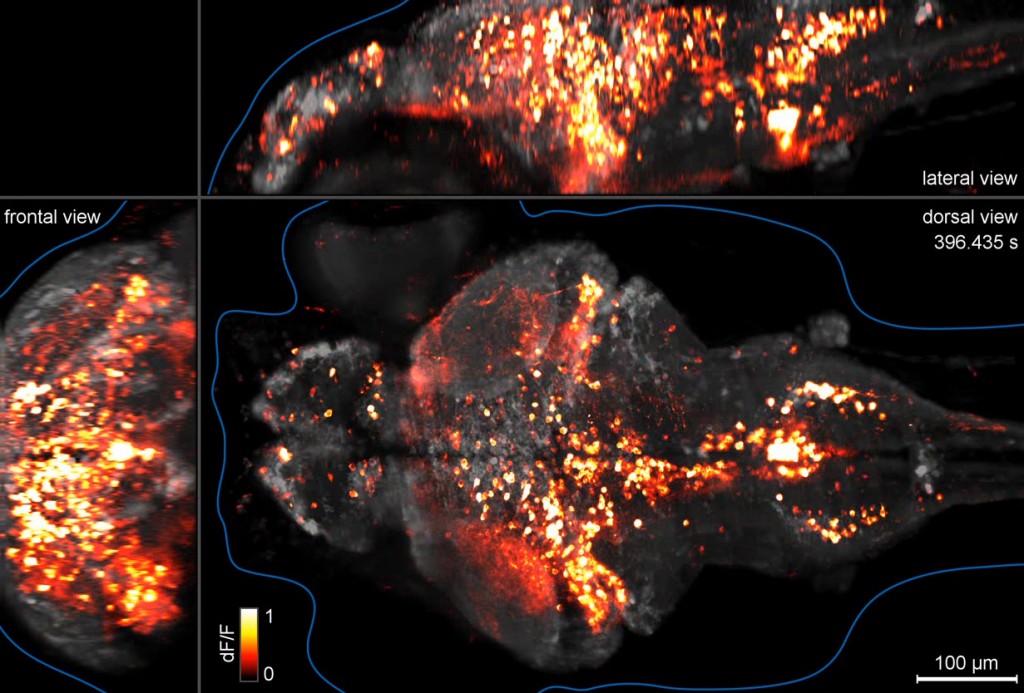
In an Article that just went live in Nature Methods, Misha Ahrens and Philipp Keller from HHMI’s Janelia Farm Research Campus used high-speed light sheet microscopy to image the activity of 80% of the neurons in the brain of a fish larva at speeds of a whole brain every 1.3 seconds. This represents—to our knowledge—the first technology that achieves whole brain imaging of a vertebrate brain at cellular resolution with speeds that approximate neural activity patterns and behavior.

Click on the image to view the video.

Brain activity imaging of a whole zebrafish brain at single-cell resolution. Click on image to view video [20 MB].

Interestingly, the paper comes out at a time when much is being discussed and written about mapping brain activity at the cellular level. This is one of the main proposals of the Brain Activity Map—a project that is being discussed at the White House and could be NIH’s next ‘big science’ project for the next 10-15 years. [Just for clarity, the authors of this work are not formally associated with the BAM proposal].

The details of BAM’s exact goals and a clear roadmap and timeline to achieve them have yet to be presented, but from what its proponents have described in a recent Science paper the main aspiration of the project is to improve our understanding of how whole neuronal circuits work at the cellular level. The project seeks to monitor the activity of whole circuits as well as manipulate them to study their functional role. To reach these goals, first and foremost one must have technology capable of measuring the activity of individual neurons throughout the entire brain in a way that can discriminate individual circuits. The most obvious way to do this is by imaging the activity as it is occurring.

With improvements in the speed and resolution of existing microscopy setups and in the probes for monitoring activity, exhaustive imaging of neuronal function across a small transparent organism was bound to be possible—as this study has now shown.

The study has also made interesting discoveries. The authors saw correlated activity patterns measured at the cellular level that spanned large areas of the brain—pointing to the existence of broadly distributed functional circuits. The next steps will be to determine the causal role that these circuits play in behavior—something that will require improvements in the methods for 3D optogenetics. Obtaining the detailed anatomical map of these circuits will also be key to understand the brain’s organization at its deepest level.

These are some of the types of experiments described in the BAM proposal and they are clearly within reach in the next 10 years–whether through a centralized initiative or through normal lab competition and peer review. While it is expected that in mice, too, functional circuits will span large brain areas, performing these types of experiments in mice will require more methodological imagination. It will not be possible to place a living mouse brain within the microscope system used by Ahrens and Keller to image the zebrafish brain. The mouse brain is significantly bigger, is largely impenetrable to visible light and is surrounded by a skull. Realistically, we may not see methods that enable whole brain activity mapping in mammals at the cellular level for quite a while.

But there is much worth learning about brain function in smaller organisms such as the zebrafish and drosophila, and microscopy systems such as this will be capable of providing important fundamental insights into brain function that are relevant to our understanding of the human brain.

Whether it will be through BAM or not, the neuroscience community has important challenges to tackle ahead. At Nature Methods, we have been actively involved in supporting technology development in the neurosciences from the very beginning and we look forward with enthusiasm to doing so during this exciting period in neuroscience research.

Update: We just published an Editorial on this topic in our May issue.

Nobel Laureate Rita Levi-Montalcini dies at 103

Rita Levi-Montalcini{credit}ANSA/Corbis{/credit}

Yesterday the world lost one of its most extraordinary scientists when Rita Levi-Montalcini died at her home in Rome at the age of 103.

Tiny in stature but outsize in personality, Levi-Montalcini survived fascist Italy, where Jews were barred from working at universities, converting her bedroom into a makeshift lab to continue her studies on how nerves grow. Never losing her ruthless obsession with the topic, she went on to discover the molecule nerve growth factor, which won her a share of the 1986 Nobel Prize in Physiology or Medicine. Most of that work was carried out in the United States.

She spent her last decades back in Italy, where she became a national heroine and was appointed Senator for Life. In parliament she made sparks by blocking legislation that might have been unfriendly towards research. She also created a foundation to support scientific education for women in Africa and a Rome-based research institute called the European Brain Research Institute Rita Levi-Montalcini. That institute was opened to great fanfare in 2005, but inappropriate management meant that it did not develop into the vibrant legacy she had hoped to leave behind. It now struggles to keep going on a shoestring budget.

Her 100th birthday was marked with national celebrations (see this Nature profile feature, ‘One hundred years of Rita‘); today she lies in state at the Italian Senate. Her funeral will take place according to Jewish rites in her home city of Turin on 2 January 2013.