
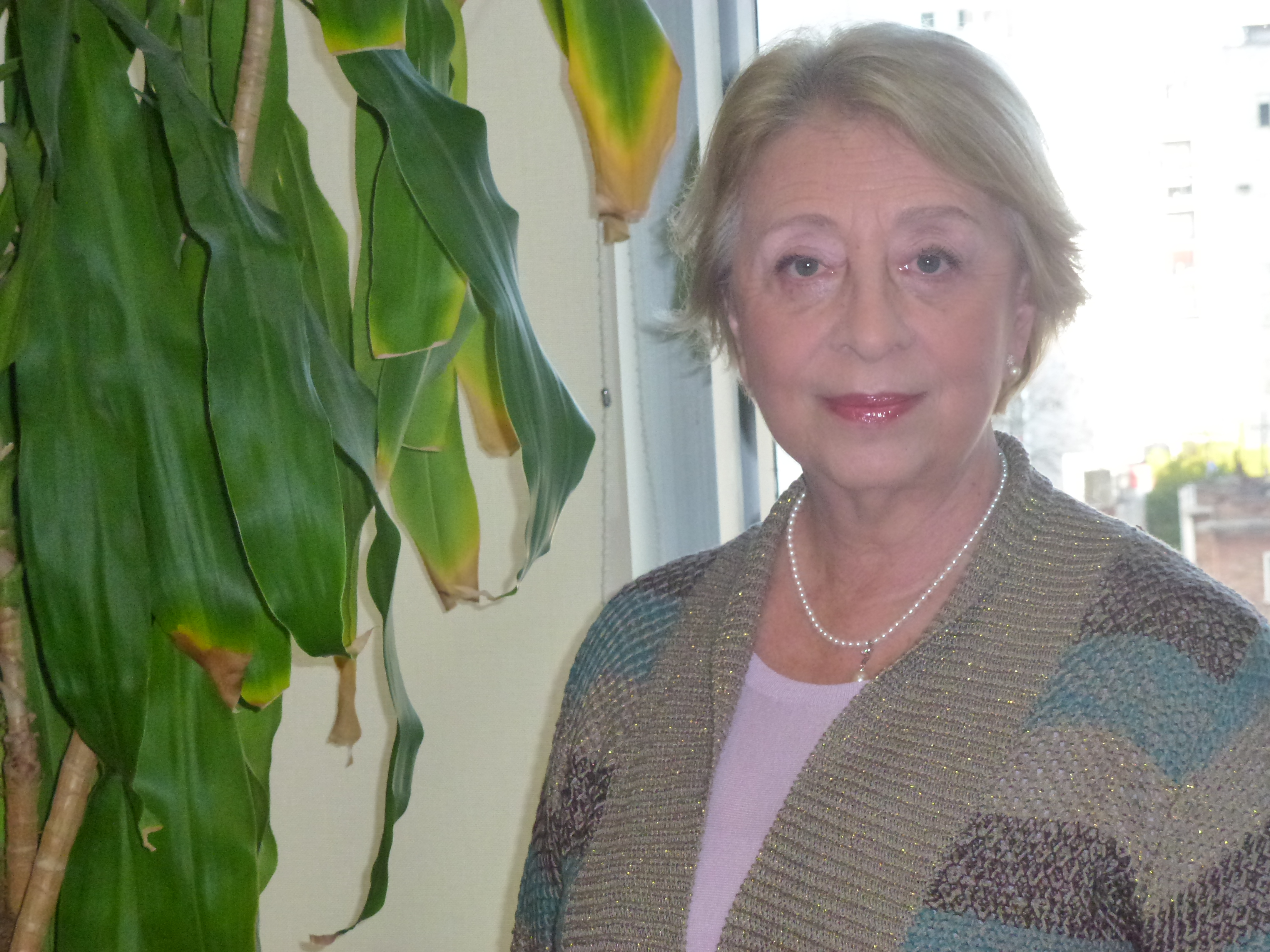
“What I would love to see is more qualitative research not on why women can’t and why so few, but who the women are that are successfully developing careers in engineering, technology or sciences.”
In part four of our five features this week celebrating prominent women in science and technology across the world, we speak to Dr Gloria Bonder, the coordinator of the Global Network of UNESCO Chairs on Gender and the UNESCO Regional Chair on Women, Science and Technology in Latin America. She talks about UNESCO’s latest global figures on women in science, changes that need to be made in both policy and education, and the necessity for more qualitative research on the women who are successfully developing careers in engineering, technology and science.
Dr Gloria Bonder is the Director of the Department of Gender, Society and Policies of the Latin American Postgraduate Institute of Social Sciences (FLACSO Argentina). She coordinates two regional programmes including the UNESCO Regional Chair on Women, Science and Technology in Latin America and the e-learning master’s programme on Gender, Society and Public Policies. Bonder is the coordinator of the Global Network of UNESCO Chairs on Gender. Since 2014, she has coordinated the region’s activities in the global GenderInSITE programme, through her role as the UNESCO Regional Chair. The programme aims to influence policies and policy makers in science, technology, innovation and engineering, to integrate gender equality principles and goals.
She is a researcher and consultant on Women, Science and Technology for several national, regional and international organisations such as: Minister of Science and Technology in Argentina, United Nations, Women and Development Unit, ECLAC and the Office of Science and Technology, UNICEF, UNIFEM, UNDP and UNESCO, among others. Bonder has developed several research projects on gender issues and/in technology and science, education, communication, health and youth, and published books and articles both national and international. She is a member of the advisory board of UN Women for Latin America and the Caribbean and WISAT (Women in Global Science and Technology).
“What I would love to see is more qualitative research not on why women can’t and why so few, but who the women are that are successfully developing careers in engineering, technology or sciences,” strongly asserts Gloria Bonder, coordinator of the global network of UNESCO Chairs on Gender and the Regional Chair on Women, Science and Technology in Latin America. She continues: “We should look at why they chose that career, what their experiences have been so far, and what they like and don’t like, as well as how they overcome obstacles. We must move away from the basic question of why so few.”
Dr Bonder is not one to mix her words lightly. Having worked on gender studies for more than 40 years in science and technology, she has an authoritative voice and is deeply respected across the world. During unstable political times in the mid-1970s in her home country of Argentina, she was the catalyst behind the creation of a women’s study centre, carrying out independent research on different aspects of gender studies. At that time, it was quite the pioneering community and as a result led to the introduction of a postgraduate programme on women’s studies at the University of Buenos Aires, which Bonder was the founding director of between 1987 and 1999.
Fundamental Changes
As we look back at Dr Bonder’s achievements having set up the Gender, Society and Policies Institute in 2001 at FLACSO-Argentina, there is something on her mind that won’t shift. She interjects: “We need to not only attract both women and men to these careers, but make fundamental changes to the workplace culture and promote that both genders share caring responsibilities. If I was young now, would I choose the science and technology subjects that are taught today? No. To go into laboratories or industries and make a career in such a way that you have to choose between having a family and enjoying other dimensions of your life, or being a successful scientist, is just plain wrong.”
At FLACSO, Bonder has been quite the influential director coordinating regional programmes across Latin America. The institute runs two huge programmes, which consist of the e-learning Master’s Programme on Gender, Society and Public Policies, and working on training and research projects for UNESCO and other organisations, alongside Bonder, in her role as the Regional Chair on Women, Science and Technology in Latin America.