
Two every week – that’s the least number of leopards poached or illegally traded in India, according to a new study by the World Wide Fund for Nature (WWF). And if one considers unreported incidents, this figure could go up to four every week, the report says. Like similar reports on other big cats, this one also rues that poaching and illegal trade are shamefully becoming the biggest threat to the survival of the ‘Prince of Cats’.
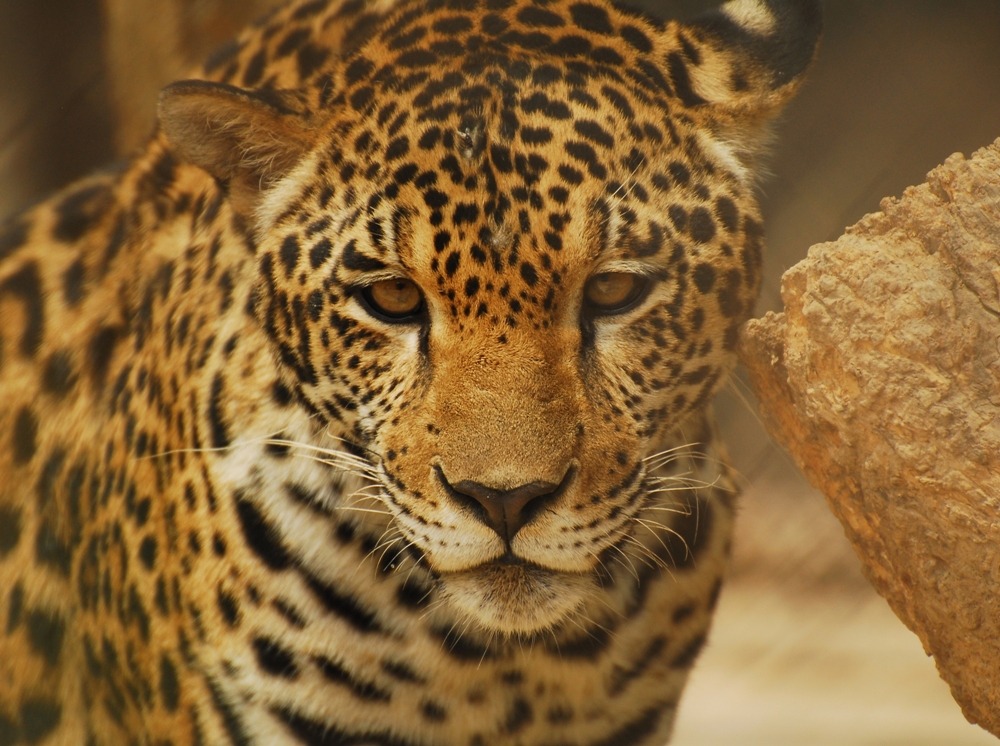
{credit}Samir Sinha{/credit}
Most of our conservation is tiger-centric. So, the very fact that a decadal study (2001-2010) has been dedicated to its poor but no less majestic cousin leopard, is in itself something to sit up and take note. More often than not, the leopard is in the news in the Indian subcontinent for being on the ‘prowl’ in suburban human habitats (1, 2, 3) or if the animal is trapped by forest officials and released back into its habitat (1, 2). Like the elephant, the leopard has been at the centre of nasty human-animal conflicts that make for unhappy reading in newspapers.
WWF’s wildlife trade monitoring network TRAFFIC now says, the results in its new report are more than double of all reported leopard-related statistics on illegal trade. That is alarming.
No reliable population estimate of the leopard Panthera pardus exists in this country. This is primarily because of the animal’s elusive nature and its widespread geographical distribution. A vague estimate puts the number at less than 5 animals per 100 square km and so the total number of leopards in the country is anybody’s guess.

Entry from August 1933 issue of Nature{credit}NPG{/credit}
With that blind spot as a backdrop, the TRAFFIC report throws up some unnerving data: at least 1127 leopards were either poached or illegally traded during 2001-2010. The authors say if one adds the unreported incidents, this number could go up to 2294. The report is based on data from 420 incidents of reported seizures of leopard body parts from 35 territories in India.
The authors of the report – Rashid Raza, Devendar Chauhan, M. K. S. Pasha and Samir Sinha – say leopard skin seems to be the most lucrative body part in the illegal trade market. About 88 per cent of the seizures involved only skins and the rest were primarily claws, bones and skulls. The national capital Delhi was found to be the most important hub of illegal trade, according to the report, followed by four northern states – Uttar Pradesh, Uttarakhand, Himachal Pradesh and Haryana.
Among the usual suspects that they recommend – understanding leopard trade better and strengthening law enforcement – is something noteworthy: improving scientific knowledge on leopards. Though there have been sporadic studies recently on the snow leopard, knowledge of leopard ecology and biology is still scarce. Adding to the woes of the leopard is the fact that there are no reliable national population statistics.
This takes me back to a small entry I noticed in an archival issue of Nature from August 1933, while researching leopard science sometime back. The entry (picture right) was about a pair of leopards from Hyderabad being added to the London zoo. It suggested that the genus was not studied enough, scientifically speaking, and needed ‘intensive’ attention.
Nearly 80 years down the line, aren’t we still saying the very same things?


