‘Volcanic’ nanotherapy

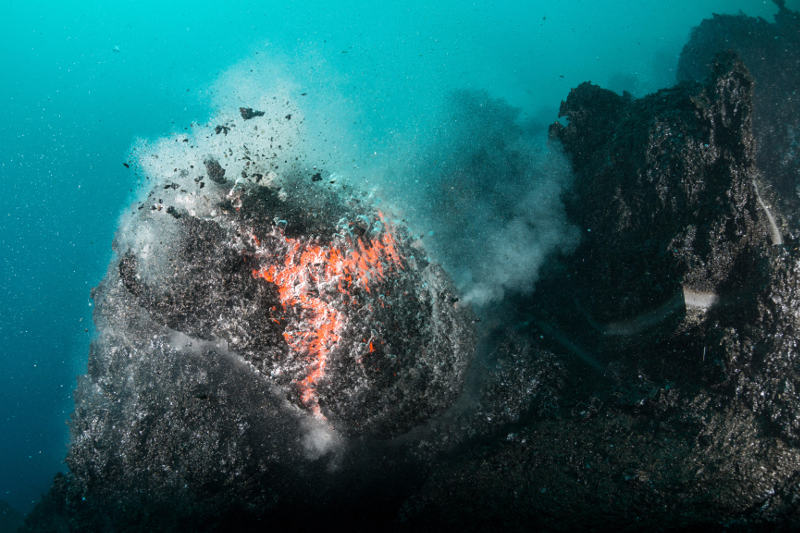
The research was inspired by the dynamic resulting from deep ocean volcanic eruptions.
The research was inspired by the dynamic resulting from deep ocean volcanic eruptions.{credit}Nature Picture Library / Alamy Stock Photo{/credit}

In order to stack nanoclusters of oxygen-rich zinc peroxide in a way that allows it to be used for cancer therapy, researchers simulate a natural phenomenon, which usually results from underwater volcanic eruptions, inside the lab.

Nature Middle East sits down with Mady Elbahri, one of the authors of this new research. Elbahri, an Egyptian scientist, is a professor of nanochemistry and nanoengineering at the school of chemical engineering, Aalto University, in Finland.

NME: You’ve come up with a new nanotherapy tool for cancer by simulating a process called the “Leidenfrost dynamic”. Can you explain it to me? Where did you draw inspiration for it?

Mady Elbahri: Well, we’re all familiar with the Leidenfrost phenomenon and [we may] have observed it while cooking in the kitchen, when a water drop touches a very hot pan’s surface. Instead of the expected rapid evaporation, the drop starts to move and dance on the hot surface. I observed this phenomenon in my kitchen a few years ago and contemplated its origin and the idea of employing it for nanosynthesis. Based on the knowledge I collected about this process, I introduced the new concept of “Leidenfrost nanochemistry”, which means synthesis of nanoparticles using the Leidenfrost effect.

NME: Can you walk me through your methods of creating nanoclusters of zinc peroxide using this new method?

ElBahri: In our latest study, we extend applicability of the phenomenon by mimicking the activity of the volcanos deep in the ocean. In this version of the Leidenfrost process, synthesis of nanoparticles starts at the bottom of a hot bath in an overheated zone at the vapor-liquid interface. Subsequently, the particles erupt towards the colder region of liquid-air interface for further growth. By such type of physical separation we are able to tailor the size of the particles.

NME: You mention in your paper that tailoring the size of the nanoparticles produced can selectively kill cancer cells. Can you elaborate more on this?

Elbahri: Tailoring the size can directly affect the oxygen release. Size plays an important role in this therapeutic process; to ensure a uniform effect, such particles should be equal in size. Also, the drug should not harm healthy cells and fibroblasts and so you need to adjust the size in a way that it can selectively destroy the cancer cells without affecting the others.

NME: How do you plan on building on this research in the future?

Elbahri: Further research can help us acquire the best therapeutic response with respect to size and dose of the nanoparticles. I also aim to transfer this knowledge to Egypt. … It will be my honor to support my motherland in getting its deserved scientific position in the world.

Interested in knowing how Elbahri and his colleauges drew their inspiration for this study? Listen to the new episode of Nature Middle East Podcast for the story behind the research.
Finding job satisfaction as a venture capitalist

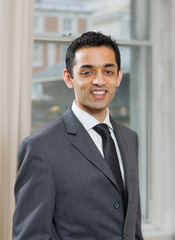
After a brief stint as a general surgeon, and a PhD in translational cancer research from the MRC Cancer Cell Unit, University of Cambridge, UK, Bali Muralidhar changed career direction to venture capital investment.

Read more about Bali’s career transition here.

Bali-Muralidhar-naturejobs-blog
{credit}Image credit: MVM Life Science Partners LLP{/credit}

What happened after you graduated from your PhD in 2008?

Throughout my academic and medical training I had seen a few start-ups come and go, and thought that investing in them could be something I might find interesting.

So after I completed my PhD in 2008, I moved to Bain & Company, a global consulting firm, where I spent time working with healthcare companies. It gave me a wider view of business and essentially replaced an MBA. This proved to be a great introduction for venture capital investment careers.

What skills did you acquire in academia that have been useful during your career in venture capital?

It’s helpful to understand where and how the pitfalls lie in science and how to read a paper. My understanding of the scientific method and ability to analyse different data sets have also been extremely useful.

For example, I’ve been looking at a potential drug that needs to go through a clinical trial before it is approved. Part of my diligence process is to comb through all the patient data, scientific literature, clinical papers, pre-clinical papers etcetera, to work out whether the thesis to the drug makes sense. I then need to work out if the clinical trial design is sound.

What was one of the biggest challenges you faced when switching from academia to venture capital?

As a scientist, you need to do all experiments and collect all the data before making a conclusion. In venture capital, this isn’t always possible. Sometimes you cannot get the data or collecting it is going to take too long, so you need to make the best decision you can with the information that you have. This mindset isn’t easy, but it comes with time and experience.

What do you enjoy most about your work?

I find I’m in a privileged position, seeing cutting edge science and potentially patient-changing companies that you might not see if you were doing niche research in academia, where, often, you’re stuck thinking about one field.

What advice do you have for any scientists looking to work in venture capital?

I wholeheartedly recommend that you get some experience with a consulting firm. These companies give you a wider view of what’s out there. You see lots of different science, work with lots of different people and you get an insight into the commercial world.

The training and professionalism that you get is a really great addition to a PhD. In a PhD you’re used to working in a lab and just with a supervisor; you don’t understand or have much experience of management. A consulting firm gives you the opportunity to develop these skills, which are essential for working in venture capital.

Interview by Julie Gould

Wellcome changes: a trip round the Reading Room

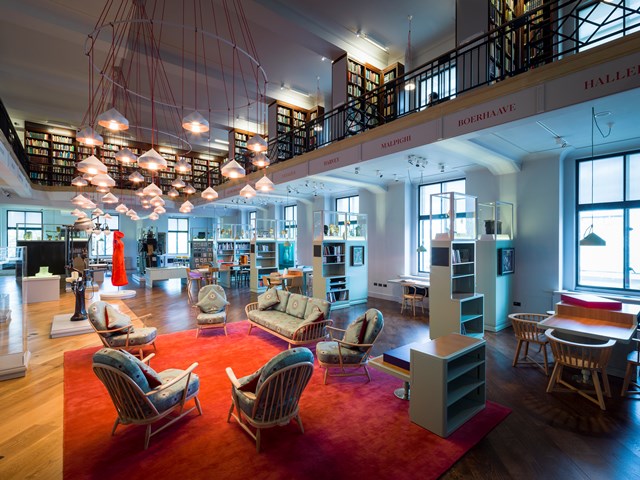
The Reading Room at London's Wellcome Collection.
The Reading Room at London’s Wellcome Collection.{credit}Wellcome Collection{/credit}

It’s a rare room where one raking glance can take in a columnar dress in scarlet fake-fur, a 1920s ‘dental station’ and a tot partly sculpted from synthetic milk powder. But such is the new Reading Room at London’s Wellcome Collection, part of biomedical research funding giant the Wellcome Trust’s £17.5 million refit, and now open to the public.

“We see it as a creative bridge between the library and collection,” says senior media officer Tim Morley, “a kind of ‘This way here’ sign for the library, with a taste of  our public programmes.”

Henry Wellcome in 1885.
Henry Wellcome in 1885.{credit}Wellcome Collection{/credit}

An asymmetrical spiral staircase connects the airy room with other floors. Ten niches — themed Alchemy, Body, Breath, Face, Faith, Food, Lives, Mind, Pain and Travel — offer space to study some of the 1,000 books on offer, draw or play boardgames. In the communal middle, a digital autopsy station dares you to (virtually) unpeel the wrappings of several mummies. The seating and floor cushions are upholstered in pale green and red fabric with a fetching mid-century modern design from the Festival of Britain, based on insulin’s crystalline structure.

“People can delve deeper into the collection’s themes here, and really explore,” notes assistant media officer Holly Story. “There’s a playful element, and they can draw their own threads through and make their own links.”

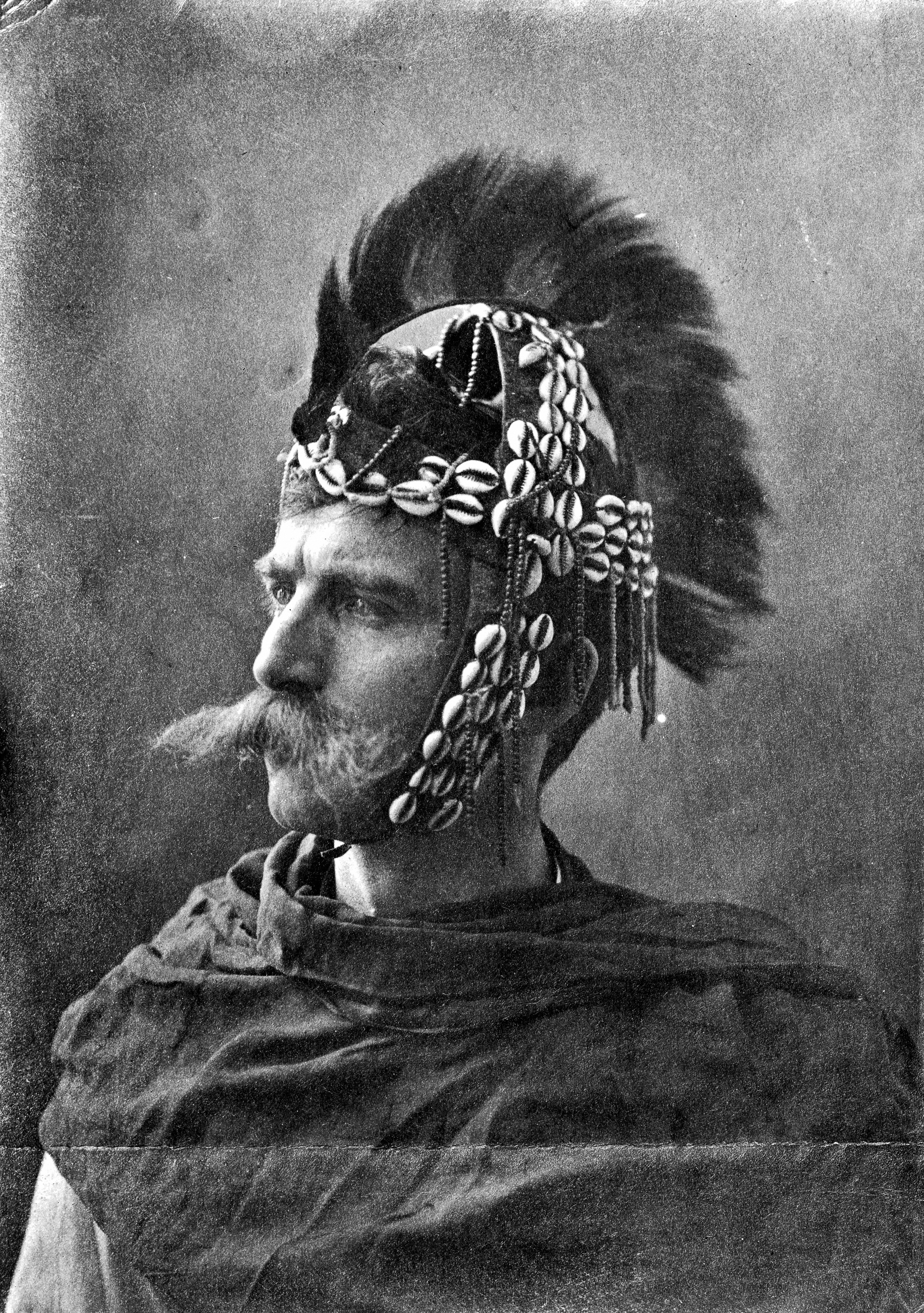
The vast trove of scientific, cultural and medical objects amassed by Wisconsin-born pharmacologist-entrepreneur Henry Wellcome (1853-1936) and his successors range from the exquisite to the grotesque. Predictably, the 100 that made the cut are rich and strange indeed.

That blood-hued gown, a 2014 copy of the 1997 original by British designer Helen Storey and her embryologist sister Kate, depicts the closing of a neural tube in early embryonic development.  A scatter of charms and amulets (many from Oxford’s anthropological goldmine, the Pitt Rivers Museum) include dried moles’ feet, once thought to guard against toothache. A silver-plated “bronchitis kettle”, a facsimile of the fifteenth-century Alchemical Processes and Receipts, an anatomical wax moulange showing acne of the hand — it’s the classic embarrassment of riches.

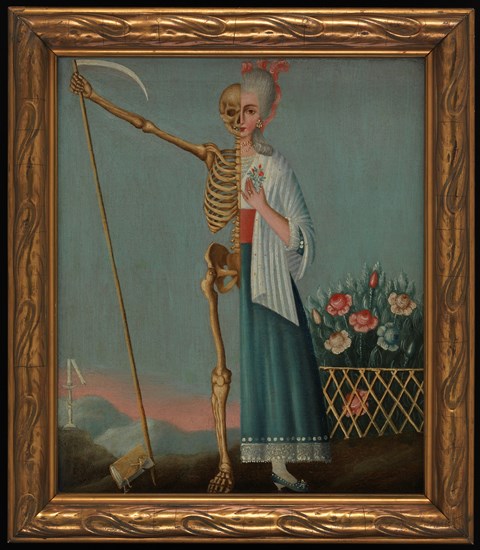
Life and Death (artist and date unknown).
Life and Death (artist and date unknown){credit}Wellcome Library{/credit}

As I contemplate this shining window-lined space with its phalanx of pendant lamps, I wonder how its design will drive use, and how the curatorial mix will enhance understanding of the ‘human wilderness’. Do luxe seating and designer lighting sit oddly with an invitation to don a straitjacket and contemplate anonymous paintings of flayed bodies?

But it’s precisely that tension between comfort and that zone beyond it that makes this space potent. As I leave, I gaze enchanted at a small vanitas oil on canvas. The eighteenth-century figure in the frame — half pompadoured woman, half skeleton — is an emblem of human mortality and a check to vanity. Yet there is something here of the very modern Frida Kahlo, whose self-portraits can be like dissections baring both her own medical trauma and the precarious human condition. Pure Wellcome — finding the universals under the skin.  

The Reading Room is part of Wellcome Collection at 183 Euston Road, London NW1 2BE (www.wellcomecollection.org). Wellcome show The Institute of Sexology runs through September; listen here to Geoff Marsh’s Nature Podcast Extra interview with co-curator Honor Beddard. 


For Nature’s full coverage of science in culture, visit www.nature.com/news/booksandarts.