Voting commences on research prize determined by public poll

It’s an off year in the US election cycle, which means that neither the President nor most members of Congress will face the voters come November. But that doesn’t mean you can’t still cast a ballot this fall. Today, the Brigham and Women’s Hospital (BWH) in Boston announced the finalists for the second annual BRIght Futures Prize, a $100,000 research contest in which the winner is decided by a public poll. Voting is now open through 21 November.

The BWH launched the prize last year in an effort to engage the public-at-large. First, the hospital’s Biomedical Research Institute (BRI) solicited grant proposals from BWH staff on various overarching themes: last year, those were personalized medicine and systems immunology; this year, the topics span the nine featured at the hospital’s ‘research day‘ in November (where the BRIght Futures Prize winner will be announced). Then, the BRI convened peer-review panels to winnow the applicants down to three finalists, each of whom made a short video to pitch their ideas to the public. (See my coverage of last year’s prize: ‘Biomedical grant awarded by ‘American Idol’-style public vote’.)

Last year’s winner was Robert Green, a clinical geneticist at BWH who proposed to sequence the genomes of 480 newborns, half from healthy babies and half from sick babies, in an effort to study how to use that information in routine medical care. Off the back of his BRIght Futures Prize, which served as a sort of pilot grant, earlier this month Green won a $6 million grant from the US National Human Genome Research Institute to roll out his plan in full. (See ‘Scientists to sequence genomes of hundreds of newborns’ from the Nature News blog.)

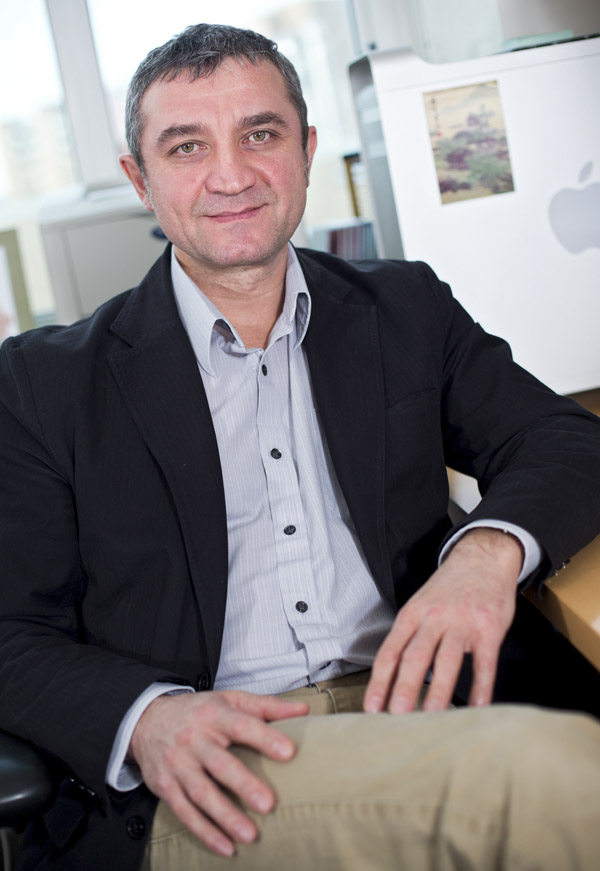
This year’s finalists include: Utkan Demirci*, a biomedical engineer who aims to advance a point-of-care microfluidic device for detecting levels blood levels of antiepileptic drugs; pharmacoepidemiologist Daniel Solomon and healthcare researcher Joel Weissman, who hope to create an online patient portal to streamline clinical trial enrollment and boost participation; and plastic surgeon Bohdan Pomahač and bioengineer Jeffrey Karp, who propose to develop a new generation of adhesive medical tapes based on biologically-inspired designs. (See my February 2013 news feature about Karp’s investigations of ‘biomimetic’ adhesives: ‘The sticking point’.)

You can watch all the finalists’ videos and read short descriptions of their research proposals here. Check them out, and then exercise your voting right!

*Update: Demirci was named the winner at the BWH Research Day on 21 November.

In wake of Syrian chemical attacks, scientists seek to improve sarin antidotes

US Air Force officers administer a nerve agent autoinjector containing atropine and 2-PAM during a readiness exercise.

US Air Force officers administer a nerve agent autoinjector during a readiness exercise.{credit}US Air Force photo/Staff Sgt. Chrissy FitzGerald{/credit}

In the early hours of 21 August, doctors in Damascus area hospitals scrambled—often in vain—to save the lives of Syrian civilians brought to the hospital with foaming mouths and convulsions. Today, a report released by a United Nations inspection team confirms, as many have suspected, that the chemical weapon used in the attack was the deadly nerve gas sarin.

There are medical countermeasures proven to help counteract the poisoning of sarin and other organophosphate-based nerve agents such as soman and VX—some of which were available last month to Syrian victims. But “they have their limitations,” notes David Jett, director of the Countermeasures Against Chemical Threats (CounterACT) program at the US National Institutes of Health (NIH) in Bethesda, Maryland. Certain drug therapies don’t enter the brain well and none offers protection from the long-term effects of sarin exposure. So scientists have ratcheted up their efforts to improve the arsenal of antidotes against this particular chemical weapon and its lasting impact on the nervous system.

Sarin proves so fatal because it inhibits an enzyme called acetylcholinesterase (AChE). This enzyme normally degrades the neurotransmitter acetylcholine, a key signaling molecule that has numerous functions in the body, including facilitating cognitive function and triggering muscle contraction. Without functioning AChE, muscle fibers twitch uncontrollably and neurons in the brain become hyperactive, leading to seizures. If untreated, people exposed to sarin typically die of asphyxiation, as the muscles involved with breathing proceed to fire nonstop.

More than 1,400 people, including an estimated 426 children, died in the August gas attack, according to US intelligence estimates. Syrian doctors had only limited amounts of antidotes against the nerve gas, according to Sawsan Jabri, a trained physician who teaches biology courses at Oakland Community College in Eastern Michigan and serves as a spokeswoman for the US-based Syrian Expatriates Organization. She says that medical staff around Damascus (with whom she is in contact) had a total of some 50,000 ampoules of atropine, a drug that blocks the receptor responsible for binding acetylcholine, thereby preventing nerve and muscle cells from responding to the neurotransmitter. She adds that they also had “very limited amounts” of both pralidoxime (2-PAM)—a compound that reactivates sarin-inhibited AChE—and the anti-anxiety drug diazepam (better known as Valium), which prevents and treats seizures.

These three medicines—atropine, 2-PAM and diazepam—together constitute the ‘gold standard’ of anti-sarin therapies. As a matter of precaution, US military personnel are equipped with kits that contain spring-loaded syringes full of these antidotes, known as autoinjectors, which allow them to self-administer drugs through the muscle soon after, or better yet, before a chemical attack. But the therapeutic window is small, and prophylactic treatment is typically only feasible for military personnel, not civilians. So government defense agencies have long sought more robust and widely applicable alternatives to limit the death toll and mitigate permanent disability among survivors.

“There is a very vibrant research and development program in this area,” Jett says. He notes that the US government has been funding work in this area since “long before the chemical attacks in Syria, and even before the civilian attacks in Tokyo,” referring to the domestic terrorist attack on the Tokyo subway system in 1995, one of the first-ever uses of sarin as a chemical weapon. “We’re on this.”

Continue reading

Toddler’s death prompts reflection on bioengineered tissue transplants

Tissue engineering

{credit}Robert A. Lisak{/credit}

There was sad news over the weekend that the youngest patient to ever receive a bioengineered trachea seeded with her own bone marrow–derived stem cells had died. Hannah Warren, who was born without a windpipe, received the artificial trachea at Children’s Hospital of Illinois in Peoria in April. It was only the sixth procedure of its kind and the first to be performed in the US. She would have turned three next month.

Doctors involved in the girl’s treatment told the New York Times that her death was not related to the bioengineered organ. Rather, her native tissue around the esophagus didn’t heal properly, necessitating another operation. She ultimately died from complications of that second operation. “The trachea was never a problem,” said Paolo Macchiarini, a surgeon at the Karolinska Institute in Stockholm, who led the girl’s tracheal implant and has spearheaded the protocol around the world.

The news got me thinking about a feature article I wrote two years ago about a similar procedure in which a toddler, about the same age as Hannah Warren, received a tissue-engineered blood vessel to correct a congenital heart defect known as a ‘single-ventricle anomaly’. The problem is fatal without surgical correction.

The bioengineered blood vessel, like the artificial trachea, starts out as a tube of plastic fibers. Doctors then add a patient’s own cells, taken from the bone marrow, and implant the construct after just a few hours of incubation. Twenty-five people received this treatment in Japan throughout the late 1990s and early 2000s, but this was the first such procedure in the US.

So how is that child doing today? “I am happy to report our first patient is still doing well nearly two years after her surgery,” Christopher Breuer told me in an email this week.

Breuer and his colleague Toshiharu Shinoka completed the operation in August 2011 at the Yale-New Haven Hospital in Connecticut. The two pediatric surgeons have since moved to Columbus, Ohio, where they codirect the Tissue Engineering Program at Nationwide Children’s Hospital. They continue to see their one patient from the blood vessel trial every six months and talk to her parents on the phone about once a month. But the move to Ohio has temporarily delayed further study enrollment.

They should be recruiting participants again soon, though. “We have recently completed construction of our new facilities,” says Breuer, “and will hopefully be enrolling more patients later this year.”

As for the bioengineered tracheas, Macchiarini told the Times that he would continue with similar operations, including one scheduled for Stockholm this week. It’s clear that with Hannah Warren’s death, the risks of the procedure will be foremost in researchers’ thoughts.

Yale immunologist wins new €4 million award

Ruslan Medzhitov

{credit}Brian Ach/HHMI{/credit}

Most scientists will say that they go to the lab every day out of a pure love of science, not to make buckets of money. But for researchers at the pinnacle of their fields, science can be a lucrative trade. Win a Nobel Prize, and you could take home more than $1.2 million. Bag a Templeton Prize, and you could be depositing a $1.7 million check. Net a Breakthrough Prize in Life Sciences, first awarded earlier this year, and you’d walk away with a cool $3 million.

But that’s nothing compared to the €4 million ($5.1 million) purse attached to the Else Kröner-Fresenius Award, a new prize handed out today by the German non-profit Else Kröner-Fresenius-Stiftung (EKFS). Although €3.5 million of the prize money is intended for future research (leaving only €500,000 for the recipient to use as he or she pleases) the total value of new award makes it the most valuable single accolade in all of science, monetarily at least.

That accolade was given to immunologist Ruslan Medzhitov, a Russian-born scientist at Yale University in New Haven, Connecticut, who co-discovered and characterized mammalian Toll-like receptors (TLRs) in the 1990s. These pattern recognition molecules are now recognized as integral parts of the innate immune system that fight off microbial infections and detect associated damage. Many drug companies are actively targeting these receptors in the hopes of treating cancer, sepsis and inflammatory disease.

Two years ago, Medzhitov (pictured) was controversially overlooked for the 2011 Nobel Prize in Physiology or Medicine, which went to the discoverer of dendritic cells (Ralph Steinman) and two other immunologists who elucidated key aspects of innate immunity (Bruce Beutler and Jules Hoffmann, with whom Medzhitov shared the 2011 Shaw Prize in Life Science and Medicine, the $1 million ‘Nobel Prize of the East’). At the time, 24 scientists wrote an open letter in Nature arguing that Medzhitov and his mentor Charles Janeway, who died in 2003, should have been recognized by the Nobel Committee for their seminal contribution of cloning a human TLR and showing that it activated signaling pathways that induce adaptive immunity.

However, according to Stefan Kaufmann, director at the Max Planck Institute for Infection Biology in Berlin, the Nobel snub had no effect on Medzhitov’s selection for the new award. Medzhitov “was clearly one of more innovative researchers,” says Kaufmann, who, as president of the International Union of Immunological Societies, served as chair of the award’s executive committee. Plus, he notes, the Else Kröner-Fresenius Award recognizes both past achievements and ongoing research activity, and Medzhitov has an active research program that could aid in the development of new vaccines and anti-inflammatory medicines. (See this commentary that Kaufmann cowrote last year in Nature Immunology for more background on the award.)

The inaugural immunology-themed award was timed to commemorate the 25th anniversary of the death of EKFS founder Else Kröner. Going forward, the foundation expects to grant the award every four years to a different discipline of medical research.

Melanoma drug joins ‘breakthrough’ club

Earlier this year, the US Food and Drug Administration (FDA) granted its first ‘breakthrough therapy designations’ to a pair of cystic fibrosis drugs (see Nat. Med. 19, 116–117, 2013). But since then, it’s been all about the cancer agents.

The New Jersey drug giant Merck announced this morning that its investigational cancer drug lambrolizumab (MK-3475) had received the breakthrough blessing in recognition of the dramatic clinical benefits observed in an open-label, phase 1 trial involving people with advanced melanoma. The FDA’s new development path is specifically designed for experimental agents that produce large and unprecedented treatment effects in early clinical trials.

According to preliminary data presented at an international melanoma meeting last year, 43 of 85 patients with inoperable and metastatic melanoma who received lambrolizumab showed an objective anti-tumor response after 12 weeks, including eight who experienced a complete response. The average duration of response was 7.6 months, and most of the reported side events were minor, although seven people experienced potentially dangerous immune-related complications.

“It’s never a good time to be a patient. But at this point, if you are, it’s the dawning of a new day where we have the return of hope of having a significant therapy,” says trial investigator Omid Hamid, director of the Melanoma Center at the Angeles Clinic and Research Institute in Los Angeles.

“One of the best things about getting this breakthrough designation is that it drives patients to clinical trials, and it drives patients to the understanding that there is continued work being done,” he adds.

How anti-PD-1 therapy such as lambrolizumab works

How anti-PD-1 therapy works{credit}Nature{/credit}

Like Yervoy (ipilimumab), an FDA-approved melanoma therapy that promotes T cell function by blocking a surface protein called cytotoxic T lymphocyte antigen 4 (CTLA-4), lambrolizumab is an immunotherapy drug. It works by inhibiting another surface protein called programmed death-1 (PD-1). PD-1 is an inhibitory signaling receptor expressed on activated T cells. By targeting PD-1, lambrolizumab stimulates the immune system, enhancing the ability of T cells to kill tumor cells (see Nat. Med. 18, 993, 2012).

Bristol-Myers Squibb, Genentech, Amplimmune and CureTech all similarly have drugs directed at either PD-1 or its ligand. But, according to Hamid, lambrolizumab is the only drug to have been shown publicly to work in people for whom Yervoy has failed. In the trial data presented last year, 11 of 27 participants who had previously tried Yervoy showed an objective anti-tumor response to the new experimental Merck antibody.

Additional phase 1 data will be presented in June at the American Society of Clinical Oncology’s annual meeting in Chicago. Merck is currently recruiting participants for a 510-person, phase 2 follow-up.

Wendy Selig, president and chief executive of the Melanoma Research Alliance, an advocacy organization based in Washington, DC, welcomes the new designation for lambrolizumab. “We view it as a really important step in the process of creating this ‘all hands on deck’ mentality, where you have a serious unmet medical need and where there are big gaps in terms of what’s available,” she says.

Lambrolizumab is the fourth experimental cancer drug to be labeled a breakthrough. The others are: Pfizer’s palbociclib (PD-0332991) for metastatic breast cancer; Novartis’s LDK378 for ALK-positive lung cancer; and Johnson & Johnson’s ibrutinib (PCI-32765) for various types of leukemia and lymphoma.

“It’s great to see that the FDA has embraced this,” says Jeff Allen, executive director of Friends of Cancer Research, a Washington, DC–based think tank and advocacy organization that first proposed the breakthrough designation. “I think what’s most promising is that there are drugs that are having this magnitude of effects in disease settings where there are so few options.”

3D-printed material has tissue-like properties

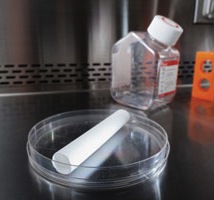
A rubbery material made using a three-dimensional printer can transmit electrical signals and mechanically fold like biological tissue in predictable ways. The work, published in this week’s issue of Science by researchers at the University of Oxford, UK, could pave the way for tissue engineering, controlled drug release technologies or other medical applications.

“We can mimic tissue properties using relatively easily obtained building blocks,” says chemical biologist Hagan Bayley, who led the work. “It’s at a primitive level at the moment, but it’s an interesting attempt to make things that behave like tissue by bottom-up fabrication.”

The technique involves printing tiny water droplets into specific positions in an oil bath. The droplets acquire a lipid monolayer and form bilayers with other droplets in the growing network. Some of these droplets also contain membrane proteins to allow for long-range electrical communication, like in a nerve axon; some have different concentrations of salt to create a gradient for osmosis-driven folding.

In the video above, two colored dyes are included to visualize the printing process. In the paper, the authors demonstrated that they could send an electrical signal along a defined path, and fold a flower-shaped network of droplets into a hollow sphere.

“They’ve demonstrated some engineered functionality to what they’ve printed,” says Lawrence Bonassar, a biomedical engineer at Cornell University in Ithaca, New York, who was not involved in the study. “This opens the door to printing neuronal structures or guiding neuronal in-growth in a very targeted way. That, in some ways, is a bit of a holy grail.”

New, intensive trials planned on heels of Mississippi HIV ‘cure’

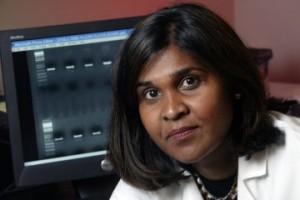
Deborah Persaud

Deborah Persaud presented her findings at CROI. {credit}Johns Hopkins Medicine{/credit}

ATLANTA — Until recently, the medical community held a consensus that children born with HIV might be obliged to take antiretroviral drugs for the rest of their lives. But the announcement made last week that an infant in rural Mississippi who stopped receiving medicine at 18 months of age and has since lived for a year with no measurable viral RNA in the blood is prompting HIV experts to question the conventional wisdom.

“It’s definitely paradigm shifting,” says Deborah Persaud, a pediatric infectious disease physician at the Johns Hopkins Children’s Center in Baltimore who presented the Mississippi case here at the Conference on Retroviruses and Opportunistic Infections (CROI) on 4 March. However, a trial that involves drug cessation is fraught with ethical and medical difficulties, so the next steps going forward remain unclear.

Persaud and other HIV specialists plan to meet over three days in May at a leadership retreat of the International Maternal Pediatric Adolescent AIDS Clinical Trials (IMPAACT) group, an investigator network funded by the US National Institutes of Health (NIH), to discuss how best to test if and when antiretroviral therapy can be halted for children born with HIV who achieve undetectable levels of the virus in their blood. “We need community input on this,” Persaud says. “If we develop careful strategies, we could probably come up with a consensus approach in a couple of months.”

From Berlin to Mississippi

A prime benefit of going off antiretrovirals is the avoidance of drug-induced side effects, ranging from metabolic complications to bone demineralization to kidney failure. This is especially true for young people who could be on these medications from birth. Yet, before the Mississippi baby, no one had ever achieved a ‘functional cure’ from HIV—meaning undetectable viral replication and no disease progression in the absence of drugs—off the back of antiretroviral therapy alone. (Timothy Brown, the so-called ‘Berlin patient’, achieved this state, but only after a bone-marrow transplant with donor cells invulnerable to HIV replaced all of his native immune cells, a procedure deemed too risky for most HIV-positive individuals.)

The key to the baby’s functional cure, researchers believe, was probably the unconventionally aggressive treatment administered to the newborn in the first days of life: a trio of antiretroviral agents given twice daily starting from around 30 hours after birth. By giving these drugs before the infant had the chance to develop any memory T cells—the place where HIV goes to hide—this may have prevented the virus from establishing the latent reservoir that typically thwarts efforts at fully eliminating HIV from the body.

In contrast, most babies born to HIV-positive mothers today receive only a ‘prophylactic’ course of antiretroviral drugs to prevent infection. This typically involves fewer agents and less frequent dosing. Full treatment regimens are then given only after a positive diagnosis, which can take up to six weeks in many parts of the developing world.

Yet, in the case of the Mississippi baby, Hannah Gay, a pediatric HIV specialist at the University of Mississippi Medical Center in Jackson, put the newborn on the more aggressive regimen even before the tests came back showing that the child was infected. She did so out of the concern over the possibility of mother-to-child transmission, as the mother had never received prenatal care nor antiretroviral treatment. In fact, her HIV-positive status was only revealed to doctors while she was in labor. Following the baby’s diagnosis six days later, Gay maintained this intensive protocol with a slightly different drug cocktail going forward. Drug withdrawal was never planned. But after 18 months on the regimen, the child’s family stopped treatment for unspecified reasons. Surprisingly to Gay and her colleagues, the virus never rebounded.

“It’s always good to have your thinking jolted,” says Katherine Luzuriaga, of the University of Massachusetts Medical School in Worcester, who collaborated with Presaud and Gay in analyzing the Mississippi baby’s blood work.

Could other babies—around 1,000 of whom are newly infected globally each day with HIV—treated in a similar way now be functionally cured of their infection? A month ago, most researchers would have said no. Now, they’re not so sure.

Continue reading

Antidotes edge closer to reversing effects of new blood thinners

The US approval late last year of the blood thinner Eliquis (apixaban) made it the third blood-thinner pill option to come online in the last three years, all of which have proven to be as or more effective as the old go-to warfarin, with lower rates of brain hemorrhaging and fewer blood tests required to get the dosing right. However, unlike warfarin, which has an antidote in the form of vitamin K, no compounds exist that directly counteract the anticoagulation effects of these next-generation blood thinners—something desperately needed for the 1–3% of patients who suffer major bleeding complications, experience trauma injuries or require urgent surgery while on these pills.

New anticoagulation antidotes could be on the way. On 5 February, Portola Therapeutics, a South San Francisco–based company with an injectable antidote called PRT064445, announced that it had sealed a deal with Germany’s Bayer and New Jersey’s Janssen Pharmaceuticals to test PRT064445 in a phase 2 trial involving healthy volunteers given Xarelto (rivaroxaban). This pact comes on top of a similar partnership announced in November 2012 between Portola and the makers of Eliquis, Bristol-Myers Squibb and Pfizer, both based in New York.

Approved by the US Food and Drug Administration in 2011, Xarelto, like Eliquis, blocks a key enzyme in the blood-clotting cascade called factor Xa. PRT064445 works by acting as a decoy for drugs like Eliquis and Xarelto to bind to, preventing them from obstructing factor Xa in the bloodstream.

Reporting online today in Nature Medicine, Portola scientists showed in human plasma that PRT064445 reversed the anticoagulant effects of these drugs and another experimental factor Xa targeted agent known as betrixaban, as well as two indirect factor Xa inhibitors, including a form of heparin, an older injectable anticoagulant. The drug also restored normal clotting in rabbits and rats. According to John Curnutte, head of research and development at Portola, based in South San Francisco, California, PRT064445 also proved safe and well tolerated in an as-yet-unpublished phase 1 study involving 32 healthy volunteers not on anticoagulant therapy.

Continue reading

‘FlyWalker’ tracks insect feet, could advance Parkinson’s research

They may have wings, but fruit flies spend plenty of time on their feet. And these insects, also known as Drosophila, are a standard animal model for studying neurodegenerative diseases, such as Parkinson’s and even Alzhiemer’s.

Often, scientists will create fruit flies that contain the same genetic mutations as seen in these disorders to see how the DNA changes affect the insects. Yet, for all the complex genetic tools they employ, the way of measuring the resulting motor defects remain crude: A researcher will knock the flies in a vial down to the bottom with a quick tap, and then wait to see how long it takes for the insects to climb to the top. (For an example, go to 2:28 into this video on LRRK2 animal models of Parkinson’s.)

Now, reporting in eLife, a team at Columbia University in New York has developed a more accurate and sophisticated way to quantify such movement. They first videotape a fly walking, and then, using computer software that can spot the individual footpads of the insect and mark when these each hit the surface. With this data, they can calculate the insects’ walking speed, distance covered and overall gait.

In the paper, the authors looked at sensory-deprived flies and showed that inactivation of sensory neurons in the insects’ legs led to defects in step precision but did not affect coordination between the legs. They call the program FlyWalker.

Similar technology already exists for tracking the movements of lab rodents. But as Ronald Calabrese of Emory University in Atlanta notes in an accompany commentary, “the Columbia team is the first to scale it down to fly-like dimensions.”

With so many metrics being teased apart by the new algorithm, Columbia’s César Mendes, a postdoc in Richard Mann’s lab who led the research, expects scientists who use the technique to discover new things about their diseases of interest, such as how an ailment worsens over time. “This method is good if you want to see a progressive phenotype and to see subtle changes as time goes by and the disease phenotype gets more aggravated,” he says.

“I really foresee that you will see flies that start to have some [movement] defects that have not been seen before, and hopefully we’ll be able to correlate some phenotypes to particular groups of neurons or to particular circuits,” Mendes told Nature Medicine. “I’m very curious to see what we’re going to have in the future.”

VIDEO: Newly discovered form of cell division may help ward off cancer

Cell biologists have long thought that cytokinesis, the final step of cell division in which the cytoplasm and its contents are split, is necessary for the proper assortment of chromosomes. Disrupt this process, the prevailing wisdom held, and aneuploidy will result, with cancerous implications. But a team led by Mark Burkard at the University of Wisconsin–Madison has discovered a new type of cell division, dubbed ‘klerokinesis’, that protects cells from failed cytokinesis.

Using live-cell imaging, the researchers watched retinal pigment epithelial cells for five days after they had chemically inhibited cytokinesis. Reporting today at the American Society for Cell Biology’s annual meeting in San Francisco, they showed that many cells managed to split into two during the first growth phase of the next cell cycle—not during mitosis—allowing each to recover a normal chromosome set. Burkard says that therapeutic strategies that boost this type of nonmitotic cell fission could prevent cancer in people at high risk of developing tumors marked by abnormal chromosomal counts.

https://youtu.be/lKU-F3Pqyj8

Video courtesy of Mark Burkhard