Global health careers: starting out

We talk to two young scientists spending their summer in rural Africa in the name of global health. 

Credit: Naturejobs/Catherine de Lange

Jay Bala (L) and Keane McCullum {credit}Credit: Naturejobs/Catherine de Lange{/credit}

Keane McCullum is a senior biochemistry major at Messiah College in Grantham, Pennsylvania, who is currently applying to medical school. Jay Bala is a second year Masters of Public Health student at Vanderbilt University in Nashville Tennessee, having studied chemistry at undergraduate level. Naturejobs bumped into them at the Macha Research Trust laboratories, in rural Zambia, and asked them what they were both doing there…

Keane McCullum: My school offers a course on healthcare in the developing world which is taught here in Macha. Whilst applying for the course, I had the idea that maybe I could continue to do research over the summer. I’d paid for my tickets already so why not just extend my flight dates?

Jay Bala: The reason I chose this public health masters is because they say: go make yourself useful in the world. So I’m spending a little over three months in country working on public health projects and actually understanding how things work with the view of doing this when I graduate.

For the practicum portion of my course, I am  splitting my time between projects in Zambia’s capital, Lusaka, and here in Macha. In Lusaka, I’m working as a chemist on a public health project monitoring nutrition in children who are on antiretroviral therapy. Here in Macha, I am seeing different aspects of how public health works – everything from planning and evaluation to how projects are carried out, so I spend time in the hospital, time in the villages, lots of time with data – a little bit of everything,which is nice.

What’s the long term plan for both of you? Keane, you’re planning to go to medial school…

KM: My time here has shown me that general practice is so versatile in any setting – whether you’re working in America or abroad, in rural, urban, or low income settings. I think it’s just emphasized to me that I want to go into general practice.

JB: I want to work for a few years either in southern Africa or Asia. I really love Zambia at this point – I would love to stay here. I’d love to do some real public health, maybe epidemiological research, but incorporate the basic sciences, which I feel sometimes get overlooked. I really want to find that niche where I can marry my basic science with public health.

Do either of you get put off by the idea of traveling for work for long periods, especially to really remote places?

KM: I have realized that if you’re going to raise a family somewhere like Zambia, it’s probably better than any place I’ve seen in the US. Everybody is always welcome and it’s super safe, but it’s a very unique place. So depending on where an opportunity opened up, that’s part of the adventure. And where a door opens, if you take it you are bound to find some things you like and some things you don’t like. A lot of thought would go in to it, but I think I’d jump at the chance to be almost anywhere.

JB: I agree – there are very few places I wouldn’t go. Life is an adventure, and two years ago I was in an air-conditioned lab in a winery trying a hundred different kinds of wine a day.

That sounds nice- why did you leave?

JB: I was doing research chemistry at Gallo winery in California, one of the largest wineries in the world. I think I left the dream job to go help people…and I wonder why every time because now I have to pay for wine.

What’s been the best thing about your time here at Macha?

KM: I’m not doing a thesis here like Jay, I’m just here to volunteer, so that gives me a lot of freedom. I enjoy the research and I find it challenging, but I’ve also really enjoyed being in the clinic and in the surgical suite, being able to shadow the doctors and seeing how they are able to go about diagnosis and management with minimal resources. That’s been the most exciting thing for me as I prepare for that next chapter.

JB: I am used to spending time in lab and have spent eight years either volunteering or being a clinical scribe in hospitals, so the really interesting thing that I take away from it is to see all the different elements of  public health research actually being implemented, even the small things. It’s really nice to see that actually happen and to cement the theory, so I know what to look for.

Will you be sad to leave?

JB: It’s going to be incredibly tough to leave but I plan on coming back – I don’t think this is my last trip to Africa.

KM: I’ve definitely developed a lot of really meaningful relationships with the guys and girls in the lab, silly things like sitting around and making jokes all the time. I’m going to miss them, and I’m definitely going to miss just being able to walk to peoples’ houses and always feel welcome.  Being a hot-climate culture, you’re always welcome and you’re always part of the community. It’s a really special place.

Do you have any advice for others considering going down a global health career path?

JB: Have pure intentions. You need to know exactly why you’re doing something like this. We’re lucky here, but a lot of our colleagues are hauling water and heating it up so they can wash themselves like a car – when you’re doing something like that, you’ve got to remember why you’re doing it. And if you’re not doing it for the right reasons, you’re going to miserable, and misery spreads here- it’s a disease.

KM: My advice to other undergraduates would be ask a lot of questions and be on the lookout for opportunities. Also, be asking yourself what your intentions are. If you’re just going for the purpose of traveling or seeing a new place, you can do that on your own time and probably stay in a hotel with clean water! A simple question I’ve often asked myself is, would I do the same project in the States? And if the answer is no, or I don’t really care that much, then it doesn’t make sense for me to use all those resources to go and make myself feel that much better in a different setting, because in that case it’s all about me and the feeling I get out of it. So ask yourself that question, and if its something you’re passionate about for the sake of it, then that’s where you should be.

Naturejobs has been travelling in Zambia with the International Reporting Project, speaking to people working in global health, in particular those studying malaria, HIV/AIDS and TB. 
Working in global health: Jennifer Stevenson

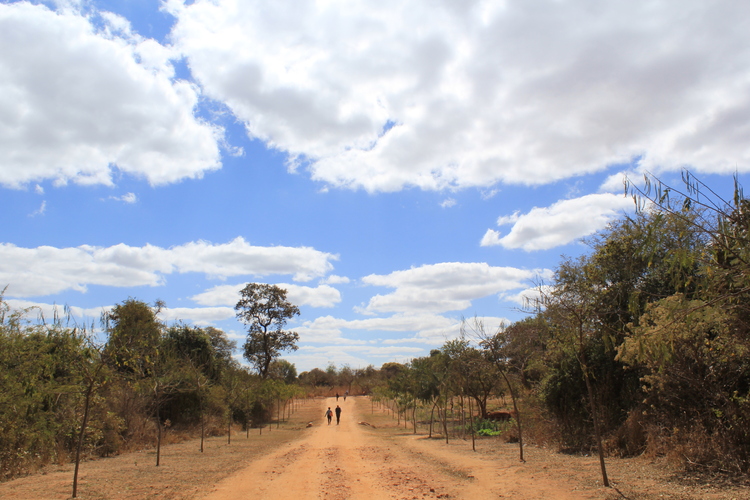
Jennifer Stevenson is a research associate at the Johns Hopkins Malaria Research Institute, Johns Hopkins Bloomberg School of Public Health, and resident entomologist at the Macha Research Trust in Zambia, where she is working on new techniques for malaria control. Stevenson studied biological sciences at the University of Oxford, and did both an MSc and PhD at the London School of Hygiene and Tropical Medicine investigating ways to control mosquitoes. After spending 5 years working in Kenya on malaria research, she moved to Macha, Zambia in March this year. Macha is a small rural community area in the Southern Province of Zambia, which is made up mainly of traditional villagers who live in homesteads scattered over the savannah. Stevenson has spent 12 years working in public health, and has spent much of that time working in remote locations in Uganda, Venezuela, Kenya, and now Zambia. Naturejobs caught up with her in Macha to find out more about her work and career.


Macha

{credit}Credit: Catherine de Lange{/credit}


When did you decide that global health was what you wanted to do?

When I started research on mosquitoes I was very interested in the biology and the behaviour of mosquitoes but really with the aim of eventually doing that somewhere where it actually means something. When I started my job in Kenya I became more involved in the global health side and that really grabbed my attention. I really enjoyed the epidemiology – how to roll out surveys and plan operational research. Here in Macha, it’s going to be more on the entomological side, with some field-work. Going back further, my father was a researcher in topical medicine in Kenya so I got to tag along with him and see the work he was doing, and right from an early age I was fascinated by that.

What is it about global health that really appealed to you?

There’s a lot of challenges and I like a challenge! You also learn something new almost every day, you get to work with some fantastic people, fantastic communities, some great academics in the field. And being able to work in Africa, you really get to see what the challenges are and get a feel for what can work: it really focuses your mind on driving towards something that could really help.

There are setbacks and there are a lot of times when it can be quite difficult though. But at the end of the day when you can see a change it’s really worthwhile. In the project I was working on in Kenya, we were doing a randomised controlled trial where we were proving bed-nets, spraying houses, testing and treating people for malaria. We had a great community involvement there and we were able to help some of the families. There were some very sick children we were able to help, which was very fulfilling.

Do you ever worry that when you leave the field your efforts will be undone?

That is always a challenge because with these research projects you come in with a set amount of money over a set timeline. What we try to do is to train people up and be able to find positions for them afterwards. For instance in Kenya, it was great seeing people [we trained] who had just left school getting into the position where they were applying for permanent roles at, say, the Kenya Medical Research Institute, and really seeing them thrive. So part of this work is capacity building as well, and obviously that’s very rewarding.

How do you feel about spending such long periods away from home?

I normally try when I’m out in these places to think: home is here. I come from a family who moved around the world anyway so actually defining where home is is difficult. Although I’m british I was brought up in Kenya and we also spent some time in Indonesia. It was only when I was 16 or 17 that I moved back to the UK.

Credit Jennifer James

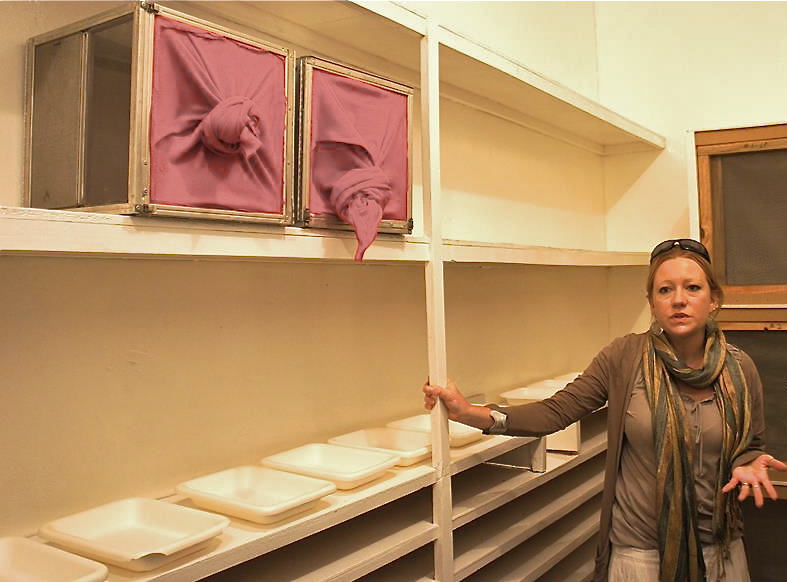
Jennifer Stevenson in the newly refurbished insectary at Macha {credit}Credit: Jennifer James{/credit}

Entomology is one part of these projects. What other kinds of  roles are there in global health?

There’s a great range. There are people who have done pure science – biochemistry or molecular biology – who then move into public health. A colleague of mine went down that route and is now doing a masters in public health with a view to get into policy. There are people who are mathematical modellers and get into epidemiology. So I don’t think there’s a set route, it’s a real mix.

Any advice you’d give to someone thinking of a career in global health?

I think the key thing is to get experience. I had an upbringing that gave me a lot of exposure anyway. A lot of people won’t have that chance, but getting to volunteer on projects and getting that experience is really key. Go out and work in areas that you might be interested in, like Africa. I think it’s also important to speak to people in the kinds of fields you might be interested in. In terms of leading up to my degree I think one regret I always had is not doing maths at A-Level. Whatever you get into in the science world in public health, maths is key.


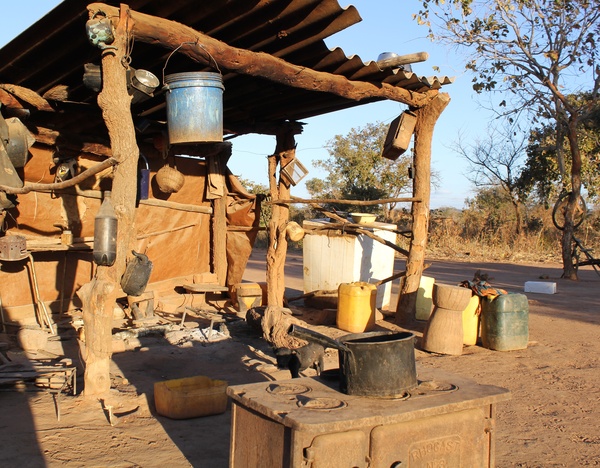
Stevenson's work is split between entomological studies in the Macha labs, and field work, where she visits homesteads in the area, such as the one below.

Stevenson’s work is split between entomological studies in the Macha labs, and field work, where she visits homesteads in the area, such as the one below. {credit}Credit: Catherine de Lange{/credit}


homestead small

{credit}Credit: Catherine de Lange{/credit}

Naturejobs is in Zambia with the International Reporting Project, speaking to people working in global health, in particular those studying malaria, HIV/AIDS and TB. 
Let the (medical) games begin: A Q&A with Olympics health director Brian McCloskey

With just three weeks to go before the Olympic flame is officially lit in London, the UK’s Health Protection Agency (HPA) announced this week that it is “Games ready”, with a rapid-response system in place to keep spectators and athletes healthy. Over the course of the 16-day event, the public health body will pinpoint and respond to any emerging health hazards or infectious disease outbreaks that may occur among the 11 million ticketholders and 15,000 athletes expected to descend upon the British capital.

Leading the effort will be the Olympics lead health director Brian McCloskey, who is also the HPA’s regional director for London. A family doctor by training, McCloskey played a major role in the agency’s emergency response to the London tube bombings in 2005 and helped craft the public health preparedness guidelines for the 2004 Olympics in Athens. Ahead of this year’s Summer Games, McCloskey spoke with Nature Medicine about the HPA’s key preparations and overarching public health challenges for the 30th Olympiad.

Which infectious diseases will you be tracking during the Games?

We will monitor all infectious diseases, but the main ones that will likely be an issue for us will be gastrointestinal diseases such as food poisoning and infectious diseases such as measles. There have been measles outbreaks in Europe and in UK in the past couple of years and those haven’t gone away.

Continue reading