Compound kills drug-resistant tuberculosis through novel mechanism

Tuberculosis is an old disease that demands new drugs. More than one million people die each year from Mycobacterium tuberculosis infections and a growing percentage of new infections—at least 9%—are caused by strains of the bacterium that can’t be killed with many of the drugs now available.
Q203

Q203

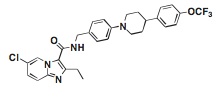
A new experimental compound could help. In a paper published online today in Nature Medicine, researchers describe a small molecule called Q203 that thwarts drug resistant tuberculosis infections in mice by targeting the mycobacterial cytochrome bc1 complex—a mechanism distinct from that of existing agents.

“Q203 works in ways [other] drugs do not,” says Kevin Pethe, project head of the antitubercular program at the Institute Pasteur Korea in Gyeonggi-do, who led the study, “and it can work against the resistant bacteria.”

To find the new drug, Pethe and his colleagues screened more than 100,000 different chemical compounds for their ability to inhibit tuberculosis growth in mouse macrophages. They identified 106 molecules that killed the infectious agent without harming the cells. One compound—a kind of imidazopyridine amide (IPA)—stood out for its ability to wipe out drug-resistant strains of tuberculosis isolated from human clinical specimens. The researchers made small changes in the chemical structure of this molecule to derive Q203. They then tested the compound in mice infected with tuberculosis, and observed that animals given Q203 showed fewer lung lesions than those treated with isoniazid, a commonly used first-line anti-tuberculosis agent. Plus, the mice tolerated high doses of Q203 without any noticeable side effects.

To understand how Q203 stopped the bacteria from replicating, Pethe’s team studied six tuberculosis strains that were resistant to the killing power of Q203. By sequencing the genome of these strains, the researchers pinpointed a common mutation affecting the cytochrome bc1 complex, which is involved in energy metabolism. They then measured ATP levels in Q203-sensitive cells and showed that ATP production dropped significantly after treatment with the experimental agent.

The finding that the cytochrome bc1 complex is the primary target of Q203 is consistent with the results of two recent reports showing that IPAs can broadly inhibit energy transduction systems in the tuberculosis pathogen. In one study, a British team from the University of Birmingham and the pharma giant GlaxoSmithKline discovered a series of molecules in this same chemical class directed at the same target, although these compounds were less effective at inhibiting tuberculosis growth as Q203. In the other report, Pethe and his former colleagues at the Novartis Institute for Tropical Diseases in Singapore showed that a panel of 13 different IPA compounds could kill tuberculosis by depleting ATP.

“The IPAs are getting a lot of attention because they are really inexpensive to make, seem to be safe, and work against drug-resistant tuberculosis,” says Marvin Miller, an organic chemist at the University of Notre Dame in South Bend, Indiana, who, together with colleagues at Indiana’s Eli Lilly, reported earlier this year on yet another set of IPAs with promising anti-tuberculosis and pharmacokinetic properties. “They could be very practical.”


Mouse study shows heat shock protein protects against hearing damage caused by common antibiotic

Every drug has the potential to cause side effects. With aminoglycosides, a group of antibiotics that includes those used to treat tuberculosis and other serious infections, hearing loss can affect as many as 20% of people taking the drug. Despite a spate of efforts, there is currently no treatment or prevention for the damage to sensory cells caused by these drugs.

Ear photo

However, in a paper published today, in the Journal of Clinical Investigation, Lisa Cunningham and her colleagues at the US National Institute on Deafness and Other Communication Disorders in Bethesda, Maryland, show that the protective effect of a heat shock protein, HSP70, may provide a new therapeutic option to prevent inner ear cells injury by these antibiotics.

Heat shock proteins (HSPs) are produced by cells in response to stress, such as a sudden spike in temperature. Dubbed ‘molecular chaperones’, HSPs may be best known for their stabilizing role inside cells where they help sort, separate and fold other proteins. But scientists continue to discover the protective role that heat shock proteins can play outside of cells—from activating the body’s defense system to helping repair injured muscle. With a lengthening research record of showing up when cells get injured, HSP70 may be a good therapeutic focus to avert aminoglycoside-induced hair cell death.

“We know diseases can be caused where there is deficient or inadequate chaperone function,” says Rona Giffard, a neuroscientist at Stanford Medical School, in Palo Alto, California. If researchers find a way to increase HSP70 in areas where cells could be harmed, that ability to create a ‘super-response’ may give us ways to support cells that are stressed and unlikely to survive, Giffard says. “We might be able to push cells over the edge, to survival.”

Continue reading

From tumors to tapeworms: parasite’s genome points to new uses for cancer drugs

On the map: Taenia solium

On the map: Taenia solium {credit}Shutterstock{/credit}

Commonly used cancer drugs could be repurposed to help eliminate tapeworm infections, according to the first full genome analysis of the human gut pathogen.

A team led by Matthew Berriman, a geneticist who studies parasites at the Welcome Trust Sanger Institute in Hinxton, UK, sequenced the genomes of three human-infective tapeworm species as well as a fourth tapeworm that lives in the intestines of rats and mice. Their analysis, published online today of Nature found that among more than 1,000 gene products that are predicted to be druggable in the parasite responsible for echinococcosis—a disease that affects an estimated 2–3 million people worldwide—more than 200 already have existing therapies (many in the oncology space) that block them.

“By providing reference genomes for these tapeworms, the study lays the foundation for the identification of new potential drug targets to kill the worms,” says P’ng Loke, a microbiologist at the New York University Langone Medical Center who was not involved in the study.

The cancer link makes sense given the life cycle of the tapeworm, notes Berriman. People typically ingest the parasite as eggs or larvae that then migrate to the host’s intestines where they develop into adult tapeworms. “When larvae infiltrate tissues and organs and cause large proliferating growth, [it’s] like metastasizing cancer,” he says.

The potential for new pharmacological interventions doesn’t end there, though. The genome map also revealed that the tapeworm’s parasitic lifestyle has led to a number of gene losses and molecular simplifications that could provide a wormy Achilles’ heel. Thanks to evolution, for example, tapeworms have lost genes involved in oxidative stress response, making them reliant on just one enzyme for this kind of cell detoxification.

Fortunately, drug repurposing could prove successful here, too. The tapeworm enzyme involved in oxidative stress, called thioredoxin glutathione reductase, is the target of multiple drugs that have been shown to kill blood flukes and flatworms. “We have identified clear vulnerabilities in the pathways the parasites rely on,” Berriman says.

Potential treatment for severe influenza found in Omega-3 fatty acids

shutterstock_129688976Omega-3 fatty acids, which have an important role in promoting healthy growth and development, have made headlines in recent years for, among other things, their possible cardiovascular benefits. Found in high levels in fish oil, these fatty acids are the most consumed non-vitamin or non-mineral supplement in the US. Now, researchers have discovered another potential use for these fat building blocks: using them as a treatment for flu.

In a study published today in Cell, a modified omega-3 fatty acid known as protectin D1 was found to markedly increase the chances of survival in mice with infected with various strains of influenza, including the H1N1 strain behind the 2009 ‘swine flu’ epidemic.

“The authors show for the first time that [protectin D1] actually disrupts replication of influenza,” says Charles Serhan, an anesthesiologist at Brigham and Women’s Hospital in Boston. “It provides a natural template for new therapeutic development.”

When given microgram doses of protectin D1 intravenously 12 hours before and immediately after infection with a strain of influenza A, three out of eight treated animals survived past a two-week end point; by comparison, all seven control counterparts died within eight days. Mice infected with the 2009 strain of H1N1 swine flu fared even better when treated in this manner—all six survived, compared with only two out of six in the group that received only a saline solution.

Protectin D1 given two days post-infection appeared nearly as effective in preventing death in mice as Peramivir, an intravenous anti-viral drug marketed by BioCryst Pharmaceuticals of Durham, North Carolina. Approved in Japan and Korea for treating severe flu, Peramivir did not move past phase III clinical trials in the US for efficacy, but was subject to an emergency FDA authorization in 2009 as a treatment for H1N1 swine flu.

Remarkably, while less than half of treated animals survived past two weeks on either therapeutic alone after infection with influenza A, none died after receiving protectin D1 and Peramivir in conjunction.

In a petri dish model using human lung cells, protectin D1 appeared to reduce the virulence of influenza by blocking the export of viral mRNA from a cell’s nucleus, according to the new study. This is reflected in a massive decrease in the infection rate of cells.

Derived from omega-3 fatty acids, protectin D1 is one of a family of similar fat molecules with apparent antiinflammatory and antibiotic properties. Naturally produced, these compounds are thought to play a protective effect in the lung, brain and other organs. This study is the first to demonstrate anti-viral qualities for these molecules, with protectin D1 showing the greatest efficacy.

“I see this as opening a whole new avenue of research,” says Serhan, who was the first to characterize protectin D1 in 2007. He notes that this could represent a new class of antivirals that work by both reducing excessive inflammation and by disarming replication of the virus. The risk for side effects could be low as well since “it’s a natural mechanism,” says Serhan.

Many questions remain as to protecin D1’s therapeutic potential in humans, as well as if these omega-3 fatty acid-derived molecules could treat other types of viral infections. Future clinical trials and research are needed to prove efficacy and safety, says Serhan. For now, he recommends not over-doing it with fish oil supplements, until scientists know more about the underlying mechanisms. “You don’t want to be deficient in [omega-3], but I wouldn’t go the other direction. There could be unwanted side effects.”

Image: Shutterstock

TB vaccine takes a tumble

Cross-posted from the Nature News Blog

A leading candidate for a sorely needed new vaccine against tuberculosis (TB) has failed to protect children against the disease in a major clinical trial.

Published today in The Lancet, the results of the trial of the MVA85A vaccine show that it seems to have “no significant efficacy” against either TB or infection with Mycobacterium tuberculosis.

The results are a major blow to the TB research community, as MVA85A had seemed highly promising as a solution to the problem of the patchy efficacy of the ‘BCG’ vaccine used worldwide against the disease.

Click here to continue reading.


EDITORIAL: A long pause

A version of this editorial appears in the February 2013 issue of Nature Medicine.

Last January, scientists voluntarily imposed a pause on research that could lead to the generation of highly pathogenic avian influenza viruses with increased transmissibility to mammals. Now, new restrictions currently under debate further risk stalling progress in avian flu research.

****

In late 2011, a firestorm erupted around two papers under peer review on highly pathogenic avian influenza (HPAI) H5N1 viruses. Both identified mutations that would permit airborne transmission of the viruses to ferrets. Although the viruses were not highly pathogenic in the ferrets, the papers sparked concerns that the mutant H5N1 viruses might have pandemic potential.

The concerns are not unwarranted given the history of H5N1 infections. The case fatality rate due to H5N1 in humans exceeds 50%, yet only 610 infections have been recorded since 2003, in part because of its low capacity for human-to-human transmission. However, there is fear that avian influenza could acquire the mutations necessary to rapidly transmit among humans, similar to seasonal influenza. Therefore, a better understanding of the mutations necessary to facilitate transmission of H5N1 in mammals and their effects on the fitness of the virus is considered by many to be crucial in developing countermeasures in the event of an avian flu pandemic.

Continue reading

Timeline of events: A brief history of what made news this year

This year has proven to be a veritable cliff-hanger for the world of biomedicine. At the same time that the US government stands poised on the brink of the so-called ‘fiscal cliff’, pharmaceutical companies are stumbling with the industry’s ‘patent cliff’ and academic researchers face the looming ‘funding cliff’. But not everything in 2012 was so dire, with dozens of new drugs to hit worldwide markets and countless discoveries made to enable the next generation of medicines. What follows are a set of ‘Cliff’s notes’ to the year that was for the field.

Brain gain: The US Department of Health and Human Services published a draft framework on 9 January laying out a national plan for fighting Alzheimer’s disease. The document, which was finalized in May 2012, calls for effectively preventing and treating the disorder by 2025. A month later, the EU’s Joint Programme in Neurodegenerative Disease Research launched a strategy to improve coordination between research and funding efforts on such diseases.

Continue reading

Neglected diseases see few new drugs despite upped investment

Over the past decade, neglected diseases have attracted increased attention and larger investments in research. Even often overlooked tropical diseases such as sleeping sickness and leishmaniasis have received more funding. “These Cinderella diseases, long ignored and underappreciated, are a rags-to-riches story,” said Margaret Chan, director-general of the World Health Organization, in an address in May. But these newfound ‘riches’ have given rise to just a few dozen newly approved therapies and only a handful of truly novel drugs. A new analysis by Médecins Sans Frontières (MSF) and the Drugs for Neglected Diseases Initiative (DNDi) finds that the rate of approvals for new compounds over the past decade is roughly the same as it was during the previous two-and-a-half decades, when the diseases received little attention.

“It is still a very depressing picture,” says Manica Balasegaram, head of MSF’s Access Campaign in Geneva. “This is a little bit disheartening considering the huge amount of activity that’s been happening in the global health world.”

The new analysis, presented today at a symposium in New York, shows that of the 850 new therapies and vaccines approved by the US Food and Drug Administration, the European Medicines Agency and other agencies between 2000 and 2011, 37 focused on neglected diseases, and just four of those were new chemical entities. The work builds on a pioneering paper published in 2002 by members of the Drugs for Neglected Diseases Working Group, which counted 1,393 new drug approvals—16 of which focused on neglected diseases—between 1975 and 1999 (Lancet 359, 2188–2194, 2002). According to DNDi, 11 of those 16 drugs could be considered new chemical entities. The numbers suggest that although the rate of approvals for drugs for neglected diseases has gone up, the rate of approvals for new chemical entities seems to have remained relatively flat.

Direct comparisons, however, are difficult, as the new analysis is more comprehensive than the previous one, and tallying drug approvals can prove challenging. Joshua Cohen, a health economist with the Tufts Center for the Study of Drug Development in Boston, reanalyzed the working group’s data a few years ago and came up with a different count—32 new drugs approved for neglected diseases, including 13 new chemical entities (PLoS ONE 5, e10610, 2010).

Continue reading

Computer program aims to rank vaccine development decisions

WASHINGTON, DC — Aligning the priorities of all stakeholders involved in vaccine development can be a convoluted and thorny process. An international health organization might emphasize a candidate vaccine’s expected health benefits for disadvantaged populations, a government agency might be more focused on its own backyard, and a drug company could be driven by its monetary bottom line. With so many competing interests, what experimental product does it make the most sense for these partners to pursue?

Soon, a mathematical model that’s particularly good at weighing complex alternatives may be able to help. It’s at the heart of a new computer program, called the Strategic Multi-Attribute Ranking Tool (SMART) for Vaccines, that scores potential avenues for vaccine research and development according to the priorities fed into its algorithm. Members of the US Institute of Medicine (IOM) panel behind the new tool, who discussed the algorithm’s prototype at a meeting here on 2 November, hope it will establish a shared vocabulary that will allow everyone working on preventative vaccines for infectious agents to better understand and share their own perspective. “We’re creating a common language for people to talk with, instead of everyone having their own language,” says IOM committee member Charles Phelps, a health economist at the University of Rochester in New York.

In the past, the IOM simply released reports that encouraged vaccine developers to prioritize tackling certain diseases on the basis of the balance of expected health benefits, the costs of developing and administering the vaccine and the projected savings from the preventative medicine. For instance, in the most recent report, published in 2000, the IOM strongly favored targeting influenza, a virus that kills up to 49,000 people each year in the US at a cost of tens of billions of dollars annually to the country’s economy. In contrast, the bacteria responsible for Lyme disease, a far less prevalent pathogen with a smaller economic burden, fell much lower on the priority list.

The IOM had intended for vaccine developers to take its rankings into account when making decisions. However, according to Paul Offit, chief of infectious diseases at the Children’s Hospital of Philadelphia and a co-inventor of the rotavirus vaccine, such lists tended to justify choices that had already been made. “When the IOM puts a list out,” he says, “[vaccine manufacturers] feel that validates what they’ve done.”

With the SMART tool, any organization can generate its own priority rankings, custom-tailored from a list of 29 different vaccine attributes, including the number of premature deaths expected to be prevented from immunization, the availability of other medical interventions and whether the targeted disease has been stigmatized. A vaccine maker could give more weight to economic considerations such as the costs of clinical trials and licenses, say, whereas a defense-related agency could flag diseases that tend to afflict military personnel serving abroad. Out pops a numerical score for each candidate under consideration, thanks to a computational method also used to weigh complicated options for expanding Mexico City’s airport decades ago. Each score is broken down to reveal how much the chosen priorities contributed to the final number.

Continue reading

Select agent status could slow development of anti-SARS therapies

Saudi Arabian doctors scrambled last month to treat a third person who had fallen ill from a new strain of coronavirus that emerged earlier this year in the Middle East. The man survived with the help of supportive care from his physicians, but one of the other two patients who fell victim to the mysterious virus—a pathogen that resembles the coronavirus responsible for severe acute respiratory syndrome (SARS)—was not so fortunate.

{credit}CDC{/credit}

These recent cases drive home an all too stark reality: a decade on from the SARS outbreak that killed close to 800 people worldwide, scientists still have no proven effective vaccines or drugs that can stop the spread of SARS or SARS-like viruses, let alone mitigate their symptoms. Now, to make matters worse in the face of an emerging threat, a new reclassification of the bioterrorism risk posed by SARS may hamper efforts at novel medical strategies.

“Many labs are going to destroy their [SARS] virus instead of continue to work on it because the burden of regulation is quite high,” says Rachel Roper, a microbiologist at East Carolina University Brody School of Medicine in Greenville, North Carolina.

Roper has worked with SARS since the global pandemic ten years ago. She led the team that sequenced the virus’s genome, and, more recently, she and her colleagues created two experimental vaccines: a whole, killed SARS virus shot and an adenovirus-based vector carrying key SARS structural proteins. Both products elicited some degree of immune response and partially prevented viral replication in mice and ferrets. However, the protection was incomplete.

She had been working to improve both strategies and was already struggling with how she would advance a lead candidate into the clinic in the absence of any natural human SARS challenge against which to test it. Then, on 5 October, the US government announced plans to add SARS to its list of select agents. This reclassification, which goes into effect on 4 December, requires labs to now obtain additional licenses and adhere to stricter levels of biosafety and biosecurity to conduct any experiments with the virus. Although Roper recognizes that the move was made in the interest of protecting public health, for her this was the last straw. She says she no longer plans to work on SARS, opting to destroy her live virus instead of seeking certification for her lab.

Continue reading