Scientists rally as sequester-based budget cuts loom

Vivien Marx reports from the AACR meeting and Rally for Medical Research in Washington, with details of the AACR plenary address by Harold Varmus.

Leaving the talks and conference halls behind, around 8,000 researchers and clinicians attending the American Association of Cancer Research (AACR) in Washington, DC joined patients and patient advocates on the Carnegie Library grounds to rally against cuts to research budgets. Members of Congress, patient advocates and celebrities involved in the organization Stand Up to Cancer, which also funds research, made their loud and forceful case against sequestration, the impending across-the-board forced 5% budget cuts facing government agencies, including the US National Institutes of Health.

Rally participant, University of Wisconsin scientist Nihal Ahmad, says that the sequester is already hitting his research, cutting into his ability to buy tools and reagents, which is work on signal transduction in tumors.

Overcoming cancer is a “very significant outcome for this country,” says Daniel Pollay of Weill Cornell Medical Center, explaining why he attended the rally. Andrea Russello, a product scientist at Cell Signaling Technology took part in the rally because her customers include academic scientists whose work is being affected by the sequester. She also knows many young scientists who cannot find jobs after their post-doctoral fellowships. The risk now is not just a budget plateau. “I think we’ll really regress if we can’t keep pushing forward,” she says.

Columbia University Medical Center researcher Jeanine D’Armiento looks at matrix metalloproteinases in tumors, in lung diseases in particular. Her latest grant scored in the 9th percentile. “Last year funding was at 10% and now it’s at 6%, if it were last year I would have received that grant. But right now, I don’t have it.” Staff cuts have been inevitable and she feels that her dream to move from mouse models into humans has to be put indefinitely on hold. According to NIH rules, the grant can only be resubmitted after 36 months.

Prior to the rally, National Cancer Institute Director Harold Varmus in his AACR plenary address encouraged delegates to attend it in order to highlight the importance of doing science to counter illness. The new BRAIN Initiative proposed by President Obama, may bode well for the future of science, he says, but it is an initiative that will “come too late” to address the problems cancer researchers face this fiscal year and the near future, he says.

Instead of just a fall over a fiscal cliff, research funding has actually been declining since 2003, he says. Inflation has eroded the agency’s spending ability to 2001 levels.

At the same time, he feels optimism about the new inroads against cancer that researchers are making and the possibilities the current $4.8 billion dollar budget provides. To manage the sequestration, his agency will keep the number of funding grants constant this year with a grant-funding success rate around 13%-14%.

He also took the opportunity to talk about initiatives the NCI is rolling out, also as a way to manage sequestration. The NCI is rolling out new initiatives geared toward ‘precision medicine’, including:

  • A Cancer Knowledge Commons, which is an informatics-based approach to aggregating data from many sources, will help to promote the use genomic analysis to improve research, treatment and outcomes.
  • A new Center for Cancer Genomics to continue the work of such projects as the The Cancer Genome Atlas
  • Clinical trials that find drugs that match the genomic profile of patients to drugs that stand to help them.
  • Continuation of the Provocative Questions Initiative, which is geared toward unanswered questions related to the biology of cancer and which are high risk but are also high reward opportunities.
  • A focus on RAS mutations, which are found in around one quarter of all tumors, leveraging proteomics and immunotherapies.
  • Looking at new ways to perform pre-clinical testing of drugs.
  • Global health initiatives.
  • Programs that take on the cultural change across the research community necessary to allow better sharing of results, reagents and reporting of outcomes from clinical trials.

A bend in the river for cancer genomics

People can be forgiven for thinking that the messages coming out of the American Association for Cancer Research annual meeting in Chicago this week seem to conflict. Finishing up today, the meeting hosted nearly 17,000 scientists, exhibitors and guests and had several talks expounding the dizzying pace of genome technologies being applied to cancer diagnosis and treatment. At the same time, some speakers warned of the challenges inherent in doing cancer ‘omics.’

A plenary talk Sunday evening by Elaine Mardis of the Genome Institute at Washington University in St Louis covered her group’s ongoing work to characterize individual patients’ tumours using what she calls deep digital sequencing, which looks at the whole-genome sequence from a patient and his or her cancer and then resequences and verifies individual mutations in DNA and RNA recovered from multiple biopsies. Her methods can show not only differences between cancer cells and normal cells but also how cancer cells change and evolve over time and in response to treatment. She has published recently on this for acute myeloid leukaemia (AML) and for myelodysplastic syndromes that can progress to AML.

Continue reading

Communities Happenings – 29th March

Communities Happenings is a (usually) weekly post with news of interest to NPG’s online communities. The aim is to provide this info in one handy summary. Listings include tweetups and conferences that we’re attending and/or organising as well as new online tools, products or cool videos. We also occasionally flag up NPG special offers and competitions plus updates about NPG social media activities such as new accounts you might want to follow. Do let us know what you find most useful!

SoNYC 

SoNYC is the monthly discussion series which the nature.com Communities team organises in collaboration with Ars Technica and Rockefeller University. The event is also live-streamed and archived and we create a round-up post including a Storify storyboard of all the online conversations around the event.

March 20th’s event was a re-scheduling of last October’s event on, “Setting the research record straight” which focussed on deterring and detecting plagiarism in scientific papers. The panel featured Retraction Watch blogger, Ivan Oransky, John Kreuger of the Office of Research Integrity and Liz Williams, Executive Editor of The Journal of Cell Biology. As we did for February’s event, we posted preview content on Of Schemes and Memes – thanks to Rich van Noorden and Dot Clyde for contributing along with Ivan and others. You can find a write-up of the event from Nature NYC blogger Jennifer Cable here, as well as a Storify collating the online conversation. Here is the take-home message as described by Jennifer Cable:

It was implied in most of the discussion that retractions are a result of bad science, whether or not there was an initial intent to deceive. However, as John Krueger pointed out, retractions are a healthy part of the scientific process and a well-written retraction notice can contribute as much, if not more, to the advancement of science than the initial manuscript. And, as Liz Williams put it,
“If the goal is to preserve the integrity of the scientific literature, then retractions are a sign of progress.”

The next SoNYC event will be the first birthday celebration on Wednesday May 2nd featuring an open mic night for attendees to demo an online tool, app or website that they find useful for communicating or carrying out science online. You can find out more information  about the birthday celebrations, including how to enter, in our summary post. In the meantime, keep an eye on the #SoNYC hashtag and feel free to get in touch if you have any questions.

SoNYC is growing: Announcing SoSEA and SoVan

We’re pleased to be supporting the replication of the SoNYC model in other locations. Over the past week, we’ve announced new events in Seattle and Vancouver, where local organisers are putting together similar monthly meetings. As these events will be livestreamed and enthusiastically tweeted, you’ll be able to join in the conversations wherever you are, or catch up on the video archives and Storifys of tweets afterwards.

Soapbox Science specials 

Last week the Soapbox Science blog featured a special series on alternative sources of funding for scientists. Over the years science funding has changed significantly. Today, researchers are usually funded by a mixture of grants from government agencies, non-profit foundations and institutions. However, with the increasing popularity of social media and the internet, methods used to obtain money may be undergoing a shift. New routes linking funding sources with scientists are being increasingly explored. This special Soapbox Science series focused on the new ways in which science groups and individuals are obtaining funding and how projects such as Petridish, Tekla Labs, and Kickstarter may change the future of scientific researchPosts included:

  • Scientists as global citizens – some ideas for supporting science around the world
  • Interview with Kevin Zelnio whose #IamScience project to turn scientists’ career stories into an ebook was recently funded by Kickstarter
  •  Case studies of 3 scientists, each attempting to fund their projects via Petridish, a new crowdfunding site for science research:
  • Speaking up in support of federally funded research
The London blog also featured an interview with Professor Jack Cuzick , head of the Centre for Epidemiology, Mathematics and Statistics at the Wolfson Institute in London about raising £100,000 of funding using Cancer Research UK’s  “MyProjects” initiative:
MyProjects is a web-based initiative to give members of the public the opportunity to donate to a specific piece of research which is meaningful to them. The projects are described online, with a target of how much money needs to be raised in donations before they will be collected and work will begin. At the moment, 39 projects are seeking or have reached full funding, spanning a whole range of cancers. One of the major beneficiaries of this initiative was Professor Jack Cuzick , head of the Centre for Epidemiology, Mathematics and Statistics at the Wolfson Institute in London, whose major trial of a breast cancer drug raised over £100,000 of funding.

Continue to the post to hear more from Professor Jack Cuzick  as well as a video where he talks about his fund raising goals.  If you have an idea or a someone who might be interested in taking to the Soapbox, please do get in touch.

SciBarCamb tickets

April sees the return of SciBarCamb – an unconference for scientists and technologists, taking place on the evening of Friday 20th April and all day on Saturday 21st. The earlybird tickets have now sold out, but there are still some regular tickets left.  If you’d like to find out more about the event, read what co-organiser Eva Amsen has to say about it and you can follow the online chatter using the #SciBarCamb hashtag.

Nature News wins a Shorty award!

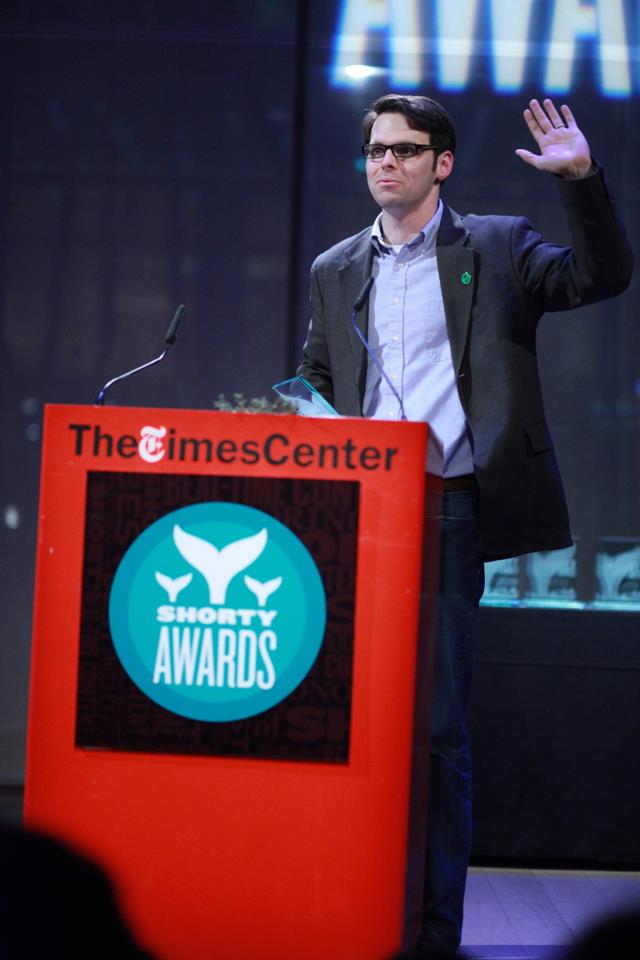
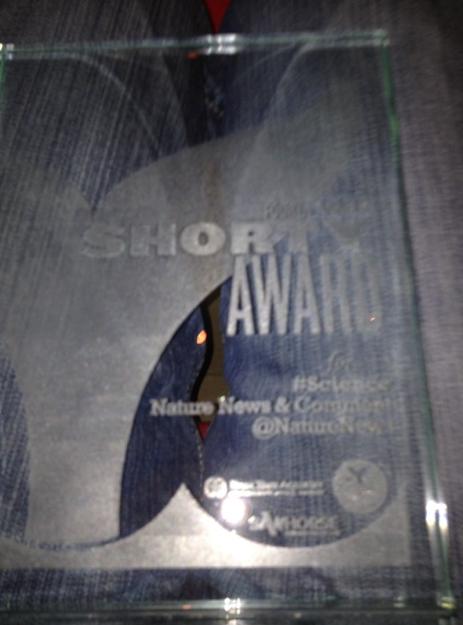
Finally, a big congratulations to the Nature News team who won a Shorty Award this week in the science category! Brendan Maher, News Feature Editor, accepted the award on behalf of the group. You can see the award in all its glory in the (slightly blurry) photos below:


The AACR Meeting

Nature will be at the American Association for Cancer Research (AACR) Annual Meeting in Chicago this weekend.

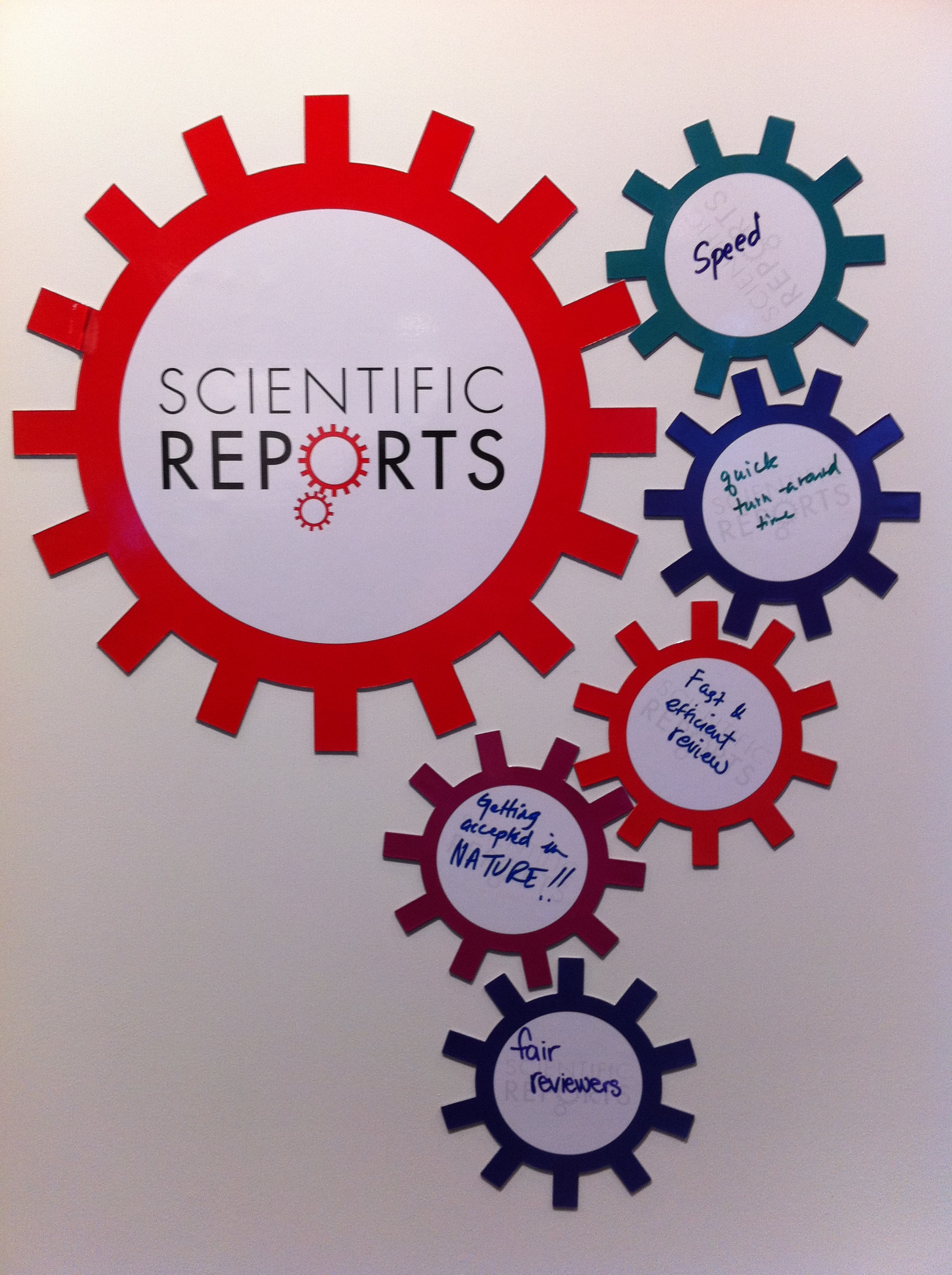
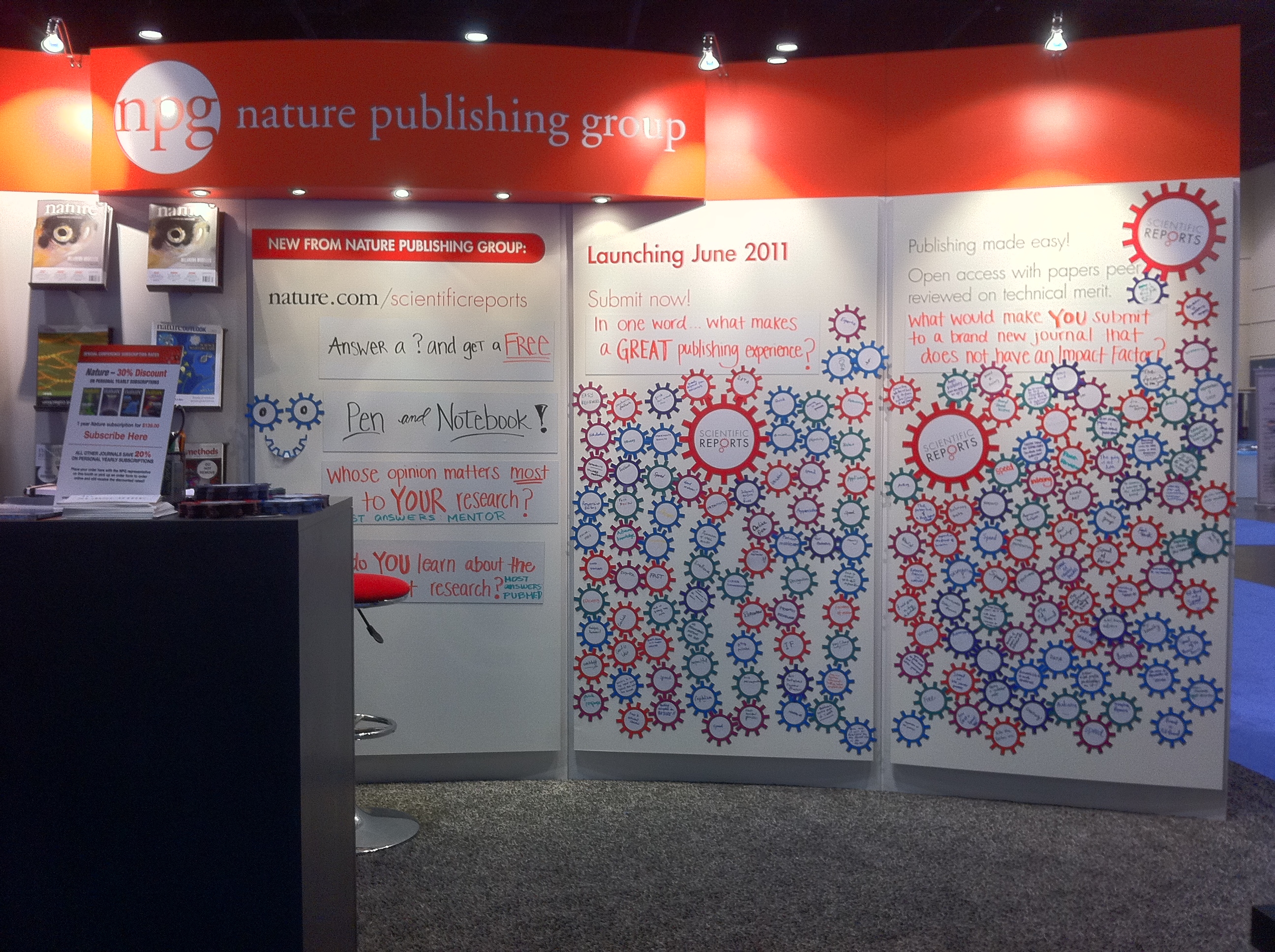
Come visit us at booth #3504, and come play our famousScientific Reports cog wheel game for special prizes. And don’t forget to ask about the exclusive discount 60% discount for AACR attendees! #NATUREatAACR. Do let us know what you think about the conference and any opinions you have.