String theorists regale in new accolades

It was Ashoke Sen last year bringing glory to physics and string theory when he was awarded the maiden three million US dollar Fundamental Physics Prize  (FPP) instituted by Russian billionaire entrepreneur Yuri Borisovich Milner. Sen was picked up by Milner’s not-for-profit foundation for ‘uncovering striking evidence of strong-weak duality in certain supersymmetric string theories and gauge theories’, opening the path to the realization that all string theories are different limits of the same underlying theory.

Shiraz

Shiraz Minwalla

This year India and string theory have been recognised again in the Milner awards with the young physicist Shiraz Naval Minwalla from the Tata Institute of Fundamental Research bagging the FPP’s $ 100, 000 New Horizons in Physics Prize for his pioneering contribution to the study of string theory and quantum field theory. Minwalla gets the award in particular for his work on the connection between the equations of fluid dynamics and Albert Einstein’s equations of general relativity. Earlier this year, Minwalla was conferred the Nishina Asia Award (worth Japanese Yen 400,000) for “his seminal work which uncovered the deep relation between the equations of fluid dynamics and Einstein’s equations of General Relativity.” He also got the Rs 55 lakh Infosys Foundation Prize in the physical science category this week. (Last year, the Infosys Foundation Prize was valued at Rs 50 lakh.)

[The other scientists who got the Infosys Prize this year are V Ramgopal Rao in the Engineering and Computer Science category, Ayesha Kidwai and Nayanjoti Lahiri in Humanities, Rajesh S Gokhale in Life Sciences, Rahul Pandharipande in Mathematics and Aninhalli R Vasavi in Social Sciences.]

These high value awards have certainly turned the spotlight back on science in the last couple of years.

So does this signal a new-found love for string theory, which has been dismissed by critics as a theoretical cul-de-sac that has wasted the academic lives of hundreds of the world’s cleverest men and women? Do these awards mean the critics must stop considering string theory — which seeks to outline the entire structure of the universe in a few brief equations — as an intellectual dead end?

String theorists are clearly regaling in the accolades. Ashoke Sen, called “India’s million dollar scientist” by the media, sounds pretty optimistic. “The recognition for the great work that Minwalla has been doing is also a great achievement for the Indian string community as a whole and is a reflection of the high quality research in string theory taking place in India,” Sen says. He feels these new awards would change the face of science in this country and encourage youngsters to think of research as a fulfilling career. “Prizes like these reflect recognition by the society that science is important,” he says.

To Minwalla, the Milner prizes appear so far to have had a special focus on string theory, “perhaps reflecting Mr. Milner’s personal appreciation of the subject”. “I think this is encouraging for younger string theorists: students in particular. Prizes to Indians are likely to particularly encourage young Indian string theorists,” he said in an e-mail chat.

The physical sciences have been India’s traditional stronghold. Though Indian research in the physical sciences is reasonable, it could be much, much better, Minwalla feels. “The real bottleneck here is that only a small fraction of the 1.2 billion people in our country get a chance to participate in research. This is partly due to poverty, but largely due to the low quality of primary and secondary schooling doled out to the majority of Indians,” according to him. He feels that the paucity of really good colleges compounds the problem. In order to unlock India’s potential in research (as well as many other things) “we need to radically improve our public schools. This, of course, is a big task. ” But one that is surely achievable if tackled with the urgency and priority it deserves.”

At the moment, the young string theorist is trying to understand the dynamics of “nonsupersymmetric Chern-Simons field theories coupled to fundamental and bi-fundamental matter in the large N limit”. The results of this “very specific, detailed and technical question” could feed into bigger qualitative questions which he says he would love to address. One such question is “Can one construct one example of a calcuable non-supersymmetric theory of gravity with a parametric separation of scales between the Planck constant and the cosmological constant?”

Sen hopes more such recognition will come India’s way in future. Here’s wishing our young physicists and string theory more strength.

How sociable are scientists in their job search?

By Anjie Cai, contributor

As a Chinese student, “being a scientist” has always been at the pinnacle of the professional pyramid. Pursing a scientific career is an indicator of one’s intelligence, ability and devotion. There is also the stereotype that scientists are shy, isolated and absorbed into their own world.  When it comes to the playground of job hunting, being unsociable doesn’t sound like a competitive trait. Therefore, I am very interested in knowing more about how sociable scientists are in their job hunt and how it affects where they get their career information from.

For the last two years, I’ve been running my own small scale investigation, by carrying out a survey at the Naturejobs Career Expo.  Things haven’t changed much over the two years – except for the fancier freebies (Naturejobs jelly beans, for starters). Science students are friendly and helpful as always, and 59 participants filled out my questionnaire.

Far from home

In terms of demographic, more than half of the students who responded were international. International students were particularly worried about promotion opportunity, salary, and work permits. They felt that friends, supervisors, and colleagues offer the most helpful advice in dealing with those concerns, whilst they felt that the information provided by careers services – although useful – is quite general and doesn’t necessarily apply to them. All in all, it is clear that international students preferred to draw on their own networks for the most useful advice.

Help wanted

When asked to rate how important different sources were in their job search, participants chose web searches, supervisors and people they met at scientific events as the top three. More than half of the participants received career advice from people they met at scientific event, and from speakers.

The findings reflect the fact that most scientists love to discuss their own research and that they are willing to give advice to people who show the same interest and passion. Our participants felt that it was rewarding to have a chat with speakers and fellow attendants and that due to the technical nature of scientific subjects, career information from science community is more helpful than that from family members. They felt that being sociable and proactive gives scientists a head start in the competitive job market, and many science students were aware of the importance of good communication in their career.


sociable

{credit}Adby Creative/Naturejobs{/credit}

All that networking clearly pays off too – nearly half of respondents said they have been offered a job, placement or internship by a contact.

But despite this networking success, it seems many of the scientists we spoke to didn’t appreciate their own talents.  When asked about the “areas you are most concerned about in job your search,” networking skills was the top of the list. How to make contacts in the science community and how to make the most of science events were both areas the scientists wanted to improve upon.  And one third of participants wanted to improve their salary negotiation skills. It seems that scientists find communication a challenge, but are perhaps better at it than they think, or don’t realise that even finding opportunities through casual contacts falls under the banner of the dreaded ‘networking’.

How does this tally with your own experiences? What’s your most reliable source when it comes to looking for a job? And which parts of the job hunt are you most concerned about?

Ocean acidification could trigger economic devastation

Coral reefs, shellfish, and even top predators such as tuna could be devastated as human carbon-dioxide emissions continue to acidify the world’s oceans. These and other impacts of anthropogenic ocean acidification are laid out in a new expert assessment, released today.

Oceans act as a huge carbon sink, sucking up much of the CO2 released to the atmosphere. But taking up more carbon increases the acidity of the water, with wide-ranging effects on marine organisms.

The authors of the report, released today from the Third Symposium on the Ocean in a High-CO2 World, review the current science on the effects on marine organisms, and write that there is a “medium confidence” level that shellfish harvests will decline. There is also a medium confidence level that economic damage will result from impacts on coral reefs, with tourism, food and shoreline protection suffering. The size of this is unclear but one estimate is for $1 trillion in damage from coral loss alone.

Modelled global sea-surface pH.

Modelled global sea-surface pH.{credit}Ocean Acidification Summary for Policymakers 2013{/credit}

How larger species will fare as oceans acidify is less clear. The report gives only a “low confidence” rating to the idea that top predators and fin fish catches will be reduced. But any losses in this area could hit hard the 540 million people whose livelihoods depend on such fisheries.

Scientists also have a “very high confidence” that the ocean’s capacity to take up carbon decreases as waters acidify. So even larger cuts in human greenhouse gas emissions than currently envisaged may be needed to meet targets set to limit global warming as a result, the authors write.

The report is likely to be pored over by policymakers as it comes out ahead of the latest report from the IPCC’s working group II on the impacts of climate change, which is due next year. Although the new report was produced with a different methodology, it still represents one of the most comprehensive and up-to-date assessments of a major impact of CO2 emissions currently available.

Co-author Ulf Riebesell, an oceanographer at the GEOMAR Helmholtz Centre for Ocean Research in Kiel, says more work is urgently needed to understand animals’ and plants’ abilities to adapt to a more acidic ocean, and to move researching the impact on single species to how ecosystems as a whole will fare. There is also a need to clarify on how these changes will affect the services that the oceans provide to humans — from food to protection from storms.

The report authors also say that the acidity of the oceans could increase by 170% by the end of the century, corresponding to a drop in surface ocean pH by 0.32. This occurs under a pessimistic scenario of high human emissions. Since the industrial revolution, surface ocean pH has dropped from 8.2 to 8.1. As pH is a logarithmic scale, the increase in acidity since the industrial revolution could reach around 170% under this scenario.

Under lower-emissions scenarios, this decrease would be around 0.07. But current emissions show no sign of dropping to those necessary to achieve such a goal, cautions Riebesell.

“If you look at current trajectories we’re no way below the [high emissions scenario],” Riebesell says. “Of course we hope the human race is smart enough to learn at some point and turn the wheel round.”

The report was sponsored by the International Geosphere-Biosphere Programme, UNESCO’s Intergovernmental Oceanographic Commission, and the Scientific Committee on Oceanic Research.

Brain initiatives galore, smiles aplenty

Vivien Marx reports on the Society for Neuroscience meeting in San Diego and the big brain projects in the EU and US.
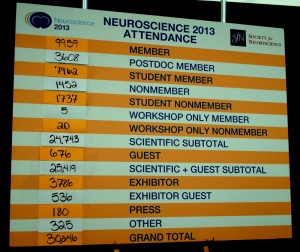
SfN attendance sign

The Society for Neuroscience annual meeting in San Diego clocked record attendance.{credit}Vivien Marx{/credit}

The brain is hot.

Despite dismay about the recent 16-day US government shutdown, the impact of automatic budget cuts–the sequester–taking effect in light of federal budget disagreements in Washington, and the general economic malaise, there is palpable excitement. New large-scale initiatives are getting underway around the world to develop technologies to empower neuroscientists.

This year’s Society for Neuroscience (SfN) meeting in San Diego that has just ended, clocked a record attendance of over 30,000 attendees, noted society president Larry Swanson to attendees with a broad smile in one of his conference announcements. “It is an inspirational time to be a neuroscientist,” he said, with the field drawing attention, for example, across the European Union and in the White House. In a town hall meeting for the Brain Research through Advancing Innovative Neurotechnologies (BRAIN) Initiative, there was no lack of critical comments and suggestions of aspects to include in BRAIN. But smiles stayed plentiful as funders explained their plans.

The fact that the US president chose neuroscience as his multi-year, signature project is something “we should all be pretty excited about,” says Tom Insel, director of the National Institutes of Mental Health. In addition to projects in the US, such as  (BRAIN) Initiative and the EU’s Human Brain Project, large neuroscience projects are just emerging in Australia, China, Japan and Israel. “This is beginning to feel like a global movement,” he says. And projects are unfurling in the private sector, too.

The new tools, says Story Landis, director of the National Institute of Neurological Disorders and Stroke, will help neuroscientists do their work “bigger, better, faster” and expand the research strides made in recent years.

Much remains to be done. Compared to what is known about the kidney or heart, very little is known about the brain, says Insel. Adding to the neurological diseases, he noted, are the “invisible wounds of war” such as traumatic brain injury and post-traumatic stress disorder. Tools to help diagnose these illnesses are urgently needed.

Nora Volkow, director of the National Institute of Drug Abuse says that the BRAIN initiative stands to “act like a catalyst” in ways not unlike the decoding of the human genome and its successive “avalanche of discovery.”

Besides attending SfN’s hundreds of sessions and 17,000 posters, scientists had the chance to get up close and personal with representatives from the funding agencies and to hear about and discuss the new opportunities. Here is a snapshot of some of the announcements.

European Union
As Daniel Pasini from the European Commission’s programme on future and emerging technologies explained, the 10-year European Human Brain Project has invited the scientific community to present “grand ideas” for a massive effort to computationally reconstruct the human brain using supercomputers.

The model will help to study brain-related diseases, which are a major health challenge, an economic and social burden, and to pool data and expertise more effectively and translate results for treatments.

The project, which took three years of planning, involves over 250 scientists across Europe in 135 research groups in 22 countries, including groups in the US and Asia. The program began officially in October and has a budget of $1.6 billion. Half of the money will come from the EU the other will come from national funding sources, Pasini says. The first phase is slated to last 30 months and is funded with $100 million.

Six platforms are to be developed including, for example, the neuroinformatic platform as a single point of access to all neuroscience and clinical data along with software tools. The other platforms involve brain simulation, high performance computing, medical informatics, neuromorphic projects and neurorobotics. The idea is to keep improving the model as new data become available. All tools and data are set to be made available to the global scientific community. The plan is to create the ‘CERN for brain research.’ Not unlike a telescope facility or a super-collider, scientists will be able to perform experiments and use this platform to help continue to expand the model.
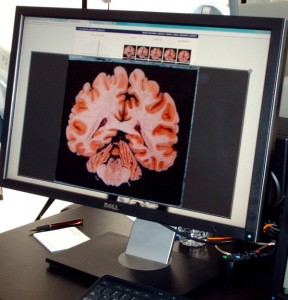
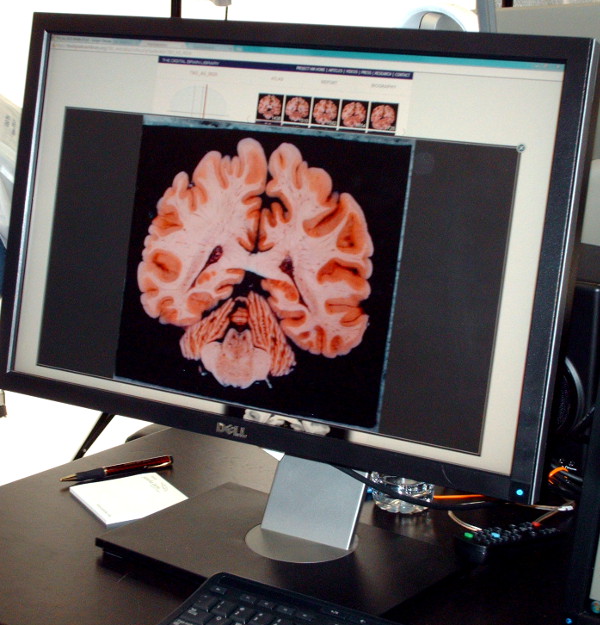
Deconstructing Henry

The Brain Observatory at UC San Diego is running ‘Deconstructing Henry’ an examination of the Brain of patient H.M.{credit}Vivien Marx{/credit}

US Defense Advanced Research Projects Agency (DARPA)
“Yes, we build guns and bombs, that is true,” says Colonel Geoffrey Ling of DARPA more generally. He is a neurologist who also served in Afghanistan and Iraq and currently deputy director of DARPA’s division responsible for defense sciences, which does not build bombs and guns. He and many other neuroscientists want to cure diseases ranging from Alzheimer’s to schizophrenia to post traumatic stress disorder to traumatic brain injury. DARPA is indeed “zeroed in” on the problems facing soldiers returning from the battlefield.

Speaking directly to fellow panelists from NIH, he says: “I wish they would double the budget yet again for you guys,” which was greeted by SfN attendees with vigorous applause.

Two DARPA solicitations for proposals are now open, offering “real money,” as Ling says, collecting projects that relate to memory dysfunction and psychiatric disorders. More solicitations are “in the works,” he says. “It’s not for us to decide what you’re going to build,” he says, highlighting the importance of imagination and taking a diversity of approaches.

The funding model at DARPA is shaped by use cases to assure that what is developed serves his constituency, the servicemen and women.

Multidisciplinary research, for example, is not achieved with the collaboration of a cellular neuroscientist, a neurophysiologist, and a neurologist. Rather, for DARPA interdisciplinary efforts can be a team comprised of a mathematician, a physicist and “a crazy guy in his backyard putting together some Rube Goldberg thing,” says Ling.

Unlike NIH, DARPA issues no grants but rather contracts, which are “deliverables-driven,” and may seem more rigid that NIH. But he sees strength in the synergy of the different funding approaches by NSF, NIH and DARPA. DARPA is committed to this project over the next decade, says Ling.

Data-sharing provisions are built into each contract, which DARPA takes “extremely seriously,” and breach of contracts are pursued. The DARPA solicitations issued are just the beginning, he says.

Systems based Neurotechnology for Emerging Therapies (SUBNETS)
Deadline: Dec. 17, 2013
This project seeks proposals to develop devices, perform model organism based research, or enable modeling of human neural systems, which are geared to help treat patients with neuropsychiatric and neurologic disease.

Restoring Active Memory (RAM)
Deadline: Jan. 6, 2014
This project seeks proposals in the area of analyzing and decoding neuronal signals which can be used to help patients recover memory function after injury.
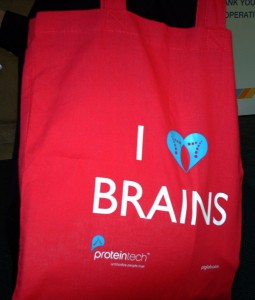
SfN attendee bag

Companies in the neuroscience field may benefit from funding in the emerging large-scale projects. Here a scientst at SfN wears one company’s advertisement.{credit}Vivien Marx{/credit}

National Institutes of Health (NIH)
No grants have yet been awarded through the Brain Research through Advancing Innovative Neurotechnologies (BRAIN) Initiative. But grants are in the pipeline. True, says Insel, some see the project as a perhaps $40 billion dollar challenge, but he views the funding in 2014 as an “initial investment.”

The first report of the BRAIN initiative’s working group, says Landis, offers a guide for how the project could begin to move forward in its first year. The working group, is the advisory committee to the NIH director is chaired by Rockefeller University’s Cornelia Bargmann and Stanford University’s Bill Newsome. Landis says excitement is high in the Obama administration and across NIH. The hope is that this enthusiasm would be reflected in the budget allocations.

The NIH first year funding is “a down payment,” she says.

Insel says that the NIH’s $40 million to be allocated in 2014 is drawn from the following sources:

  • $10 million are coming from the NIH Director’s discretionary fund
  • $10 million are from the NIH Blueprint Neuroscience a program to enhance collaboration across NIH institutes
  • $20 million are split among four NIH agencies: National Institute of Neurological Disorders and Stroke (NINDS), National Institutes of Mental Health (NIMH), National Institute of Biomedical Imaging and Bioengineering (NIBIB), National Institute of Drug Abuse (NIDA)

These monies were previously slated for initiatives of the individual institutes’ choice. As Landis explains, these four agencies agreed that the BRAIN Initiative was the one they selected for fund allocation. She says she and her colleagues are “optimistic” that the excitement, opportunities and promise of the BRAIN initiative will power the budgets of the future. Throughout sessions at SfN, she, Insel and others were quick to squelch fears that BRAIN would draw funding away from investigator-driven grants.

The first NIH Requests for Applications (RFAs) are currently begin hashed out with cross-communication happening across NIH, NSF and DARPA, says Insel.

All BRAIN Initiative projects will be peer-reviewed and perhaps unlike the more classic grants, they will have milestones and there will be expectations of data-sharing. “That’s going to be baked into everything we do in this project,” says Insel. Evaluations will accompany the projects after they are funded.

A number of awards are likely to be cooperative agreements, which are part way between a contract with deliverables and R01s, says Landis. These agreements are accompanied by milestones. If researchers do not share data and that provision is in their notice of grant award “there can be consequences,” she says.

Update: In mid-December NIH announced six funding opportunities. Approximately $44 million will finance six new funding opportunities.

Sunset at SfN

Two of the 30,000 attending scientists take a break outside the SfN conference halls.{credit}Vivien Marx{/credit}

National Science Foundation (NSF)
Cora Marrett, the acting director of the NSF says her agency will “very energetically” support the BRAIN Initiative. She says that funders need to take “the long view” to let the forces of scientific discovery play out with a long-term commitment. “I’m feeling very optimistic, too, about what the long-run prospects for additional resources will look like.”

Evidence of NSF’s engagement with neuroscience in general can be seen in the recent $25 million grant to fund the Center for Brains, Mind and Machines at the Massachusetts Institute of Technology. The intent is to blend computer science, math, robotics, neuroscience and cognitive science.

The BRAIN Initiative will require intense collaboration across disciplines and scales, she says. Neuroscience has been more devoted to small science, she says, the work of individual principal investigators and small lab groups. Marrett agrees with Alan Leshner, the executive publisher of Science, that neuroscience’s strides will benefit from a change in the culture toward larger-scale, interdisciplinary efforts.

At the same time, this shift will occur without prescriptions that all work needs to be on “the huge scale” of a particle accelerator, for example. Indeed neuroscientists will need to integrate findings across the scales of their research and link physiology, biophysical and genetic data with cognitive and behavioral findings (see Leshner Editorial in Science).

The projects will require data management plans of the grantees, she says, to explain how they will handle data-sharing, which is to the benefit of the entire enterprise.

Cholesterol guidelines back away from high-dose statin regimens

Long-awaited revisions to cholesterol clinical guidelines have dialed back previous recommendations to use cholesterol-lowering drugs to force ‘bad’ cholesterol below predetermined targets.

The guidelines, issued 12 November by the American College of Cardiology and the American Heart Association, aim to reduce the risk of cardiovascular disease, and come with a range of familiar recommendations including regular exercise and a low-salt diet.

But cardiologists — and pharmaceutical companies — have been eager to see how the guidelines would address the use of blockbuster drugs called statins to hit cholesterol targets. Although it is generally recognized that lower is better when it comes to LDL (bad) cholesterol, doctors and researchers have disagreed over the measures taken to get there.  The push to meet LDL targets has led some doctors to prescribe high doses of statins, sometimes combining multiple cholesterol drugs. Although that may lower LDL levels, it also boosts the risk of side effects from the medications. And critics of the approach have argued that there is not enough evidence showing that higher doses of cholesterol-lowering drugs reduce the risk of heart attacks and cardiovascular disease.

The guidelines released yesterday share this concern, noting that an expert panel was unable to find sufficient support for boosting statin doses to hit the targets laid out in previous guidance. Although high-intensity statins are still recommended for some high-risk patients, others are advised to stop at moderate doses.

The long-delayed revision was first undertaken by the US National Heart Lung and Blood Institute in 2008, but in June this year the institute decided to hand the reins for clinical guidelines to external partners.

WMO: 2013 among the ten warmest years on record

The year 2013 is on course to becoming the seventh-warmest year since climate records began in 1850. The average surface temperature during January to September has been 0.48 °C above the 1961–1990 average, according to the World Meteorological Organization’s provisional State of the Climate report, released today.

The first nine months of 2013 were slightly warmer than the same period in both 2011 and 2012, according to the WMO. If no major outliers occur in what remains of the year, the global surface temperature in 2013 will have been close to the average during 2001–2010, the warmest decade on record.

In the Northern Hemisphere, weather patterns were influenced this year by a negative phase of the so-called Arctic Oscillation, a pressure system which tends to bring cold air to lower latitudes. This has caused the relatively cool spring temperatures in Europe and some parts of North America and Asia, says the WMO. Australia, on the other hand, experienced the hottest summer on record.

Despite the slow-down in the rise of the average global temperature in recent years, nothing suggests that global warming might not continue, the WMO warns. The atmospheric concentration of heat-trapping greenhouse gases, which in 2012 reached a record high carbon dioxide equivalent of 476 parts per million, is expected to reach a new record high in 2013 and will likely climb further in the forthcoming years, says the report.

The global sea level, which currently rises by around 3 millimetres per year, has also reached a new record high.

In late May and early June, extreme rainfall in central Europe led to major floods along the Danube and Elbe Rivers. Owing to unusually early and heavy monsoon rains, bad flooding also occurred near the India-Nepal border. This year’s monsoon season was relatively friendly to large parts of Africa including the Sahel zone. However, Angola and Namibia suffered their worst droughts in 30 years.

In terms of numbers of storms, the 2013 hurricane and typhoon season was so far only slightly above the 1981–2010 average. Whether climate change has added to the severity of storms, notably to the unprecedented destructiveness of Typhoon Haiyan in the Philippines, is still up for debate.

Leeches’ blood meals could give more clues on saola, world’s rarest mammal

saola_cameratrap1_2013

The saola seen on the right in this camera-trap picture was the first one seen in 15 years.
{credit}WWF{/credit}

The saola, a species so rare it has been called the Asian unicorn, has been photographed for the first time in 15 years.

A camera trap set up by World Wildlife Fund (WWF) in Vietnam captured images of the antelope-like animal in September, according to an announcement today from the conservation group. Saola are critically endangered and probably number in the low hundreds.

The animals are only known to live in the Annamite Mountains on the border between Vietnam and Laos. In 2011 Vietnam established a small saola reserve, but conservation is hindered by the paucity of data on their habitat.

Conservationists had become so desperate to pin down the animal’s habitat that they began surveying DNA from leech blood meals in hopes of finding saola sequences (see “A bloody boon for conservation”).

Nicholas Wilkinson, a Vietnam-based wildlife ecologist at the University of Cambridge, UK, who is leading those efforts, tells Nature that his team is waiting to hear back from lab testing of a very large number of leeches. The researchers also plan to collect large numbers of leeches from the area where the camera trap was located. “I have high hopes we’ll get encouraging results and 2014 will be the year of a proper leech-based survey for the species,” Wilkinson says.

Swedish scientists decry government links to anti-GMO ‘vandals’

Posted on behalf of Marta Paterlini.

A group of Swedish scientists challenged their government in an open letter on 22 October in which they alleged that Swedish foreign aid has supported vandalism in the Philippines against research plots of genetically modified crops.

Last August, a group of Philippine anti-GMO activists attacked and destroyed a field trial of so-called ‘golden rice’ in the Bicol region. The trial was being conducted by the government’s Philippine Rice Research Institute, the International Rice Research Institute (IRRI), and other public-sector partners. IRRI, whose general director, Robert Zeigler, also signed the open letter, is supported by Sweden through foreign aid to the Consultative Group on International Agricultural Research, CGIAR.

Among the protesters, Philippine authorities identified members of MASIPAG, an organisation that expressed support for the attack on its webpage.

MASIPAG is one of the bodies funded by the Swedish International Development Cooperation Agency, an agency of the Swedish Ministry for Foreign Affairs, through funds to the Swedish Society for Nature Conservation (Naturskyddsföreningen SSNC).

In the open letter, the writers voice concerns that Swedish aid funds are used “to sabotage research that aims at mitigating human suffering”.

A week later the minister for development cooperation, Hillevi Engström, wrote a reply which said, in part: “Foreign aid intended for agricultural development should obviously never be used to finance criminal activities,” and “SIDA has a clear mandate to conduct effective aid and combat fraud in its handling of aid efforts.”

Charlotte Petri-Gornitzka, SIDA’s
 general director, said in a statement, “It may seem strange that Swedish aid goes to IRRI’s work to develop GM crops and simultaneously supports organisations such as MASIPAG to develop alternatives to these GM crops — and even campaigning against them.” She added that Swedish aid funds may not be used in illegal actions, and that SIDA might reconsider the support to organisations that are involved in illegal actions. SIDA has appointed SSNC to investigate if and how MASIPAG has given support to individual farmers in connection with vandalism acts.

In an email to Nature, SSNC president Mikael Karlsson claimed that there is no evidence supporting the accusation in the scientists’ letter that MASIPAG was involved in the uprooting, or that SIDA’s money financed that event.

Jens Sundström, a plant biologist at the Swedish University of Agricultural Sciences in Uppsala and one of the authors of the letter, told Nature that he finds Karlsson’s statement surprising, because the open letter provided links to official documents that alleged that unnamed MASIPAG members took part in the acts.

Sundström also says he’s troubled that the Swedish government seems to have accepted what he calls a “false dichotomy” between traditional and modern farming. “Both activities must be founded in science to be successful, and would both benefit if we just could co-operate.”

Desert farming pilot yields positive results

Sahara Forest Project

{credit}Sahara Forest Project{/credit}

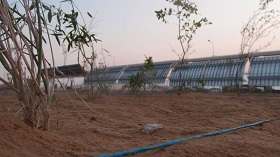
After two and a half years of research and testing, the Sahara Forest Project pilot in Qatar has started to yield results, and initial findings are showing good results for arid land agriculture.

The pilot project, built on one hectare of land, produced 75 kg/m2 in three crops annually, which is competitive with those obtained in commercial farms in Europe. The project, however, uses seawater instead of freshwater. The greenhouse, where the plants are grown, uses seawater and blowing winds to create a cooling effect which allows the plants to grow even under the scorching summer heats of Qatar, explains a news story in Science. Pipes with cold seawater passing in them causes some air moisture to condense, which is the source of freshwater plants use.

The cold moisture coming out of the greenhouse also allowed plants to grow outside the greenhouse, and the operators were able to use “evaporative hedges” which brought temperature down by a further 10°C, which allowed desert plants to grow quicker than normal and throughout the whole year. The final component of the pilot is a concentrated solar power plant which provides energy to run the project and any surplus is used in desalination of saltwater for extra freshwater. The salt end product was collected in large pools, and researchers are trying to grow salt-tolerant algae that can be used as animal fodder or grown for bioenergy production in the pools formed.

“The remarkable results demonstrated on the ground reveal the potential for enabling restorative growth and value creation in arid land,” Joakim Hauge, CEO of the Sahara Forest Project, told reporters. According to Hauge, scaling the project to 60 hectares can cover all of Qatar’s current  imports of  cucumbers, tomatoes, peppers, and egglants. The question is, however, is this commercially feasible? The reports don’t explain how much producing these food crops would cost.

The Sahara Forest Project will launch a new, 20 hectares pilot near Aqaba in Jordan to test the commercial feasibility of the project.

Australia’s scientists brace for major job losses

Posted on behalf of Stephen Pincock.

Scientists at the Commonwealth Scientific and Industrial Research Organisation, Australia’s national science agency, are concerned by a management announcement that may see hundreds of contract and casual employees let go in coming months.

At the end of October, chief executive Megan Clark told staff that CSIRO was implementing a temporary suspension of external recruitment and the renewal of contracts except in “exceptional circumstances”.

CSIRO’s headcount currently stands at 6,299, after a round of redundancies announced earlier this year. Some media outlets have claimed that as many as 1,400 additional jobs may be at risk from the new policy.

But interpreting the impact of CSIRO’s latest announcement is difficult because an end date for the freeze has not been made public. The size of the job losses will depend partly on how long the hiatus remains in place.

There are currently 933 fixed-term employees and 430 casual staff at CSIRO. Among those, 315 fixed-term contracts and 262 casual contracts will expire before June 2014, according to figures supplied to Nature by a spokesman.

Another source of confusion has been the timing of the CSIRO announcement. It came as Prime Minister Tony Abbott was making good on a pre-election promise to dramatically reduce the public-sector payroll.

Earlier this month the Public Service Commission, a workplace authority, had issued orders to agency heads not to renew any temporary contracts or casual positions and to begin sacking “non-ongoing” workers.

But the CSIRO spokesman says the agency decided to make the cuts of its own accord. “It wasn’t a decision of the Federal Government. We certainly took some of our cues from what they were doing with the APS [Australian Public Service] but because we’re a statutory authority, we could make our own decisions,” he says.

At first, staff thought the CSIRO was acting on orders from the government, says Sam Popovski, Secretary of the CSIRO staff union. Realising it was an independent decision left many baffled.

“Initially … staff were upset, but understood the context. They’re more bewildered now. The leadership of the organisation haven’t really made clear what the premise of the decision was.”

Clark said in her statement that the decision would not compromise commitments to industry or other stakeholders.

But Popovski says roughly three-quarters of those employed in fixed-term positions were directly involved in research. “I just can’t see how it [the cuts] can’t have an effect on research.”