Alice’s Analysis: Cells to Civilisations by Enrico Coen

Over the coming months, Nature’s Head of Press, Alice Henchley, will be reading and reviewing the books shortlisted for the 2013 Royal Society Winton Prize for Science Books, at a rate of one every week.  The winner will be announced at a public event at the Royal Society on the 25th November 2013 during which shortlisted authors will discuss their books with host Dara O Briain.  Prior to the announcement,  we’re running a competition on Of Schemes and Memes to win a set of the shortlisted books – all you have to do is predict the winning book and enter our prize draw.

Cells Book jacketIt’s a pretty lofty ambition to explain how life goes from the simplest form to the most complex of societies, yet Coen works hard in Cells to Civilisations to get to the heart of the subject.  He kicks off by expounding on the principles that he believes can explain the complexity of life: population variation, persistence, reinforcement, competition, cooperation, combinatorial richness and recurrence. Unfortunately, it is here, I regret, that it becomes apparent that this is not my idea of a popular science book. The language is more like that of an undergraduate text and the analogies, which perpetuate throughout the book, seem often to be only tenuously linked to the theories that Coen is trying to describe.

However, as the book continues, I do find some chapters of real interest, and bearing somewhat closer resemblance to the other books on the Royal Society Winton Prize shortlist.  Chapter Six, for example, piques my interest as Coen describes how organisms deal with change.  This is a fascinating area and Coen chooses some great examples, including the extraordinary Mimosa pudica plant, whose leaves fold quickly together when you touch them, and the sea slug, a beast with particularly large and well-studied neurons that so fascinated Darwin.  Chapter Nine also attracts me, as it looks at the way we perceive and understand our world and uses the interesting example of an averaged portrait, made up of 179 portraits, including those by Rembrandt and Modigliani, to do this.  Unfortunately, these chapters, which explain the basics of neuroscience, do, to some extent, fall back to the kind of textbook prose that I was less enamoured with.


Continue reading

India’s Mars probe struggles to leave Earth orbit

Posted on behalf of Sanjay Kumar.

[Update 12 November: The Indian Space Research Organization has announced that it successfully completed the orbit-raising maneuver of the Mangalyaan probe in the early morning today. The apogee height was raised to 118,642 kilometres, well above the 100,000 km required in the mission’s original plans.]

India’s first Mars mission, a probe named Mangalyaan that lifted off on 5 November, hit its first rough pocket early today, before even leaving Earth orbit.

Five days after launch, the satellite failed to raise its orbit to reach its planned farthest point (apogee) of 100,000 kilometres from Earth. Rather, it only raised it to less than 79,000 km. As a consequence, it is behind schedule with increasing its velocity so that it can later catapult to Mars, says the Indian Space Research Organization (ISRO).

The ISRO had planned a circuitous route so that the probe could be launched using a less powerful but well-tested rocket, the Polar Satellite Launch Vehicle, instead of a more powerful one. This meant first sending the satellite to revolve around the Earth in an elliptical orbit, gradually increasing its orbit length as well as its velocity by firing its liquid-fuel engine. The goal of that flight plan was to use Earth’s gravitational field as a slingshot to get the probe on its 780-million-km journey to the red planet.

ISRO has been under attack from its critics, including its former chief, G. Madhavan Nair, for being in a hurry to launch the satellite rather than wait until it could perfect the more powerful Geo Synchronous Launch Vehicle, which has seen repeated failures since 2001. Nair has dubbed the Mars mission a publicity stunt.

The probe performed three orbit-raising maneuvers successfully on 7, 8 and 9 November, ISRO said in a jargon-laden press release. But during the fourth orbit-raising operation early today, the engine underperformed.  “When both primary and redundant coils were energized together, as one of the planned modes, the flow to the liquid engine stopped,” said the ISRO statement.

Mission control, however, has not lost hope. ISRO anticipates that with further orbit-raising maneuvers, the spacecraft will be put on its trajectory to Mars on 1 December.

ISRO’s spokesman Deviprasad Karnik says ISRO has two other options available for getting the engine to perform properly, and will conduct the maneuver again tomorrow.

On the road at #SfN13 – Tackling the terabyte: how should research adapt to the era of big data?

If you’re attending the Society for Neuroscience meeting this year (#SfN13), join us for our panel discussion: ‘Tackling the terabyte: how should research adapt to the era of big data?

When: Monday, November 11, 6:30 – 8:30 p.m.

Where: Hilton San Diego Bayfront, 1 Park Blvd, San Diego, CA 92101  

Room: Sapphire 400

Continue reading

On the road at #SfN13 – Tackling the terabyte: how should research adapt to the era of big data?

If you’re attending the Society for Neuroscience meeting this year (#SfN13), join us for our panel discussion: ‘Tackling the terabyte: how should research adapt to the era of big data?

When: Monday, November 11, 6:30 – 8:30 p.m.

Where: Hilton San Diego Bayfront, 1 Park Blvd, San Diego, CA 92101  

Room: Sapphire 400

Continue reading

Tomb of ancient Egypt chief physician unearthed in Giza

The massive tomb carries the mark of elevated status.

The massive tomb carries the mark of elevated status.{credit}Arab Republic of Egypt Ministry of State for Antiquities Affairs{/credit}

The tomb of a top ancient Egyptian physician, who treated royals, was discovered in the Abusir necropolis, a site of excavations just 25 kilometres south of Cairo. A Czech archaeological mission unearthed the limestone tomb last week, confirming through press interviews and on its Facebook page that the tomb does indeed belong to the head of the physicians of the north and south of Egypt some 4,400 years ago.

Shepseskaf-Ankh, which translates to “Shepseskaf is living,” was associated with royalty, including a ruler of Egypt named Niuserre. The same site, which shelters the remains of 14 pyramids, served as the resting place of two other physicians from the fifth dynasty, as well as Old Kingdom rulers and a number of high temple priests close to the kings.

The architecture of the tomb, and its size, stretching across 21 by 14 meters and rising up 4 meters in height as well as housing an open court and eight burial chambers, gives away the high and noble status of the chief physician—who is believed to come from an elite Egyptian family, according to Ali Al-Asfar, deputy head of the ancient Egyptian section of the Ministry of State of Antiquities.

In one section of the tomb, a false door carries some of the ancient doctor’s prestigious titles, including Priest of Ra—the sun god—and Priest of Magic.

Miroslav Bárta, director of the archaeological team from the Czech Institute of Egyptology, told the National Geographic that he is pleased with the historical details contained in the tomb. “This microcosmos illustrates general trends that ruled the society of the day,” he said. “This is exactly the moment when the empire starts to break down due to rising expenses and increasing independence of powerful families.”

Open-access genome project lands in UK

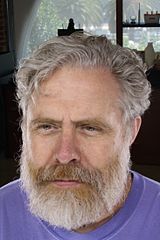
George Church

George Church{credit}Wikimedia Commons{/credit}

In 2008, a group of prominent scientists and entrepreneurs announced, after careful consideration, that they would make their genome sequences public, marking the launch of the Personal Genome Project (PGP). The “open source” genomics effort sought to make the genomes and medical histories of 100,000 people available for anyone to use. It was started by George Church, a genomicist at Harvard Medical School in Boston who was among the first 10 participants, or the “PGP-10.”

Now Church is taking his open-access genome model global. At a predictably packed press conference on 6 November, he announced the launch of a UK edition, and that a European franchise is on the way for 2014. A Canadian PGP started enrolling volunteers in December 2012.

The UK-PGP is aiming for another 100,000 participants. Stephan Beck, a genomicist at University College London leading the effort, says he is one of the 400 already on the waiting list. They plan to sequence 50 genomes in the first year.

In the five years since it started, the US edition has released 200 genomes and more limited genetic data on another 500, with a waiting list in the thousands. But Church expects growth to be exponential, once sequencing costs fall sufficiently.

In contrast to the United States, England has a publicly funded health care system in the National Health Service (NHS), with near-universal enrollment. This raises some interesting questions for the UK-PGP.

Like their American counterparts, UK participants will be asked to input their own medical histories to go along with their genome sequences. The questionnaire is exhaustive and it can take several hours to complete. But a patient’s NHS record — including the results of lab tests — would be even more helpful than patients’ self-reported information for scientists looking to correlate genetics and health. Beck says he hopes that NHS gives patients the option to upload their NHS records to PGP, but that is not yet possible.

Meanwhile, NHS England has its own genome sequencing effort, which is being led by a company called Genomics England with plans to sequence 100,000 genomes over the next 5 years. Beck says he has talked with officials there about collaborating. For instance, Genomics England could use a PGP data as a quality control, for a participant enrolled in both programmes. But Beck would like the relationship to extend even further. “We are very interested to work together with Genomics England to develop a procedure so those individuals willing to donate their genome can, so it becomes a PGP genome, and all associated data becomes open to everyone,” he says.

Genomics England, however, is eager to draw a distinction between it and PGP. “There are significant differences between PGP and our programme, notably that we are focusing on NHS patients with diagnosed diseases. We therefore have a different approach to privacy and data access and take this very seriously, because we have a duty of care to NHS patients,” executive chairman John Chisholm said in a press statement. A spokesman for Genomics England, Mark Palin, also questions whether patients would be able to release their NHS data through PGP. “I don’t know how it would work,” he says.

Nature has covered the US version of the PGP extensively (see: “Give me my genome”, “Nature readers flirt with personal genomics” , “Be prepared for the big genome leak”); and most recently, an op-ed in the magazine by Church advocated for more people to inspect their own genomes (see: “Improving genome understanding”).

GM labeling initiative likely defeated in Washington state

Photo by MillionsAgainstMonsanto via Flickr.

Photo by MillionsAgainstMonsanto via Flickr.

Preliminary tallies suggest Washington state voters have struck down a ballot initiative to require labeling of genetically modified (GM) foods.

The vote, held 5 November, was the latest skirmish in the ongoing controversy over GM food labeling. Many other states have similar measures in the works: the Center for Food Safety, a nonprofit consumer advocacy group based in Washington DC that supports labeling, lists over 20 proposed state initiatives — most wending their way through state legislatures — to either label or limit GM foods. California voters rejected a similar proposal last year.

Though the Washington state measure, called I-522, inspired some creative campaign commercials, early vote counts indicate a likely defeat, 45% in favor to 55% opposed. Those counts are incomplete, and the state will continue to accept and tally mailed-in votes postmarked by 5 November. The ‘Yes on 522’ campaign maintains that the results are too close to call; opponents of the initiative have deemed I-522 “soundly rejected“.


UK backs away from ‘value-based pricing’ for drugs

The UK government seems to have rowed back on plans for a radical new pricing system for medicines that would have used independent assessments of their worth to limit costs. But some elements of the pharmaceutical industry are still warning that a new agreement on how much the country pays for drugs will drive research overseas.

Previously the government had said it would seek a ‘value-based pricing’ for medicines. However, in a deal with the pharmaceutical industry announced today, companies will still be allowed to set prices for new products, and as part of the deal the total amount the UK spends on drugs will be controlled.

Deepak Khanna, the president of the Association of the British Pharmaceutical Industry, says he hopes the deal will increase take up of innovative new medicines in the UK’s National Health Service.

But, “if we don’t see an improvement in the adoption and availability of that innovation, we will see an impact on the UK being a strategic market,” says Khanna — and that could mean research investment heading overseas.

Steve Bates, the head of the BioIndustry Organisation, which represents UK bioscience companies, was more blunt. In a statement, he said he feared that the agreement “will have a negative impact on industry investment here”.

The deal is part of a new ‘Pharmaceutical Price Regulation Scheme’, which is agreed every five years by the Department of Health and the Association of the British Pharmaceutical Industry (ABPI). As part of the new scheme – which starts in 2014 – the industry has agreed to keep the current £12 billion spending on branded medicines in the UK’s National Health Service (NHS) flat for two years. Increases will be limited to less than 2% in the following three years. If the NHS drug bill does go higher than these agreed amounts, the industry will pay back the difference.

The UK is an important market for the drug industry, as many other countries take their lead from its prices and uptake, and it is an important base for medical research. But the pharmaceutical industry has sometimes seen it as an unfriendly environment because the NHS generally will not pay for products that do not represent value for money — based on reports from the National Institute for Health and Care Excellence (NICE).

A value-based pricing scheme would have seen the NHS dictating prices to companies — as opposed to deciding whether or not to take the companies’ offers. The change had concerned some in the industry, which has already been under serious pressure to cut the cost of medicines in the face of the European financial crisis.

Today’s announcement appears to remove the most radical part of the UK’s value-based pricing plans. The Department of Health has not yet responded to a request for comment.

Five physicists make the shortlist for $3-million award

Five theoretical physicists are in the running for the field’s most lucrative prize.

The winners of the 2014 Physics Frontiers Prize, who become nominees for the $3 million 2014 Fundamental Physics Prize, were announced on 5 November.

Michael B. Green of the University of Cambridge, John H. Schwarz of the California Institute of Technology, Andrew Strominger and Cumrun Vafa, both of Harvard University, and Joseph Polchinski, from the Kavli Institute for Theoretical Physics at the University of California, Santa Barbara were nominated.

If they fail to pick up the big prize, each will receive an award of $300,000 and automatically be re-nominated for the next five years.

Launched last year by Russian billionaire entrepreneur and former physicist Yuri Milner through the Fundamental Physics Prize Foundation, the awards are designed to provide recipients with more freedom and opportunity to pursue future accomplishments.

The foundation has already made millionaires of 11 physicists (plus handing a hefty cheque to seven CERN physicists who split a twelfth prize), and it has begun to do the same in biology.

But the prize is not without its critics who question whether their efforts to create “science superheroes” are the best way to drive the field.

Continue reading