Investigating open access, citation and usage: what’s the advantage?

Ellen Collins

Guest post from Ellen Collins, Research Information Network.

The Research Information Network is a small independent policy consultancy working on scholarly communications. We’ve existed since 2005 in various guises, working with librarians, publishers, research funders and academics themselves to understand how researchers want to find, use and share information.

Our aim has always been to create an evidence base that will help others to make informed decisions about the best way to support researchers. We’ve worked with a number of methodologies and techniques over the years to do this, qualitative and quantitative.

When Nature Publishing Group approached us earlier this year to undertake a brief and independent statistical analysis of usage and citation data for Nature Communications, we were happy to do it. They wanted a report that they could use to kick off a bigger conversation about what the data might tell us about open access and what this means for article use and citation.

The data about the 2,878 articles published in Nature Communications was easily machine-harvestable, and therefore fairly basic.  For every article published between the journal’s launch in April 2010 and the end of 2013 we were given its open access status (open or not), discipline, year and date of publication, Web of Knowledge citation data and, where available, Altmetric scores. For the articles published in the first half of 2013, we were also given the number of HTML views and PDF downloads, 90 and 180 days after publication.

Continue reading

I owe my business to my frustration as a Scientist – Frontiers Co-Founder Kamila Markram

Kamila Markram co-founded Frontiers in 2007 with a mission to improve academic publishing and the dissemination of articles.

Ahead of ESOF 2014, we talk to three leading figures in science, technology and academia who through frustrations of not having the effective tools necessary to do their work, decided to build their own.

In this three-part series in the run-up to Europe’s largest, general science meeting held every two years, this year in Copenhagen (June 21-26), we look at the increasing number of start-up companies that are “spinning out” of academic institutions worldwide.

Here, the co-founder and CEO of Frontiers, Kamila Markram talks about the growing numbers of academics starting companies as a result of frustrations and advances in open science.

Kamila’s Background:

Kamila Markram is a neuroscientist, autism researcher and co-founder and CEO of Frontiers, an open-access publisher and research network. Frontiers innovates in peer review, article-level metrics, post-publication review, research networking and a growing ecosystem of open-science tools. With over 20,000 articles published in 47 community-run journals across 29 STM fields and 50,000 researchers on its editorial boards, Frontiers is the fourth leading open-access publisher worldwide. In 2013, Frontiers joined the Nature Publishing Group family in a partnership to advance Open Science.

Continue reading

Scientific Data and the Summer of Data

"There is an increasing need to make research data more available, citable, discoverable, interpretable, reusable and reproducible."

“There is an increasing need to make research data more available, citable, discoverable, interpretable, reusable and reproducible.”

Guest blog post by Sam Burridge, Managing Director for Open Research at Nature Publishing Group.

It’s been a busy few weeks for the open access team at Nature Publishing Group. In China, we announced the launch of a new Microsystems & Nanoengineering journal with the Chinese Academy of Sciences. A study published in Scientific Reports on the potential for nanoparticles being used for invisible barcodes has caught the attention of the media. And last, but by no means least, we launched the first content for Scientific Data.

Scientific Data aims to address the increasing need to make research data more available, citable, discoverable, interpretable, reusable and reproducible. It is an online-only, peer-reviewed publication for descriptions of scientifically valuable datasets called Data Descriptors.

Data Descriptors are a new category of publication designed to provide detailed descriptions of experimental, observational, computational or curated data. They integrate a narrative component with structured, curated information to maximize interpretation, search and reuse of the underlying primary datasets, presenting information on the genesis of the datasets and the experimental steps used to derive them, and linking to the resulting data files.

Data Descriptors are designed to provide a ‘missing link’ between the original dataset and the article of record.

Continue reading

Digital lab notebook


brightcove.createExperiences();

“The conventional paper lab notebook is dead – or at least it’s on life support. With the advent of open electronic notebooks, data and methods are no longer cloistered in books or tucked away on private hard drives. But this gives the user some tradeoffs to consider. Read more about it on Nature Careers

Clarifying NPG’s views on moral rights and institutional open access mandates

We would like to clarify NPG’s support for open access, and our position of the moral rights of authors, following some concerns raised by Kevin Smith, Duke University’s Scholarly Communications Officer.

We take seriously our responsibility towards the integrity of the scientific record. The “moral rights” language included in our license to publish is there to ensure that the journal and its publisher are free to publish formal corrections or retractions of articles where the integrity of the scientific record may be compromised by the disagreement of authors. This is not our preferred approach to dealing with corrections and retractions, and we work with authors and institutions to try seek consensus first. The right against derogatory treatment is a key aspect of moral rights.

We always attribute articles to authors, we have clear contribution policies, see also our editorial on this issue.

We believe researchers should be credited for their work, and as a founding member of ORCID, we have implemented ORCID integration on nature.com to foster disambiguated accreditation.

NPG’s commitment to open access has been questioned, following our request that authors provide a formal waiver of Duke University’s open access policy. NPG is supportive of open access. We encourage self-archiving, and have done so since we implemented our policy in 2005:

“When a manuscript is accepted for publication in an NPG journal, authors are encouraged to submit the author’s version of the accepted paper (the unedited manuscript) to PubMedCentral or other appropriate funding body’s archive, for public release six months after publication. In addition, authors are encouraged to archive this version of the manuscript in their institution’s repositories and, if they wish, on their personal websites, also six months after the original publication. “

You can find this policy here.

We are requesting waivers from Duke University authors, because of the grant of rights asserted in its open access policy: “In legal terms, each Faculty member grants to Duke University a non-exclusive, irrevocable, royalty-free, worldwide license to exercise any and all rights under copyright relating to each of his or her scholarly articles, in any medium, and to authorize others to do so, provided that the articles are not sold. The Duke faculty author remains the copyright owner unless that author chooses to transfer the copyright to a publisher.”

If we do not request a waiver, the general language of this policy means that Duke University has the rights not only to archive the manuscript in Dukespace, but also to distribute and publish to the world at large the final version of a subscription article freely, in any medium, immediately on publication. We started requesting waivers recently, following an enquiry from a Duke University author.

We have worked constructively with PubMed Central  and institutional repositories for many years, and do not want our intentions and commitment to academic integrity and open access to be misunderstood.

Grace Baynes
Head of Communications, Nature Publishing Group

Nature journals provide a CC license for community experiments

Nature Methods has long been an advocate of the value of community experiments (or competitions/challenges) to assess and compare the performance of algorithms and software tools. In 2008 we discussed the value of these competitions and advocated that they also be used to assess the performance of less widely used algorithms such as those used for single particle tracking. Such an experiment for assessing single particle tracking was run in 2012, although the results are still awaiting publication.

Publication of such work has often been confined to more specialized journals but in 2012 Nature Methods started publishing manuscripts emanating from these competitions with a manuscript assessing the performance of gene regulatory network inference methods based on results of one of the DREAM5 challenges.

In recognition of the profound value such challenges provide to the wider scientific community the Nature journals will now be publishing manuscripts describing the results of these challenges under a Creative Commons attribution-noncommercial-share alike unported license. This is the same license we use for publishing first genome papers, standards papers and white papers. The first example of this is an Analysis article published in Nature Methods yesterday describing the results of the first large-scale community-based critical assessment of protein function annotation (CAFA) experiment.

Publication of such community experiments will necessarily be highly selective and likely increasingly so as such challenges become more prevalent, as illustrated by the explosion in the number of Grand Challenges in Medical Image Analysis. But these community experiments provide invaluable information on the performance of methods that are otherwise difficult to objectively compare. We hope that the potential for publication in a Nature journal and the open access provided by a creative commons license helps encourage broader participation in these efforts and visibility of the results.

Update: February 12
We just published another manuscript describing a community experiment. This Analysis article presents the results of the first FlowCAP challenge that assessed the performance of flow cytometry automated analysis methods.

Argentine legislators approve open-access law

Argentina is nationalizing its science output, following last month’s nationalization of energy company YPF. This time, the benefits should be international. On 23 May the House of Representatives, Argentina’s lower house, approved a bill that would require the results of all scientific research conducted at or funded by the Argentina’s National System for Science and Research to be made freely available in an online depository.

The bill would also require publication of primary data from such studies within five years. The country’s National Digital Repository System, founded in 2009, will create a common system for accessing all data and publications subject to the law. The bill must now pass in Argentina’s senate and executive branch. Continue reading

Communities Happenings – 6th February

Communities Happenings is a weekly post with news of interest to NPG’s online communities. The aim is to provide this info in one handy summary. Listings include tweetups and conferences that we’re attending and/or organising as well as new online tools, products or cool videos. We also occasionally flag up NPG special offers and competitions plus updates about NPG social media activities such as new accounts you might want to follow. Do let us know what you find most useful!

A special SoNYC

February’s SoNYC is a super social media week special event at the American Museum of Natural History!  Please join us on Thursday February 16th, in person or online, via the social media week livestream to discuss Beyond a Trend: Enhancing Science Communication with Social Media.

As a communications tool, social media is an undeniably effective way to enhance your message. But within the science realm, top communicators – both academic and professional – strive to use social media for something greater: to engage the public in a conversation about science. Never before has it been so easy for researchers, public information officers, educators, students, and journalists to talk directly to the public about the benefits, limits, and implications of scientific knowledge. Social media not only makes these meaningful conversations possible, but it often also makes them fun and compelling. During this session, hear from scientists, communicators, and educators who use social media tools and the philosophy behind them to find creative, collaborative, and engaging learning opportunities.

This month’s panel:

– American Museum of Natural History educators who are developing a “tool kit” of mobile apps, websites and more to help middle school students collect, share and present data on urban biodiversity

– Ben Lillie, the co-organizer of The Story Collider, which tells science stories by combining verbal narratives with podcasts, Twitter and an online magazine

– Matt Danzico, a BBC journalist who conducted a 365-day blog experiment called “The Time Hack” looking at how we perceive time

– Carl Zimmer, a science journalist whose latest book, Science Ink: Tattoos of the Science Obsessed, is based on feedback he received on his Discover Magazine blog when he asked the question: are scientists hiding tattoos of their science?

– Moderator: Jennifer Kingson, day assignment editor, Science Department, The New York Times

The event is free to attend with an opportunity to meet the panellists and other attendees afterwards. If you’d like to follow the vocal online discussion (we average around 600 tweets per SoNYC event), keep an eye on the #sonyc hashtag or check back here for our write-up and Storify of the online conversations. Do also keep an eye on the official Twitter account for more details.

Twitter

This week has seen the launch of more NPG accounts on Twitter:

NaturePhotonics – Nature Photonics is a monthly journal which publishes top-quality, peer-reviewed research in all areas of light generation, manipulation and detection.

NatureOutlook – Nature Outlooks are supplements to Nature, filled with news, features and comment about issues of scientific interest.

APB_Neuro – Action Potential is a forum operated by neuroscience editors @noahWG & @ih_C_hi at Nature. They’ll discuss what’s new and exciting in neuroscience, publishing & policy.

You can also find a full Twitter list of NPG journals and products here.

A new Scilogs blog

We would like to wish a warm welcome to a new blog run by the Max Planck Institute for Human Cognitive and Brain Sciences, which began on the Scilogs blogging network this week. NeuroCognition will provide insights into what scientists have on their minds. Posts may feature new studies, ideas, projects and initiatives, comments on current debates, conference reports, plus lots more. Their first post looks at brain waves:

Can you hear your own brain? Of course, you cannot. I nevertheless find myself returning to this fascinating play of thought. We often talk of “brain waves”. This is most likely inspired by the old images of electroencephalographs (“EEG”) that recorded electrical voltage changes straight from a participant’s scalp and scribbled them onto meter-long papers. Here is a picture from Berger’s famous first publications in the late 1920s:
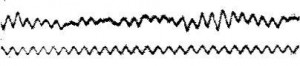
 

We encourage you to check out the rest of the post.

Congratulations

We would like to congratulate this month’s Nature Network blogger who has qualified for a free 3 month subscription to Nature.  

Well done to Anne-Marie Hodge – keep up the great blogging!

Our recognition system for Nature Network bloggers is open to any blogger who publishes a minimum of 1 post per week/4 blog posts per month in a given calendar month. For those bloggers who haven’t qualified, do not be disheartened as there is always next month. You can check out the guidelines here.

SLAS Conference and Exhibition

Nature will be in sunny San Diego, California this week for the Society for Laboratory Automation and Screening meeting:

SLAS2012 unites the scientific savvy, technical innovation and energy of the former LabAutomation and SBS conferences to increase collaboration and prominence for the laboratory science and technology community. SLAS2012 brings together leaders in the scientific community working in drug discovery and development efforts, as well as clinical diagnostics, food and agricultural sciences, forensics and security sciences, petrochemicals and energy, and consumer products.

Come by to Booth #209 to say hello, and pick up free journals! (Also, ask about our conference discounts- 30% off Nature, and 20% of all other Nature Publishing Group journals.)


NPG offers further open access options

Nature Publishing Group (NPG) is pleased to announce an expansion in open access among its society-owned titles. A new open access journal, Molecular Therapy – Nucleic Acids, has now launched at www.nature.com/mtna. In addition, Clinical Pharmacology & Therapeutics and Spinal Cord now offer open access options. Authors publishing original research in CPT and Spinal Cord can opt to pay an APC to make their paper open access immediately on publication.  Martin Delahunty, Associate Director, Academic Journals & Pharma Solutions, NPG, explains:

“Open access has been central to NPG’s growth over the last two years so we are pleased to be expanding open access options among our society titles. We are also delighted to welcome Molecular Therapy – Nucleic Acids to our growing catalog of society titles.”

You can find out more in the official press release here.