What are the benefits of reproducibility in science?

There has always been an element of risk in science, which is why data must be reproducible, explains Ellen Phiddian.

On June 6, 2012, I skipped class to watch the transit of Venus. I was studying in Adelaide, Australia, where the transit lasted from early morning until mid-afternoon and we had a wonderfully sunny day to view it. If I had known a bit more about the history of the transit, I may have been more thankful for that.

ISS-45_Indian_subcontinent-smaller

A view of Venus from over the Indian subcontinent. This photograph was taken by Japan Aerospace Exploration Agency (JAXA) astronaut Kimiya Yui from the International Space Station on December 5th, 2015

In the 1760s, astronomers made long and convoluted journeys across the globe just to observe Venus crossing the Sun. Scientists at the time wanted the transit recorded from as many continents as possible, so they could use the data to calculate the distance between the Earth and the Sun. It took years of effort and huge sums of money to orchestrate such a viewing. Continue reading

Data sharing: Fewer experiments, more knowledge

Data sharing will reduce the experiments needed in the lab and will increase the speed of knowledge generation by decreasing the time spent on the generation of equivalent datasets.

Guest contributor Ana Sofia Figueiredo

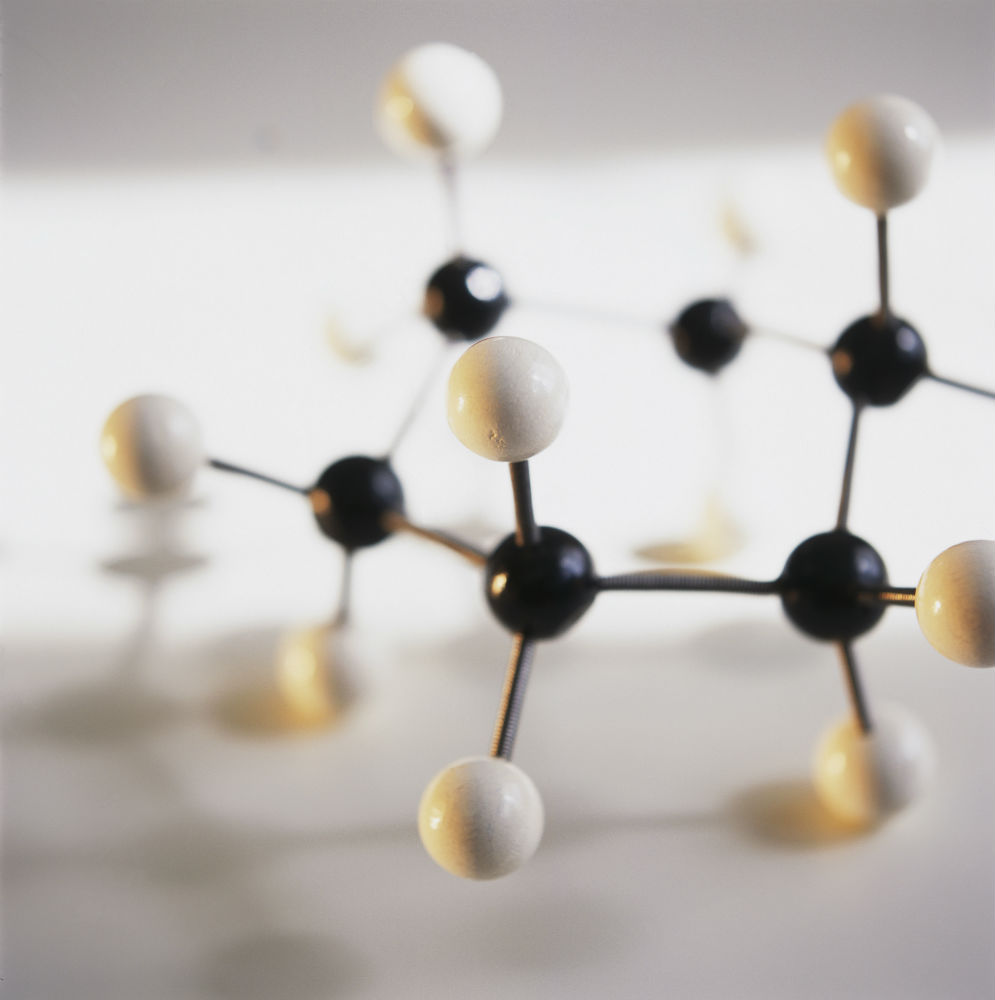
biological-model-naturejobs-blogI’m a postdoctoral scientist in systems biology at the University of Magdeburg, Germany. There, I build mathematical models to understand the mechanisms behind certain biological processes, such as the process of energy production by cells under extreme conditions. These mathematical models are representations of reality and some of them can be useful, although all of them are wrong. When well parameterized with data, these models give a quantitative representation and better understanding of such biological processes. Using a systems biology approach, I can do experiments in silico that are very difficult or technically impossible to do in vitro or in vivo.  However, a model is only as good as the data it incorporates.

When I have access to publicly available experimental datasets, I can plug the data into my models and, from the synergy of combining mathematical models with experimental data, learn more about the biological system I have at hands.

Sharing data, models and experimental protocols can push forward the generation of knowledge in science. Continue reading

Sharing data: Why it should be done

As data continues to be produced at staggering rates, scientists need to become more aware of the benefits of data sharing, says Eleni Liapi.

Guest contributor Eleni Liapi

CD-stack-naturejobs-blog

{credit}PhotoDisc/Getty Images{/credit}

The scientific community is currently experiencing an explosion in data generation. At CERN (the European Council for Nuclear Research), the rate of data production is 1 petabyte (=1015 bytes) per day inside the Large Hadron Collider (LHC), which is comparable to 210,000 DVDs.  At the European Bioinformatics Institute, 20 petabytes of biological data had been stored between 2004- 2012.  In the US alone, the volume of data produced by the healthcare industry in 2011 was estimated at 150 exabytes (=1018 bytes). Undoubtedly, this volume of information brings with it several problems, including data storage and sharing.

Access to data is a topic that initiates numerous discussions and opinions between scientists and other communities for a plethora of reasons, including concerns about inappropriate use, institutional or industrial restrictive policies where the gigabytes of obtained genomic data are to be utilised for pharmaceutical research, for example. To date, there have already been attempts to estimate the extent of the problem. In one survey, 67% of the participants expressed the view that inaccessible data hinder scientific progress. Continue reading

Announcing the Publishing Better Science Through Better Data writing competition

Enter a new writing competition for the chance to attend the Publishing Better Science Through Better Data 2015 event (#scidata15) in October, have your writing published on the Naturejobs blog and work with Nature Publishing Group editors.

SciData-logo-naturejobs-blogAfter a rapidly sold out first conference in 2014, we are looking for five budding science writers to help with news coverage of Publishing Better Science Through Better Data 2015. The day-long conference, held at Nature Publishing Group’s offices in Kings Cross on October 23rd 2015, will explore the practical implications, for early career researchers conducting and publishing their work, of data sharing policies and tools.

This year’s full-day conference will include advice on publishing, advancing careers and include discussion of emerging tools and resources available to researchers to help them, and society, derive maximum benefit from scientific research. The focus of the 2015 conference is on natural sciences and medicine, from academic and industry research perspectives.

Speakers will include representatives from leading journals, research organisations, funding agencies and technology providers. Also, lightning talks and demos will enable conference delegates – researchers and technologists – to present case studies of data sharing and analysis tools in action. Continue reading
