Maximising the role of UK universities as “anchor institutions”

UK universities have, in many ways, moved on from the old, disengaged “ivory tower” perceptions of the past. In many towns and cities, the role of a modern university encompasses much more than exclusively being an institution for education and research. Universities are large, locally-embedded establishments, and often bring a positive economic, cultural and social impact to their home city: so much so, that the concept of UK universities as ‘anchor institutions’ is becoming increasingly important.

anchorCoined in the US, the term “anchor institution” describes a nonprofit institution – often in unsettled or deprived areas – that can bring significant socioeconomic benefits to their local community by providing employment and collaboration opportunities and fostering existing initiatives: the most common of which are universities and hospitals.


Continue reading

Researcher mobility in a post-Brexit world

flag-of-the-united-kingdom-smaller

Existing UK immigration rules can support foreign-born researcher movement after Brexit, but the attractiveness of the UK research environment may still keep the best and brightest away, says Erica Brockmeier

Whether you’re relocating around the block, across town, or to a completely new city, moving is not a trivial task. For many PhD students and early career researchers, moving to a new research group can play a key role in professional development. It’s a way to gain new perspectives for your research, expand your professional network, and to work in a prestigious or well-known group in your field. Sometimes the best move for your career isn’t just across towns or cities, but is one that involves moving away from your home country, either temporarily or permanently.

Continue reading

Employment rights in post-Brexit Britain

As the UK prepares to trigger Article 50, signalling its departure from the EU, opponents of Brexit worry that that employment rights will be eroded and the UK will become a less welcoming place, particularly for LGBT people.

sciencebrexit

A placard waved at the anti-Brexit demonstration, held in London on March 25 2017.

“Rule Britannia, Britannia rules the waves, First we’ll kick the Poles out, Then we’ll get the gays.”

Liberal democrat peer Liz Barker reminded a business summit on LGBT rights last week that the above chant was heard in London the day after the EU referendum in June 2016, and that in the three months following there was a 147% increase in reported homophobic crimes.

“Among the very many half-truths bandied about during the [referendum] campaign, the idea that the EU played very little or no parts in gaining rights in this country was most egregious,” she told The Economist’s Pride and Prejudice event, held in London, Hong Kong and New York on 23 March. Continue reading

Join the March for Science in London (and other UK cities)

The most effective way to protect science is to encourage the public to value and invest in it. This is why we’re marching through London on 22 April 2017, says Story Sylwester.

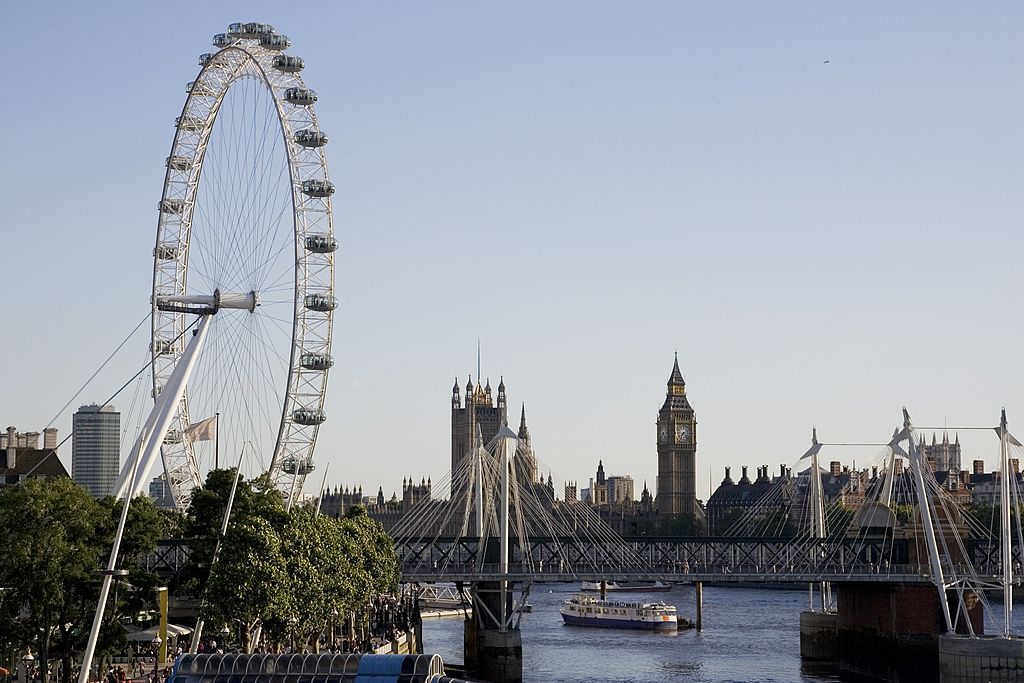
London skyline. Credit: Tim Graham/Getty Images

London skyline. Credit: Tim Graham/Getty Images

As the nature of scientific inquiry developed over centuries from the “solitary genius” model of Sir Isaac Newton to the international collaboration modelled by the Rosetta space exploration mission, UK scientists have been leaders in the development of scientific thinking and methodology. Yet, in an age where science has resulted in new technologies, improved quality of life, and improved understanding of the world around us, it faces some of its toughest challenges. Continue reading

The talent prize that flies the Spanish flag for organometallic chemistry

In 2016 Eva Hevia published her 100th paper, had her second child, celebrated her 40th birthday, and won a £14k prize which she will use to strengthen links between scientists in the UK and her native Spain. David Payne attended the prizegiving.

Hevia, professor of inorganic chemisty at the University of Strathclyde, Glasgow, described herself as a “molecular architect” after receiving the Society of Spanish Researchers in the UK’s inaugural Emerging Talent Award at the Spanish Embassy in London this week.

embassy

Continue reading

Science communication: A solution to the upcoming Brexit funding gap?

Effective science communication could be key to making science part of the identity of the UK, says Naturejobs journalism competition winner Helen Robertson.

Post-Brexit furor is hard to avoid in the UK media at the moment. Endless speculation surrounds what looks to be a socioeconomic experiment on a national scale, and it goes without saying that the implications will be far-reaching across all UK industries.

piggybank

Leaving the EU has been projected to cost British science one billion rapidly-falling pounds a year

Continue reading