Career paths: Realize your inner entrepreneur

Scientists are inherently entrepreneurs, as Ada Yee learned when comparing the two during a business school talk.

Contributor Ada Yee

entrepreneur-naturejobsI slipped into a chair at the “Reserved for Latecomers” table, and poured a coffee. I was at a talk by Stanford business school alum Amy Wilkinson on her book “The Creator’s Code”– describing six traits that make entrepreneurs successful. I felt out of place. As a dyed-in-the-wool academic, I’d never counted myself in on the Silicon Valley buzz, but a lab mate had given me his ticket. It was 7am, and I’m a 10am-to-10pm-type grad student—but a grad student nevertheless—and so not one to turn down free eggs and bacon.

My school prides itself on being an innovation incubator, a campus that spawned the founders of Google, Cisco, and Yahoo. Nevertheless, there remains in me a feeling that science and business don’t mix. The majority of academic science still operates on an apprenticeship model, where “losing” students to companies is to lose them from the academic pantheon and kill your own lineage. Growing up in the Silicon Valley, I read headlines on the conflict of interest held by professor-scientists with industry ties in the post Bayh-Dole era (the 1980 decree that paved the way for tech transfer). At a party recently, a student-turned-startup member told me,  “academic scientists like to dig really deep into a problem. That doesn’t work in industry. It’s too slow.” Continue reading

The challenges and lessons from setting up a business

Setting up a business can help scientists develop skills in marketing, sales, communication and more.

Lysimachos-zografos-naturejobs-blog

Lysimachos Zografos {credit}Image credit: Malcolm Cochrane Photography{/credit}

Lysimachos Zografos took his career into his own hands: rather than struggling in academia against a lot of competition and diminishing funds, he set up his own business, Parkure. I spoke to him whilst I was up in Edinburgh earlier this month to find out more.

What is Parkure?

Parkure is a for-profit company focused solely on discovering drugs that will halt the progression of Parkinson’s disease (PD). To do this we have developed a primary assay based on transgenic fruit flies that express a protein that is responsible for the initiation and propagation of PD in the brain. Rather than serendipitous discovery, we look for things that might work in repurposed drugs.

Why did you start Parkure?

There were two reasons:  one was a penny-drop moment when I realised this could be a way that I could take the research that I had been working on for a while, and potentially see applicable results that could benefit people.

The second reason was that of the PhD students that I was surrounded by (many of which are my friends); less and less of them have a job with at least a 5-year contract. With that in mind, I thought that if I was going to be in a risky position, I wanted to be in charge of it, rather than someone else.

How are you funding Parkure?

We’re currently doing a crowd-funding campaign on SharIn – it’s an equity crowd-funding campaign that gives people a share of the company in return for their investment. We specifically chose equity crowd-funding because even though we’re a for-profit company, we want to share whatever we make from this.

The minimum goal is £10000, and the maximum goal is £150000. We are currently (9 January 2015) at £50k, with the deadline on 20 February 2015. The money that we are raising now is going to be enough to help us obtain market traction to help us raise £1.5-£2million to do a full-scale screen of 50k compounds and keep the company running.

In crowd-funding statistics, we’re there, but its’ hard to believe. Your brain thinks about these things in a very linear fashion. So every day you feel you should get a pledge of £1500 to reach your goal by your deadline. But that’s not how it works; you usually get pledges in chunks and periods where nothing happens. Continue reading

Entrepreneurship: A wide open career path

Entrepreneurship is not an endeavour reserved for the talented, it’s a set of skills anyone can learn.

Contributor Annalise Smith

entrepreneurship

Professor Simon Mosey{credit}Credit: Annalise Smith{/credit}

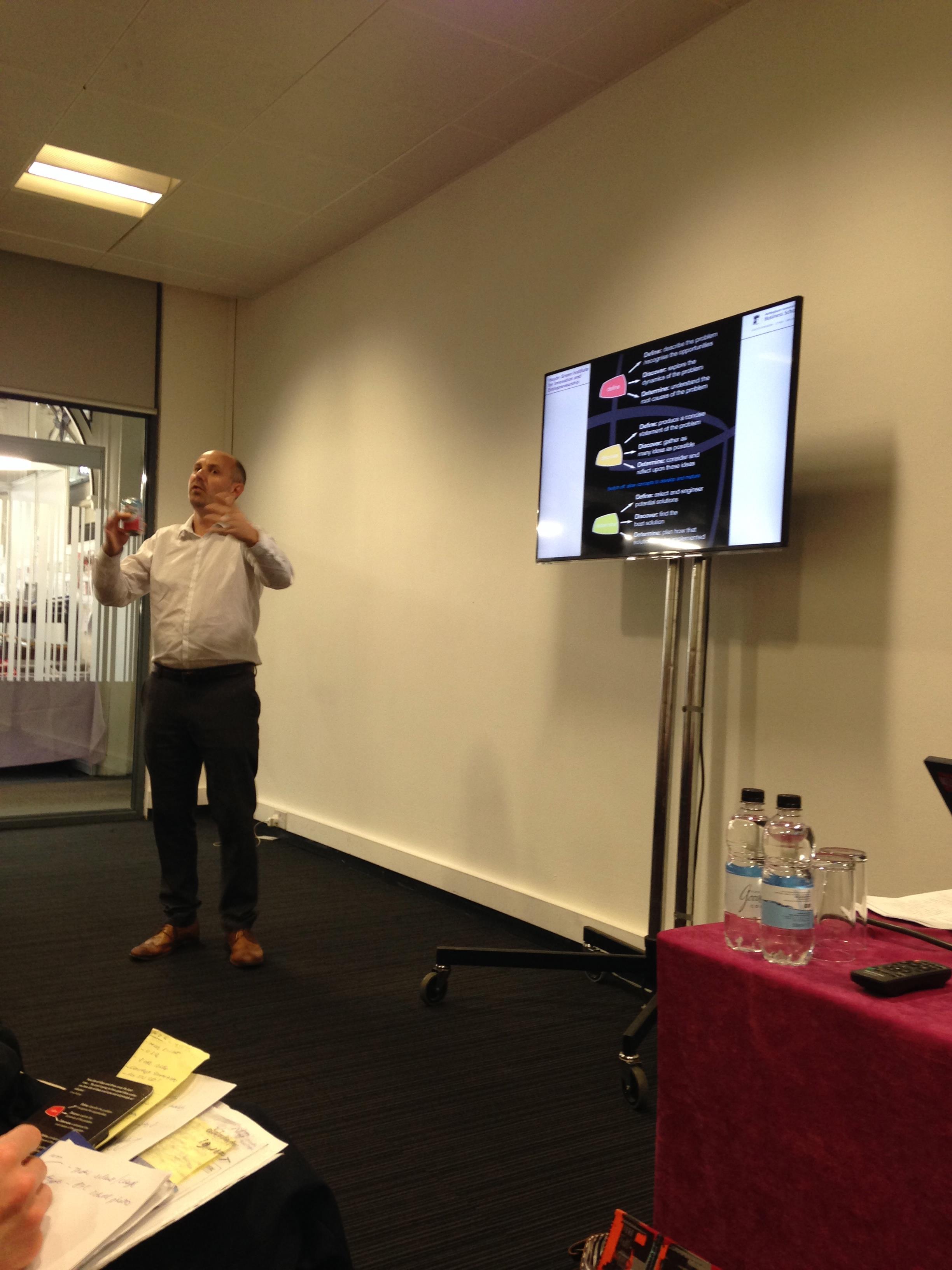
Entrepreneurship is often viewed as an endeavor reserved only for the very select few who were born with a rare combination of talents. Not so, said Simon Mosey, Professor of Entrepreneurship and Innovation at Nottingham University Business School, speaking at the Entrepreneurship for Scientists and Engineers Workshop at the Naturejobs Career Expo in London on September 19.  “Entrepreneurship is a set of skills that anyone can learn,” he declared.

Mosey similarly punctured what he said were two other myths about entrepreneurship: that entrepreneurs can see into the future and that entrepreneurs do it all themselves. These myths suggest that stars such as Steve Jobs and Mark Zuckerberg have skills that others lack. Mosey called these notions “nonsense.” Success in entrepreneurship is “not an individual pursuit” he explained. Behind Job’s and Zuckerberg’s success “is a large team of clever individuals working together in a group to realize the common vision.”

Mosey outlined a series of steps for pursuing an entrepreneurial opportunity.

Stage I: Problem Definition

It all starts with a problem, but identifying a problem that needs solving. Mosey outlined how to approach this in three steps: 1) Describe the problem and recognize the opportunities. 2) Explore the dynamics of the problem and 3) Understand the root causes of the problem. This will provide a solid foundation to then move on to using science or technology to do something about it. Continue reading

London’s biotech hub with Kit Malthouse

Is London ready to become the next biotech hub?

Kit Malthouse

{credit}Hannah Lucy Jones{/credit}

In this month’s Windback Wednesday series, we’re all about entrepreneurship: what it takes to be one, how to become one and more. But if you’re based in London, it’s not so easy. Although it’s got the brains and research centres to make it a hub, setting up shop in London is the tricky part. In this podcast, I speak to Kit Malthouse, the Deputy Mayor of London for Business and Enterprise, and find out how London is preparing to become the next biotech hub.

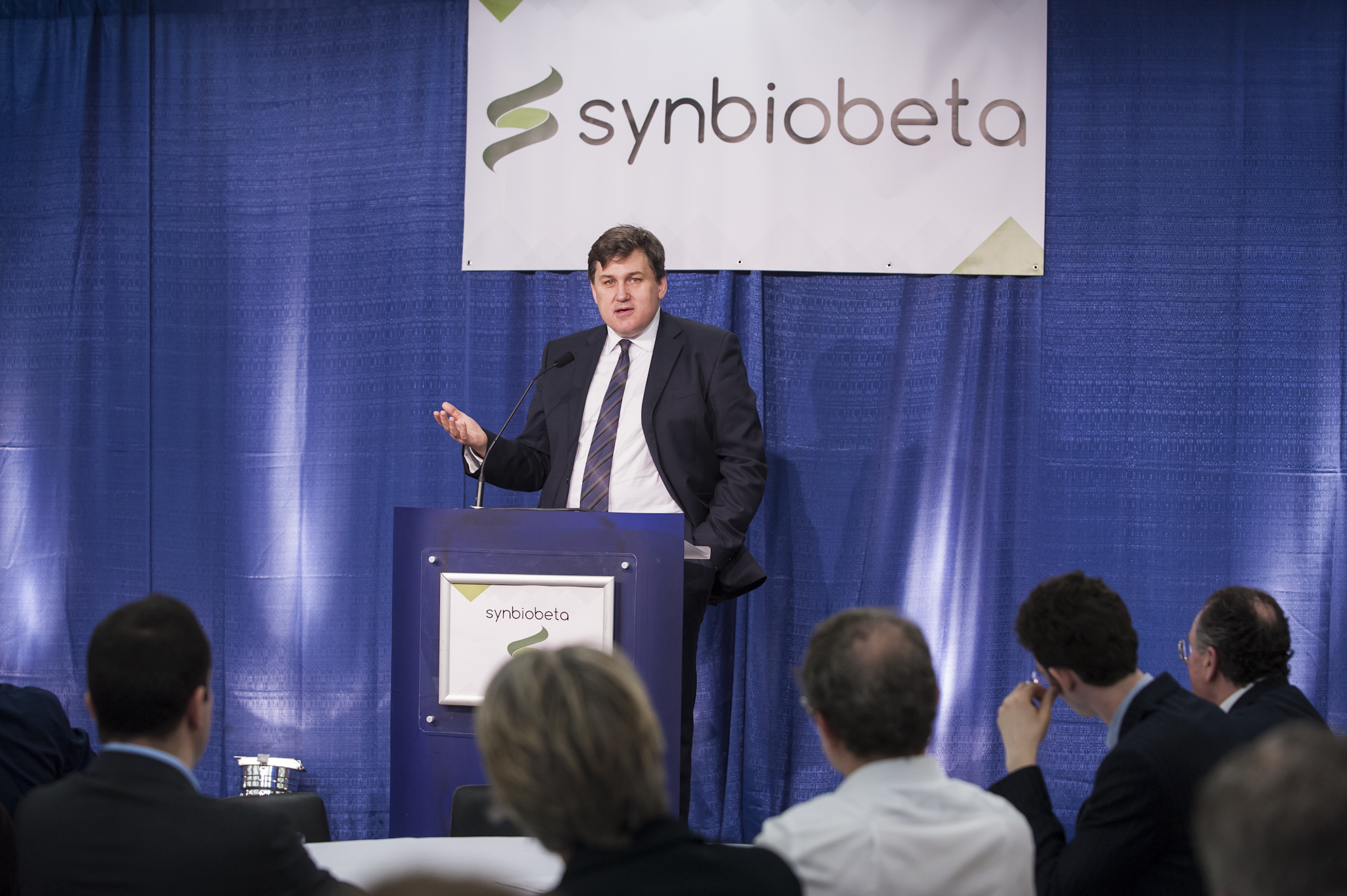
Kit Malthouse, the Deputy Mayor of London for Business and Enterprise has big plans for London. In his speech at SynBioBeta event at Imperial College London, he spoke of his dreams of London becoming the next big hub for biotech start-ups. He is aware that the foundations for this already exist.

“To a certain extent we already are. We have a huge life sciences sector.” Five large research institutes, many hospitals, Institute for Cancer Research the Crick Institute (soon!) and many more are part of an ecosystem that already exists in London. But what the Deputy Mayor hopes to do is “give it some coherence, so that it comes together as an entity… promote it, and fundamentally attract investment in.” 

Continue reading

Entrepreneurship with Steve Blank

What does it mean to be an entrepreneur?

Steve Blank

{credit}Eric Millette{/credit}

In this month’s Windback Wednesday series, we’re exploring entrepreneurship: how to brush up on your business skills, where to get venture capital funding and more. In this podcast, I speak to Steve Blank, an associate professor at Stanford University engineering school, a lecturer at UC Berkeley Haas Business SchoolColumbia Business School and the University of California in San Fransisco (UCSF). On top of all of that, he is also a thought leader of the Lean Start-up movement.

I met Steve last week at a SynBioBeta event at Imperial College London. He gave a very engaging key note speech on the Wednesday evening, giving us a flavour of what a Lean Start-up business is. He put several audience members on the spot, asking them to sell someone else’s “idea or concept”  to neighbours, who always (as per Steve’s instruction) said no thanks. They said no thanks, because of who was doing the selling. Steve was trying to make the point that if you, the scientist, have an idea or an invention that you think could be commercialised, then you, the scientist, need to go out and sell. You can’t hire a VP of sales or a marketing manager. YOU know your invention better than anyone else, YOU need to leave the lab and sell YOUR idea.

https://www.nature.com/multimedia/podcast/naturejobs/naturejobs-2014-04-10.mp3 Continue reading

Windback Wednesday: Entrepreneurship

Scientists are full of ideas, constantly creating wonderful research, but what can you do when one of these ideas could make you some money? In this Windback Wednesday series we’re digging up some articles from Nature Careers and the Naturejobs blog on entrepreneurship

windbackweds

{credit}Naturejobs{/credit}

The word entrepreneur comes from the 13th century french verb entreprendre, which literally translates to “to do something” or “to undertake”. By the 16th century, the word entrepreneur had developed a meaning of its own: someone who undertakes a business venture. It’s distinguishing features, according to Richard Cantillon (an 18th century economist), are an understanding of risk and being prepared to do business without guaranteed profits. Sounds scary, but it doesn’t need to be.

In a recent interview with Naturejobs (podcast to follow soon!), Steve Blank, a Silicon Valley entrepreneur, described entrepreneurship as a cross between science and art:

“Artists have something inside of them that they want to bring to fruition, and actually see tangible results of: it’s not just thinking about music or listening to music, they want to make music. Making a start-up and making something commercial is exactly that same feeling, and if you don’t have that passion for it, you shouldn’t get engaged. But if you do have that passion for it, you will figure out how to split up some time, take 6 months off or take a sabbatical…. [and] you will find, once in your life, you will experience what it takes to actually do a start-up. But this isn’t a job, this is a passion.”

On that much happier note, we’re going to start this month’s series on entrepreneurship with Neil Savvage’s article on Innovation: Brushing up on business. As well as case-studies, this article gives some insight into practical talks and training courses scientists can do to brush up on their business skills.

Throughout this month, we’ll also be looking at how to find some venture capital to fund ideas, how to become a bio-entrepreneur and how women can find a way in to the entrepreneurial world.

But what we’d like to know is: what does the word entrepreneur mean to you?