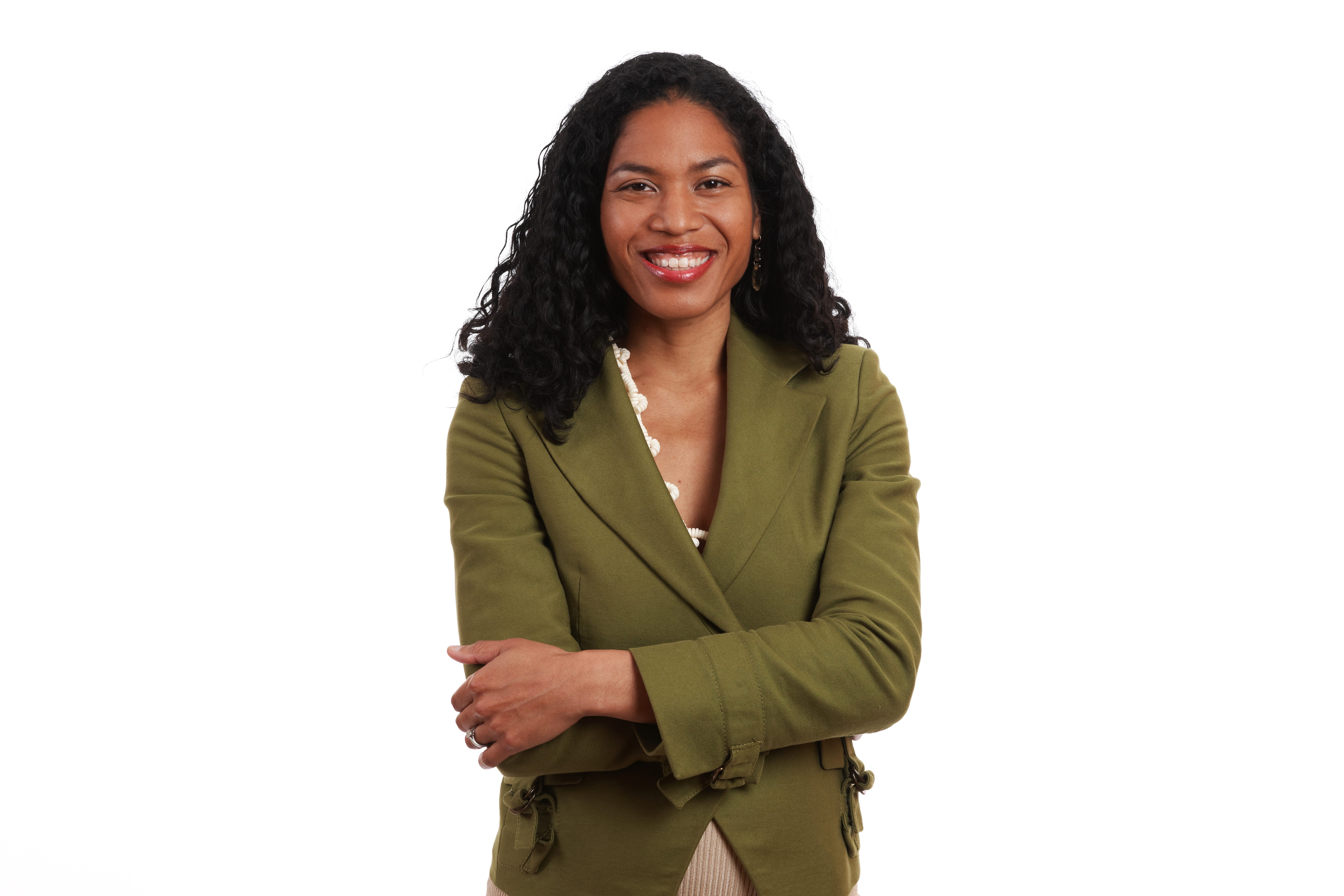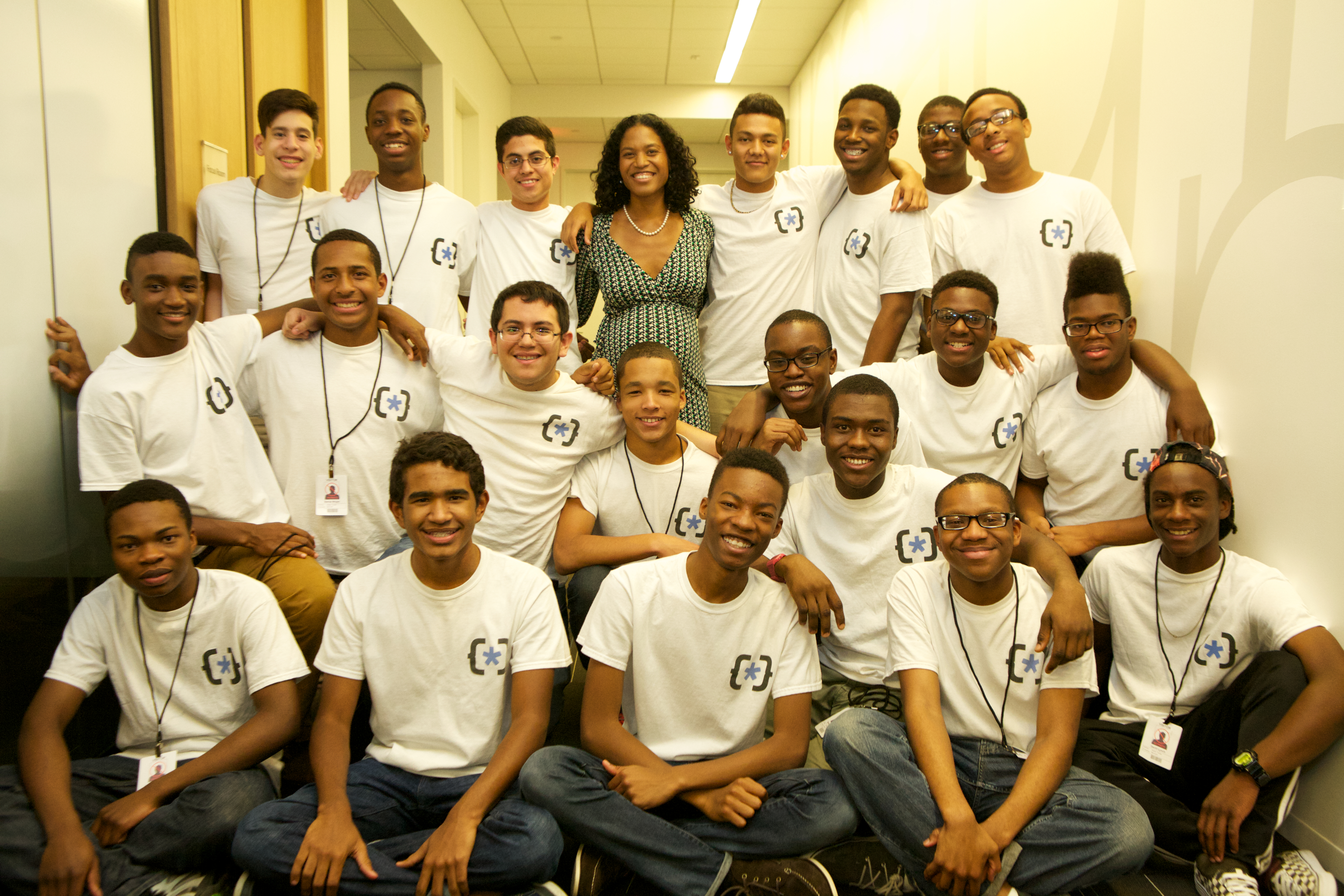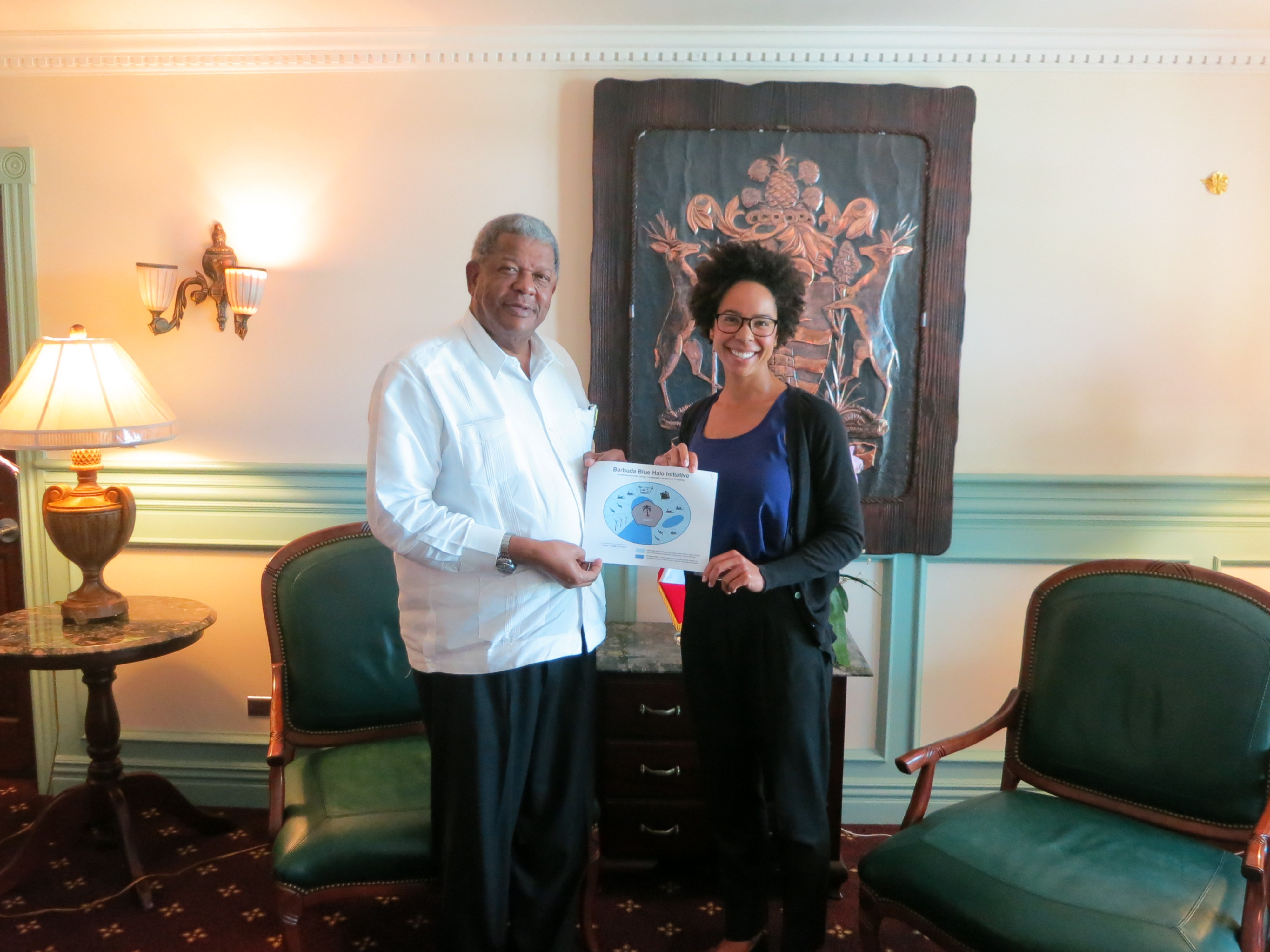
Dr Ayana Elizabeth Johnson with then Antigua and Barbuda Prime Minister, Baldwin Spencer. (Image: Waitt Institute)
Dr. Ayana Elizabeth Johnson is a marine biologist and Executive Director of the Waitt Institute. Johnson’s mission is to collect, create, actualize and amplify the best ideas in ocean conservation. Her work has been featured in the New York Times, on her blog for National Geographic, in The Atlantic, and elsewhere. She holds a Ph.D. from Scripps Institution of Oceanography, a BA from Harvard University in Environmental Science and Public Policy, and has worked on ocean policy at both the National Oceanic and Atmospheric Administration (NOAA) and the Environmental Protection Agency (EPA). You can find her talking oceans on Twitter @ayanaeliza
“People used to talk about the size of the fish they caught vertically,” says a perspicacious 15-year-old Curaçaoan holding his hands off the ground at head height. “But now we show fish size horizontally.” As the young man lowers his hands at shoulder width apart to demonstrate this, it is strikingly clear the great fishing catches of old have all but gone in the southern Caribbean Sea.
The vibrantly scenic shores and glistening beaches of this bustling island are in stark contrast with the rather gloomier outlook of the once thriving Caribbean ecosystems that supported local fisheries. Speak to any of the older residents or fishermen on Curaçao and they’ll swear by the unprecedented changes they’ve seen in their oceans in the last half century.
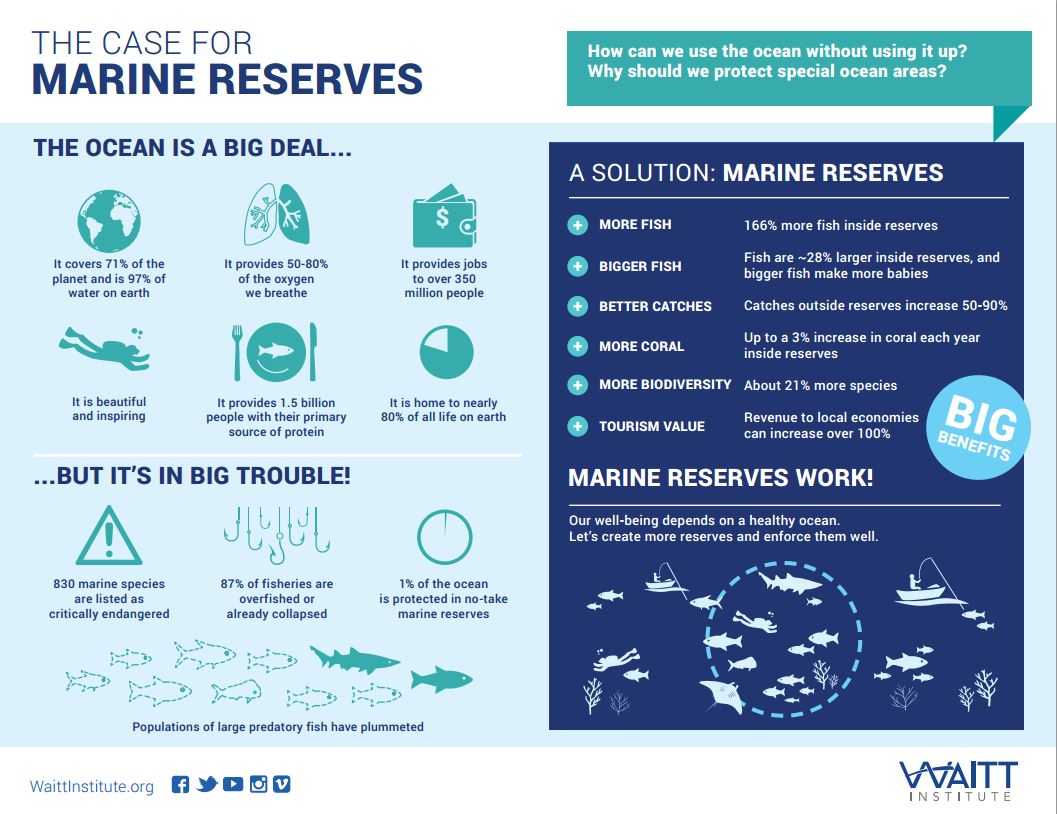
This is a familiar picture across the Caribbean, which is suffering from the same threats of overfishing, climate change, pollution and habitat loss, seen worldwide. In August 2014, the National Oceanic and Atmospheric Administration (NOAA) listed 20 species of coral as threatened under the Endangered Species Act, including five Caribbean species. Projected impacts of global warming and ocean acidification motivated this action, but as marine biologist Ayana Elizabeth Johnson eloquently writes in a New York Times op-ed: “climate change really is only half the story.”
Johnson’s encounter with the young Curaçaoan and his jarringly precocious words struck a chord with her eight years ago, in the midst of her PhD research. Focusing on fisheries management and ecology in the southern Caribbean, she interviewed more than 400 fishermen, scuba divers, and locals in Curaçao and Bonaire, to inquire what major changes they had seen in their oceans.
“It is critical to understand what local people see as the threats to the ocean, as the perceived problems have a huge influence on what the perceived solutions should be,” says Johnson. “Often scientists’ outside perspective can be very different to the local one – and this can lead to disconnect when discussing sustainable policy and solutions.”