Reflections on the L’Oreal-UNESCO For Women in Science program

Muireann Irish on celebrating diversity in science

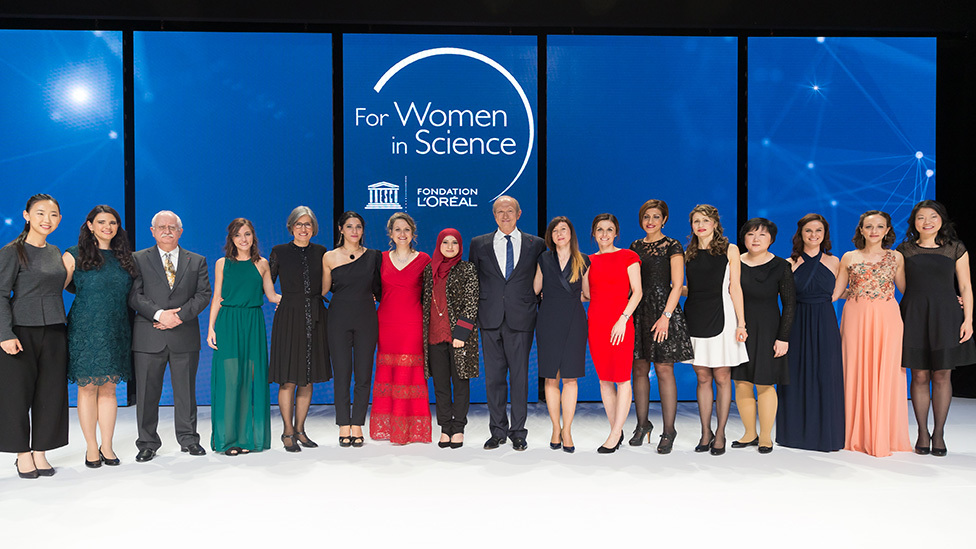
Springtime in Paris seems a fitting backdrop for any awards ceremony but particularly so in the case of the L’Oréal-UNESCO For Women in Science program. I recently had the honour of attending the 2017 International Awards along with 14 other early career researchers from around the globe, as part of the L’Oréal-UNESCO International Rising Talents Fellowship.

FWIS IRT ceremony 2017 Continue reading

Do you think your career was harder as a woman in science?

Academic speakers at the Naturejobs Career Expo, London, 2016, discuss sexism in academia.

https://www.youtube.com/watch?v=rdfqXdibc0k

Continue reading

Ageism “as bad as racism”

Ageism in the workplace is as bad as racism and over-50s applying for jobs are five times more likely to get interviews if they do not disclose their age, reports David Payne.

Andy Briggs, the UK government’s new adviser on older workers, told The Times this week that 27% of men of UK men aged 65 to 70 are in paid employment, compared to 15% in 2006. The figure for women is 18% and rising, and one in ten people aged over 70 are still working. And employers have an unconscious age bias.

Employers have an unconscious age bias

“Just as there are resources invested in younger workers in coaching and career development, and similarly when women return from career breaks, companies should invest in their older staff and give them midlife career counselling. It’s in business’s interest to do this,” he said. Continue reading

Parent, carer… #AndAScientist

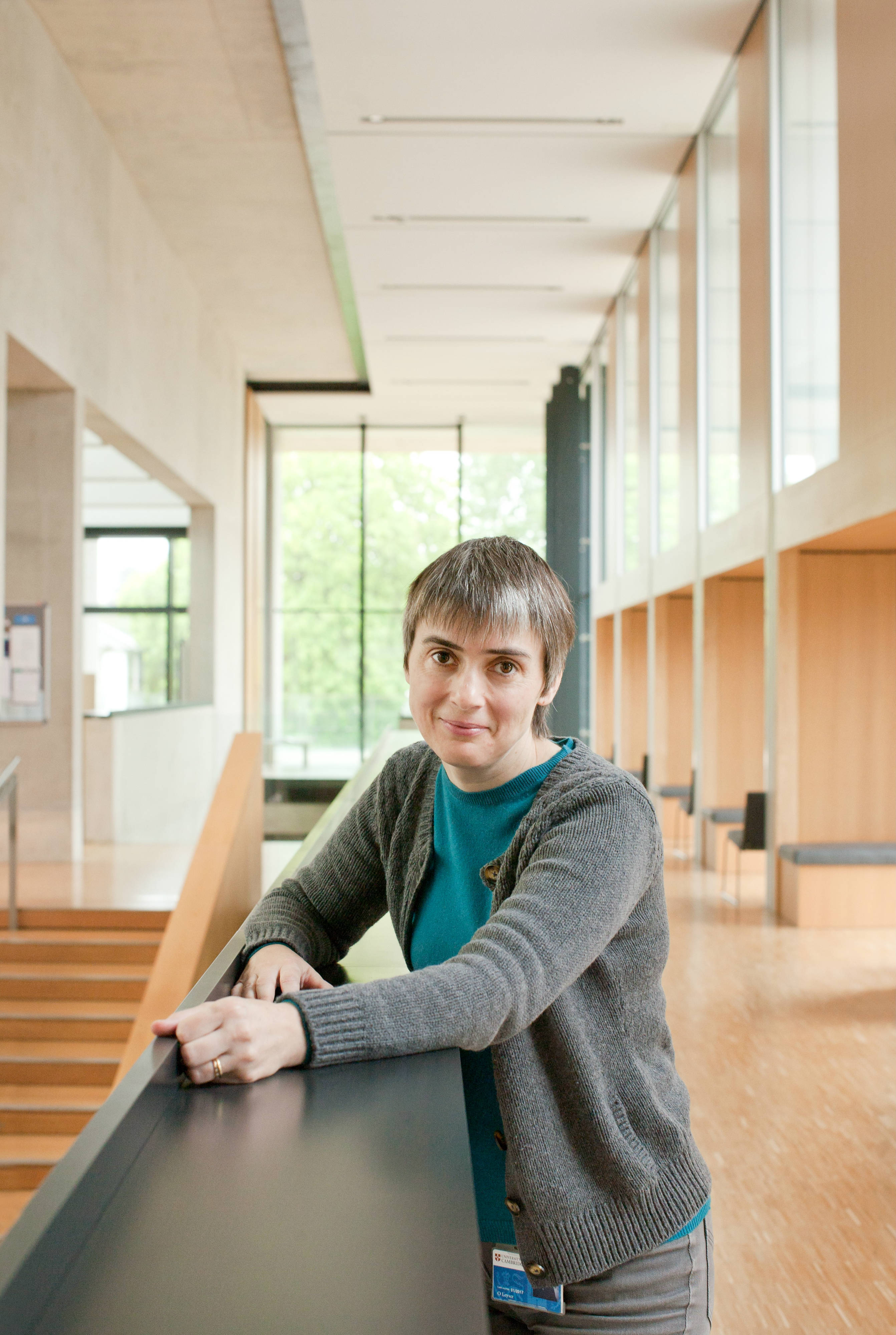
Researchers can thrive whilst combining their career with life outside the lab, says Ottoline Leyser.

{credit}Ottoline Leyser{/credit}

Guest contributor Ottoline Leyser.

Science needs diversity.  Solving complex problems is more likely if there are diverse people, bringing diverse perspectives and diverse skills to bear on them. The imaginative and interesting people science needs find inspiration in the most unexpected places – both inside and outside the lab; in their personal and family lives and their other responsibilities and commitments.

Working environments that embrace diversity are exciting and creative. They can also be challenging and uncomfortable. While it may be reassuring to work with people who agree with you all day long, you’re much less likely to come up with anything new. It’s unfortunate that such a large part of science is done by a homogenous group of people who all look like each other.  This state of affairs is maintained in part by the positive feedback that comes from unconscious bias, where appointments and promotion committees disproportionately select people similar to themselves. Continue reading

How to beat the hidden discrimination at the heart of the job hunt

Ronald McQuaid, University of Stirling


When you send off a CV to a prospective employer, you will hope to get a fair hearing. You will hope that your skills, experience and qualifications decide the response, rather than the school you went to, your post code, or even your name. Instinctively, though, we know that this isn’t always the case. Prime Minister David Cameron already has zeroed in on the issue of how applications from people with non-Anglo-Saxon or Celtic names are treated:

Do you know that in our country today: even if they have exactly the same qualifications, people with white-sounding names are nearly twice as likely to get call backs for jobs than people with ethnic-sounding names?

The UK civil service, and many major employers, have agreed to introduce application forms without the applicant’s name, in order to reduce the potential for discrimination. But how much does theory and evidence back this up? Continue reading

Unequal opportunities: Why aren’t there more Asian scientists in US leadership roles?


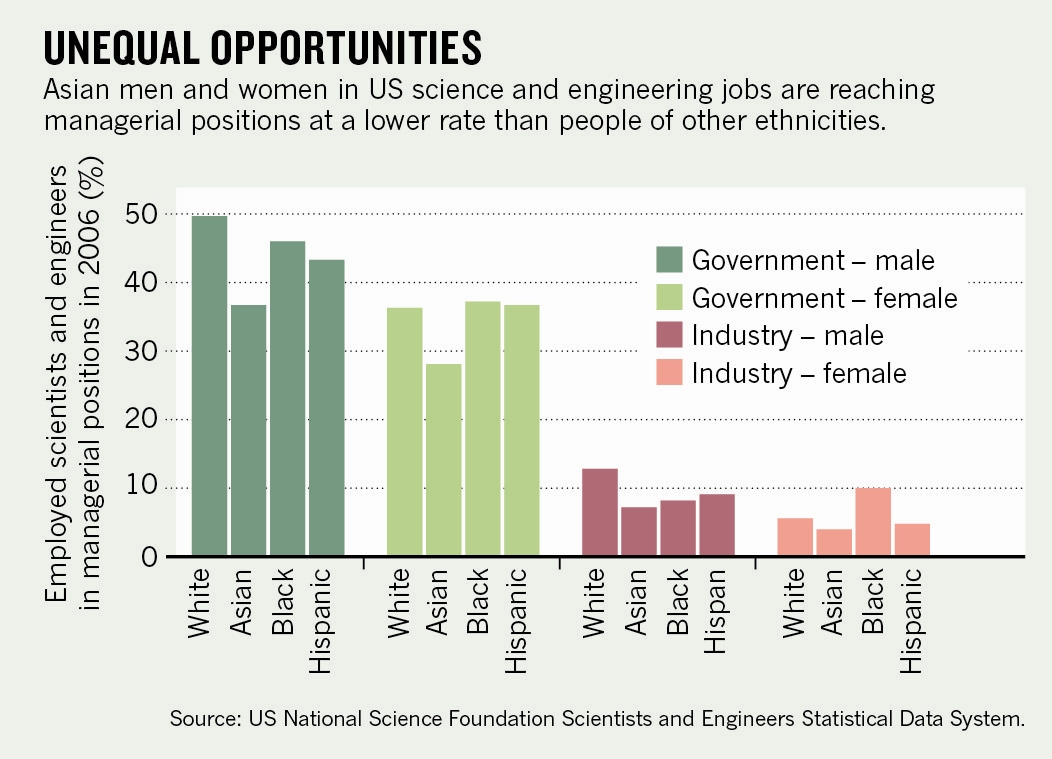
Asian scientists are underrepresented in leadership roles across US STEM careers, argue Lilian Gomory Wu and Wei Jing in this week’s Nature Careers column.

As can be seen in the graph above, Asians – people from the Far East, the Indian Subcontinent and Southeast Asia – are falling behind white people and members of other underrepresented groups, when it comes to filling leadership positions in US science. Whilst this is true for both Asian men and women, the problem seems to be compounded for female scientists, with just 4% of Asian women in industry and 28% in the federal workforce holding managerial positions. By comparison, Asians made up almost 80 per cent of doctoral recipients with temporary visas planning to work in the US. Why are they failing to reach the top?

Continue reading