Visual experiments straddling art and science

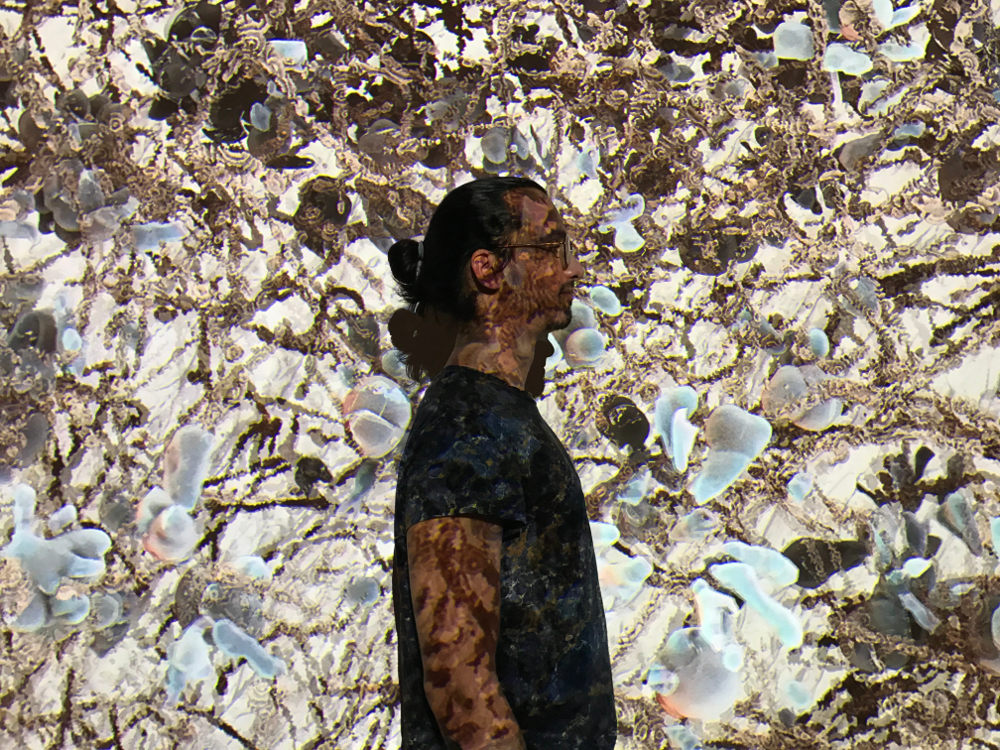
Filmmaker Markos Kay.

Filmmaker Markos Kay.{credit}courtesy of Eliza McNitt{/credit}

Digital artist and director Markos Kay pioneers at visualising the unvisualisable.

“Art and science are drivers of cultures,” says Kay, who visited the Middle East for the first time last month to exhibit a new film called ‘Quantum Fluctuations: Experiments in Flux’ at the Imagine Science Film Festival in Abu Dhabi. “I want to challenge our ideas of how our knowledge of reality is formed.”

He is perhaps best known for a generative short called The Flow (2011), which was featured in an episode of the TV hit series Breaking Bad.

The Flow takes its audience inside a proton, with the aid of simulation software and algorithms, to see a dramatically-visualised interplay of quarks and electrons, resulting in nuclei and atoms. “I was really frustrated that nobody is trying to visualise all this in a more accurate way, so I tried to make my own film. I wanted to show people how complex this stuff is,” he says.

Kay’s work explores and abstracts the complex worlds of molecular biology and particle physics, be it through presenting a different way of observing cells or using the visual language of a microscope to give life to an organic process. “The desire of an artist to find ways to interpret and observe the world is similar to a scientist’s,” he says of his own experiments.
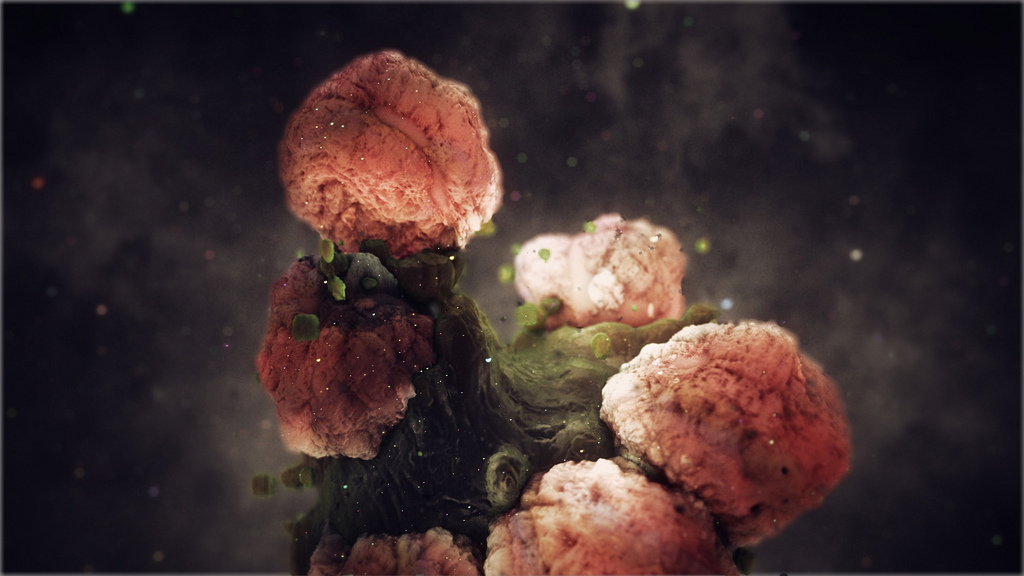
A still from Quantum Fluctuations.

A still from Quantum Fluctuations.{credit}Markos Kay{/credit}

His films are usually filled with detail and movement, and often feature scores of orchestral sounds or a generative, organic soundscape created by algorithm-based software.

His new film, ‘Quantum Fluctuations’, for instance, meditates on the transient nature of the quantum world which, he says, is impossible to observe directly. The film re-imagines the complex interactions of elementary particles as they collide inside the Large Hadron Collider at CERN –– and it’s all presented against a musical backdrop that is designed by Kay himself. Through striking computer-generated imagery, we can see interactions that occur in the background of a collision; for example, particle showers that erupt from proton beams colliding, giving birth to composite particles that eventually decay.

“Since the time of Heisenberg, it’s been almost impossible to visualise these events and simulations. It felt like a challenge,” Kay says. The film was produced by experimental design studio Epoche.io and will be part of an art and science documentary called “Sense of beauty” that focuses on CERN’s particle physics and that will be released later this year.

His latest project Humans After all, in collaboration with photographer Jan Kriwol depicts people in the context of everyday life through their circulatory systems. The project that showcases its subjects – humans stripped down to blood vessels and neural circuits – in an urban setting is meant to highlight the fragility and vitality of the human body.

“Through my work, I try to create immersive environments so that people can feel they’re entering a distant world.”
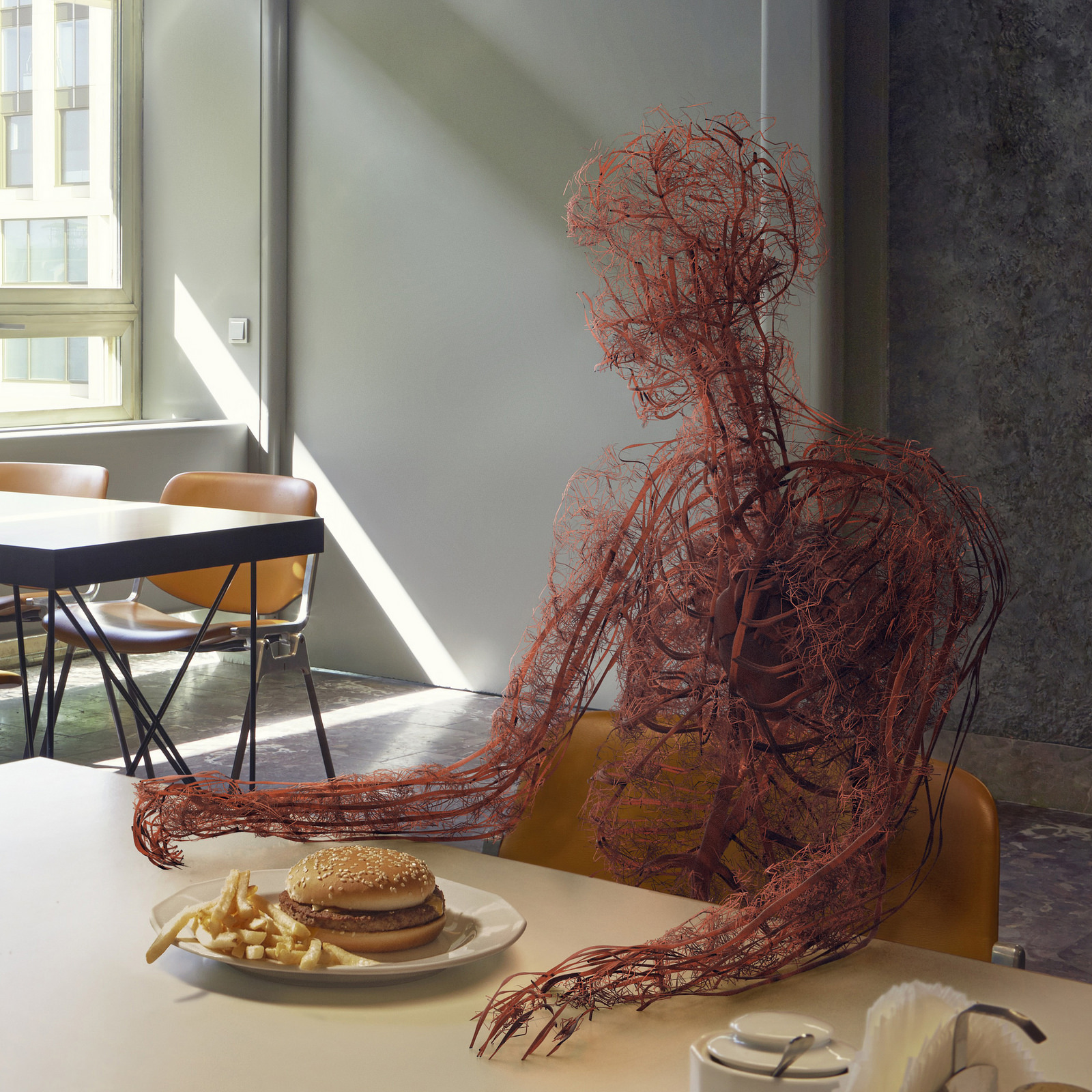
Humans Afterall.

Humans Afterall.{credit}Markos Kay / Jan Kriwol{/credit}

Bringing cinema magic to science

ISFAD17-ProgramStill-1

{credit}Imagine Science Film Festival{/credit}

In its third edition in Abu Dhabi, Imagine Science Film Festival, running from 2 to 4 March, 2017, is dedicated to light, reflecting on it through a multitude of films spanning documentary, fiction and experimental genres.

The film festival, which contemplates the intersection between science and art and which takes place at the Arts Centre in New York University Abu Dhabi (NYUAD), chooses a theme for its productions every year, and creates a conversation around it through talks, workshops, performances, and screenings of both local and international films.

In the past, the festival has collaborated with Zayed University, Petroleum Institute, Masdar in addition to NYUAD’s Arts Center in a keen effort to encourage local filmmakers to particpate in programming and filmmaking.

This year, the festival explores another fundemntal of life: light, and “how in multiple ways it has shaped how we see and understand the world providing us new insights, methods and understandings of how investigate our surroundings, and their scientific and artistic subtexts,” according to NYUAD professor and festival founder Alexis Gambis.

The festival is still accepting film submissions until December 5, 2016; works that, in the words of the festival founders, give viewers “a deep look into the natural, technological, and theoretical worlds, from the smallest molecule to the furthest reaches of space and everything in between”.

Many of the artists showcased are usually in attendance at the festival, which, in 2017, is expected to include panels on how we process and make sense of an overflow of media and information, a career talk with scientists, artists and filmmakers and how they navigate worlds that incorporate scientific and artistic dimensions, in addition to a retrospective of Larissa Sansour’s Space Triology: Nation Estate, Space Exodus, and In the Future They Ate from the Finest Porcelain (the latter featured in the second edition of Imagine Science).

Imagine Science will also exibit a revisited animation about Quantum mechanisms where data visualizations (inspired by CERN) will be projected on sand from Liwa desert.

According to Gambis, in 2017, the featured films will move from traditional documentaries to regional science fictions, experimental studies, and narratives inspired by essential science issues.

“We’re seeking new science films of all styles and subjects. Possible themes include technological shifts, neurological and cognitive functions from vision processing to memory and even dream, and the ecological and sociological studies of the Gulf and MENA landscape,” he elaborates.

To know more about the festival, how it began and what its creators have in store for it, listen to the latest edition of Nature Middle East‘s monthly podcast where this editor talks to Gambis about his brainchild and how it rose to prominence over the years.

Finding job satisfaction as a data scientist

Following your interests and making connections can launch a career.

Unlike most US students, Nathan Sanders declared his specialty as soon as he started undergraduate studies. He’d known for years that he wanted to study astronomy, but during his PhD at Harvard University he realized that the analysis itself enthralled him more than the applications for astronomy. He describes how he used his technical skills, and connections outside his academic program, to launch his career.

NSanders_portrait_2016-smaller Continue reading

Do you ever wish you’d stayed in science?

Science communication has become more accepted in academic circles, allowing researchers to do both.

The career paths in science communication panel at the 2014 London Naturejobs Career Expo was chaired by the Naturejobs editor, Julie Gould, who was joined by Greg Foot (Freelance), Jonathan Sanderson (StoryCog), Steven Palmer (Cancer Research UK) and Celeste Biever (Chief editor for online Nature news & comment).

Greg Foot would have liked to have had a chance to experiment with it: could he have done both and use his research to build himself a science communication niche? But he thinks that science communication is now an “accepted and applauded thing to be done as training or to further science,” which means people don’t have to make the decision of “either or” anymore. Continue reading

Most read on Naturejobs: January 2015

January is almost over and spring is almost upon us (or at least for some of us it might be…).

Whilst you’re waiting, why not catch up on the most popular reads of January 2015, as judged by you, our readers??

How to procrastinate effectively (if you cannot stop) is a great piece by Daisy Hessenberger. She has been spending a lot of time writing up her PhD thesis… but this also means she’s spent a lot of time procrastinating. In this article she explains how she used that time effectively, and how you might too!

How easy is it to get into science communication? Very, actually. All you need to do is try it.

Going from academia to industry is a big transition, and to make sure that you get off to a good start, having an industry-ready CV will help. Carol Spenceley, a careers advisor at Surrey University, shares her top tips for academics on preparing an industry CV in  Don’t panic! How to make your CV look its best.

From academia to industry with Paul-Peter Tak highlights his transition from pure academic research to a combination of clinical medicine and research.

We wanted to know what you, our readers, thought of the proposals that Theresa May put forward to the UK parliament towards the end of last year. Here’s some more info: Train ’em up and kick ’em out

We’re celebrating all transitional things this year: whether you’ve got a new postdoc position or a new job. If you’ve moved jobs down the corridor or are crossing an ocean for a new opportunity, we want to hear about it! We’re celebrating Scientists on the move!

Building a career in the biomedical sciences with Jim Smith is the full video of the London Naturejobs Career Expo keynote speech, where Prof Smith shares his career stories and advice with the audience.

Career paths: Beyond the Ivory Towers is this month’s podcast where I interview two people who share their job transition tips with you.

Happy Friday!

Building a career in the biomedical sciences with Jim Smith

Professor Jim Smith delivered the keynote speech at the 2014 London Naturejobs Career Expo.

Like others that have excelled in their field, Smith’s career has the illusion of being planned from the start. He thinks otherwise. In his keynote speech Smith uses case studies from his own career to show that careers in science can be windy, unexpected and difficult to plan for.

He had six key take away points for everyone in the audience. Here’s a short summary, by Simon Hazelwood-Smith:

Learn how to write. Good communication skills are vital in science, particularly when trying to publish. Smith’s advice is to practice and read promiscuously to improve.

Take good notes. “You should record everything in your lab notes, I don’t think it is possible to record too much information,” says Smith. A good lab book will allow you to defend your work from scrutiny, and may highlight correlations in your data that would be otherwise lost.

Be your own biggest critic. “Never fool yourself,” says Smith, make sure you are completely confident that your data supports your conclusions.

Say yes. Smith says that his “Constitutive response to when something turns up is yes,” you never know when a good opportunity might present itself.

Create and use networks. Astute networking can also help young scientists find their passion. “You never know when a connection, however small, may have an influence later in your career.” Collaboration in science is important for building relationships with other scientists and networking will make this much easier.

Take control of your early career.  Smith says successful scientists need three key attributes, FBI: Flexibility, Bravery and Imagination. They are often tied together earlier in one’s career and young scientists shouldn’t hesitate to take risks. “It is the easiest time in your life to move, and you will extend and diversify your knowledge and techniques,” Smith says.

Read more of Hazelwood-Smith’s summary of the keynote speech: How to build a career in the biomedical sciences.

Watch the other videos from the London 2014 Naturejobs Career Expo:

How to communicate your science in the best way

What attracted you to science communication?

How important is having a mentor in your academic career?

How do you achieve work/life balance in academia?

Should I apply for a fellowship or a postdoc after my PhD?

What’s the biggest challenge you’ve faced as a woman in science?

How important is it to move between academic institutions?

How do you cope when things go wrong in academia?

How important is teaching experience in academia?

Lindau: A picture of health

Nature Video presents four films from the 2014 Nobel Laureate Meeting in Lindau.

Reporter Lorna Stewart travels to the German island of Lindau to meet 600 of science’s brightest young minds and 37 rock stars – Nobel laureates.

In a series of four films, Stewart asks some of the most profound questions in medicine. In one film, superstar statistician Hans Rosling helps Stewart get to grips with the realities of an ageing global population. In other films, Stewart delves into the past 40 years of cancer research, wonders if we’ll ever eliminate side effects when we take medication, and receives a reality check on the battle against HIV.

Get a taste in this trailer.

You can view all the Nature Lindau films here and Nature Outlook also produced a supplement based on the Lindau meetings.

Jon Spaihts: Hollywood’s go-to science fiction screenwriter on the importance of science in filmmaking

Jon Spaihts

Hollywood’s go-to science fiction writer.

Jon Spaihts is the screenwriter of The Darkest Hour, Ridley Scott’s Prometheus and the upcoming Passengers and The Mummy. The one-time physics student and science writer has become one of the go-to writers for hard science fiction and space epics in Hollywood. He is currently working on a remake of Disney’s classic, The Black Hole and is writing Marvel’s forthcoming movie Doctor Strange.

Jon also features in today’s OSAM blog: Behind the Science of Hollywood

Here Jon speaks to Alex Jackson on collaborative work with scientists on film, the importance of science in filmmaking and finding the right balance between scientific practice, current knowledge and future developments with the demands of fine storytelling.

What experiences of working with scientists in the screenwriting process, do you have?

Much of the collaboration I’ve done with scientists is related to projects still in development – so there’s only so much I’m allowed to talk about them.

For example, I’m currently working on a remake of Disney’s classic, The Black Hole. It raises critical questions about robotics, artificial intelligence, interstellar travel, singularities, quantum mechanics, and string theory. Quite a to-do list! We’ve convened a panel of remarkable scientists to help us think through the scientific issues.

Continue reading

Behind the Science of Hollywood

MIT Professor Neil Gershenfeld (right) enlightens Jerry Zucker (left) during a Science & Entertainment Exchange Salon at the Zucker's home.

MIT Professor Neil Gershenfeld (right) enlightens Jerry Zucker (left) during a Science & Entertainment Exchange Salon at the Zucker’s home.

There is a moment in the deservedly lauded Breaking Bad when Walt must convince Gus that he and Jesse are indispensable, dramatically asserting “Without us you have nothing.” It is a scene of great suspense and emotion. But not only that, it is a fine example of where good science is used to the narrator’s advantage.

The high-level scientific dialogue sees Walt tout his superior chemical knowledge of protic vs aprotic catalytic hydrogenation and stereospecific reactions yielding enantiomerically pure products. “The dialogue had to be perfect in order to be powerful instead of laughable, and Bryan Cranston’s magnificent delivery was convincing,” explains the show’s scientific advisor, Dr Donna Nelson.

“To a scientist, seeing incorrect science in movies or on TV is like fingernails on a blackboard,” asserts Dr Nelson, who worked on all five series of the hit AMC show. “At best, it breaks one’s focus on the scene and plot. At worst, it spoils the entire show.”

Continue reading

Film on scientists gets national award

Featured on this blog earlier for its powerful narration of the life and science of India’s celebrated scientist triad Bose-Raman-Saha, The Quantum Indians has now won India’s National Film Award as the best educational film of 2013.

Raja Choudhury

Raja Choudhury

The Quantum Indians written and directed by Raja Choudhury celebrates the lives of India’s three great yet almost forgotten scientists Satyendra Nath Bose, Sir C V Raman and Meghnad Saha. The national award jury has chosen the film “for an extremely efficient and precise analysis of the contributions of three renowned scientists in a manner that not only educates today’s generation but also provides insights into complex scientific phenomena in an accessible manner.”

The film tells the compelling and inspirational story of three amazing Indians who revolutionised the world of quantum physics in the 1920s giving us Bosons, The Bose-Einstein Statistics, the Raman Effect, the Saha Equation and India’s first and only Nobel Prize for science. Their work was also responsible for building the science infrastructure upon which much of India’s future was built.

Raja says he wanted to inspire the young people of India and help restore their interest in basic science as an essential and rewarding career path today. To take the message to the youth, the film is now being shown around the world at Indian embassies and cultural centers, in academic institutions, on TV, on the Indian Diplomacy Youtube Channel and on DVD by co-producers Public Service Broadcasting Trust (PSBT).

Raja is now making another science-based film called The Indian Mind that looks at the great inventions and ideas that India has given to the world — from the cotton of the Indus Valley, from the ‘Zero’ to the Bosons and the quest for Mars.

Congratulations to the team of The Quantum Indians and here’s hoping the film influences some young minds and redirects them towards the glory of basic sciences.