How to reach out

analytics-282739_1280

As discussion of science engagement increases, notably absent is an accompanying conversation about how to appropriately prepare and find opportunities for outreach. Here’s how to get started.

Guest contributor Maria Wheeler-Dubas

The average American does not personally know a scientist, which leaves their opinions of science open to the mercy of pop culture and political pundits. In spite of this concern, one thing that has been greatly encouraging to see in the scientific community is the rise in discussion of STEM outreach. More and more scientists are recognizing science engagement as a way to break stereotypes, have a broader impact with their work, and manage sceptics of tax-funded grants—which is fantastic. However, an important part of the discussion that has been missing is how to go about getting involved in meaningful outreach. How can a research scientist maximize the use of what little time for outreach they might have?  Here is what I’ve learnt as Science Outreach Coordinator. Continue reading

Lindau: The charge of the Nobel lasses (and lads): Be humble

Humility and success in science are closely linked, Alaina G Levine discovers at the 67th Lindau Nobel Laureate Meeting.

Alaina G Levine and Dan Shectman

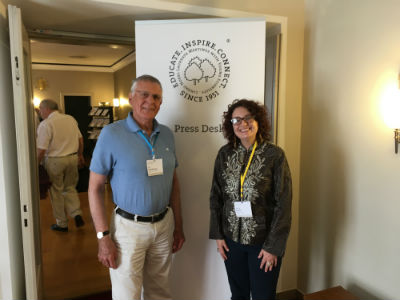
Alaina G Levine with Dan Shechtman at at the 67th Lindau Nobel Laureate meeting.{credit}Alaina G Levine{/credit}

Nerd Heaven, aka the Lindau Nobel Laureate Meeting, provides an intellectual gymnasium for nerds of the world. The youngsters who attend can partake of 29 lectures by Nobel Laureates on topics as tantalising as the Joy of Discovery given by synthetic organic chemist Bernard Feringa, to the rousing Aromatic Ring Flips in Protein Dynamics presented by chemist/biophysicist Kurt Wuthrich, all of which contributes to a flipping good time. Continue reading

Scientific play is a serious business

Iva Njunjić’s dream to explore caves and work on cave beetles took her far from her home country of Serbia — to the beautiful island of Borneo.

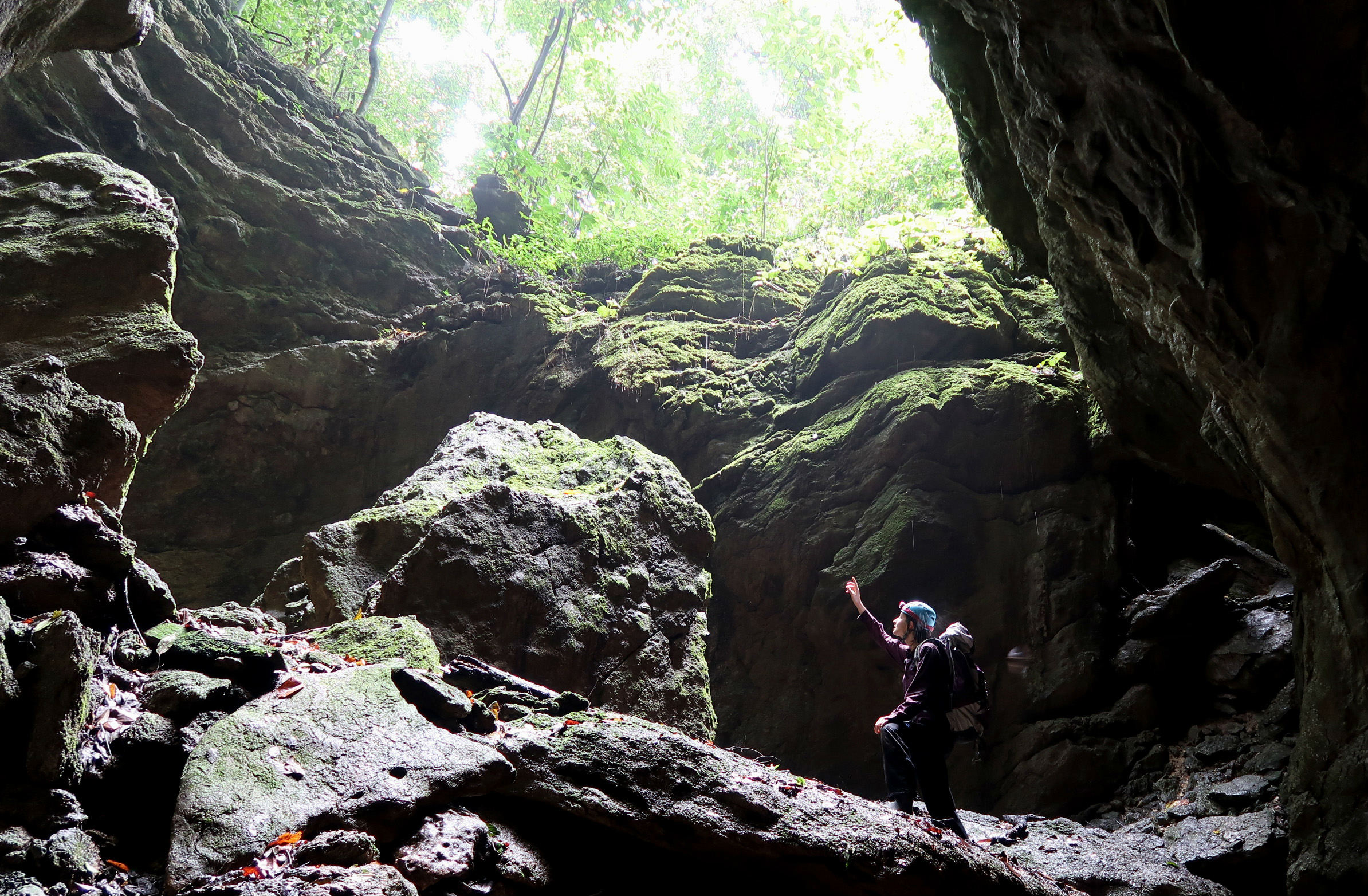
Bod Tai cave on Borneo-smaller

This photo was taken during field work in Sabah, Malaysia where Prof. Menno Schilthuizen, his PhD student Mohd Zacaery bin Khalik and I went to explore caves and hunt for new species of cave invertebrates. We spent many days around a small village on the Kinabatangan River, trying to locate caves in numerous limestone hills and gather information about the organisms that live there. Continue reading

How do researchers use social media and scholarly collaboration networks (SCNs)?

Written by: Tina Harseim, Head of Social Media, Springer Nature and Gregory Goodey, Research Analyst, Springer Nature

Social media is not only a way for authors and publishers to disseminate research findings, it’s also increasingly being used by researchers to discover and read scientific content.

To better understand how social media and scholarly collaboration networks (SCNs) are used within academia to support research activity, Springer Nature conducted a survey in February. This was in follow up to a Nature survey carried out in 2014. (The original survey can be found here: Online collaboration: Scientists and the social network)

Over 3,000 researchers from STM and HSS fields (humanities and social sciences) completed the survey, though numerically dominated by STM respondents (89%). Researchers covering all career levels gave us their views, with the largest groups of respondents from Europe (33%), the Americas (31%) and Asia (31%).

The survey revealed researchers’ views on their professional use of social media and SCNs, to what extent it can help them in their work, and the role publishers and journals can play to support researchers with activity on these platforms.

All data is available to view and download on Figshare, along with a summary of the key findings.

These include:

• Over 95% of respondents said they used some form of social media or SCNs for professional purposes
• ResearchGate was the platform with the greatest proportion of professional users (71%), followed by Google Scholar (66%)
• While respondents stated they used SCNs in high numbers, frequency of use, and therefore platform engagement, was reported to be higher for social media
• 50% of professional users said they accessed Facebook on a daily basis
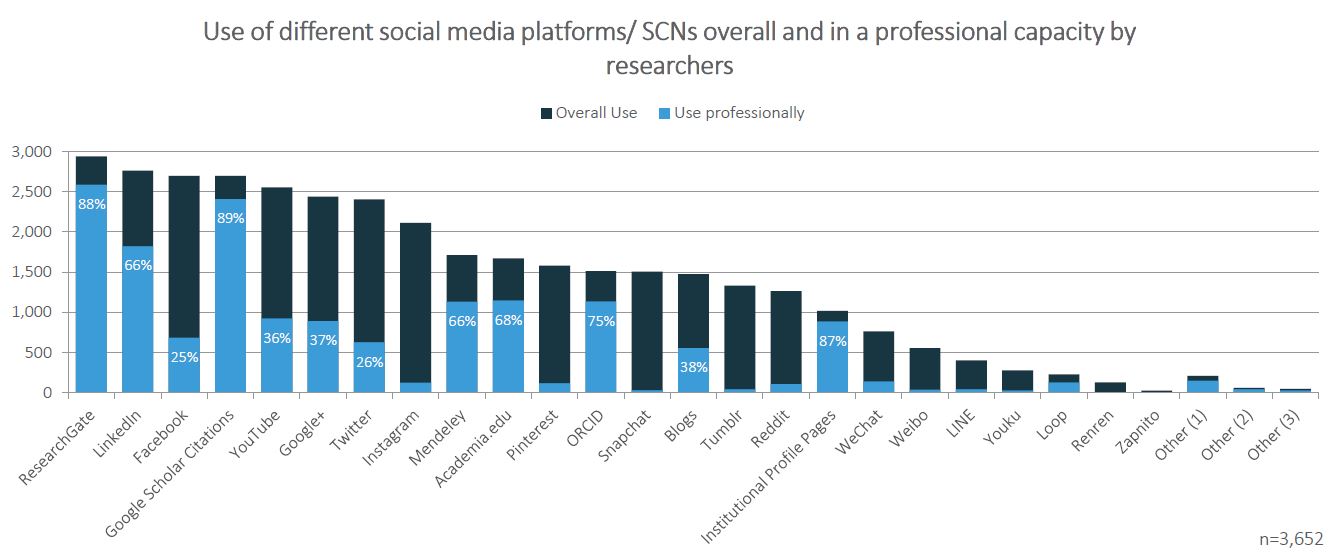
 

• In the Nature survey conducted in 2014, the most-selected activity on both ResearchGate and Academia.edu was simply maintaining a profile in case someone wanted to get in touch (68%). This year’s survey revealed that the research activity that over three quarters of respondents stated that they use social media and SCNs for was discovering and / or reading scientific content (Nature’s 2014 study 33%)
• 57% of respondents to the survey used some form of social media and /or SCNs to support with self or research promotion
• Therefore, unsurprisingly, the content that the majority of researchers appreciate from publishers is information on new topics and trends; and research relevant to their field and article recommendations
• Over 80% of respondents would also expect to some degree that any research of content provided by the publisher / journal on these sites should be openly accessible
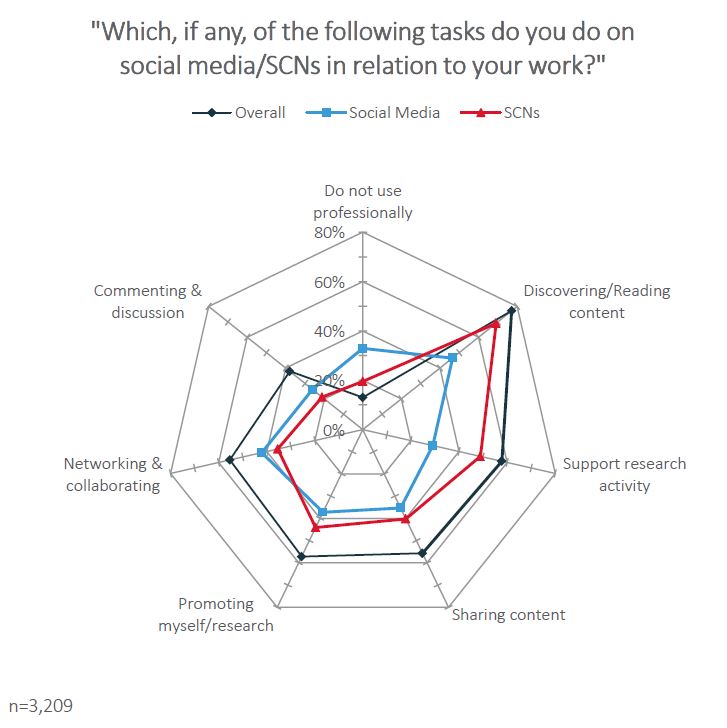
The survey enables us to provide the best service for our authors, and keeps us close to the views of our community. Over 70% of respondents did agree that they felt that they should do more to promote their research using social media / SCNs.

A significantly higher proportion of Twitter and Facebook professional users share scientific content than any other social media platform or SCN. This gives us confidence that SharedIt, Springer Nature’s content sharing initiative, is offering the functionalities that our users need.

We will use these results to support our approach to social media, discussions on the value SCNs provide for researchers, and how we can best shape our services to meet the needs of the academic community.

The data from this survey has been made open access for anyone who would like to use it. You can find it on FigshareFigshare.


The discomfort is worth it: share more

Making sure to communicate with the public is hard and takes time. Scientists should keep doing it, says Jessica Eise.

When David Eagleman, a neuroscientist at Stanford, wrote the New York Times bestseller Incognito, I read it voraciously. The world of the mind opened to me. My subconscious brain took on an entirely new meaning to me. Eagleman’s research felt salient, relevant, and crucial to our understanding and progress as a species.

Knowledge-sharing

{credit}Asonlobo/Wikipedia; CC-BY-SA-4.0{/credit}

Continue reading

Lost in translation

You may not be an English native speaker, but that shouldn’t be an obstacle in science, says Elena Blanco-Suárez.

GettyImages-550382899-smaller


Continue reading

Why I marched for science – a transatlantic perspective

The March for Science turned a spotlight on the importance of research. But it won’t have a lasting effect unless we improve science communication, says Judith Reichel.

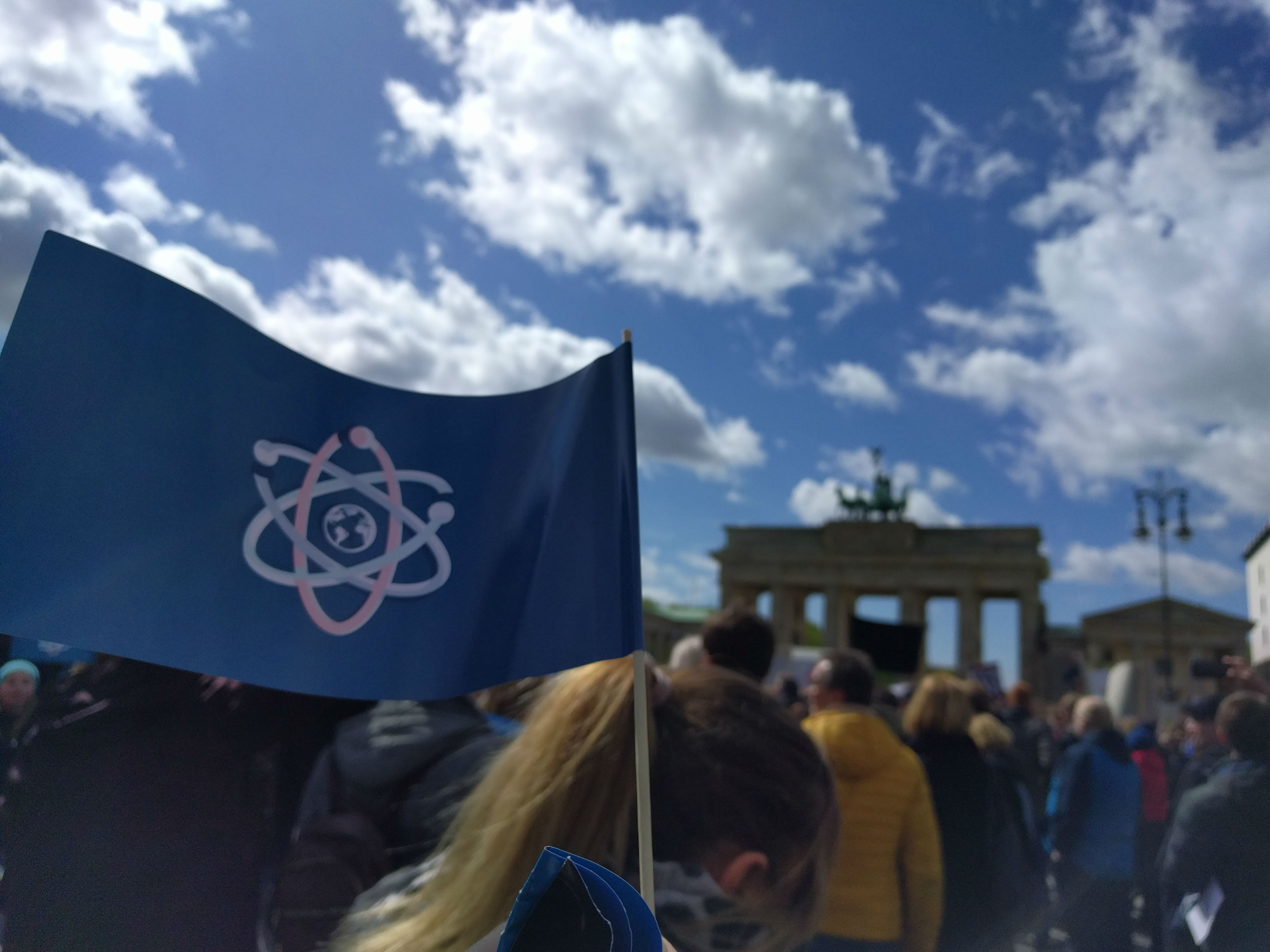
On Saturday, April 22nd, myself and an estimated 11,000 other science supporters marched in Berlin. The event was part of the global “March for Science” that took place in over 600 cities worldwide. While the March here and everywhere else was a great success in putting a spotlight on the importance of research and the danger of building on false facts, I’m worried it won’t have a lasting effect on the public perception of science if we don’t improve our science communication.

MarchforScience-Judith-1-smaller

The March for Science passes the Brandenburg gate in Berlin, Germany

Continue reading

All in three: How to pitch your PhD in 180 seconds

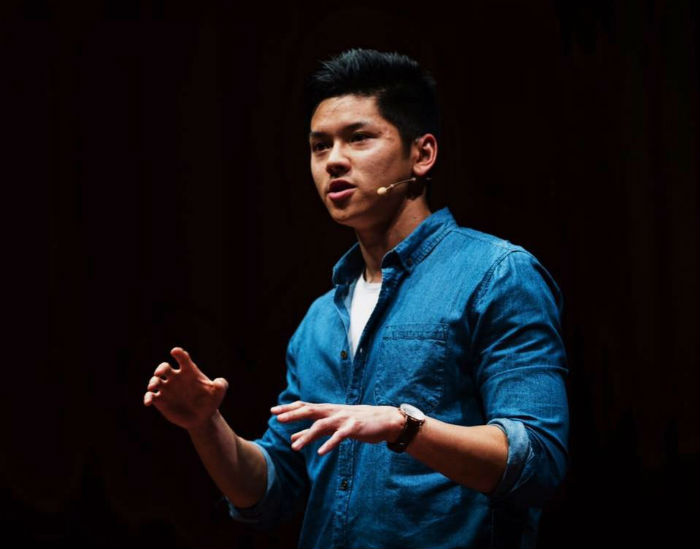
The stage was set. A thousand people had taken their seats. Stage lights were blaring. Cameras were circling. In the green room, 10 PhD students, 10 knotted stomachs. I have a weird interest in seeing how other people cope with pressure. Some use humour, some remain pessimistic. Some are humble, some are cocky. Some laugh, lots cry. All this nervous tension though, for only three minutes on stage.

Josh 3MT

Joshua Chu-Tan presenting his winning 3 Minute Thesis at the 2016 Asia Pacific finals

2016 Asia-Pacific 3MT Winner – Joshua Chu-Tan “Targeting the Root of Vision Loss” from Three Minute Thesis (3MT®) on Vimeo.

I’m referring to the 3 Minute Thesis (3MT) competition, an international competition where PhD students have to present their entire thesis, years and years of work, into a three-minute presentation with a single, static PowerPoint slide. Ludicrous, I know. However, amidst all the prize money and prestige of the competition, there was an important lesson to be learned, something that I feel is vital in the field of research – the art of communication. Here, I try to outline my thought process when writing my 3MT. Continue reading

Exploring science communication

Science communication comes in many forms. Discover your favourite, says Andy Tay

There’s a few reasons why scientists may be discouraged from science communication. Here, I’m hoping to break down some of those barriers, and introduce channels and platforms where scientists can practise. First, here are some of the reasons stopping more scientists from practising science communication, as well as my rebuttals.

GettyImages-200525300-001-smaller2 Continue reading