When conferences collide with family needs

As a busy scientist with two young children, one of Rebecca Calisi’s most vexing challenges is figuring out how to attend scientific conferences without a huge disruption in family life. Bringing children to conferences is an option, but not all are especially welcoming to the needs of families, especially to mothers with young children.
1008602_10151664484247933_418737272_o (3)

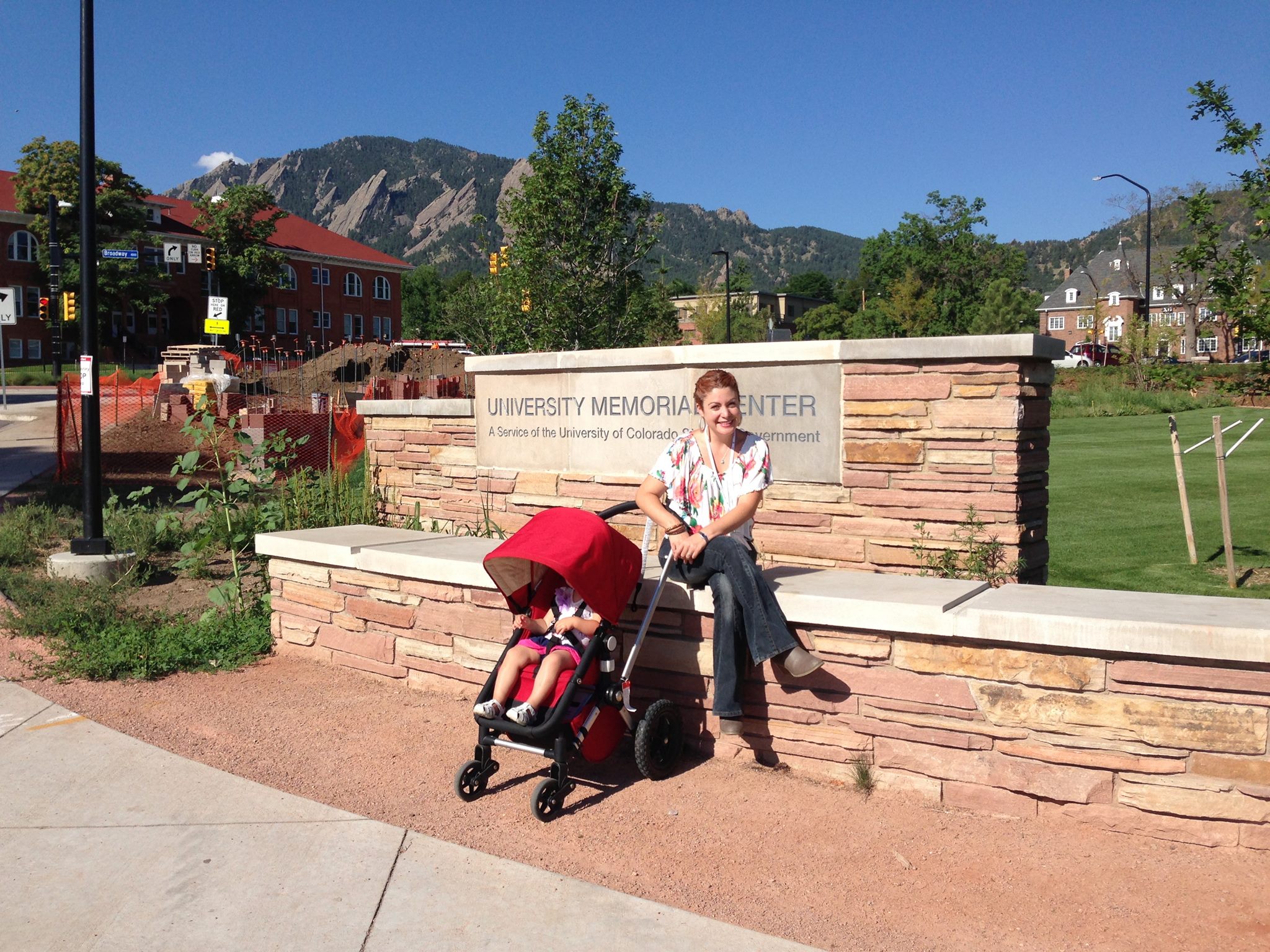
Rebecca and her daughter at the annual conference for the Animal Behavior Society at the University of Colorado in 2013

Calisi, a behavioural neuroscientist at the University of California, Davis, and a group of 45 other scientist-parents, have turned their frustrations into a call for action. In a paper published online Monday in Proceedings of the National Academy of Sciences, the researchers detail the shortcomings of past conferences and offer a blueprint for making conferences more welcoming and accessible to parents of young children.

By not providing accommodations for children, Calisi says, conferences can unintentionally create barriers that exclude large swaths of scientists—especially early-career scientist-mothers who may not be able to afford childcare. “One part of promoting diversity is supporting women with children,” Calisi says. “If institutions say they want to support diversity, they should put their money where there mouth is.”

In the paper, Calisi and co-authors suggest that conferences could fund on-site childcare services, lactation rooms and other amenities by asking for voluntary donations during registration. Exhibitors who make a donation could receive a sign or emblem that show their support. “I guarantee you they would get more foot traffic,” Calisi tells Nature. The paper also calls for all conferences to clearly state that parents are allowed to bring babies to talks and poster sessions. For now, she says, rules about children seem to change from conference to conference and even from hour to hour. She notes that researchers with babies were recently turned away from a poster session at a large conference even though the official policy permitted children in the exhibit area.

A practical, comfortable space for breastfeeding or pumping breast milk is an especially important accommodation, Calisi says. “A lactation room tells you a lot about how much a [scientific] society values women,” she says. In November, she turned to Twitter to complain about the facilities at the Society for Neuroscience (SfN) annual meeting, held last year in Washington DC.  Within hours of that tweet, the society provided more comfortable lounge chairs for mothers. “It’s not that the society was anti-women,” she says. “They just didn’t know.”

SfN, for its part, aims to become more inclusive. “The society is actively exploring ways to continue to enhance the spaces for nursing mothers in San Diego [California] this year and at SfN’s future meetings,” says society spokesperson Kara Flynn in a statement to Nature. She adds that the society is committed to “fostering a welcome and diverse community in which all scientists are able to contribute fully.”

Some conferences are already parent-friendly, Calisi says. She recently attended the annual meeting of the American Academy for the Advancement in Science in Austin, Texas, where the lactation room was comfortable and easily accessible. “I gave them two thumbs up,” she says.

Chris Woolston is a freelance writer in Billings, Montana.


Suggested posts:

The single scientist-parent

Motherhood and science 

From the frontlines 

The leaky pipeline: Thank putdowns, slights

Searches for the reasons behind the ‘leaky pipeline’—the structural failures, such as equal representation, that drive women out of science, technology, engineering and maths (STEM)—often focus on large-scale problems such as work-family or work-life balance. But insidious psychological strikes also contribute to the outflow.

A study involving interviews and online posts of 28 women in the later stages of PhD studies in engineering and physical sciences in the United States, published 31 January in the journal Social Sciences, revealed many day-to-day slights that left them feeling alienated and undervalued. Some said they were contemplating leaving research as a result. “There’s a culture in male-dominated environments,” says Bianca Bernstein, a co-author of the study and a psychologist at Arizona State University in Tempe. “Some women feel it’s not for them.”

Even though they were already deep into their PhD studies, 12 of the 28 women indicated that they didn’t want to pursue research careers. Five cited personal or work-life balance reasons, but six chalked up their decision to change course to the workplace environment and culture, including two who specifically expressed a desire to escape a male-dominated field. Hypothetically, Bernstein says, more women would finish graduate school and remain in research careers if the gender balance wasn’t already so skewed, but noted that any such scenario is difficult to test.

The interviews and posts, which took place over seven months, highlighted many of the positive aspects of the scientific life, including feelings of accomplishment and mastery. But the women in the study also reported “frequent” instances of feeling ignored, dismissed or excluded. One woman reported that a male colleague reacted rudely when she won a scholarship. “He blamed it on the fact that I was a woman and that they probably gave me a scholarship to fulfill a quota,” she said in an interview as part of the study.

The women reported that they were disproportionately asked to perform “women’s work” such as cleaning up the lab or performing clerical duties. “We’ve been hearing that complaint for decades now,” says Bernstein, who is also a principal investigator with the US National Science Foundation’s CareerWISE programme, a coaching initiative for graduate-level women in science and engineering. “It’s surprising that it hasn’t changed.”

A few women reported unwanted sexual advances in the workplace. Bernstein notes that the interviews and posts tracked only study subjects’ recent experiences, not everything that had ever happened with them during their graduate programme. Also, the interviews and posts took place before the rise of the #metoo movement, so women may have been more reluctant to report such events than they would be today.

Kevin Miller, a researcher with the American Association of University Women based in Washington DC, says that even seemingly minor grievances can add up. “Women in STEM have to fight an uphill battle that starts when they are girls and their interest in the sciences may be discouraged or ignored,” he says. “The experiences described in this study show that women face bias both subtle and overt as well as systemic factors that make them more likely to exit STEM fields.”


Chris Woolston is a freelance writer in Billings, Montana.


Suggested reading:

Technology: Women are alienated

Academic housekeeping: Women’s work?

Men are more likely to be hired

March for Science 2018 gears up

Organisers of the second annual March for Science , scheduled for 14 April in Washington DC, are hoping to recapture the energy and enthusiasm that prompted more than 1 million researchers and others to march together last year across 600 cities around the world in support of evidence-based policy and upholding science for the greater good.

MarchforScience-Judith-2-smaller

Caroline Weinberg, an organizer for the upcoming march in Washington DC, expects smaller crowds than last year, although she admits her prediction may again be off the mark. “Last we expected 40,000 people, and we got around 100,000,” she says. She adds that most of the marchers in the nation’s capital city were concerned citizens, not practicing researchers.

In Washington DC and elsewhere, organisers envision events with fewer marchers, placards and chants but more advocacy-related activities. Weinberg and others aim to offer hands-on projects for those taking to the streets in Washington DC. In Berlin, Germany, organisers are planning a “local hero” programme where scientists will give public talks at bars, cafes and other venues. March-related activities in Portland, Oregon, will include speeches by local politicians and a science expo with at least 30 presenters, including a juggler who demonstrates the principles of physics.

The election and inauguration of Donald Trump for US president helped to spur marchers last year, and Weinberg says that she suspects that some scientists this year may be motivated to speak out against Trump’s recent budget proposal, which called for drastic cuts to the US Centers for Disease Control and Prevention spending plan . But she adds that the march and other forms of science activism shouldn’t depend on crises to draw interest and participation. “Our challenge is to build up a huge crowd and send a message that galvanizes everyone but to also make it sustainable,” she says. “We can’t allow our advocacy to be tethered to those moments.”

Roughly 15,000 people attended last year’s march in Portland, but that kind of enthusiasm will be hard to replicate, says Denesa Oberbeck, a behavioral neuroscientist at the Oregon Health & Science University in Portland and a member of the steering committee for this year’s march. “There’s some fatigue and some burnout, but we need to keep fighting,” she says. “We have to maintain an activist stance.”

Kristine Wadosky, a cancer researcher at Roswell Park Cancer Institute in Buffalo, New York, marched in Washington DC last year carrying a sign that read “Curing cancer is non-partisan.”  This year, she plans to join the march in Chicago, Illinois, where she will give a talk on advanced prostate cancer for the annual meeting of the American Association for Cancer Research. She says that she’s just as energized about science advocacy as ever before, and she thinks that many other young scientists feel the same way.

This time, Wadosky says, she won’t need a sign to send her message, which isn’t especially complicated. “I just want to go to show that I’m a scientists, and I exist,” she says.


Chris Woolston is a freelance writer in Billings, Montana.


Suggested reading:

Growing pains
In support of the March
Reflections on a movement

Podcast: Family life, career life: making it work

scalesTransitioning from academia to industry is a common direction for a career move. But it is possible to move the other way, even as a mother of five children?

In this podcast we share Paula Littlejohn’s story. Paula started her microbiology PhD at the University of British Columbia, Canada, a year ago, after a decade in industry and having five children. We find out how she juggled the demands of an academic career alongside motherhood.

Continue reading

The struggles of female and underrepresented scientists

Initiatives to increase diversity among faculty members—particularly in science, technology, engineering and maths (STEM)—have prompted efforts to track university recruitment and retention of women and underrepresented minorities (URM). Three new US studies shed light on the issues, including salary and publication rates.

nj7668-489a-i1

Continue reading

Growing the next generation of scientists

Scientists have a duty to inspire the next generation of students. To do this, we need greater interaction with young people and the local community.

Naturejobs journalism competition winner Jessica Gorrill

The future of STEM (science, technology, engineering and mathematics) in the UK is on shaky ground. The numbers of entries at A-level for Biology, Physics and Chemistry dropped by 1%, 2.6% and 1.6% respectively in 2016, according to statistics collected by the Joint Council for Qualifications. This ends the steady increase seen since 2009. Whilst this drop may be attributed to the first year of new government reforms, it could be the beginning of a worrying trend of students neglecting careers in science.

Ideas-naturejobs-blog

{credit}Topp_Yimgrimm/ThinkStock{/credit}

Continue reading

Dealing with dyslexia: Let’s redefine the term “smart”

Collin Diedrich

Collin Diedrich

Despite having a PhD in molecular virology and microbiology, Collin Diedrich’s dyslexia caused him to doubt his intelligence in a world where “smartness” is revered.  But having this learning disability has helped him to think critically and made him more driven in his career. His advice to students with dyslexia? Get the support you need. There’s plenty out there.

Continue reading

Mentoring: A powerful tool

By Virginia Gewin

complexity

{credit}westend61/Getty{/credit}

A free mentoring toolkit that helps female Middle Eastern scientists around the world to find and support one another is available online.

Rana Dajani, a molecular biologist based at Hashemite University in Zarqa, Jordan, developed the toolkit to inspire female researchers to build the networks they need to support, collaborate and advise one another as they move forward in their careers.

The number of female researchers in Middle Eastern countries varies wildly. A 2016 report found that women represent around 35.5% of total researchers in the 57 Organisation of Islamic Cooperation countries. Still, the numbers of employed women in some Middle Eastern countries are much lower. In Jordan and Algeria, just 12% of women work and in Saudi Arabia, 14% are employed.

Dajani built a mentoring network in Jordan in 2013, pairing 10 mentees with 10 mentors. From that experience, and with funding from the US National Academies of Science and the US National Science Foundation, she created ‘Three Circles of Alemat’, a three-year project to develop and test the mentoring toolkit. Working with female researchers from 17 universities across the Middle East, she and her team created a low-cost method to improve personal and professional success for both women and men. The final phase of her mentoring project, Three Circles of Alemat, brought together a cross-regional group of female Middle Eastern scientists this year in Boston, Massachusetts, at the annual American Association for the Advancement of Science conference.

The mentoring toolkit is available for free through the website of the Society for the Advancement of Science and Technology in the Arab World. Another organization, 500 Women Scientists, a network of 19,000 women worldwide, has also adopted the toolkit. “We did not want to provide a centralized forum for mentors to find mentees because it is costly,” says Dajani, who is spending this year as a fellow at Harvard University in Cambridge, Massachusetts, writing a book about women redefining success. “Rather, we wanted people to take control and start their own creative forums.”

Virginia Gewin is a freelance writer in Portland, Oregon.


Suggested posts

Video: How did you cultivate mentors?

Ten tips for finding an effective mentor

The faculty series: What does it take to be a mentor?


Different “Me”s open up a new world on a personal and scientific level

Haruka Yuminaga’s experience moving back to Japan has been a challenge — but has helped her become a better scientist.

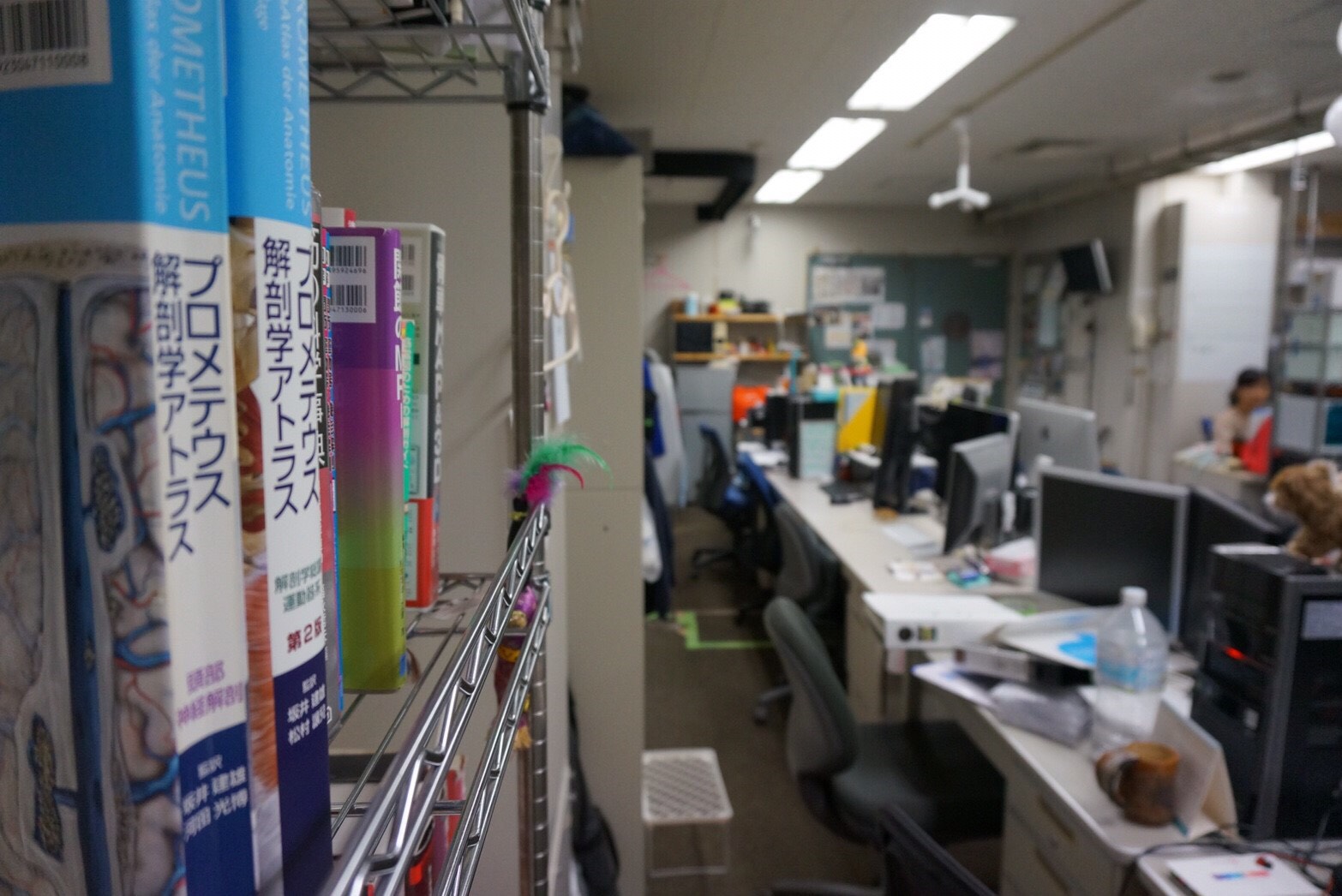
A light grey room is filled with 23 grey desks, scattered in pens and books. In one corner sits a refrigerator packed with snacks. Next to it is a rice cooker. The walls are covered in pictures of fun lab memories. Amidst the clutter, some students joke and laugh; chat with a professor about their experimental procedures; analyze data on their laptops and unconsciously wrinkle their brows.

umi lab

The Ushiba lab

It is a usual morning at the Ushiba lab where I’m doing an internship this summer. I am a rising junior at Macalester College in Minnesota, USA. Before spending two years in a U.S college, I spent all my life in Japan, and expected being back in a Japanese lab to feel natural. But my assumption was wrong.

Reverse culture shock

Continue reading