#scidata16: Boost research and avoid embarrassing retractions by working openly and reproducibly

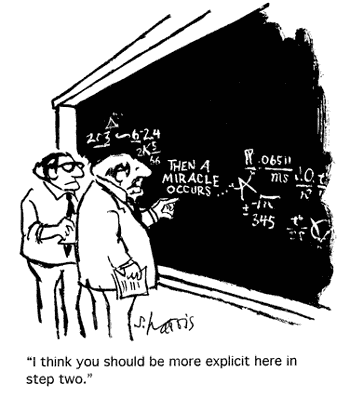
Experiments fail to be reproduced, research data from others is hard to come by, and steps between data and figure are described as ‘here, a miracle happens’.

Speakers at the Publishing Better Science through Better Data (#scidata16) conference addressed these issues and more.

Publishing Better Science through Better Data journalism competition winner Réka Nagy.

Most research happens behind closed doors, and the results can only be gleaned once they’ve been published. The raw data that lead to results, however, are rarely made public, and the steps taken to get from data to figures in a publication is not always clear, which has led to the reproducibility crisis currently facing research. It’s clear that something needs to be done to address this, and the ever-inventive collective mind of science is finding inventive solutions.
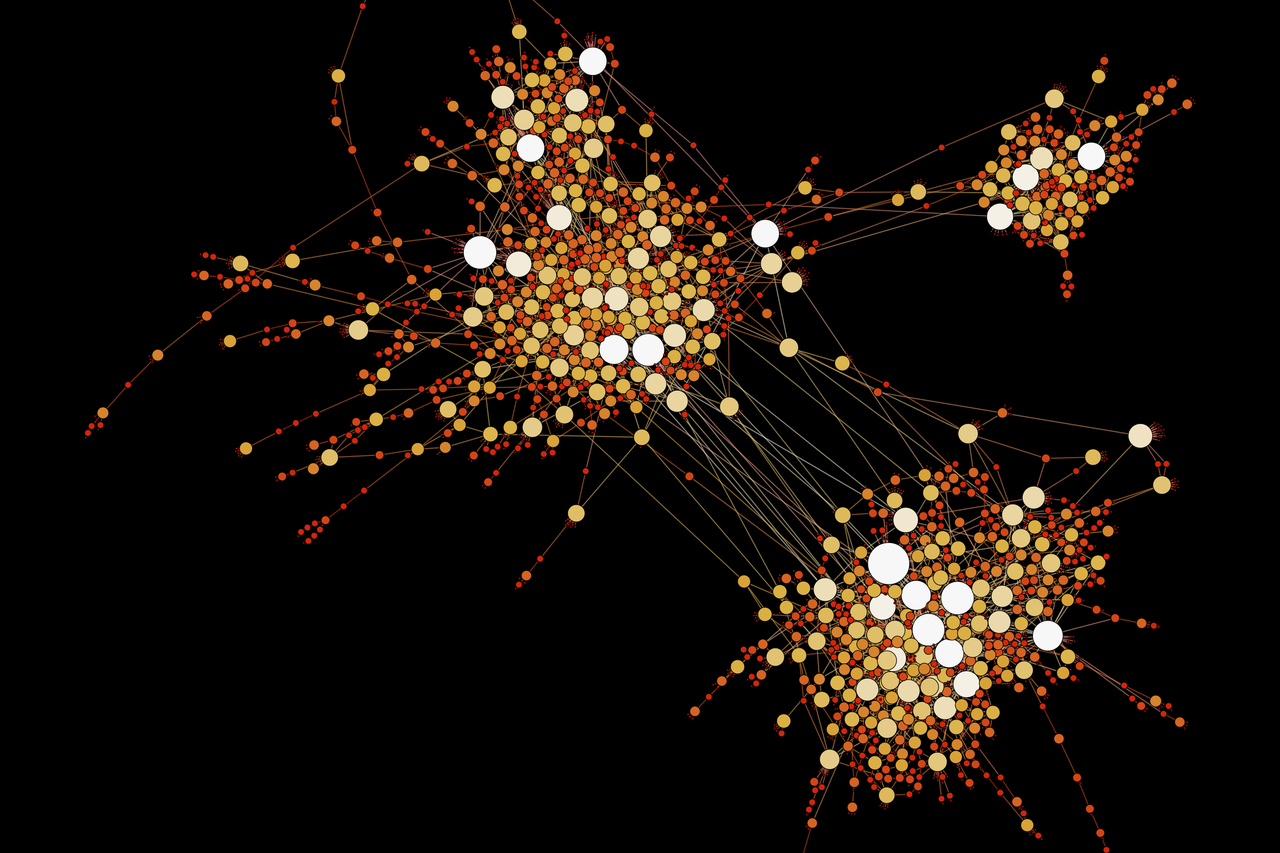
Network_Visualization

The steps taken to get from data to figures in a publication is not always clear {credit}SlvrKy/Wikimedia Commons CC-BY-SA-4.0 {/credit}
Continue reading

#scidata16: Work reproducibly for the sake of your career

Making sure others can do your experiments doesn’t just help them — it’s good for you, too.

Publishing Better Science through Beter Data writing competition Jonathan Page

A core tenet of science is reproducibility: the results of one scientist must be able to be reproduced by another, lest the findings be dismissed as a fluke or even fraudulent. In today’s data-driven realms of research, ‘reproducibility’ doesn’t simply mean publishing methods, many journals now require that datasets, and the code used to analyse them, be published too. This requirement ensures that both data, and methods, can be scrutinised. If other researchers can’t reach the same results, the study will need to be treated with caution. In doing this, scientists avoid damaging their reputation by publishing flawed studies, and journals avoid publishing bad science. It’s a win-win situation.

So why don’t scientists always work reproducibly?

JPage_Profile-smaller

Jonathan Page

Continue reading

Has big data changed what it means to be a scientist?

Researchers still need to adhere to the scientific method, regardless of how large the datasets are or how complicated the experiments become.

Publishing better science through better data journalism competition winner Erica Brockmeier

The life of today’s scientific researcher doesn’t look like it did in the 1940s. One of the papers I cited in my dissertation, published in 1941 by Dr. C.L. Turner, describes the efforts of a solo scientist manually counting bone segments in female fish fins after treatment with anabolic steroids. Turner was one of the first scientists to show that female mosquitofish exposed to androgens exhibited the type of fin growth which was normally only found in male mosquitofish.

behind-the-scenes-quintin-anderson

{credit}QUINTIN ANDERSON{/credit}

Continue reading

What are the benefits of reproducibility in science?

There has always been an element of risk in science, which is why data must be reproducible, explains Ellen Phiddian.

On June 6, 2012, I skipped class to watch the transit of Venus. I was studying in Adelaide, Australia, where the transit lasted from early morning until mid-afternoon and we had a wonderfully sunny day to view it. If I had known a bit more about the history of the transit, I may have been more thankful for that.

ISS-45_Indian_subcontinent-smaller

A view of Venus from over the Indian subcontinent. This photograph was taken by Japan Aerospace Exploration Agency (JAXA) astronaut Kimiya Yui from the International Space Station on December 5th, 2015

In the 1760s, astronomers made long and convoluted journeys across the globe just to observe Venus crossing the Sun. Scientists at the time wanted the transit recorded from as many continents as possible, so they could use the data to calculate the distance between the Earth and the Sun. It took years of effort and huge sums of money to orchestrate such a viewing. Continue reading

How is the rise of data-intensive research changing what it means to be a scientist?

Data-intensive research requires a new breed of scientist: interdisciplinary analysts who enjoy swimming in data, says Atma Ivancevic.

There has always been an emphasis on the generation of novel data in science. Being a scientist involves progressing from observation to hypothesis to experiment to output. In the past, a combination of scarce data to look at and low throughput machinery to make more has led to limited experimental outcomes.

2016-09-12-Atma Ivancevic 04-smaller-cropped

Atma Ivancevic

Continue reading

#scidata16: Publishing Better Science through Better Data: Writing competition

This competition provides the chance to attend the Publishing Better Science through Better Data October 2016 event, work with a Nature editor and have your writing published here on Naturejobs.

After a very successful event last year, we are again looking for five budding science writers to help with news coverage of this year’s Publishing Better Science through Better Data event.


scidataWellcomeSDATA2

Continue reading

#Scidata15: Make the most of your research: Publish better data

Primary research papers are the currency of academics, but they’re also part of a much wider body of knowledge that is restricted by a lack of transparency.

Guest contributor Lakshini Mendis

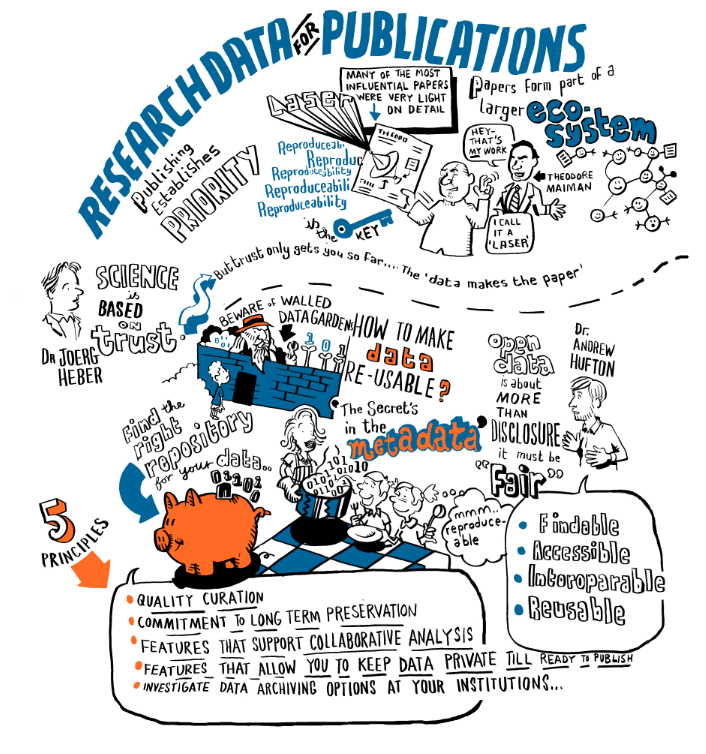
naturejobs-blog-Scidata15-ResearchData-for-Publications

{credit}Image credit: SCIENTIFIC DATA/LUDIC GROUP{/credit}

Historically, a great deal of trust has been placed in statements made in research papers for which the underlying data have not been shared. The invention of the laser was described in a paper containing just three data-points, for instance, and Watson and Crick first described the structure of DNA in a paper without any data at all. But with about 1,500 papers retracted since 2012, and 26.6% due to misconduct, scientific papers are now firmly under the microscope.

Improving the availability and readability of original research data would go a long way to improving matters. And as scientific publishers largely determine how research data is disseminated, their involvement will be central to any change. Speaking at Publishing Better Science Through Better Data in late October 2015, Dr Joerg Heber and Dr Andrew Hufton, editors at Nature Communications and Scientific Data respectively, emphasised that to make the most of research data it must be more open.

Overcoming the data-sharing challenge

According to Hufton, the status quo is for researchers to only share data with others directly. As well as being inefficient, data associated with published work disappears at a rate of about 17% a year as a result of researchers failing to properly catalogue findings. There is now, therefore, a move from scientific publishers to make data findable, accessible, interoperable and re-useable – or, to use an acronym as those of a scientific persuasion are so often inclined to do, FAIR. Continue reading

#Scidata15: Big data: Challenges create opportunities

The era of big data brings with it a sea of opportunities for development and innovation.

Guest contributor Daniela Quaglia

naturejobs-blog-Scidata15-Opportunities-from-Research-Data

{credit}Image credit: SCIENTIFIC DATA/LUDIC GROUP{/credit}

Big data is here to stay. As scientists, we stand to benefit by being part of this exciting revolution. At the second Publishing Better Science through Better Data conference, held in London on October 23rd, Dr. Ewan Birney, joint associate director of the European Bioinformatics Institute (EBI), and Dr. Timo Hannay, founder of SchoolDash (a website that provides statistics about schools in England), walked us through some of the opportunities that arise from working with big data.

Opportunities in biology

Birney spoke about how the increase in big data is influencing the way we do biology. He promised to give the audience “an EBI centric view of the world”. I’m glad he did, because every scientist wanting to use big data should understand how EBI can help them.

EBI takes data provided by laboratories and stores, verifies, classifies and shares it. This approach means that a wealth of molecular-biology data, from DNA sequences to full systems (such us biomolecular pathways and metabolomics data), can be found in one place. As most scientists do not want to have to work from shared data in their raw form, the institute also works with the scientific community to convert original data into useful formats. Data from the Human Genome Project provides a compelling example of how such transformations can benefit the community — as Birney pointed out, not even the most experienced researchers want to analyse such complex raw data. Continue reading

#SciData15: Get more out of your research data

Researchers shared their tools to help scientists use and share data more effectively at the 2015 Publishing Better Science Through Better Data conference.

Guest contributor Rehma Chandaria

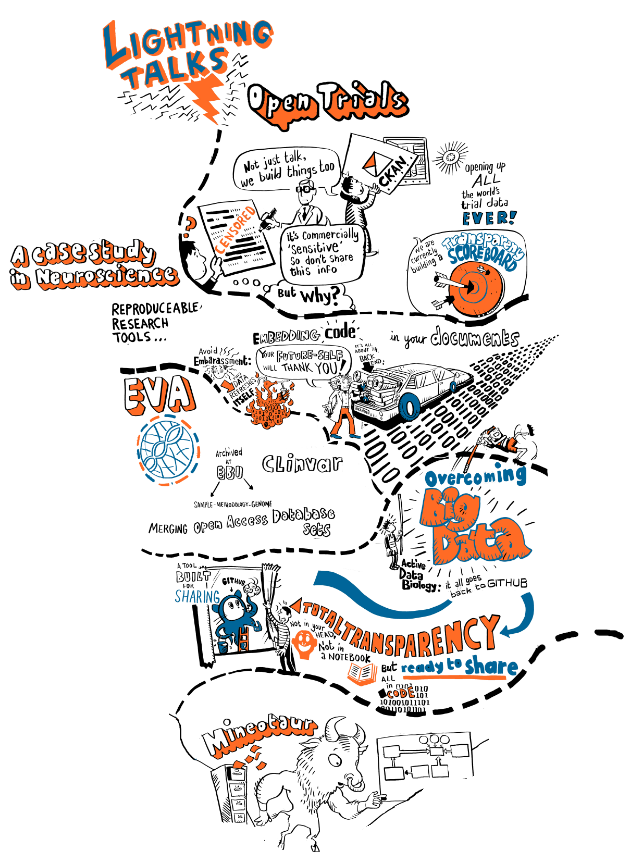
naturejobs-blog-Scidata15-Lightning-Talks

{credit}Image credit: SCIENTIFIC DATA/LUDIC GROUP{/credit}

The session of lightning talks at the 2015 Publishing Better Science Through Better Data conference was strategically scheduled to combat the post-lunch lull that often occurs. Five speakers had seven minutes each to tell the audience about their tools for helping scientists to use and share data more effectively.

Dr Sam Payne and Dr Balint Antal have both written programmes that allow researchers to collaboratively analyze and visualize large amounts of data. Payne of the Pacific Northwest National Laboratory in Washington State developed Active Data Biology, a tool for interactively exploring and analyzing ‘big data’. He demonstrated how the programme can be used to assess proteomics data in the form of a heatmap — you can click on various proteins, conduct real-time analytics, save the proteins you find interesting and look at what your collaborators have saved. Rather than having the information hidden away in your notebooks or in your head, everything is stored on GitHub so it’s transparent and available to everyone involved. Mineotaur, developed by Antal of the University of Cambridge, UK, is based on a similar idea. It is an open-source tool designed for biologists to explore high-throughput microscopy data. Mineotaur can also be used to share research findings and allow others to analyse them further. It can even be embedded in publications to allow readers to explore the data for themselves. Continue reading

#SciData15: Research Data for Discovery: Prepare to Share

Speakers at #SciData15 advocated for a wider degree of awareness of the field of data science and the implementation of data sharing technologies.

Guest contributor Caroline Weight

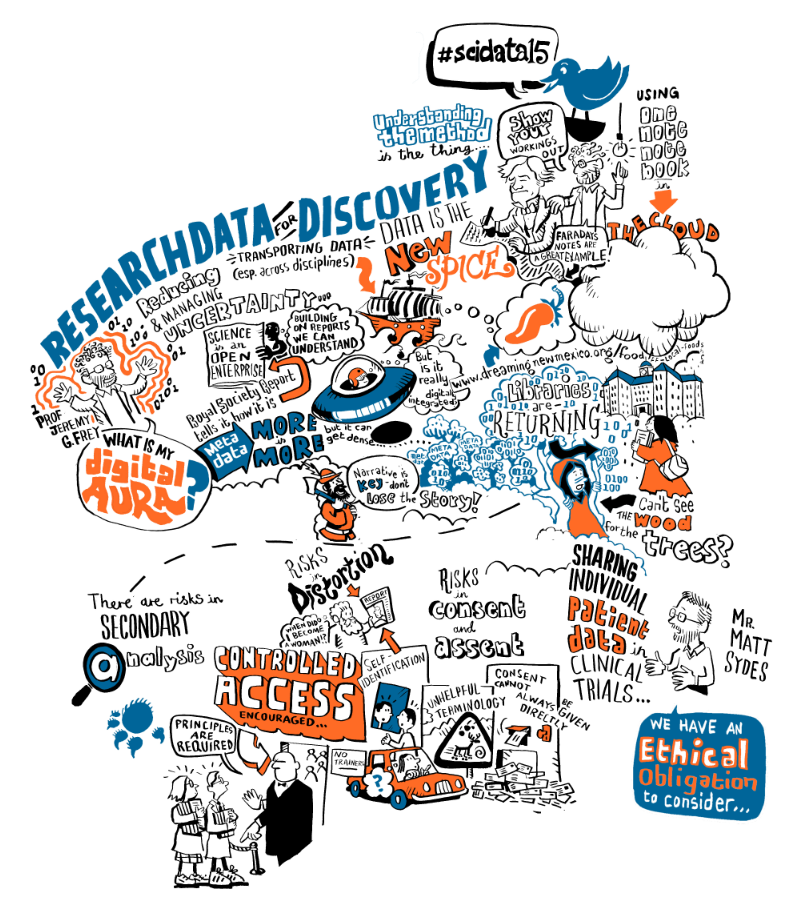
naturejobs-blog-Scidata15-Research-Data-for-Discovery

{credit}Image credit: SCIENTIFIC DATA/LUDIC GROUP{/credit}

“We must engage in the idea of sharing,” said conference chair Iain Hrynaszkiewicz as the 2015 Publishing Better Science through Better Data meeting kicked off at the headquarters of Nature Publishing Group (NPG) in London on 23rd October.

Hrynaszkiewicz, who develops new areas of open research publishing and data policy within NPG/Macmillan, noted that 30 funding bodies — including the Engineering and Physical Sciences Research Council and The Royal Society — have written policies that outline requirements for data-sharing. Examples include detailed methods and protocols, microscopy images and mathematical workings, as well as meta-datasets of, for example, genotypes and microarrays.

The meeting’s aims were to increase awareness of ways to effectively share data and to discuss how to improve the efficiency, implementation and overall impact of sharing among the scientific community. A recurring issue throughout the day was how to enforce sharing, and get the concept to become part of standard, everyday scientific practice –one that seeps into the lives and habits of working researchers. Continue reading