Dan Cressey, a reporter at Nature, speaks about getting a job as a science journalist at the Naturejobs Career Expo, London, 2016.
https://www.youtube.com/watch?v=iilmmDHxgPY

https://www.youtube.com/watch?v=iilmmDHxgPY
Ever wonder when you’ll publish that big paper that’ll win you the Nobel Prize (or at least a new research grant)? Turns out, it could be your next.
As Nature News reports, a new equation, developed by a team led by Albert-László Barabási at Northeastern University in Boston, Massachusetts, shows that papers published at any point in a scientist’s career have equal chance in becoming their most highly cited work. It might be sensible to keep that in mind the next time you’re struggling through centuries of data analysis, or when your thumb starts to bruise from more and more mindless pipetting.
You can watch a video explainer below, and find the paper here.
Suggested posts
How to get published in high-impact journals: Big research and better writing
Writing for international journals: tips and techniques
Nature Masterclasses: Writing for highly-selective journals
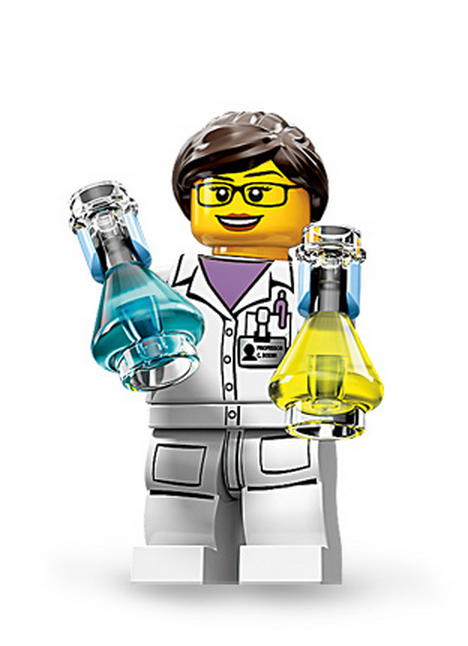
The call for reproducibility has never been stronger in the history of science. Since two major pharmaceutical companies, Amgen and Bayer, reported in 2011/12 that their scientists were unable to replicate 80-90% of the findings in landmark papers, scientific news outlets have caught up on the issue. Their reports have catalyzed conversations among stakeholders (policy makers, funding agencies and scientists) to improve reproducibility in science.
{credit}LEGO{/credit}
There are a lot of reasons why reproducibility is so important, and why Amgen and Bayer’s results caused such controversy. I’ll start at the individual level. Continue reading
Sometimes I ask people, “if you weren’t studying biology, what would you do?”
At first, they’re taken aback, and I don’t blame them. PhD students are self-selected for a certain kind of persistent, focused thinking; that’s what it takes to become the world’s leading expert on your thesis project. We are as deeply immersed in our work as a fish in water. That makes asking a graduate student to consider a different field of study a lot like asking a fish to imagine life on dry land.
“We are as deeply immersed in our work as a fish in water. That makes asking a graduate student to consider a different field of study a lot like asking a fish to imagine life on dry land.”
Guest contributor Virginia Schutte
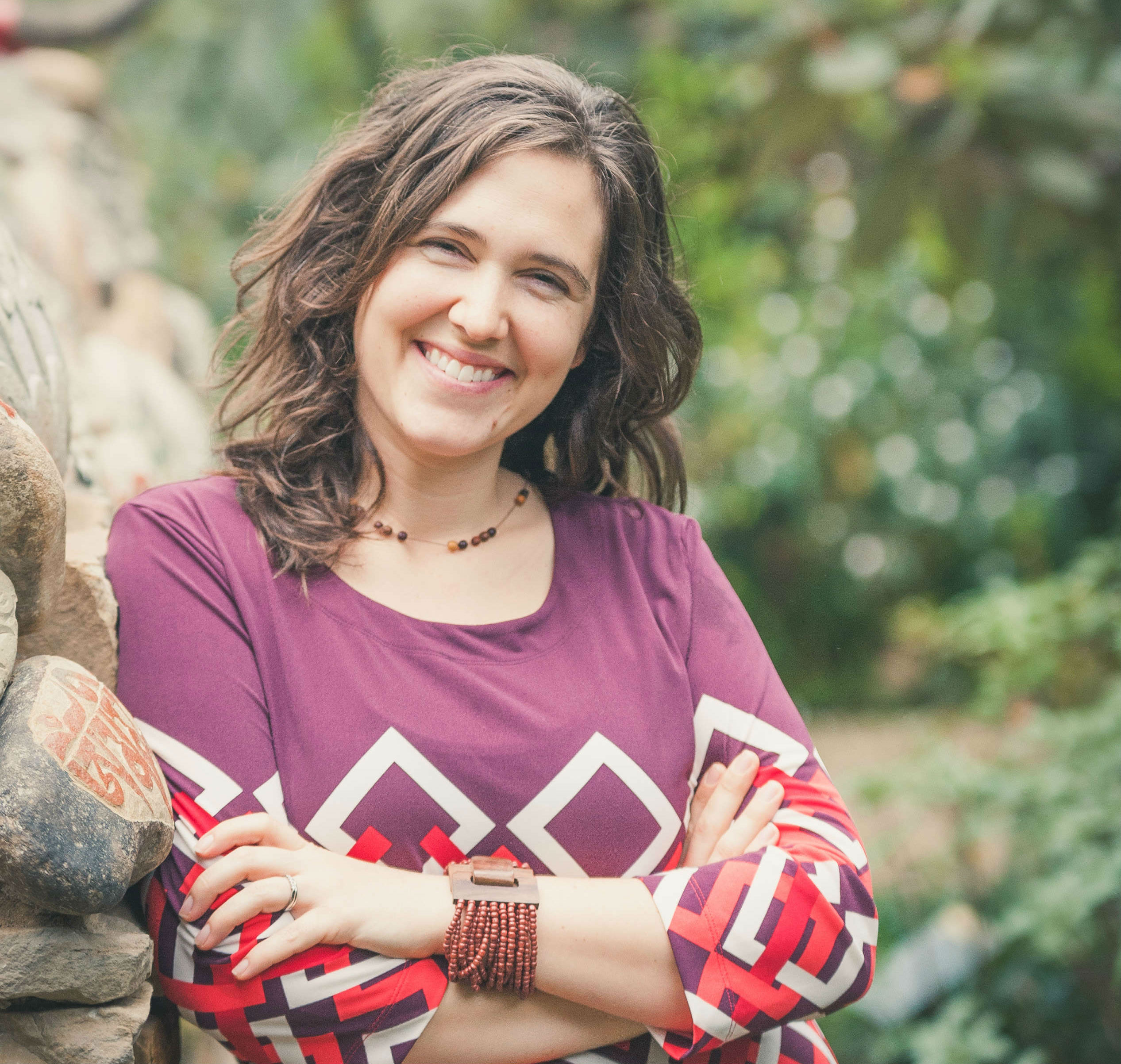
The international conference Comm4Science: communicating science beyond the lab took place in Heidelberg in early May. Around 100 participants attended, where they met a great roster of speakers, took part in a communication workshop, and asked questions of a panel of experts.
Virginia Schutte
Guest contributor Viviane Callier
Gender stereotypes affect our attitudes and behaviours, even if we’re unaware of them. But the habit of implicit bias can be broken: an intervention with faculty at the University of Wisconsin helped to break the bias habit, led to an improved department climate for everyone, and increased faculty hires of women and underrepresented minorities, a new study shows.

Bias, perhaps?
Guest contributor Viviane Callier
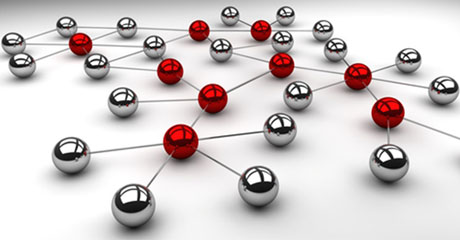
Connections matter – in terms of productivity, in terms of obtaining grants, in terms of promotion and advancement, and in terms of retention in academic positions, a new Harvard-based study shows. Women and underrepresented minorities (URMs) have a smaller “reach” – a measure of second-order connections – and the discrepancy between the reach of women & URMs and that of white men is greatest at the junior faculty level. This discrepancy may account for differences in productivity, promotion, and retention of women and URMs in academia.
CREDIT: CC-BY-SA Atos/Flickr
Professor Langer, who runs the 100-strong Langer Lab at MIT, told the Financial Times that “it is a great honour to win what is by far the biggest engineering award in the world.”
His research led to the development of drug delivery designs that would allow drugs to be released in the body over an extended period of time. His polymers were designed with long, water-filled channels that allow large molecules to gradually pass. This has specific possibilities for drugs that target conditions like cancer, mental illness and diabetes.
The prize, awarded to engineers from all over the world whose research has affected millions, if not billions of lives, is part of a UK initiative to promote engineering on a global scale, and is thought to be the equivalent of a Nobel. The 2013 award was shared by 5 people who were involved in the invention of the internet, including Sir Tim Berners-Lee. Continue reading

Who are you calling slack?{credit}Getty/Thinkstock{/credit}
Contrary to popular opinion, people who work from home are not slacking off. In fact, those who work part of the time from home end up working between five and seven hours longer than their peers in the office, according to a study of over 60,000 people in the US.
Mary Noonan, from the University of Iowa, and Jennifer Glass from the University of Texas at Austin, analysed data from two US data sources — the National Longitudinal Survey of Youth 1979 panel and special supplements from the U.S. Census Bureau’s Current Population Survey, a monthly survey of about 50,000 respondents of which the team took samples from 1998, 2002 and 2004. The study was published earlier this year in Monthly Labour Review.
The findings challenge the idea that working from home is a good solution for those employees needing a better work-life balance or with care-giving responsibilities, suggest the authors. They also challenge the idea that those who work from home are not working as hard as their colleagues in the office.
The authors also speculate as to whether employers take advantage of people working from home, and the resulting longer hours, to increase demands on them. Further studies should look at whether or not those people started working longer hours after they started working from home, they say.
In many workplaces, there is much stigma attached to home-working, and some people may feel pressurised into working longer hours to prove that they are still doing invaluable work. Of course, having the flexibility to work from home is often an essential benefit, but It can also be hard to switch off at the end of the day, when you aren’t physically leaving the office – which might also account for extra hours.
If you are considering working from home, or are struggling to get the balance right, here’s our advice on how to get things done without adding extra pressure: Continue reading
You may have noticed we’ve given the Naturejobs homepage a minor spring clean – we’re still making a few tweaks, but the search box is both more prominent and streamlined, news and features are easier to find and we’ve added this new blog. We’ll be using the blog to post short news items to help keep you up-to-date with the latest developments affecting the job landscape for scientists, and we’ll also be including more provocative pieces to promote discussion and debate.
As with any blog, we’re looking for interaction with you, our readers – so please let us know what you think in the comments section. If there’s something you’d like to see covered, just let us know – we’ll consider all suggestions.
Most of the posts will come from me, Rachel Bowden – I’m the Naturejobs web editor – but we’ll also be looking for guest bloggers to contribute in the future, so watch this space.
The changes are the first phase of a larger project to make the Naturejobs website more useful to jobseekers and employers. We’re also putting together a short online survey about the website so you can have your say, so please watch out for it – your answers will help make the website better for everyone.